Will my ‘no soliciting’ sign stop door knockers? What Kansas law, Wichita rules allow
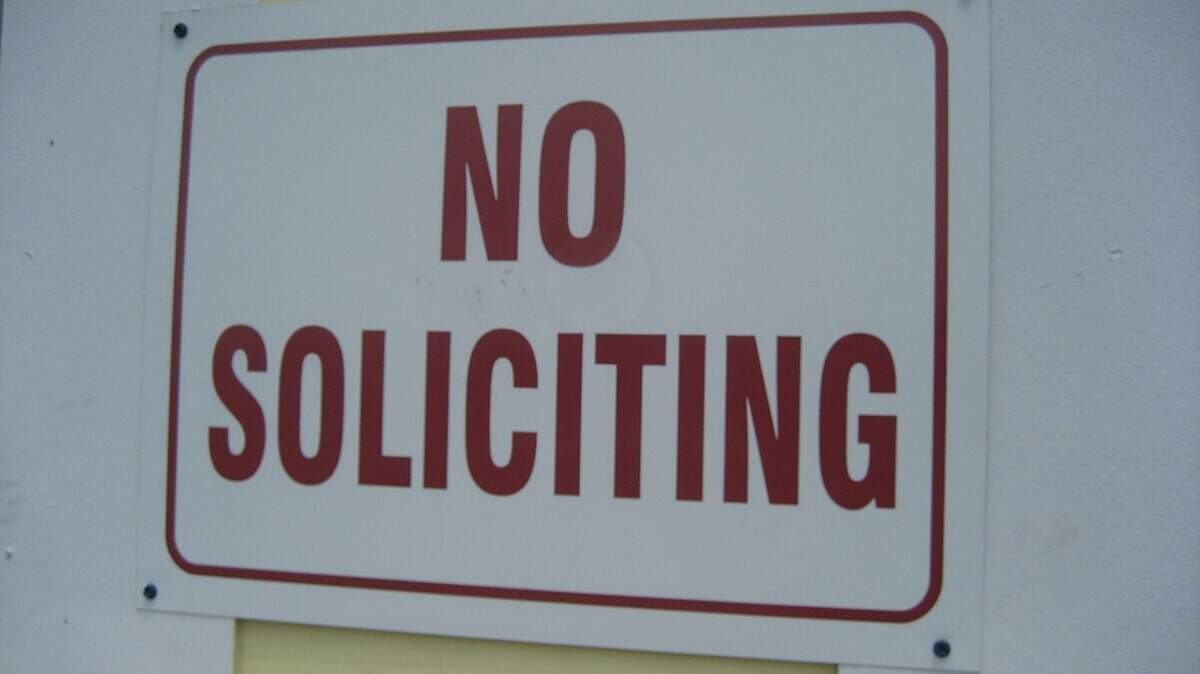
A knock on the door can mean many things — visiting friends, neighbors or a package arriving, just to name a few. But if you look through your window and see someone you don’t recognize, there’s another possibility: a salesperson.
Whether it’s an internet provider, a roofing company or painting service, having a sales person show up at your front door can interrupt your routine. That is why some people opt for putting a “no soliciting” sign on their property.
But is posting a sign on your door enough? Are there any Kansas laws or Wichita ordinances that say what a salesperson can and can’t do when going door-to-door? We spoke with Casey Johnson, the director of advocacy and litigation at the Kansas Legal Services, to answer these questions. Here’s what to know.
Are sales people required to heed ‘no soliciting’ signs?
Johnson said there are no state laws that prevent salespeople from knocking on a door with a “no soliciting” sign posted, but the rules can vary by city.
“There’s no statute, but some cities have their own ordinances or codes,” Johnson said.
The city of Lenexa, for example, has plenty of ordinances surrounding door-to-door solicitation, Johnson said. That includes prohibiting soliciting before 10 a.m. and after 8 p.m., not allowing soliciting at doors with a sign and requiring the salespeople to leave if directly asked to.
Wichita isn’t one of the cities with specific ordinances, however, city spokesperson Megan Lovely confirmed to The Eagle in an email.
“Door-to-door solicitation is generally covered under first amendment protections,” Lovely wrote.
Wichita does, however, prohibit soliciting on city property.
What does Kansas law say about door-to-door sales?
Just because there are no city ordinances regarding the act doesn’t mean there aren’t any laws in place in Kansas for door-to-door sales.
Kansas Consumer Protection statute 50-640, for example, gives customers the right to cancel the transaction after a certain period of time.
“By midnight on the third business day, you have the right to rescind any door-to-door sale,” Johnson said of the law.
There also must be a receipt given to the customer when they sign an agreement.
“What we see a lot of times is they’ll just have it on an iPad. They won’t send it to you, they won’t even email it to you,” Johnson said. “So some of our clients don’t even know what they’ve signed by that point.”
In total, there are three ways the salesperson must legally inform the customer of the right to cancel: orally, through the receipt and an attached notice of cancellation.
“If they didn’t give one of these three types of notice … then you know that’s a violation of the Kansas Consumer Protection Act,” Johnson said.
The state attorney general’s office has a list published on its website of businesses prohibited from door-to-door sales due to violating the act.