
Hunting injuries in Kansas rare thanks to hunter education, state says
Mike Miller called last month’s hunting incident that wounded a 7-year-old boy “a tragedy.” Jarett Riley was turkey hunting with his father when a trespasser fired a shot at their decoy and hit the boy standing several feet away. The first-grader was struck in the forehead. His prognosis is good.
Such shootings in Kansas are rare, Miller said. Hunter education is largely to thank.
“(An incident) like this is always one too many,” said Miller, Kansas Department of Wildlife, Parks and Tourism’s assistant secretary of wildlife, fisheries and boating. “But if you look at the last couple of years, you’ll see hunting is safer than most outdoor recreations, or even sports.”
During the 2019 hunting seasons eight people were shot while hunting in Kansas. In the 2018 seasons four were shot, an all-time record low. Neither year had a fatality.
Miller referenced a 2011 U.S. Fish and Wildlife Service report that estimates Kansas hunters total 5 million hunter-days annually. Such low incident rates have been earned, he said.
“It’s largely a matter of education,” Miller said. “We’ve put more than 400,000 people through our hunter education program since 1973. There’s no question it’s made a difference.”
Following two of the 10 rules for firearms safety, as taught in the Kansas program, could have prevented Jarett from being shot.
One is, “Be sure of your target before you pull the trigger, and always know what lies beyond your target.” The other is, “Never point a gun at anything you don’t want to shoot.”
McPherson County law enforcement officials have not named the man who shot Jarett or said if he had passed a hunter education course.
Jesse Riley, Jarett’s dad, said he witnessed the man trespassing, shooting from a vehicle and illegally trying to use a .22 rifle to take a wild turkey. Only shotguns and archery equipment are legal for hunting turkeys.
Currently everyone born on or after July 1, 1957 must complete an accredited hunter education course to hunt in Kansas. Landowners and their immediate families don’t need the course to hunt on their own land.
Other exceptions are children under 16 hunting with direct supervision of an adult. Those 16 and older can also purchase an apprentice hunting license. It allows them to hunt, under direct supervision of a licensed hunter, for up to two seasons.
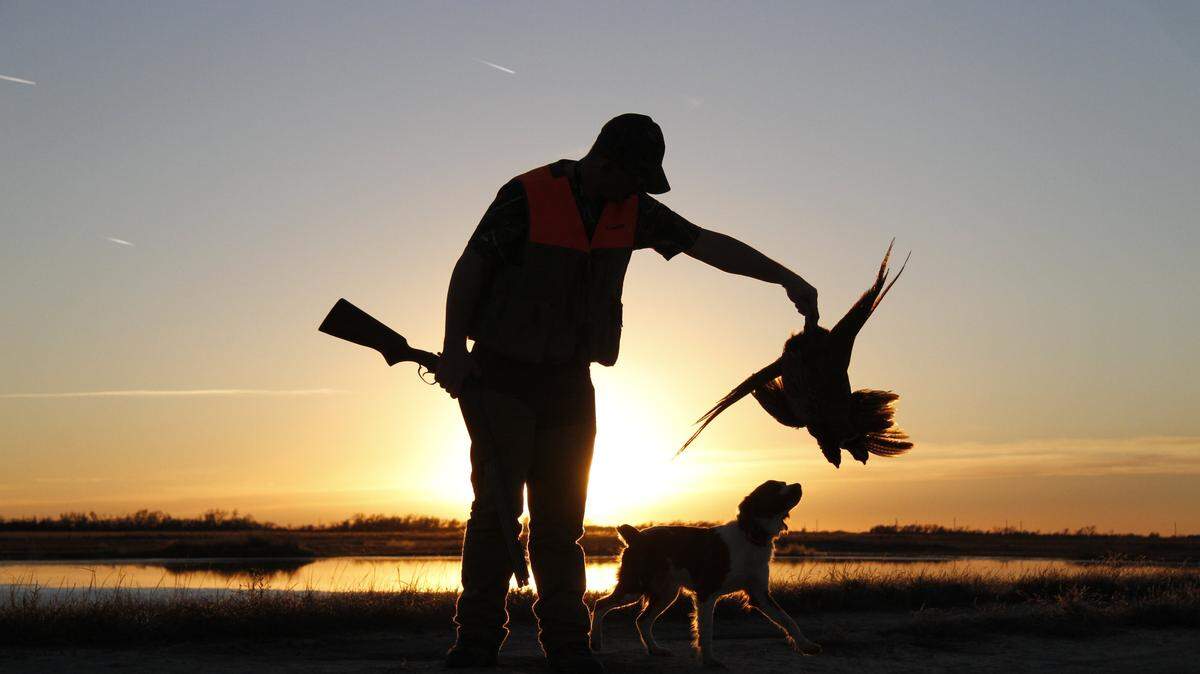
Historically, Miller said, most hunting incidents have been while people are hunting pheasants and quail. A bird flushes, one hunter swings on it and fires as it flies by another hunter. Those incidents, too, are generally declining. As well as being careful with shots, hunter education classes encourage all upland bird hunters to wear bright colors so they’re more easily seen.
Miller described Jarett Riley’s shooting as a probable “hunter mistaken for game” incident, which usually happens when someone shoots at a movement, a sound or a decoy. Most hunter education courses test students on the concept at field days with simulated hunts and targets.
This is not the first incident where someone fired at a decoy.
On the opening morning of the 2017 spring turkey season a hunter from Arkansas shot his brother and a friend as they hid behind a preserved turkey tail fan while hunting in southeast Kansas. The shooter was behind another fan when he shot. The brothers had been actually calling to and stalking each other.
Another preventable shooting happened in 2012 when a visiting hunter from Minnesota was hunting turkeys near Junction City and shot at movement in the brush. It was his hunting partner. Still believing he was shooting at a turkey, he shot the man a second time as he struggled to get away. Comedian Jay Leno showed the Wichita Eagle’s headline of the shooting on “The Tonight Show.”
Kansas’ most well-known hunting incident occurred in December 2007 when 18-year-old Beau Arndt, of Americus, was lying amid goose decoys with his friends. He was killed by a high-powered rifle bullet fired into the decoys from a nearby road by Thomas Kent. Kent was eventually found guilty of involuntary manslaughter and several lesser charges including several poaching violations. He was sentenced to 32 months in state prison.
When Kent’s trial was over, Beau’s father, Bob, helped Wildlife and Parks make an educational video on how his son’s death could have been avoided. Miller said any attention brought to instances like Beau Arndt’s and Jarett Riley’s greatly help educate the public.
“As bad as it was,” said Miller, of the Arndt killing. “It really got a lot of people to stop and think about what they’re doing out there.”
This story was originally published May 26, 2020 at 5:01 AM.