
Since when is a sales tax election not about money? When it’s about trust
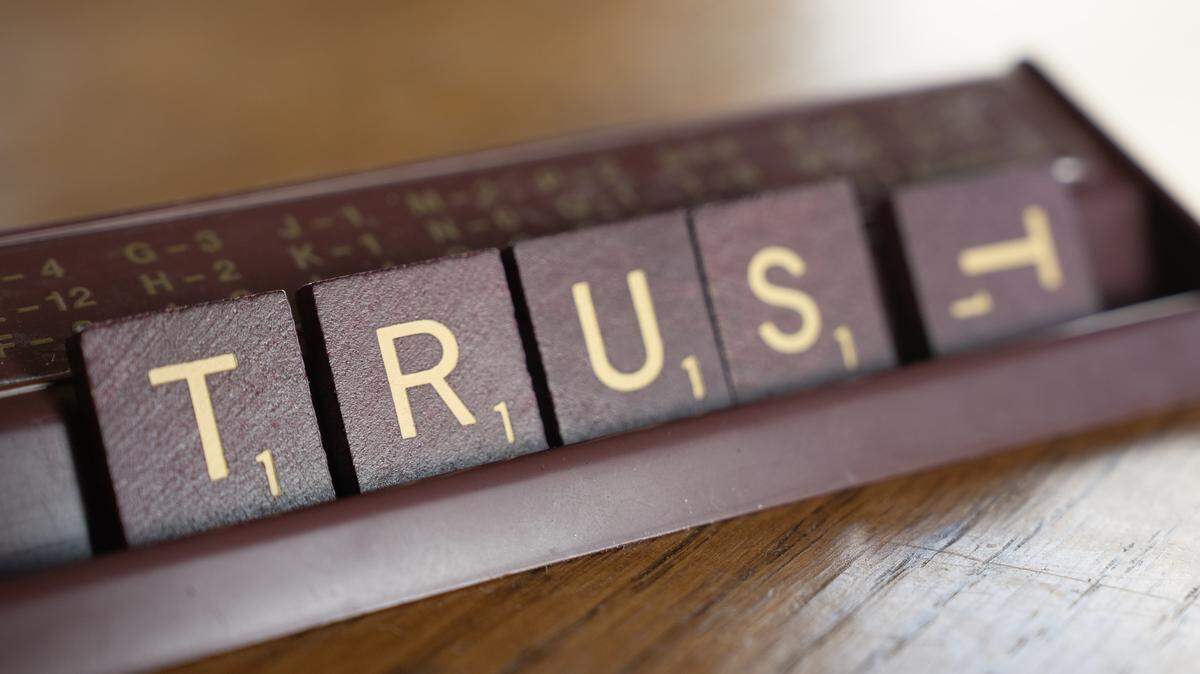
If you think money is the key issue in the citywide debate over Wichita’s proposed 1% sales tax, you’re wrong.
As Exploration Place president and CEO Adam Smith put it: “The central issue in this debate is trust.”
He said he believes “the community really wants to move forward . . . but it’s the issue of trust we’re not getting past.”
Thrive Restaurant Group CEO Jon Rolph — one of the “three rich, white guys,” as the men behind Wichita Forward have been labeled — said he knew trust would be the campaign’s biggest hurdle.
“It’s certainly disappointing, but I can’t say that I’m surprised,” he said. “It’s just a time of low trust and high skepticism.”
At what seems to be an especially divisive moment, a series of interviews with Wichitans across all spectrums showed there’s one thing that everyone unanimously agrees on:
Trust throughout Wichita in particular and society in general has been lost, and politicians are not the only ones feeling it.
Other popular targets include the media, police, educational and medical institutions and the business community.
Some people may remember a world where Walter Cronkite gave them their news, and they believed it.
A world where there weren’t millions of opinions a keyboard click away.
A world in which few questioned schools or teachers. When they listened to doctors. Believed in corporations and CEOs. Even turned to business leaders for direction within their communities.
Now, Rolph said, people ask, “Well, I wonder what’s in it for that guy?”
If implemented, the sales tax is expected to generate $850 million over seven years for public safety capital improvement projects, homeless programs and affordable housing, property tax relief, Century II and a new performing arts center.
Regardless of what happens with the sales tax vote, Wichitans likely will feel the reverberations of the fight over it long after it’s done.
So what brought us to this point? And is there anything to be done about it?
Taking sides
City Council member Mike Hoheisel traces trust issues back to Watergate and Vietnam.
“Public officials have done a lot to erode trust over the years.”
Adding to that is “how we dehumanize each other,” which he and several others blamed on social media.
“You get kind of a certain stigma about a person before you can even meet them face to face,” Hoheisel said.
“We don’t read articles; we read headlines. . . . We simply just seem to take a side.”
County Commissioner Pete Meitzner said that “COVID really elevated the divisiveness.”
“Everybody was so isolated.”
That’s around the time when Wichitan Faith Martin noticed it, too, as an election worker.
She said those positions are staffed by a lot of older people — generally for little pay — who in the past weren’t questioned about their allegiances.
Suddenly, Martin said, there were concerns over things like the workers might toss ballots in the trash.
“Some of the most insane things I’d ever heard,” she said. “There were people, like, visibly upset and rattled on all sides.”
Martin didn’t consider it distrust in politicians.
With behavior like that, she said, “Basically, you’re saying you don’t trust your neighbors.”
Good decisions
Hutton CEO Ben Hutton, one of the three businessmen who proposed the sales tax, said questions over accountability are fair and appropriate.
“But I think when that extends to automatic distrust, we’ve gone too far. . . . We are letting that prevent us from making a good decision today or in the future.”
Past issues are a tough hurdle for some to overcome, especially minorities, said Margaret Shabazz, a Black Wichitan who ran for City Council in the last election and regularly speaks during public comment times at council meetings.
“We’ve never had trust,” Shabazz said. “We’ve been promised things all our lives and never gotten it. It’s been normalized.”
Like Hutton, Wichitan Esau Freeman said “you can hold people accountable without not trusting everyone around you.”
Freeman is the business representative for the Service Employees International Union Local 513, which represents a variety of workers, including city of Wichita and school district employees.
He said he sees empathy, or “seeing somebody else’s perspective,” as he put it, at the heart of overcoming distrust.
“This is the basis of our humanity. . . . The sooner we get back to dealing with people as people, the better our society is going to be.”
That includes giving people some grace, he said, and giving them room to fail.
“If we’re going to achieve things, we have to take chances.”
Freeman and numerous others suggested getting involved to overcome distrust. He said that’s what gave him new perspectives and how he learned issues generally aren’t simply black and white. Freeman said showing up, wherever that may be, and learning more opens your eyes to nuances.
“The more I showed up, the more I found out.”
Community advocate LaWanda DeShazer also suggested getting involved. She lost a race for City Council in the most recent election, but she regularly shows up at meetings to make sure her perspective is heard.
“Start getting involved so you can become an informed citizen,” she said. “It has to start at the local level.”
Patterns of behavior
Arguably, it’s easy to be more disconnected than ever. Friends University political science professor Russell Arben Fox understands.
“I don’t think there’s been some decline of virtue. I don’t think people have become worse.”
Instead, Fox said there’s been a loss of relationships.
“Trust is not whether or not somebody is doing a good job. Trust is, ‘I have a relationship with this person. I like this person.’ ”
Fox said relationships and patterns of behavior build trust, but those are harder to achieve today.
“We have become deeply privatized in the way we live our lives . . . and so we’re not able to develop those patterns.”
He said there’s no magic wand to return society to what it was or to unilaterally rebuild trust.
“I don’t understand how it could come back on a grand scale.”
However, that’s where transparency comes in, Fox said. He said it becomes a key variable to building trust.
Chase Billingham is a bit more skeptical.
The associate professor of sociology at Wichita State University is not optimistic that anything is going to be done in the short term to build trust in politics or anywhere else, though he agreed about the power of relationships.
For instance, citizens may have a negative view of Congress but personally like their own representative, he said.
New City Council member Joseph Shepard said distrust “is deeper rooted than just this sales tax,” but the issue has brought the topic to the forefront.
“I think people are like, whoa, how did we get here?”
To learn how Wichitans got to this mistrustful place, no one has to look any further than issues over botched community endeavors such as WaterWalk, Ken-Mar, the new water treatment plant or the Ice Center, to name a few.
“The list goes on and on,” Shepard said.
He said he believes more engagement by elected officials is one answer.
“We have to get out of City Hall more.”
So, about that tax . . .
Fidelity Bank president and CEO Aaron Bastian, the third of the trio of businessmen who proposed the sales tax, has an early contender for what may be the understatement of the year:
“This is not how I would have expected a sales tax campaign to go.”
He, Hutton and Rolph acknowledged mistakes have been made throughout the campaign.
In fact, the commercial that likened Wichitans opposing the tax to Communists was such a disastrous episode, Bastian and Rolph referred to it only in oblique terms without mentioning the C-word.
“There’s a lot of things we could have done to better build trust at the start of this effort and in hindsight wish we would have done,” Bastian said.
Some City Council members also admit fault with, as Billingham bluntly put it, rubber-stamping the ballot measure.
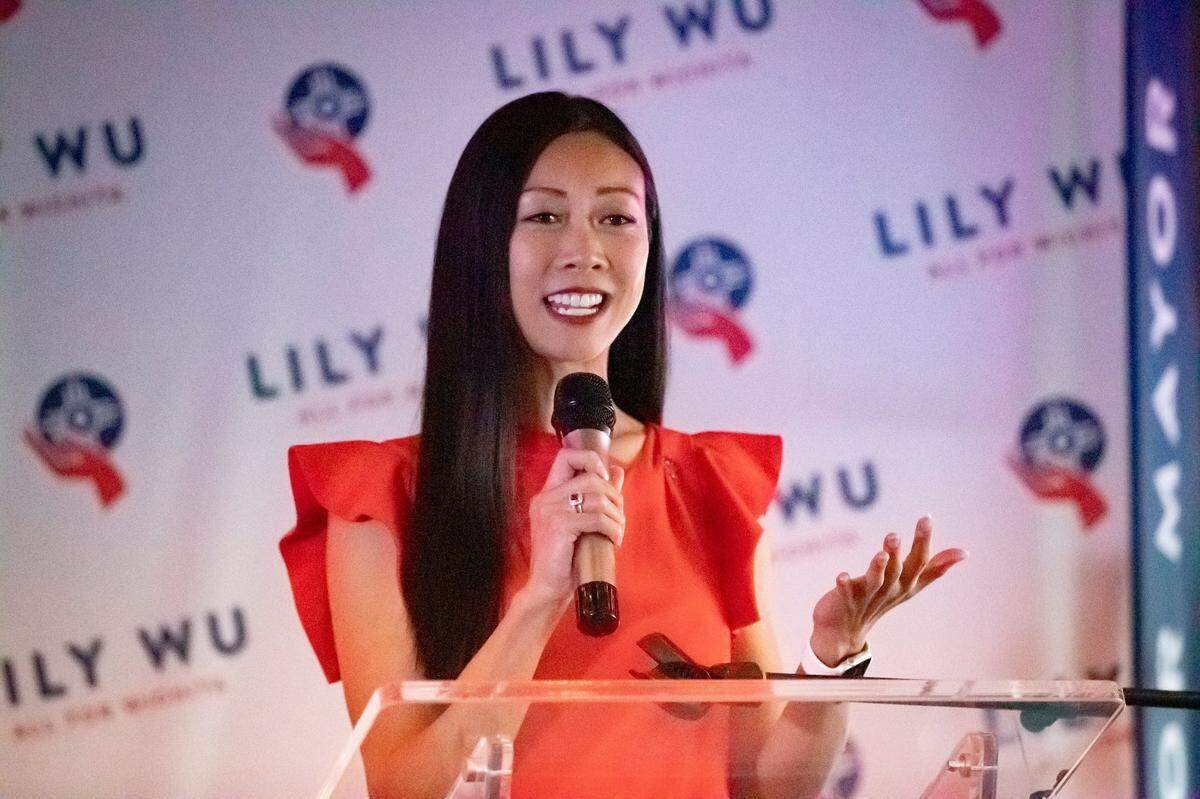
“I’ve been reflecting a lot, and that was probably a mistake,” said Mayor Lily Wu.
.JPG "IMG_IMG_0073_2_1_GVQESVPO_L894378124 (1).JPG")
She said she was motivated by what she’d been hearing from the community about things like homelessness and public safety.
Hoheisel, too, said the sales tax referendum “is what it is” now, but he said, “I feel like there’s always opportunity to learn and improve the process. I always desire more public engagement.”
Bastian said he expected people to debate the merits of the proposed tax, but the intensity of feeling on the issues “was a lot stronger than I would have expected, but I also think that we had some moments that made that intensity stronger.”
After all the negativity on both sides of the campaign, City Council member JV Johnston said he believes none of the businessmen who proposed it will put themselves on the line for an effort like this again.
Except, in interviews with The Eagle, each one confirmed he will.
As Rolph said, “Even with low societal trust, people can find belief for the idea and dream of what Wichita can be.”
The last word
Bastian perhaps has learned what Wu has discovered about trust and the public in her two years in office.
Wu ran on a pledge of rebuilding trust in City Hall, but she said that “it has been truly eye-opening how hard it is.”
“It can wear on you.”
Wu said she plans to address trust in her March 8 State of the City Address.
“I don’t feel like you can fix anything in government unless you openly examine it and let the people see.”
In return, Wu echoed what others said about how important it is for the public to be informed and be critical thinkers.
Though she said she’s not asking anyone to vote one way or another on the tax, Wu said she does have a request for Wichitans.
“I am asking this community to come together. . . . We either are going to win as Wichita, or we’re going to lose as Wichita.
“Whatever happens March 3, we’ll have to move forward.”