
Looking back on Layton’s career as Wichita city manager. And at what’s next for him
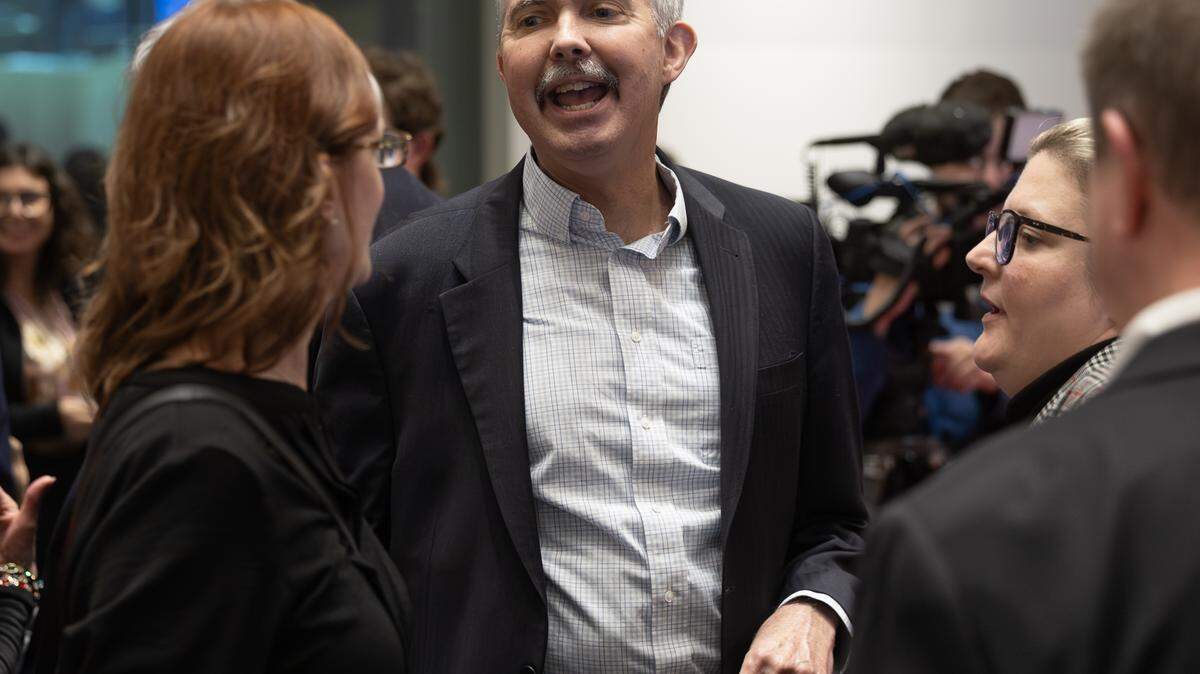
In his 16 years in Wichita, City Manager Robert Layton has watched the city’s skyline change.
His office, on the 13th floor, sits on the southeast corner of City Hall. The south-facing windows give Layton, also known as just “Bob,” a view of the continued growth in development the city has seen during his tenure.
Whether he’ll admit it or not, it’s a testament to his time with the city. Right now he now has a view of ongoing construction at Wichita State’s biomedical campus, which he played a role in.
“I always think it’s really presumptuous for somebody to talk about their legacy,” Layton said. “It would be easy to point to a number of capital projects, because they’re visible. It’s not anything that I did as an individual. It’s, I was here and worked with a team on all of those projects.”
Layton came to Wichita in 2009.
He was hired after a contentious and drawn-out selection process in 2008. After little public engagement during the search process, the council named one finalist and offered him the job.
The candidate, Pat Salerno, signed a contract and then reneged at the last minute, re-starting the manager search where Layton emerged as a finalist.
He was selected by a 4-3 vote, with council members Jim Skelton, Paul Gray, Jeff Longwell and Sharon Fearey voting to hire him. Former Mayor Carl Brewer and council members Sue Schlapp and Lavonta Williams voted against hiring him.
“I did not vote for Bob, but I thank God for the four council members that did vote for Bob,” Williams said at a recent retirement reception for Layton. “They saw something in Bob that evidently Sue and Carl and I didn’t see.”
His first day on the job was complicated, with the city in the middle of trying to solve a budget shortfall. Wichita, like the rest of the country at the time, was experiencing the Great Recession, leaving the city in a $600,000 deficit.
But a Wichita Eagle article dated Feb. 3, 2009, noted that Layton was setting an “easy tone” for a “hard task.”
The article also noted Layton’s humor – when he pushed away a recorder from a KFDI reporter who mentioned the station’s country music format.
“Put that away, I don’t do country,” Layton said. His son worked in the music industry then, and had more of an affinity for pop rock, the article noted.
That tone carried through Layton’s tenure. During heated discussions at City Council meetings, advisory boards, and other public engagements, he remained calm, giving measured responses when needed.
That was apparent in Layton’s last meetings with the current City Council, which approved placing a sales tax proposal on the ballot despite opposition from speakers at the meetings.
Layton at City Hall
Before coming to Wichita, Layton worked in a number of other city governments in the Midwest, including a stint as city manager for Urbandale, Iowa, from 1984 to 2009.
Layton also worked for the cities of Des Moines and Kansas City, Mo.
It was in Urbandale, though, that he met Greg Robinson, who was a school principal and later superintendent of the Urbandale School District.
“We were fortunate to do a lot of things in Urbandale while he was city manager, and for those things, I am blessed to become the leader that I was during that time,” Robinson said at Layton’s retirement reception.
In Wichita, Layton oversaw city government through a number of projects, including a new baseball stadium, the Multi-Agency Center for the homeless and a new airport.
An avid reader, Layton also says he’s proud of the work the city did to create the Advanced Learning Library.
“We were going to emphasize a different way of people learning,” he said. “I still believe we have one of the top 10 libraries in the country in terms of being built around how people want to learn, how we can advance literacy.”
Layton also oversees the city’s more than 3,000 employees.
Many credit him with investing in the workplace culture at City Hall and investing in its employees.
“They went away with the idea that here is a true servant leader, not just the words, not just the label, but someone who really exemplified that,” former Wichita Public Works Director Alan King said. “Results were that he strengthened the organization. The organization really became more of an extension of his philosophy, and as more people started understanding and buying into it, it became really the norm.”
Layton’s time hasn’t been without controversy, notably with the city’s police department several years ago. The police chief reports to him.
In the nation’s first fatal swatting in 2017, Wichita police detective Justin Rapp shot and killed 28-year-old Andrew Finch.
The city defended the shooting for years but eventually agreed to a $5 million settlement, one of the largest in state history.
Activists critiqued the city’s handling of the shooting and the subsequent investigation. Some even called on Layton to resign.
“It’s no wonder the people of this city don’t trust their government,” AlmaAnn Jones, a representative for the Finch family, said in 2020. “It’s controlled by an unelected dictator who is entirely free to do whatever he pleases and knows he will never face any consequences.”
Layton said during times when he was critiqued by the community, he used it as a learning experience.
“You can’t turn a deaf ear,” Layton said. “You have to always hear those concerns so you can get better.”
That led to the city hiring a new police chief and investing in police technology and training.
“I can’t tell you how many episodes we’ve had in the last year where the department has stayed away from use of force and have had successful outcomes,” Layton said, “especially with people who are going through mental health challenges or behavioral health challenges.”
During election years, the city manager’s role in running the city has been questioned by candidates.
It was also brought up during the search process for a new city manager: did the council want to move forward with a “strong mayor” form of government, rather than its current council-manager form?
Those talks have stalled for now.
“So many elected officials I have worked for have started out sometimes critical of the position, thinking the manager is there to protect the employees and not to execute on their vision or on their direction,” Layton said.
“Usually, I win them over in a year, because they realize that we’re to execute on what it is they want to get accomplished.”
Some controversy from Layton’s tenure will carry into the next city manager’s tenure: a new water treatment plant that is not yet operating and is months behind schedule.
A contract for constructing the $574 million water plant was steered toward Wichita Water Partners by former Mayor Jeff Longwell in 2019 after the city’s selection committee voted unanimously to award the contract to Jacobs Engineering. City staff also questioned whether the Water Partners had the experience needed to construct a large water plant.
The plant has faced numerous setbacks.
“The water plant is a great example of one where, as professionals, we made a recommendation, the council went in a different direction,” Layton said. “That’s the form of government. I still believe we made the right recommendation, but the elected officials have to factor in a lot of different issues.”
Wichita’s, and Layton’s, future
In the weeks leading into his retirement, Layton was staying busy with full agendas for the City Council — and getting his successor, Dennis Marstall, ready to go on day one.
Layton pointed out that for one day, Dec. 31, the city will have two city managers. Layton’s last day with the city is that same day, and it’ll be Marstall’s first.
Marstall has been the county administrator for Lancaster County, S.C., since 2021. Lancaster County is in the far north part of the state, directly south of Charlotte, N.C., where Marstall also has experience.
“That’s the only thing that would ever give me pause is asking someone to take this job that hasn’t worked for a large city,” Layton said.
“The nature of the issues that you deal with, the way you manage a large organization and hold people accountable, keep track of projects, and not just projects, but assignments. I learned all of that when I was in Des Moines primarily, but also in Kansas City, and if I hadn’t had that experience, I think I would have been lost when I was here.”
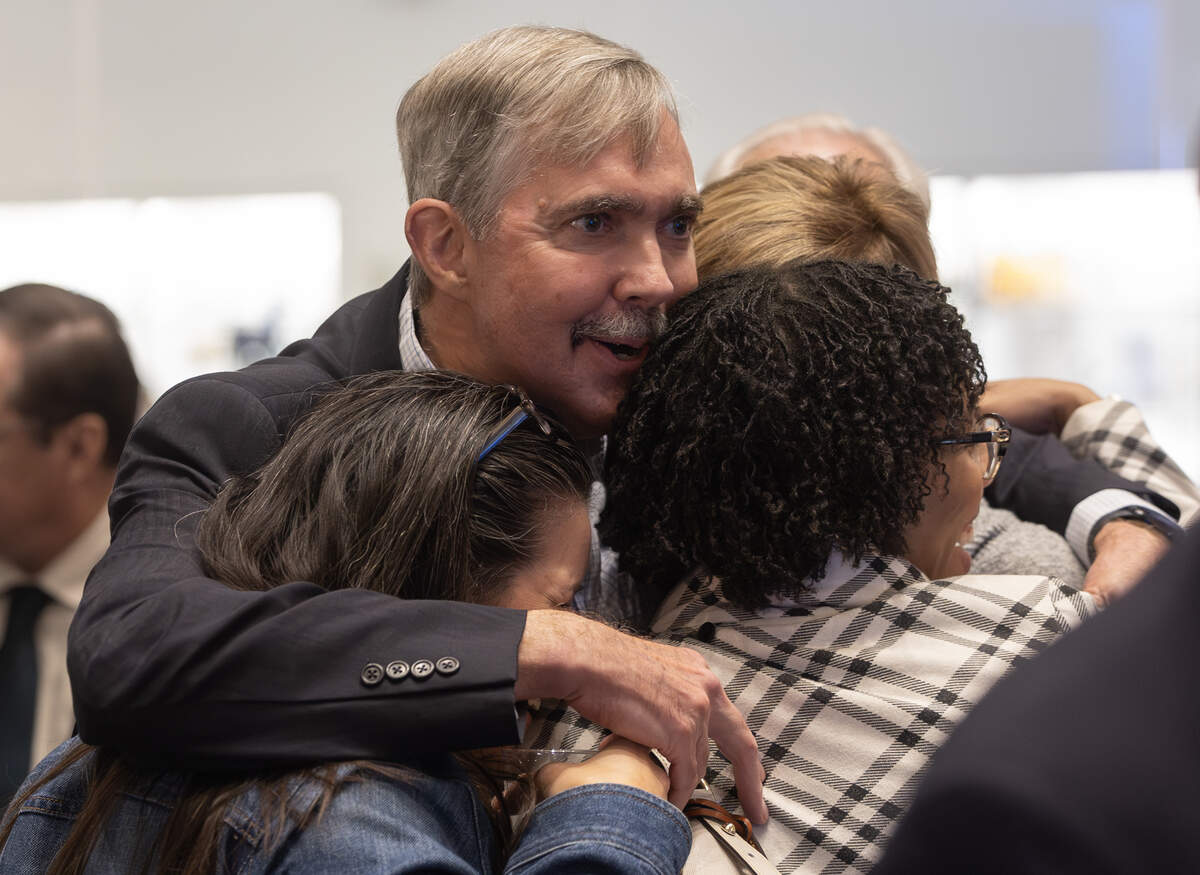
When Layton retires at the end of the year, he said he’d still like to be part of making Wichita a better place to live and plans to continue to live in the city.
As a grandfather to five children in a blended family, that includes working on early childhood literacy initiatives.
Some of that work has already begun, with the Wichita Library Foundation recently adding a new area in its downtown library named after him: the Robert Layton Family Place. It’ll soon also be at every library branch location.
The family place allows children to play, read, and learn with their caregivers, according to the library foundation.
“It’s our future and it’s a community future,” Layton said on investing in childhood literacy. “If they’re below standards for [third grade], their likelihood of being involved in the criminal justice system, not graduating from high school, and then even their career path, that all can be predicted. And what you want to do is break that cycle. You want them to be achieving, because it saves us money as a community…
“That fire has been lit even more in me because of my grandchildren. I see where they are, and I want them to excel, but I want everyone at that age to be able to excel and have unlimited opportunities that come from having just a solid education.”