
Wichita City Council gives final approval for 1% sales tax election in March
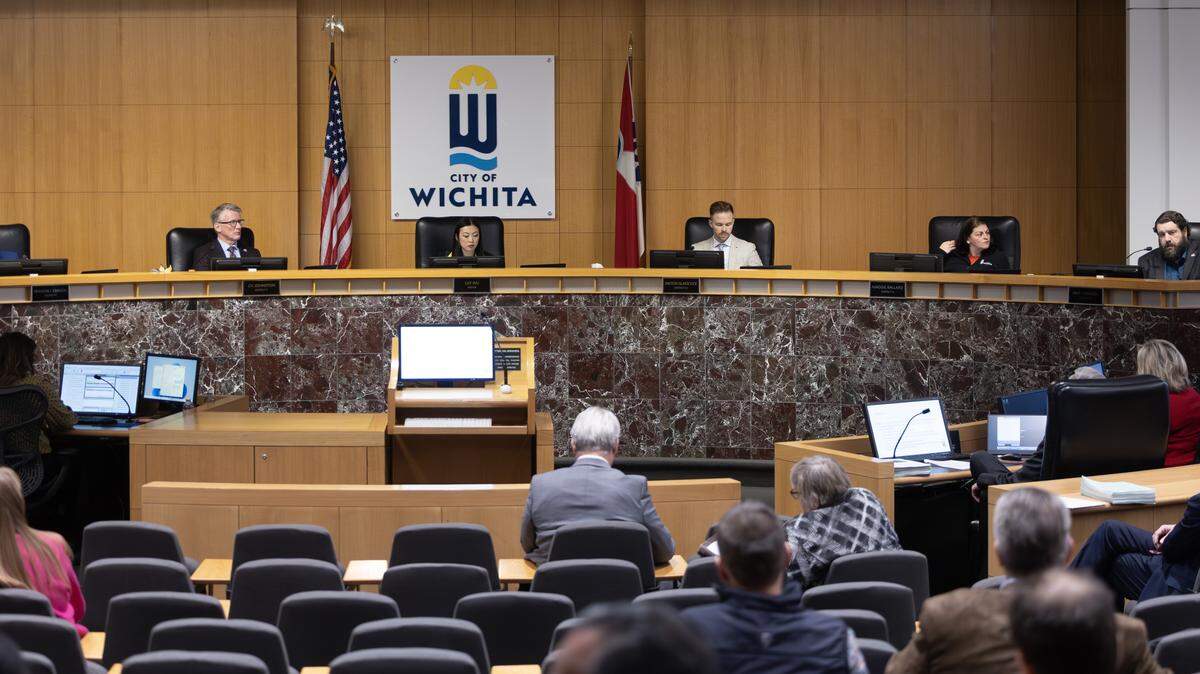
The Wichita City Council gave unanimous final approval Tuesday to hold a 1% city sales tax election on March 3 despite lingering unanswered questions and a failed attempt to separate $850 million in projects into separate ballot questions.
The election will cost the city $150,000.
The proposal — first made public three weeks ago — would fund a new performing arts center, a convention center expansion, public safety projects and Century II renovations while providing money to fight homelessness and to lower property taxes.
Residents who spoke continued to say Tuesday that the process has been rushed.
“They don’t want to hear from us, they want us to shut up and vote,” conservative radio host John Whitmer said in comments to the council. “That’s not democracy. That’s not the process. It’s easier to find the Epstein files than it is to find the details to this plan.”
The City Council felt some of the consequences of the hurried approval process, as the city attorney shot down multiple attempts to change the ballot question language for lack of time.
The council couldn’t change the ballot question language without moving the question — scheduled to be put to voters at a March 3 election — to a different, less expensive election due to timelines required by the Sedgwick County Election Office.
A move by council member Mike Hoheisel to place the five projects separately on the ballot failed 3-4. Council member Maggie Ballard and Mayor Lily Wu voted with Hoheisel, but the other four voted against it. It would have required two special meetings later this week to meet the election office’s Friday deadline.
Instead, the council decided to leave the ballot question’s language intact while making non-binding changes through City Council policies.
“I wish we had more time to look at this as a community and gather the buy-in from our community,” Hoheisel said. “Not only does this harm the trust from the community, but it also puts the potential funding for many programs that I care about at-risk.”
Mayor Lily Wu said she had concerns that the sales tax won’t require matching funds from the private sector for $75 million earmarked for a new performing arts center. And she said she had heard many concerns about adding a tax to food. City officials also dampened some of the council member’s hopes for sales tax relief programs.
The officials confirmed Tuesday that the city cannot exempt groceries from the sales tax. And the group eligible for a proposed rebate would be around 9,000 people – or about 2.25% of the city’s 400,000 population.
Tuesday’s meeting also revealed that the council voted last week based on inaccurate information from City Manager Robert Layton, who told the council at the time that putting the ordinance on the August or November ballot would cost the city. Election Commissioner Laura Rainwater told the council on Tuesday that putting it on August or November ballots would be free for the city of Wichita.
The special election in March will cost the city at least $150,000, she said. The city said it will pay for the election out of a contingency fund in the city manager’s office.
Proponents of the March election have said they want a special election so voters can focus solely on the sales tax question.
“I think it was clear in all the public feedback sessions we’ve had is that Wichitans care about a variety of the issues that are embedded within this plan,” Matt Burchett with Wichita Forward said, “whether it be serving our homeless community, our first responders, lowering taxes. We know that Wichitans care for these issues and will hopefully respond in a way that affirms the sales tax.”
Others have said a March ballot is needed so the city can fund its homeless shelter next year because the city has not budgeted for that expense.
“What the city needs... is a consistent stream of funds to work with our homeless service providers,” Second Light’s Board Chair Steve Dixon said.
Representatives from the Wichita Regional Chamber of Commerce and Downtown Wichita supported the sales tax proposal.
“It’s the community’s turn to step up and address a community-wide issue,” Downtown Wichita’s Executive Director Heather Schroeder said.
This story was originally published December 16, 2025 at 1:09 PM.