
Wichita water and sewer rates will rise 23% over three years. Here’s why
AI-generated summary reviewed by our newsroom.
- Council approved a 23% water and sewer rate increase for 2026–2028.
- Council locked in multi-year rates to give consumers more predictability.
- City cites $2B+ capital projects and lost municipal water customers as reasons.
The Wichita City Council has voted to raise water and sewer rates by more than 23% over the next three years.
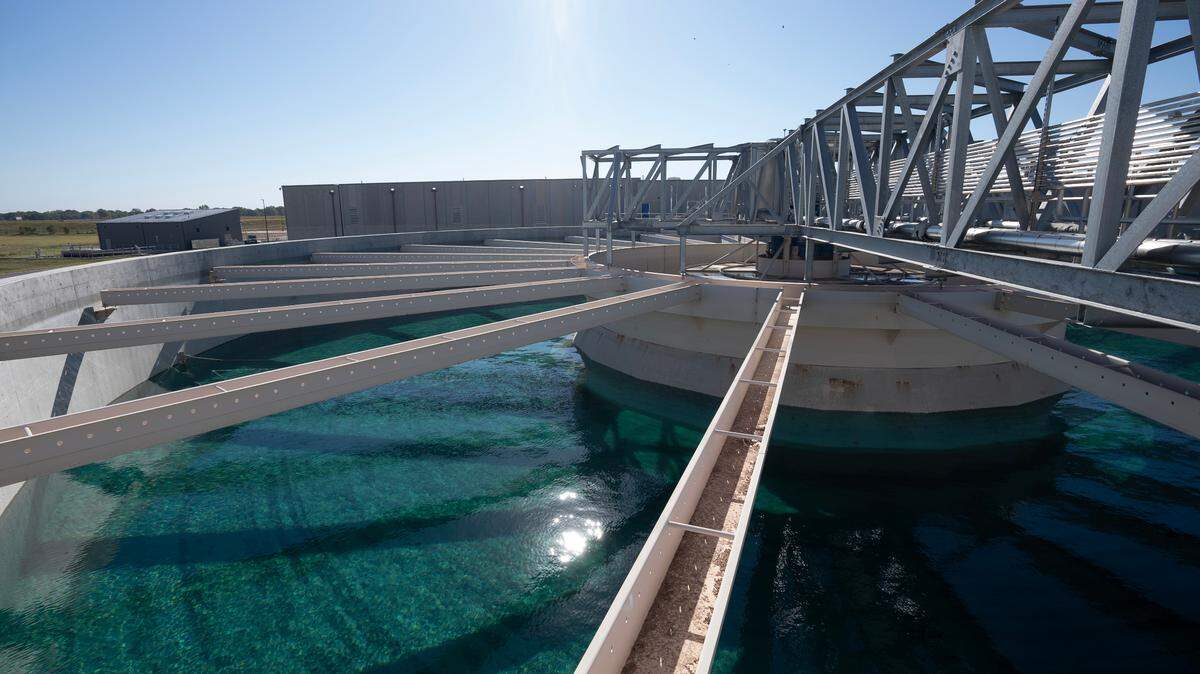
The increases come amid continuing delays at the city’s new water treatment facility, which is more than a year behind schedule with no completion date in sight.
The council had already hinted that rates would increase more than expected next year, but Tuesday’s vote also locked in rates for 2027 and 2028, a departure from past practice of approving rates annually. Water and sewer rates will increase by 7.11% in 2026, 7.52% in 2027 and 6.98% in 2028.
The increases for low-volume users are projected to be more than $4 a month next year and an additional nearly $5 a month by 2027 for hypothetical customers whose monthly bills are $62.44 this year.
Council member Dalton Glasscock promoted the multi-year rate hike with support from Mayor Lily Wu and council member Brandon Johnson. They both supported Glasscock’s initial proposal to approve five years of increases. Council member Becky Tuttle cast the deciding vote after the others agreed to her proposal to limit the scope to the next three years.
“What would be the harm in setting rates for five years,” Glasscock asked city staff. “Give people the foresight in what maybe additional charges will be. And then if there needs to be a different change, it can come back to council.”
City staff said locking in rates could cause issues with managing expectations with the public if, for instance, rates needed to be increased more than was previously approved. But, otherwise, it would not cause any problems, according to the city's director of public works and utilities.
“Five years . . . it’s just a long time in our world,” Tuttle said. “And three just gives me a little more comfort.”
“We all know that everything increases based off of inflation,” Wu said. “The cost of individuals that are employed, their rates increase. ... Chemical prices continue to increase, energy prices continue to increase. All of these require the rates to continue increasing; however, predictability to help individuals who are trying to budget would be helpful. So I’m in favor of having more predictability.”
The increases approved Tuesday are well above long-term projections offered by the city as it moved forward with two major capital improvement projects expected to total more than $1 billion: the Wichita Water Works water treatment facility and the bio-nutrient removal sewer project.
City officials had previously said rate increases would remain around 5% through 2028 before dropping to around 4% annually through 2034. Instead, increases will continue around 7%.
The city has lost water customers since those projections, with two neighboring suburbs — Derby and Valley Center — opting to build water plants of their own amid uncertainty surrounding Wichita’s water system. That’s a loss of more than $2.5 million a year while the cost of doing business continues to climb, Gary Janzen, Wichita’s director of public works and utilities, said.
The primary rate drivers are the city’s more than $2 billion in capital improvement projects to pay for over the next ten years, including Wichita Water Works, BNR and more than $609 million in additional water system projects, $245 million in sewer projects and $229 million in projects that are already in the works, Janzen said.
Council members JV Johnston, Mike Hoheisel and Maggie Ballard voted against the rate increases.
“I would not be in favor of doing a three- to five-year set rate for three to five years,” Johnston said. “I think if you keep your eye on the ball, then you are paying more attention to it. So, out of sight, out of mind. If we don’t look at it for two or three years, it’s out of sight, out of mind. I think we should look at it every year.”
In response to Johnston’s concerns, the council also approved holding a workshop meeting each October in lieu of a rate decision.
Hoheisel said he could not support the increases because of how much they burden already struggling residents who have seen costs rise in recent years — property taxes, rent, utilities, groceries and health insurance, for instance — at higher rates than incomes.
“So, over the next decade, if it’s averaging about $3 a [month] increase, that would be about $30 [each month] increase over a decade,” Hoheisel said. “So putting the average low volume payment around $90 to $100 [a month]. That is something I get a little heartburn over, seeing those rates coming up.
“A lot of people’s consternation is with how much it hits poor people, working people, people on fixed incomes,” Hoheisel said. “I’d like to see something that’s a little more top-heavy as far as adjustments go, to take a little less bite out of the working people who have less and less to work with in the upcoming years.”
Ballard said she could not support the rate hikes because of the timing of the decision, which comes as the new water plant is yet to be completed.
“I have an unpopular comment,” Ballard said. “I understand, obviously, the importance of us paying the debt for this giant infrastructure you know that we built, but it’s really hard for me to have this conversation with all of the uncertainties just with the new water treatment plant, even though we’re taking care of it, and, you know, it’s being worked on and all of that. It’s just hard for me to increase the rates. I know we have to pay for it. I get that, but I just, I’m having a hard time.”
Work stalled at the $574 million water treatment plant last month when Wichita Water Partners, the contractors building the plant, discovered substantial problems with the clarifiers while testing the plant’s ability to deliver safe drinking water. It was originally scheduled to be complete by September 2024, but drought-related issues and other performance testing problems have caused delays to stretch into at least 2026.
Wu, Tuttle, Glasscock and Johnson chose the most expensive of three rate-increase plans presented by Janzen to ensure the city maintains a debt coverage ratio of more than 125%, which is 5% higher than required by rating agencies, to “provide a safety net for uncertain, unforeseen, negative circumstances,” Janzen said.
“We have an old enough system in some areas, we just never know what might be coming next,” Janzen said.
This story was originally published December 2, 2025 at 6:40 PM.