
Wichita water customers can expect to see larger rate increases than predicted
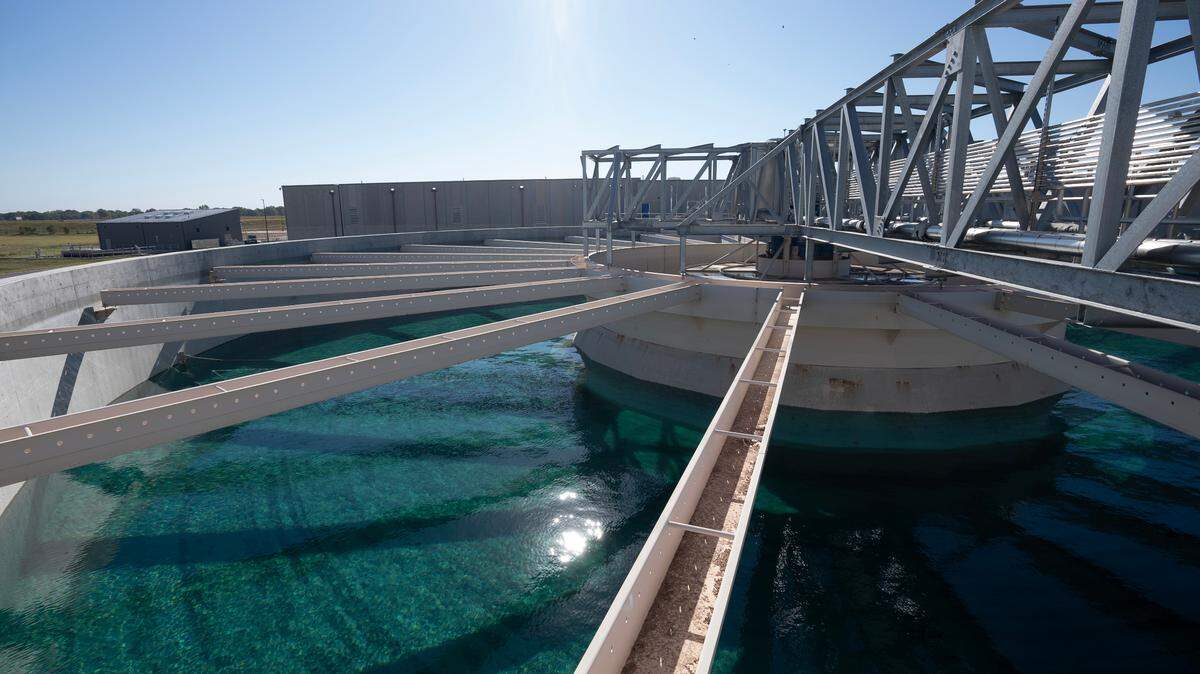
Wichita water and sewer customers can expect to see larger rate increases the next two years than originally anticipated.
The increase is mostly caused by a continued climb in operations and maintenance costs, as well as the expected loss of two wholesale water customers.
The city had been set to increase water rates by 6.17% next year. City Council members heard two new rate increase options at a workshop Tuesday.
The first option would raise rates by 6.23% next year and by 7.04% in 2027, when the city expects to lose $2.5 million as Derby and Valley Center open their own water treatment facilities.
For low-level water users who spend about $62 a month now, that would mean bills would climb $3.67 a month in 2026 and $4.33 a month in 2027.
A second option would level out the increases, with 6.53% next year and 6.88% in 2027.
With that, low-level water users would see a $3.80 a month increase next year and $4.29 a month in 2027.
Wichita’s Public Works Director Gary Janzen said his department recommends the first option for the council’s approval.
“I don’t think everybody fully understands, when they pay their water and sewer bill, what it is going to,” Janzen said. “It contributes to what is in our capital improvement program to be able to maintain, operate and maintain what we have.”
The city has budgeted about $2 billion over the next ten years for capital projects, including the new water treatment plant, the biological nutrient removal facility and updating aging water infrastructure.
The proposed rate increases don’t factor in a number of other issues, including replacing lead and some galvanized steel service lines to meet new federal requirements and revenue losses from the city’s new permanent water restrictions.
That means water and sewer customers may see even more of a jump in rates in future years.
“It’s getting to be a lot,” council member J.V. Johnston said about the rate increases. He noted that an average customer would pay roughly $100 more a year by 2027.
Council members are scheduled to vote on increases in early December.
“Just for the record, I’d keep rates as low as possible,” he said.
Janzen responded: “I would say, just for the record, that this is as low as we can possibly do.”