
Water bills for Wichita customers will be going up. Here’s when and how much
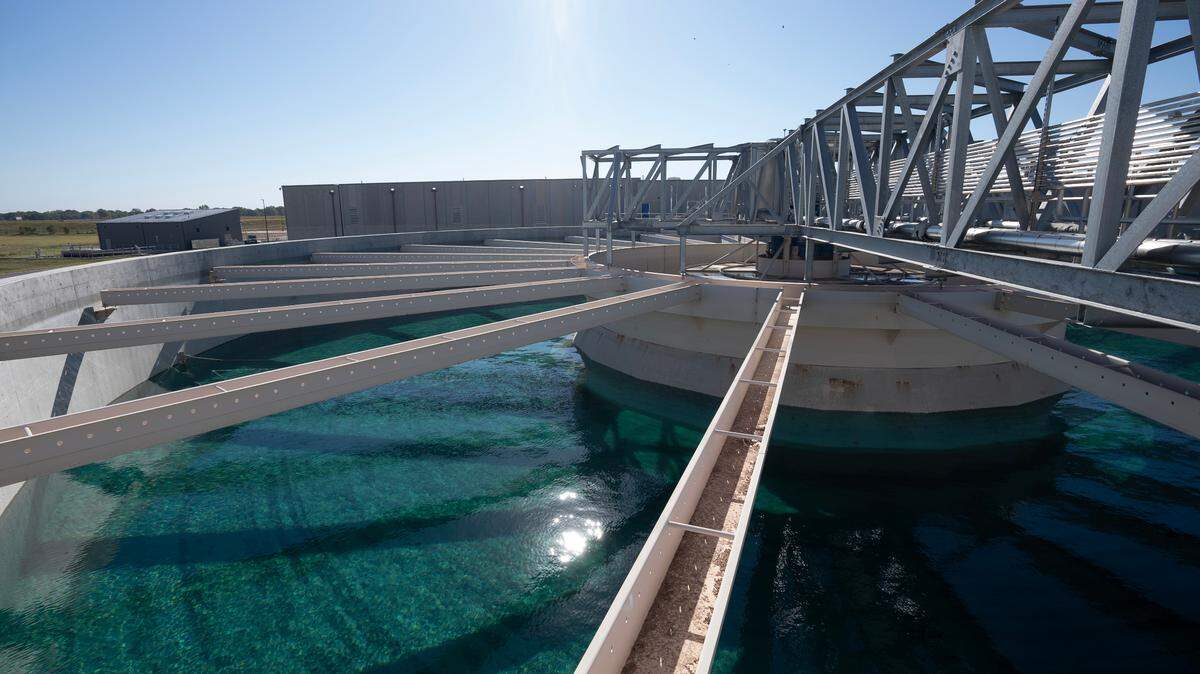
Wichita water and sewer customers can expect to see their bill continue to increase at higher than expected rates as the city’s new water treatment plant comes online.
The City Council approved a combined 6.14% rate increase for next year – which amounts to approximately $3.21 more a month on residential customer bills, according to the city.
However, other fees associated with water use will rise significantly.
Account origination fees, which are added to water customers bills when they first start an account with the city, are currently $34. With the council’s approval, it will now be $53.
Fees also increased for meter maintenance, connection and testing services. Those fees are adjusted every two years, according to Public Works Director Gary Janzen.
“These are for cost recovery only,” Janzen said. “So over the course of two years, we’ve also seen some inflationary impacts here too. These typically are fees that go to contractors that are part of owning a home, buying a home, whatever it might be.”
Fees for when water is shut off because the bill is not paid will increase from $30 to $42. Additional trips for water shutoff increase to $46 from $30.
“Our hope and our recommendation, to everybody, is to come to us before you get to that,” Janzen said. “Let us find a way that they don’t get to that point where they missed paying a bill, and now we’ve got to talk about this whole late fee scenario. We’ll do everything we can to work with them, as long as they get with us ahead of time.”
The council did not approve an increase in how much water and sewer customers are charged for a late payment.
Customers now pay a 1.5% fee if the bill is not paid within 25 days of being issued. Staff proposed that the fee be increased to 5%, which the council rejected.
The council will discuss the fee adjustment at a later meeting, which may also include an option to waive late fees the first time a customer misses a payment.
“I’ve seen people that have margins where they are counting their budget by the cents,” council member Dalton Glasscock said. “[Adding late fees], then they’re choosing to get between medication or food.”
The city of Wichita has been hiking combined water and sewer rates by 5% each year since 2019 as part of a plan to fund nearly $2 billion in infrastructure projects – including the new water treatment plant. The 5% annual increases were supposed to continue to 2029 before dropping to 4% each year until 2034 and 3% from 2035 to 2040.
With inflation, the city is now increasing water and sewer rates by more than 6% annually until 2030, before going back to 5% annual increases through at least 2034. Any increases would require approval by the City Council to take effect.
“Our hope is the 6.14% gets us in a better place going forward, that next year is not another full percentage. That’s not what we think is going to happen right now,” Janzen said. “This bump is necessary, I think, to get us over where that deficit was since 2019 and get us to a better place.”
Low-use residential customers who pay $60 to $70 a month this year would pay $103 to $126 a month by 2034, according to an Eagle analysis of city estimates presented to the City Council earlier this year.
But those rate hike projections by the city don’t account for a number of issues, including revenue losses or operating costs tied to the prolonged drought the city is experiencing.
“The revised rate plan provides only enough coverage to meet the minimum requirement that does not provide a safety net for unforeseen negative circumstances,” Janzen told the council. “But this is not necessarily unusual. This is typically where we’ve been at, what we’ve looked at in the past. I think we feel pretty good with where we’re at.”
The plan also doesn’t account for two of the city’s larger wholesale customers, the city of Derby and Valley Center, to move away from using the city’s water as they build their own water treatment plants in the near future.
The new plant is scheduled to open April 1, six months late, at a cost of $573 million, $20 million over the city’s 2019 budget. The city will continue operating its existing water treatment plant until at least 2026.
This story was originally published December 3, 2024 at 2:07 PM.