
Wichita City Council rejects $400K settlement with developers who they say owe $1.8M
AI-generated summary reviewed by our newsroom.
- Wichita City Council rejected $400K settlement for unpaid $1.8M city loan debt.
- Mayor Wu and majority opposed deal, citing need for financial accountability.
- Developers repaid $717K; city alleges missed payments, broken promises.
The Wichita City Council has rejected a $400,000 settlement with developers who still owe $1.8 million on a $2.5 million city loan from more than a decade ago, sparking debate over taxpayer money and accountability.
Mayor Lily Wu pulled the settlement from the consent agenda — where it was set to be approved with a list of other routine items without debate or public comment — and forced a discussion and a separate vote on the item after The Eagle reported the specifics of the arrangement that had not been included in the city’s agenda report.
“I cannot vote for this because I cannot see myself giving up on principle,” Wu said Tuesday. “I don’t believe the individuals are being held accountable to the fullest extent.”
Council members Maggie Ballard, Dalton Glasscock, Mike Hoheisel and Becky Tuttle joined Wu’s opposition while Brandon Johnson and J.V. Johnston voted in favor. Johnson and Johnston argued that $400,000 is better than nothing.
“I think we’re at a point now where we have to make a business decision,” Johnston said. “Do we want to roll the dice, go to court, spend more money and possibly get zero, or do we want to take what we can get under arbitration and take the $400,000? If we vote this down and get zero, then people on this council are responsible for not getting $400,000 taxpayer money back.”
The city of Wichita filed a lawsuit against Old Town developer David C. Burk, Key Construction owner David E. Wells and H.H. Holding LLC in 2023 alleging broken promises and missed payments related to a redevelopment agreement for the Ken-Mar shopping center. The agreement to repay was held together by a verbal agreement by Burk and Wells, according to the city’s legal filings.
Under the proposed settlement, the city would have received $400,000 — more than $1.4 million short of what the city said in court filings and again on Tuesday that it was still owed. In exchange, the city would have dismissed the lawsuit against Old Town developer David C. Burk and Key Construction owner David E. Wells.
The settlement would leave H.H. Holding LLC on the hook for more than $1 million. The company, however, is dormant and has no assets or income.
Johnson, who was the designated council member involved in negotiating a mediated settlement, moved to approve the settlement, citing concerns that the courts could end up putting the full debt on H.H. Holding, instead of Burk and Wells in their individual capacities, giving the city no chance to recoup any of the money.
“There is a business that has no financial revenue coming in or financial worth at the moment that is named in the suit,” Johnson said. “And if we were to go to court — and even win — we could win, and people would feel good about winning. But there are no assets with that business. This is an opportunity, with the principals of the business, to receive, while it is low compared to what’s owed, $400,000 that is guaranteed.”
Glasscock pushed back.
“I believe that we should fight, and I think we owe it to the taxpayer to be able to fight for this,” Glasscock said. “To take any nominal amount — I don’t think that’s justification for a bad settlement deal.”
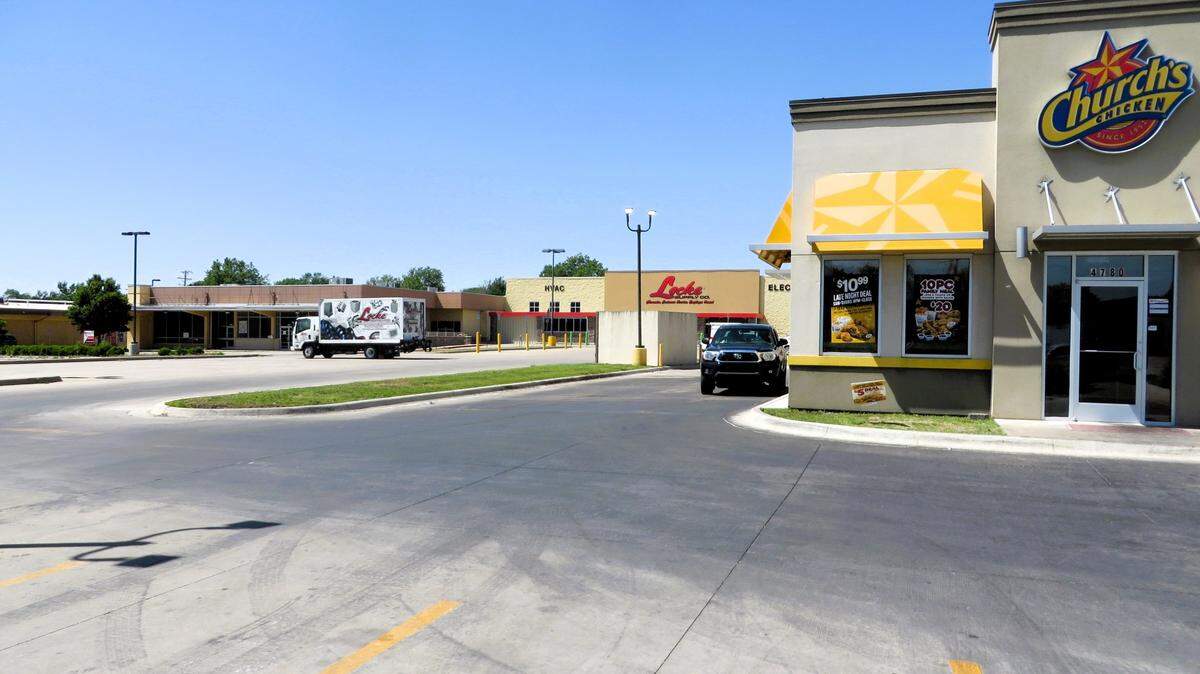
Wichita gave the developers a $2.5 million loan in 2011 to purchase and redevelop the Ken-Mar shopping center on the northwest corner of 13th and Oliver. Instead of redeveloping the site, the developers sold the property to Walmart for $2.4 million.
None of that money went back to the city, according to the lawsuit. Walmart opened a neighborhood market in 2012 and closed it in 2016.
H.H. Holding LLC, a Kansas limited liability company created for the sole purpose of developing Ken-Mar that was temporarily dissolved in 2022, is owned by Burk and Summit Holdings LLC. Summit’s principal owners are Key Construction owners David E. Wells and Kenneth A. Wells and Key Construction CEO Richard R. McCafferty, state business filings show.
Wells, a partial owner of H.H. Holding through another LLC, told the city in a 2022 email that the business was insolvent with no income or assets, court filings show.
Under the original development agreement, the city was supposed to use tax increment financing, which would capture new property taxes in the area to pay for the incentives. But the city did not issue TIF bonds for the site and instead gave the developers a direct loan of $2.5 million that the city labeled a “TIF Loan” in city documents.
The city said in the lawsuit that Burk and Wells “made oral representations to the City” that they would continue making payments at 3% interest through 2029.
The developers repaid the city $717,000 from 2013 to October 2019 but stopped responding to invoices after that, the city says.
Despite the stop in payments, the City Council continued to approve more public incentives and development agreements with the same developers, including large projects in Riverside and near the city’s new baseball stadium.
The city said in its lawsuit that the developers paid through 2019 to “maintain a standing performance record with the City that would enable their numerous incentive applications for other projects to successfully pass through the City’s vetting process.”
In 2022, Wells informed the city that the developers would no longer pay, according to an email attachment the city included with its lawsuit.
They stopped paying “because they had already secured the desired benefits for their other projects with the City,” the city’s lawsuit says.
Lawyers for Burk, Wells and H.H. Holding have not responded to requests for comment.
In court filings, the developers have largely denied the city’s claims and said the city’s interpretation of the agreement did not “completely and accurately reflect the obligations of the parties to the Development Agreement.” They also said the city failed to hold itself to the original development agreement by not issuing TIF bonds.
Wu said standing up for the city is worth the risk of losing in court.
“While the chance of possibly getting zero could be there, as this would go to trial, I don’t believe that this sends the message about how we work with individuals who want to do public-private partnerships with the city of Wichita,” Wu said. “So I cannot incentivize someone for doing bad.”
Hoheisel agreed.
“I haven’t had a single constituent reach out about settling this in . . . favor,” he said. “Just about to a person, everyone has reached out and said that they prefer us to fight. Some of them have even said, I’ll gamble $400,000 for $1.8 million. I don’t know if that’s actually what we are capable of retrieving, but it’s the taxpayers’ funding. It’s the taxpayers’ money.”
This story was originally published May 20, 2025 at 2:00 PM.