
New Wichita water plant will be more expensive to operate than planned; rate hikes expected
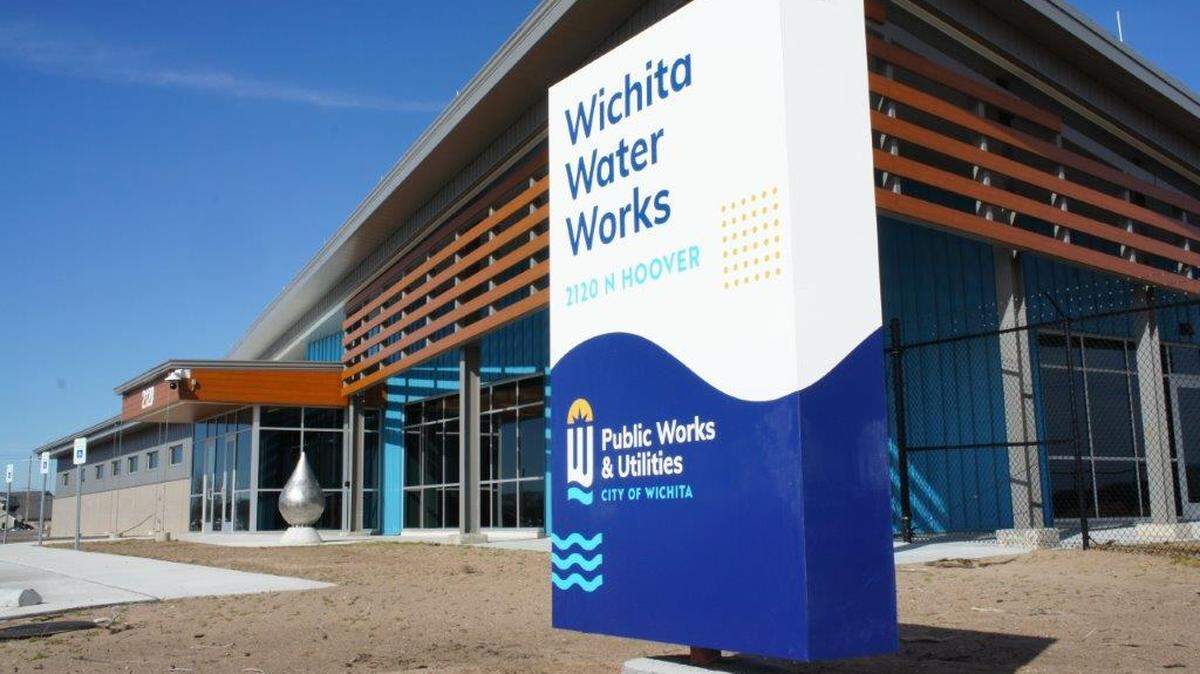
Wichita water customers should brace for higher-than-expected rate hikes over the next decade as the cost of operating a new water treatment plant outpaces the city’s budget.
City projections show water and sewer bills increasing by more than 70% over the next 10 years to pay for the new plant and other major infrastructure projects. Low-use residential customers who pay $60 to $70 a month this year would pay $103 to $126 a month by 2034, according to an Eagle analysis of city estimates presented to the City Council during a work session on Tuesday.
And those projections could be on the low end of what to expect.
The new plant — Wichita Water Works — is scheduled to open April 1, six months late, at a cost of $573 million, $20 million over the city’s 2019 budget. The city will continue operating the Main Water Treatment Plant until at least 2026.
Gary Janzen, director of Public Works and Utilities, said the projections don’t account for revenue losses or operating costs tied to a prolonged drought, which the city is currently experiencing. They also don’t include the impact of two Wichita wholesale customers — Derby and Valley Center — moving away from Wichita water by building their own water treatment plants in the near future.
Also missing from the projections are additional costs associated with meeting future EPA regulations for lead, copper and forever chemicals, also known as PFAS.
Janzen said inflation is largely driving the need for more drastic rate hikes, while other miscalculations by the city have exacerbated a rate plan developed in 2019. The city’s budgeting model expected 3% annual inflation for operations and maintenance throughout the 2020s, but it has jumped to 10% over the past three years, Janzen said.
Annual costs for chemicals at Wichita Water Works are expected to increase by $721,000 next year — $452,000 more than the city had planned. Energy costs are expected increase by $900,000 next year — $300,000 more than expected.
Operation and maintenance at Wichita Water Works is expected to cost about $1 million more this year and $1.2 million more next year than was originally budgeted. Last week, the City Council approved a nearly $1.3 million contract with Operational Technical Services to temporarily outsource some of the jobs at the new plant amid hiring difficulties.
“This plant was designed and built to save on capital costs,” Janzen said Tuesday. “We did everything we could, because of the size of this project, to keep capital costs down. While this is a new plant, new innovation, there’s new technology — that doesn’t mean that it takes less people.”
“We’ve come to find out, over time, that we’re going to need more staff than we’ve got now to make sure we keep this plant moving forward, especially during the first couple of years,” Janzen said.
Planned increases
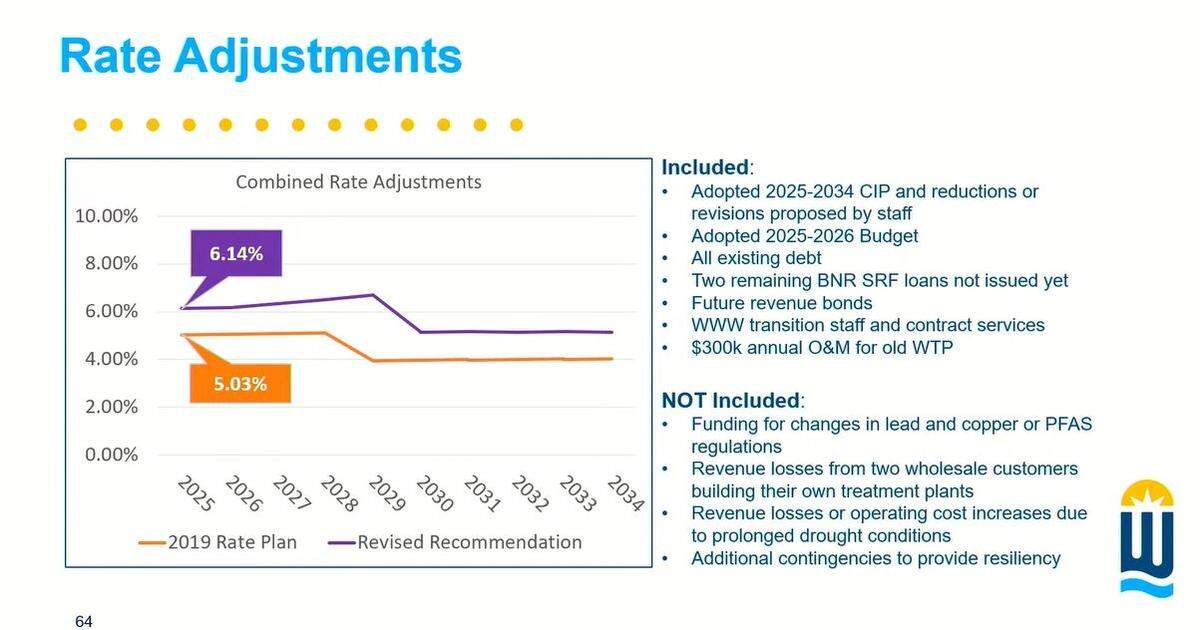
The city of Wichita has been hiking combined water and sewer rates by 5% each year since 2019 as part of a plan to fund nearly $2 billion in infrastructure projects. The 5% annual increases were supposed continue to 2029 before dropping to 4% each year until 2034 and 3% from 2035 to 2040.
Instead, the city now has proposed increasing water and sewer rates by more than 6% each year until 2030 before going back to 5% annual increases through at least 2034. Any increases would require approval by the City Council to take effect.
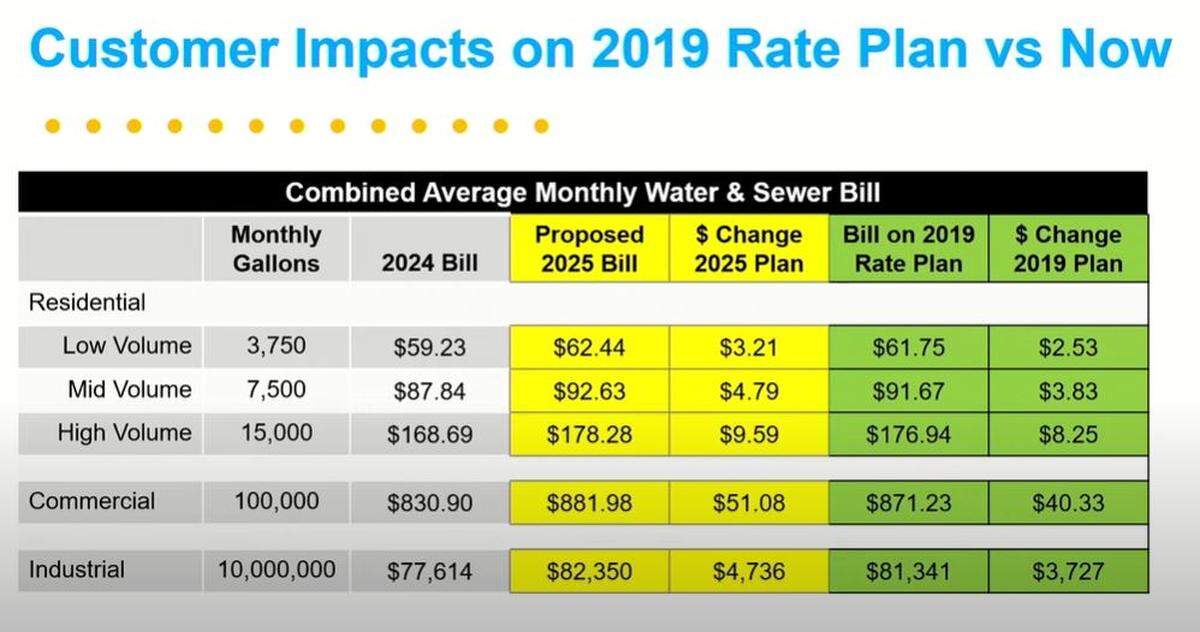
For residential customers next year, monthly bills would increase by more than $3 a month for low-volume users, almost $5 a month for mid-volume users and about $10 a month for high-volume users. A commercial water customer using 100,000 gallons a month would see a $51 increase on their monthly bill while an industrial customer using 10 million gallons a month would see a $4,700 monthly increase.
The city also is considering increasing late fees from 1.5% to 5% of the unpaid balance to offset some of the costs.
“Those who are not paying on time, those costs are being shifted to our good customers, right — those who are making payments on a regular basis,” City Manager Robert Layton said. “I like this idea of a late-fee-percentage increase so that we can discourage that and not have that burden fall on our regular ratepayers.”
To minimize rate hikes, Janzen said, the city is delaying some projects, spreading some over multiple years and cutting some funding for future infrastructure projects.
Other considerations
Mayor Lily Wu said the city should keep a close eye on cost recovery, especially when it comes to providing water to wholesale customers that pay higher rates for Wichita water, including the cities of Andover, Bel Aire, Benton, Derby, Kechi, Park City, Rose Hill and Valley Center as well as Sedgwick County rural water districts 1 and 3 and a rural water district in Butler County.
“I think when we talk about, whether it’s parking downtown, cost recovery has to be part of the conversation so that folks understand that there is a cost to maintain a lot of this infrastructure,” Wu said.
Another rate-hike driver is having enough money to cover debt payments. To keep the Water and Sewer Utility’s AA- credit rating, the city must have revenue at or above 120%. Under the 2019 rate plan, the city would have fallen below 120% by 2027, Janzen said.
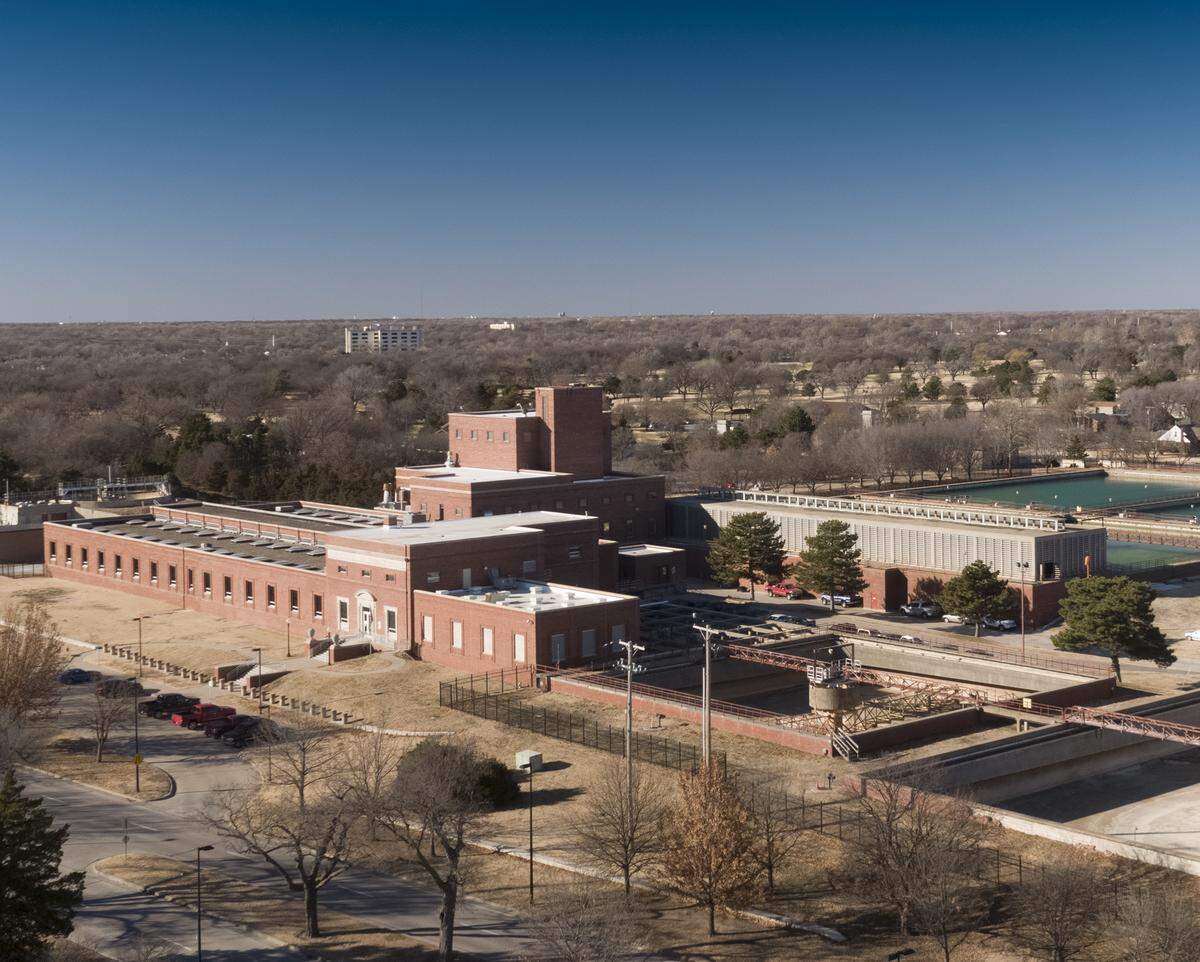
An additional future cost — or savings — could come in 2026, depending on what the City Council decides to do with the existing water treatment plant once the new Wichita Water Works comes online. The City Council already has budgeted $27 million for capital costs at the Main Water Plant and $300,000 a year for upkeep.
City staff presented seven options to the City Council on Tuesday that range from $8 million, which it what it would cost to leave it sitting, to $75 million, which is the cost to demolish.
The option recommended by staff would keep the Main Water Treatment Plant in case of emergency to deliver treated groundwater within one or two days of an outage. It would cost $15 million to $20 million over the next 20 years in capital investment, operations and maintenance.