Spread, moneyline, props, the vig? Here are terms to know in sports betting
READ MORE
Money on the line
Sports betting is illegal in both Kansas and Missouri, although legislators in both states have pushed to change that for years. But lawmakers in Kansas think this might be the year. And in Missouri, professional teams are pursuing two tracks of legalizing gambling.
Expand All
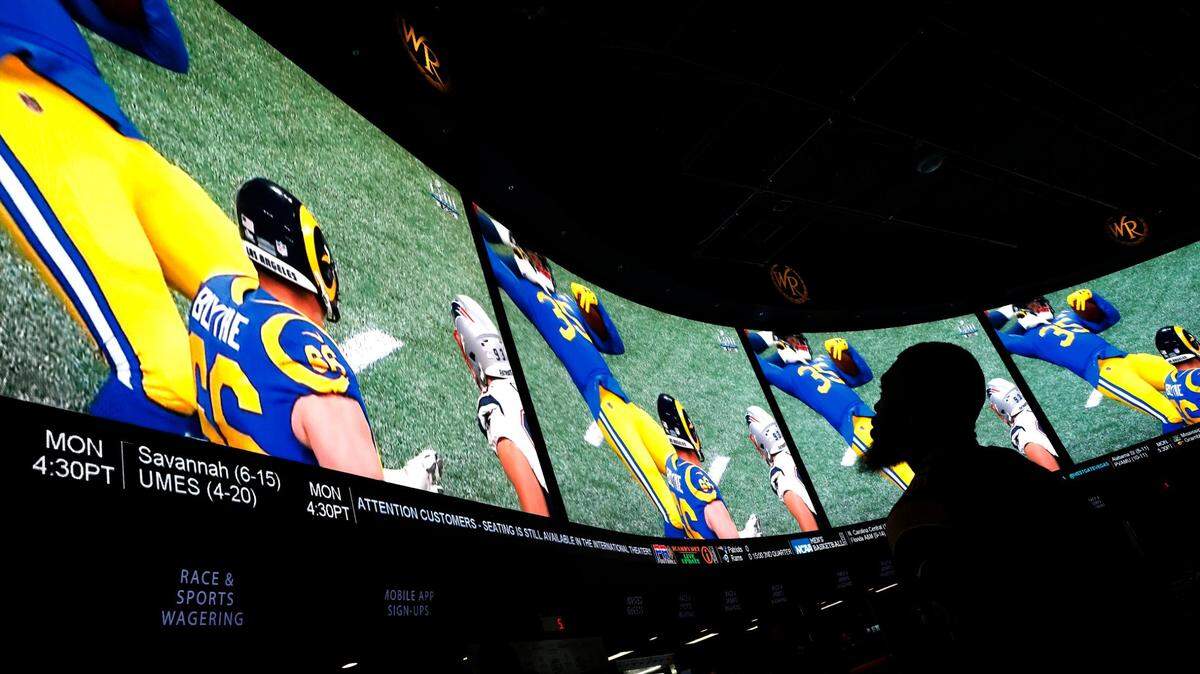
Chiefs, Royals and Sporting KC want sports betting. Will Kansas, Missouri make it legal?
Spread, moneyline, props, the vig? Here are terms to know in sports betting
Betting on the Super Bowl? Here are the odds - and some wacky prop bets on offer
What is sports betting? It’s not legal in Kansas but we’ll explain anyway
If you want to bet on sports, you need to know how it works and some key terms so you don’t come off looking and sounding like a chump — or worse, making a bet you didn’t intend to make and losing.
Here’s a handy guide to how the game is played and how to talk the talk at a sportsbook.
Sportsbook
This is simply a business, legal or illegal, that takes bets on sports. It can be a special section of a casino where live sports bets are made; or online, where the money passes back and forth in electronic transactions.
The sportsbook handles the money, pays off the winners from the money bet by from the losers, and takes a little off the top as a fee for providing the service (see “vigorish” below).
Point spread
This is also called “the spread,” or “the line.”
Sports teams are not created equal. In almost every contest, one team has a better chance to win than the other.
To compensate for that, sportsbooks establish a “spread” or “line” for each game.
This is the number of points a particular team has to win by (or lose by) for the bets on that team to pay off.
Now, people tend to think that the spread is the number of points the experts expect a team to win by.
It’s usually pretty close to that, but it goes a little deeper. It’s actually a number carefully calculated by the sportsbooks to entice bettors to bet roughly equal amounts of money on both sides, which reduces the sportsbook’s risk.
Here’s how it works from your perspective as a bettor:
For example, during the runup to the Jan. 30 AFC championship game, the Kansas City Chiefs were a 7-point favorite over the Cincinnati Bengals.
If you bet the spread on the Chiefs, you were betting that they’d win by more than 7 points. If you bet on the Bengals, it was a bet that even if they lost, they’d lose by less than 7 points.
If the Chiefs won by exactly 7, that would have been a “push” and all the bettors would have gotten get their money back.
Betting lines often are set on the half point. In that case there’s no chance of a push happening.
The spread can and does change right up to game time, depending largely on how much is being bet on each team in the days and hours leading up to the game. But once you’ve plunked down your money, the point spread you bet is the point spread you get.
Professional gamblers watch the spread closely and try to time their bets to take advantage of trends in the movement of the line.
Covering the spread
In our Chiefs-Bengals example, the Bengals pretty much shocked the world by winning the game outright 27-24, so the spread wasn’t really an issue. If the Bengals had lost, but lost by six points or less, they’d have “covered” the spread. Conversely, if the Chiefs had won by eight or more, they’d have covered.
Giving (or taking) the points
This one is easy: If you bet on the favorite, you’re “giving” the points. If you bet the underdog, you’re “taking” the points.
This is sometimes expressed as a plus/minus.
In the example above, if you bet on the Chiefs, you could tell your friends you had the Chiefs -7. If you bet the Bengals, it would be Bengals +7.
Pick ‘em
Occasionally, two teams are so evenly matched that the point spread is zero. This is called a “pick ‘em,” game, sometimes shortened to just “pick” and often abbreviated as PK on the betting line.
Moneyline bet
The moneyline is another way that sportsbooks even the odds between unevenly matched teams to draw in money from both sides.
On a moneyline bet, you pick one team to win outright and the payoff is potentially bigger if you bet on the underdog, which is identified by a plus sign.
If your team’s the favorite, denoted with a minus sign, the payoff will be smaller.
For example, last week’s game day moneyline on the Chiefs and Bengals was Bengals +275 and Chiefs -340.
What that means is a $100 bet on the Bengals won $275. Plus you’d get your original bet amount back for a total payout of $375.
A Chiefs win (if it had happened) would have paid off only $29.41 on a $100 bet, for a total payout of $129.41.
As with the point spread, the moneyline fluctuates in the lead-up to a game.
Pro gamblers watch for trends in the movement of the moneyline and try to place their bets when they think they can get the biggest payoff.
The over/under
In addition to bets on the outcome of the game, it’s common for sportsbooks to also offer the opportunity to bet on the total points scored in the contest.
This is called the over/under, O/U or Total.
In an over/under bet, it doesn’t matter who wins, just the two teams’ scores added together.
In our Chiefs/Bengals example, the over/under was 54.5.
The total points scored by the two teams was actually 51, so if you bet the under, you won. If you bet the over, you lost.
It’s that simple.
Prop bets
These are wagers that don’t depend on the final score of a game. Some common prop bets in football might be how many yards a quarterback will pass for, or who’ll score first, or whether a particular player will score a touchdown.
But the possibilities are endless. In the upcoming Super Bowl, you could bet on the pre-game coin flip, how long it takes to play the National Anthem or even what color Gatorade will be dumped on the winning coach on the sidelines.
Prop bets can be placed before or during a game, often using online or mobile betting apps.
The handle
This is the term for the total amount bet on a sporting event on both sides.
Vigorish
Also called “the vig,” “the juice,” “the cut,” “the take” or “the rake.”
Whatever you call it, this is the share of the handle that the house keeps for running the game.
Sportsbooks aren’t nonprofit organizations, and whatever kind of bet you make, the vig is baked into the odds and payoffs.
For example, a typical point spread or over/under bet might have a vig of -110.
This means you’d need to bet $110 to win $100, with that extra $10 going to the house.
The vig can vary from game to game, platform to platform and state to state (largely based on the amount of revenue the state takes from the game).
Big betting sites disclose the vig as an unlabeled number in a different color, alongside or under each bet in the spread and total lines.
It’s expressed as a negative number, such as -110, but it can range higher; -125s are pretty common. What you need to know is the closer that number is to -100 (an even bet), the less the house is taking as its cut and the bigger your payoff will be if you win.
On moneyline bets, the vig is baked into the plus and minus lines. The plus moneyline is always smaller than the minus moneyline; that difference is the vig. The smaller the difference, the lower the vig.
If you want to know the exact percentage, there are online calculators you can use to figure it out.
Casual “for fun” players seldom pay much attention to the vig. They’re just happy if they win.
Pros shop around for online sites that have the lowest vig.
Parlay
This is a series of bets combined into a single multi-part wager, generally called a “card.”
It can involve bets on several games, or several prop bets within a game.
If you lose any of the bets, you lose all the money you played. But if you win them all, you can win a phenomenal amount of money on a small bet.
Sportsbooks are happy to sell you parlays, because they’re really hard for the player to win and thus more profitable for the house.
A parlay wager was at the heart of the plot in the Adam Sandler movie “Uncut Gems.” Spoiler alert: It didn’t end well.
Futures
These are long-term bets, the outcome of which won’t be known for a while. The most common example is betting on your favorite team to eventually win the championship.
While they’re long shot bets at best, the payoff can be huge because the initial odds are high.
Before the current NFL season started, the Bengals were a +12000 long shot to win the Super Bowl — only three teams had longer odds. So a mere $10 bet on them then would win $1,200 if they win next week.
The Rams, who were perceived as a much stronger team, had a preseason moneyline of +1500 to win the championship. So if you bet $10 on them at the beginning of the season, you’d win $150.
Pro tip: Seasons are long. If you bet futures in a casino, make sure you put your betting slip somewhere safe and that you don’t forget where it is.
Bookie
Short for bookmaker. Technically, all sportsbooks could be called bookies because they book bets.
But with legal sports wagering blossoming across the nation, the term is now usually reserved for local operators booking bets illegally, or sometimes overseas online operations that will book your bet regardless of whether it’s legal in your state.
While legal sports betting has cut into their business, illegal bookies can still find players by giving higher payouts, which they can do because they don’t have to share their revenue with the state. They may also book bets on games that legitimate sportsbooks are prohibited from offering, such as high school sports.
Editor’s note: Anyone who needs help with a gambling problem can call or text a national hotline at 800-522-4700 or go to www.ksproblemgambling.org, the website of the Kansas Coalition on Problem Gambling.
This story was originally published February 6, 2022 at 4:30 AM.
CORRECTION: An explanation of plus and minus in point spread betting has been corrected.