
Wichita passes nondiscrimination ordinance, rejects religious carve out
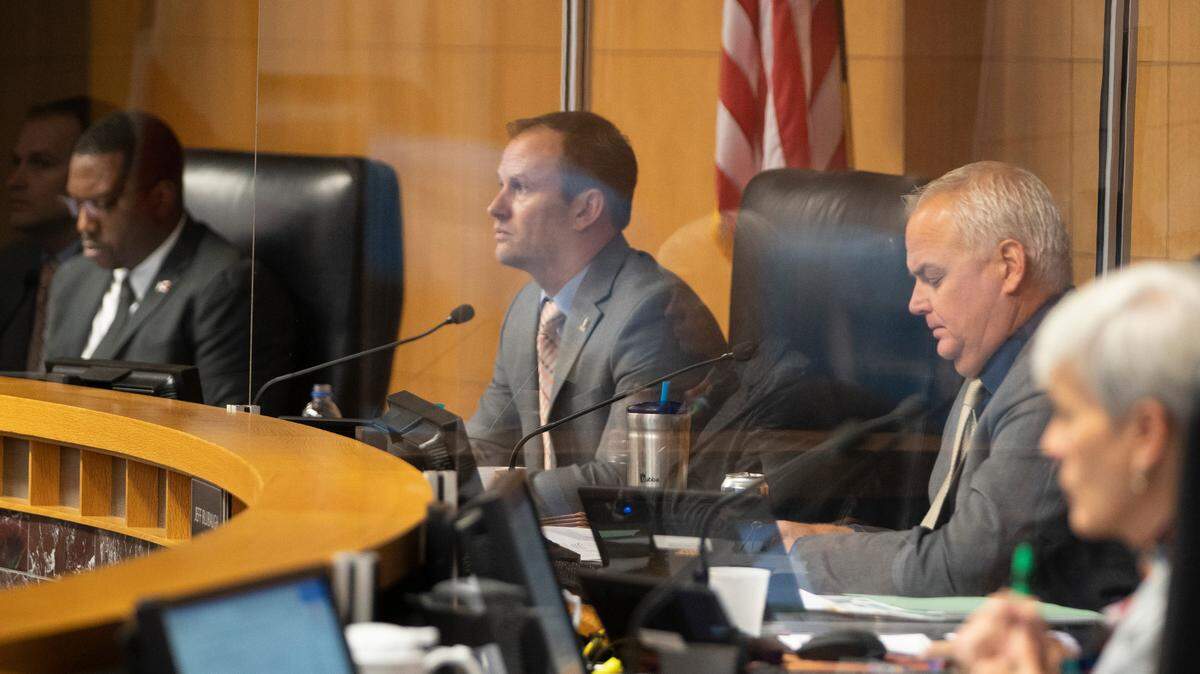
After four months of delays, the Wichita City Council passed a nondiscrimination ordinance Tuesday aimed at banning discrimination in housing, employment and public accommodations.
The council voted 6-1 to approve the ordinance, with Jeff Blubaugh voting against.
The council also rejected a carve out that would have allowed religious groups to fire or refuse to hire LGBTQ+ individuals at will, an amendment proposed by City Council member Jared Cerullo, the first openly gay man to serve on the council.
Cerullo said he proposed the amendment to help bridge the divide between religious groups who oppose the ordinance and those who wanted it to pass. But City Council members Becky Tuttle and Cindy Claycomb said the amendment would “dilute” the entire ordinance.
Passage of the ordinance signals a major policy win for Mayor Brandon Whipple, who promised the change during his 2019 campaign and brought the proposal to the council in June. It also deflates some of the campaign messaging targeting Claycomb’s re-election. Her opponent, Maggie Ballard, has criticized Claycomb for wavering on the nondiscrimination ordinance and voting to stall the process over the summer.
The nondiscrimination ordinance seeks to prohibit discrimination based on age, color, disability, familial status, gender identity, genetic information, national origin or ancestry, race, religion, sex, sexual orientation, citizenship, veteran status or any other factor protected by law.
Several speakers were critical of last-minute changes to the proposal, which was put on pause in July so the the Diversity, Inclusion and Civil Rights Advisory Board could weigh in on the ordinance.
As part of that process, the city also paid the Kansas Leadership Center nearly $18,000 to hold host public meetings on the ordinance and prepare a report on the feedback received.
The most recently approved version of the ordinance, passed on first reading July 7, allowed religious groups to discriminate in employment practices when an employee was directly involved in fulfilling the organizations’ religious mission.
The city’s civil rights board — in a 9-1 vote — recommended several changes that sought to strengthen protections for protected classes.
Cerullo added an amendment that would expand the religious group exemption to fire or refuse to hire any LGBTQ+ employees, including those who work in primarily secular jobs such as cleaning offices, truck driving or food service.
One of the chief opponents of the nondiscrimination ordinance was Cerullo’s appointee on the civil rights board, Pastor Dionae Gates. He was the lone objector to the ordinance on the advisory board and said he worried that the motivation for the change in law was tailored towards advancing business interests, economic impact and perception, not civil rights.
“My concern for that is that it then puts those who would be protected, those protected classes, in a position to be commodified, objectified and used, I think, as a bridge to then move some other agendas along as opposed to really being concerned about those in those protected classes,” Gates said.
Twice during the marathon meeting, Whipple called a 10-minute break to restore order in the council chambers.
The first time, at 10:50 a.m., Gates interrupted speaker James Barfield, whom the mayor had allowed to speak for nearly twice the five-minute limit.
Barfield, president of Kansas Advocates for Racial Justice and Equality, speech focused largely on the economic consequences of discrimination in North Carolina. Gates interrupted as Barfield unleashed on past opposition to civil rights by Christian organizations.
“We’ll start with freeing Black slaves in America, allowing women to vote, allowing Blacks to vote, racial integration, gay equality, religious freedom of non-Christian religions, women’s rights to health choices, freedom of speech, and this is just the short list,” Barfield said.
The second break came after Council member Bryan Frye lambasted Whipple for reading a Wichita Eagle guest column by religious leaders who support the nondiscrimination ordinance into the meeting record.
“I buzzed in because I was going to read from the hundreds of emails I have received from people on both sides of the issue, but I realize that’s not fair to all those people that emailed and all those people that showed up today,” Frye said to Whipple, to applause from several objectors seated in the audience.
“So what you just did, I think, is very unfair, and you should have not done that.”
Whipple asked Frye to avoid personal attacks from the bench and called a 10-minute recess at 12:05 p.m.
Under the ordinance, the city will begin accepting complaints on Jan. 1, 2022.
This story was originally published October 12, 2021 at 1:23 PM.