Wichita looks to install two dams, remove nearly 500 acres from flood plain
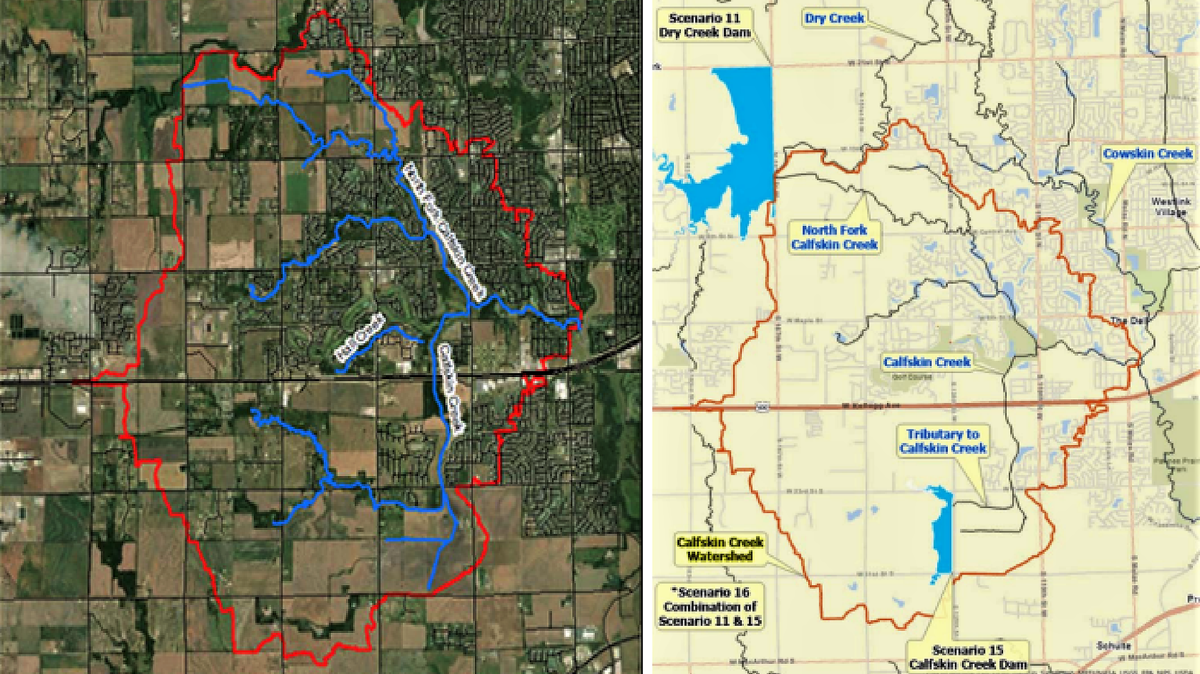
In a move intended to remove 212 homes and nearly 500 acres from a flood plain in west Wichita, the City Council unanimously voted Tuesday to seek federal funding to install two dams.
The area in question starts at Calfskin Creek west of Maize Road and extends for four to five miles east and three to four miles north and south of Kellogg.
After the dams are in place, the homes would no longer be in the flood plain and residents would no longer have to buy flood insurance, said Don Henry, assistant director in public works and utilities.
“As west Wichita continues to grow, having this opportunity to potentially get nearly 500 acres out of the flood plain and allow it to be developable will certainly be a boon to the city’s growth,” said Bryan Frye, City Council member.
The Calfskin Creek Watershed is a 17.5-square-mile area filled with homes, commercial developments and agriculture. Although the Calfskin Creek and its tributaries make the area prone to flooding, an increase in rainfall has made the problem worse, Henry said.
Wichita has added an average of 5 inches of rain annually since the 1970s, according to National Weather Service data. Additionally, the number of days where Wichita receives 1 inch or more of rain has increased from seven or eight days in the 1970s to 10 or 12 days, according to Andy Kleinsasser, a NWS meteorologist.
An increase in frequency and intensity of rainfall is one of the ways climate change is affecting Wichita.
“Over the years there has been a perception that flooding has become more intense and more frequent in the basin,” Henry said. “There was a perception that upstream development could be driving some of that change and so a number of complaints and remarkable events . . . compelled staff to carry out a study and better understand the dynamics of the basin.”
Their research found that installing two dry detention dams, one at 167th Street between 13th Street and 21st Street and one near 135th and Pawnee, would be most beneficial.
“An estimated 458 acres would be removed from the 1% annual chance floodplain and could create potentially developable land with a significant economic impact,” Henry said. His team estimates it will open up $5 million worth of land to developers.
The cost for the two dry detention dams is $40 million. If Henry and his team are able to secure a federal grant through FEMA, that would offset 75% of the costs. The last $10 million would be split evenly between the city and county governments.
This story was originally published September 15, 2021 at 4:09 AM.