Wichita is selling guns seized in crimes but receiving less than half of the proceeds
READ MORE
The sale of seized guns by the city of Wichita
More than 2,000 firearms have been sold by City Hall since 2015, when it held its first gun sales in compliance with the state law that was passed a year earlier.
Expand All
Wichita is selling guns seized in crimes but receiving less than half of the proceeds
A police chief’s nightmare: Gun sold at auction used by buyer to shoot at officers
See what firearms seized in crimes have been sold by the city of Wichita since 2017

Dion Lefler talks about how he went about reporting the story
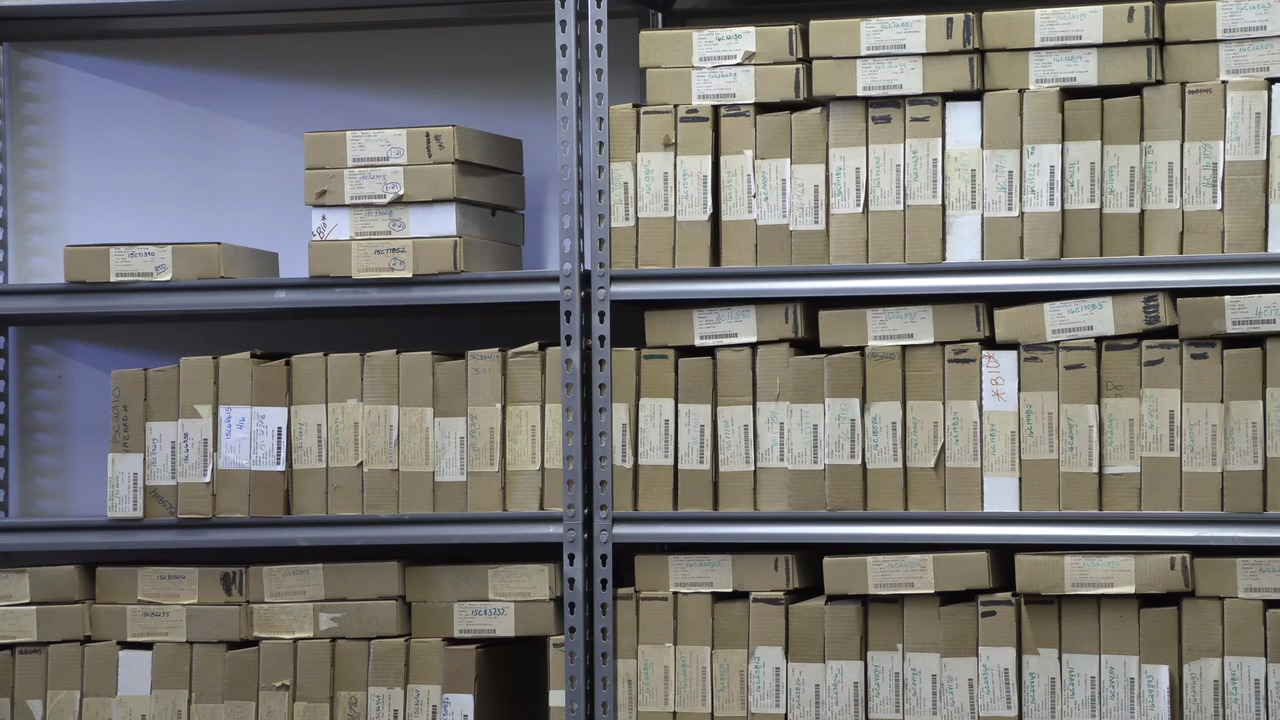
See inside the Wichita Police Department’s gun locker
Six years after the state Legislature mandated that nearly all guns used in Kansas crimes be sold back to the public, the city of Wichita has become a substantial gun dealer, selling an average of about 400 firearms a year online — but receiving less than half of the proceeds.
More than 2,000 firearms have been sold by City Hall since 2015, when it held its first gun sales in compliance with the state law that was passed a year earlier.
The guns, seized from robberies, drive-by shootings, drug deals and myriad other offenses and investigations, are sold through an online auction site.
Supporters say selling the guns is no different from disposing of any other surplus city property and safeguards are in place to ensure they’re only sold to law-abiding citizens through a licensed dealer.
Opponents say local government shouldn’t be in the weapons business at all and that there’s no guarantee the guns won’t find their way back to the criminal element through private person-to-person sales and “straw purchases,” where potential buyers who can’t pass a background check enlist a friend with a cleaner record to take delivery.
Since 2015, Wichita’s gun sales, totaling 2,082 weapons, have generated $196,000 for a fund that pays for miscellaneous police equipment.
However, the middlemen who transact the sales got more than half of the $425,000 in total sale proceeds, according to an analysis of records that The Wichita Eagle obtained through the Kansas Open Records Act.
Since it started selling guns, the city has conducted all its sales through a company called Propertyroom.com, which has a partnership with a major gun retailer that operates an online auction site for firearms and ammunition.
The city finance director said officials last took proposals for the gun contract two years ago and renewing Propertyroom’s deal was the best offer they got.
What kind of guns?
Firearms seized by police and sold by the city run the gamut from cheap Saturday night specials to prized collectibles.
In terms of capability, they range from flintlocks that would have been familiar to a Revolutionary War soldier and cap-and-ball revolvers that would be at home in a Clint Eastwood spaghetti western, to modern high-firepower pistols and semiautomatic assault rifles including Colt’s AR-15 and Chinese-made Norinco knockoffs of the Russian AK-47.
There are no public records kept of who purchases the guns.
But since 2017, the police have kept electronic records showing the type of each gun sold, the caliber or gauge, the serial number, purchase price, and the amount of revenue split between the dealers, the credit card companies and the city government.
Those records show that the cheapest gun the city sold was $1, for an EIG V22 pistol that netted Wichita 47 cents. It’s a cheaply made Italian import revolver that shoots tear-gas cartridges or blanks.
The second-cheapest gun on Wichita’s list — which sold for $5 with $2.35 going to the city — was a similar model by the same manufacturer that could shoot .22 bullets.
The most expensive gun sold by Wichita was a Colt Python .357 Magnum revolver, which fetched $1,875.88 at auction.
The Python was Colt’s top-of-the-line revolver from 1995 to 2005 and highly coveted by gun collectors, who often paid $2,000 to $3,000 for one until Colt started making more last year at a list price of $1,499.
The guns sold out of Wichita’s evidence locker skew heavily toward the cheaper end of the firearms spectrum.
The average price per gun runs just more than $200, of which the city gets back $94.
So while Wichita has made $196,000, the private companies processing the transactions and credit card companies made $221,000.
Of 1,382 guns sold since the end of 2016, 484, or 35%, sold for $100 or less.
Two-thirds of the guns sold put fewer than $100 in the city’s coffers.
The city’s gun offerings also skew heavily toward handguns.
In the past 4 1/2 years, slightly more than 77% of all the guns sold were semiautomatic pistols and revolvers.
Shotguns made up about 13% of the total and rifles a little less than 10%.
To sell, or not to sell
At the heart of the matter is a clash of cultures.
On one side are those who believe that guns are a tool like any other, blameless for the crimes they were used in and that there’s no problem with a city selling them off like any other surplus property.
On the other side are those who feel it’s unsafe and unseemly for city government to put guns back on the street — often at deep-discount prices — when they’ve already been used to commit crimes.
Sedgwick County Commissioner Jim Howell wrote the law mandating that crime guns be auctioned off rather than destroyed, when he served as a state legislator in 2014.
“There’s a thought out there that guns themselves are the problem,” Howell said. “Let me just say this, when the government collects property from whatever policing that they do, they end up with stuff. Generally that stuff has value and they typically eventually sell what they don’t have a need for any longer.”
He said guns are no different than selling off cars, jewels, watches and gold seized from drug dealers.
“The very same people purchasing these guns through online websites or whatever it is, they ultimately have to be background checked and the actual deal is done by a local FFL (federal firearms licensed dealer),” he said. “You could go online and buy a brand-new firearm as long as, again, it’s delivered and the deal is essentially brokered by an FFL.”
Howell argues that more access to guns is good for society.
“Most guns purchased by law-abiding citizens are never used in crime and they serve a purpose,” Howell said. “They serve the purpose to protect the public.”
Kansas is one of at least a dozen states prohibiting the destruction of marketable firearms. Most passed their laws about the same time as Kansas, when the National Rifle Association was pushing it as a legislative priority.
The Kansas mandate that confiscated weapons be sold back to the public was part of 2014’s House Bill 2578.
The bill started out as a measure to keep local police from delaying transfers between private owners of machine guns and other special-permit weapons
It ended up as a collection of pro-gun ideas that were cobbled together by a House-Senate conference committee in the waning days of the regular session.
Police gun sales didn’t get much attention at the time because other parts of the bill included a prohibition on local regulation of firearms by city and county governments, a ban on gun buy-back programs and provisions to make it easier for public employees to carry weapons at work.
Some Democrats tried to block the bill at the committee stage, but in the end, it sailed through with a bipartisan vote of 37-2 in the Senate and 102-19 in the House.
One of those voting for the bill was Brandon Whipple, then a Democratic state representative and now the mayor of Wichita.
“I was pretty new in the Legislature when some of these bills came through,” Whipple said. “Looking forward on what type of impact they had, you know, it was more just trusting those folks who were there longer.”
Among the “no” votes were Wichita Democratic lawmakers Rep. Gail Finney and former Rep. Jim Ward.
Both said they weren’t comfortable with the idea of recirculating guns that had been taken from criminals.
“I really didn’t see us being in the gun business, meaning government,” said Ward, a lawyer and former Wichita city prosecutor.
“You and I both know that there’s no way we’re going to get (all) guns off the street,” Ward told The Eagle. “It’s just not happening, there’s too many of them. That’s why I always focused on trying to make sure we kept them out of the hands of people that we all know shouldn’t have them . . . and I thought you shouldn’t bring them in certain places where if someone does lose control there’s going to be high carnage, schools being at the top of the list.”
Of voting against HB2578, Ward said “In the big picture, it was just a little bit of safety and I certainly didn’t want the government in the gun business.”
Finney said selling seized guns doesn’t appeal to her either.
“I’m sure I would vote against it today if I had the opportunity,” Finney said. “It doesn’t make sense to take guns and just put them back on the street. I’m just surprised how much we’re doing that and the number, how high as it is.”
Sheriff weighs in
Sedgwick County Sheriff Jeff Easter said his department is still disposing of its confiscated guns rather than selling them.
“I think it’s ridiculous” to sell them, he said. “Those have been used in crimes and they don’t need to be returning to the street. You know, when we talk about responsible gun owners, those type of things, great. But they also end up in the hands of non-responsible gun owners.”
Easter said he learned that years ago as a young police officer with the Wichita department.
“When I was on the streets in the 1990s, they (the city) used to sell handguns,” Easter said. “And there would be times you would take a handgun off of somebody on the beat, illegally possessed by somebody, and there would already be at least one or two other case numbers on that handgun.
“And so that led to the Wichita Police Department no longer selling weapons, because they were just being proliferated back onto the street and used in crimes.”
The sheriff’s department takes its seized guns to a local company that grinds them down for scrap metal, he said.
Easter said he doesn’t believe that conflicts with the state law.
“I understand what they passed in 2015,” he said. “I think it still gives us the ability to destroy them.”
In every criminal case, the department seeks an order to allow the destruction of no-longer-needed items of evidence.
And Easter’s view is that that includes firearms.
“The court case is over with and then we get a court order from the judge to destroy it,” he said.
If a gun is stolen, the department will try to find the legitimate owner and return it, he said.
But if the owner has already claimed insurance on the weapon and the insurance company doesn’t want it, those guns are also destroyed, he said.
Some guns can be destroyed
Howell said the bill could have gone further than it did – and some of those advocating for it wanted it to.
But he said he was adamant that some guns not be sold, especially those that had been used to kill a human being.
“If the firearm’s used in the commission of a homicide, then that gun can be removed from the inventory and destroyed, because it has a history,” Howell said. “And you can imagine the emotion that might be connected to a particular firearm knowing that somebody lost a life because of that particular firearm.
“Out of respect for the victims’ families, we wanted to create that opportunity for the governing body to remove those firearms from this requirement.”
In practice, Wichita generally keeps murder weapons indefinitely, in case they’re needed for appellate cases, and only destroys them if it’s ordered by a court, said police spokesman Charley Davidson.
The last time Wichita visited the issue of gun destruction was July 27, when the Police Department came to the City Council for the required permission to destroy 17 guns police deemed unacceptable for sale to the public.
▪ Five guns — four handguns and a sawed-off shotgun — were used by residents to commit suicide. The handguns were also labeled a biohazard because of blood and human tissue on the weapons.
▪ Four other shotguns were scrapped — three that were illegally sawed off and one found to be inoperable.
▪ Five of the guns were ordered destroyed by federal court orders, which override the state law.
▪ Two were rusted and inoperable.
▪ One had the serial number illegally altered.
Other exceptions to destruction are that guns can be turned over to the Department of Fish and Wildlife for their use, or to a county forensic science center “to create, if you will, a scientific database of what firearms look like forensically,” Howell said.
“Obviously there’s a limit,” he added. “They don’t want to have every gun. That would be silly.”
You can’t know this
Whether and how many of Wichita’s sold guns have been used in subsequent crimes is a federal secret.
The Bureau of Alcohol, Tobacco and Firearms maintains a database for tracing guns as they’re sold and resold by dealers. But you’re not allowed to see that data.
Public release of gun-tracing information was banned in 2003 by a section of law known as the Tiahrt Amendment, a signature accomplishment of former Wichita Republican Rep. Todd Tiahrt.
Tiahrt, now a consultant and lobbyist, said the amendment allows people who need gun traces — law enforcement personnel and defense attorneys — to get it, while keeping the information away from people who don’t.
“It came about because the data was being misused,” Tiahrt said. “For example, there was a county in upstate New York that published the addresses of all the people who owned firearms. And then those homeowners were being targeted by thieves to steal their guns.”
Tiahrt equated protecting gun-transfer records with confidentiality of medical records.
“They protect your medical records and they’re still trying to do that although that’s kind of a question with COVID and vaccines right now,” he said. “It’s a privacy issue and that’s what the Tiahrt Amendment does.”
The amendment also was designed to protect gun dealers and manufacturers from lawsuits over misuse of the products they sold.
“They were trying to use individuals’ data to do it,” Tiahrt said.
Tiahrt’s a fan of selling the guns that are seized by police.
“What would make them different from any other gun that’s sold?” Tiahrt said. “You know, firearms are sold every day and in fact in increasing numbers because of the reduction in coverage by police due to defunding of police. A lot of people are first-time gun owners now and might like to get a bargain down at City Hall.”
The 47% solution
The sale of confiscated Wichita guns is a complicated process that ends up with the city getting less than half the revenue from the guns that are sold.
The guns are first given to Propertyroom.com Inc., which operates a national auction site selling seized and surplus police property.
In 2015, about the same time Wichita started selling guns, Propertyroom partnered with Bud’s Gun Shop, which bills itself as “the Internet’s leading retailer for firearms, ammunition and accessories,” and claims to have sold more than 2 million weapons online.
Bud’s sells new and used firearms for set prices on its site, budsgunshop.com, and also operates a separate site called egunner.com that auctions firearms to the highest bidder.
Many of the auction guns are sold through no-reserve sales where bidding starts at $1.
Because of the mandate in state law that all seized firearms be sold at public auction, all the sales of Wichita guns go through the egunner site.
Propertyroom’s contract with Wichita generally gives the company a 50% share of the proceeds from gun sales.
Credit card payment fees, 3% of the sale price, comes out of the city’s 50% cut, meaning the city nets 47% of sale proceeds.
When the price of a gun exceeds $1,500, Propertyroom’s contract says the company is supposed to get 50% of the first $1,500 and 25% of anything over that.
That’s only happened once, with the Colt Python that sold last year for $1,8755.88.
The transaction record shows Propertyroom took its regular 50% split on the entire transaction, meaning the company should owe the city $88.33.
According to Propertyroom’s profile on egunner.com, the company has sold just more than 7,500 guns since April of 2015, indicating that Wichita’s 2,000-plus weapons would have made up more than a quarter of the company’s total gun business.
Andrew Nash, president and CEO of Propertyroom, did not return voicemail messages seeking comment.
Finance Director Mark Manning said the city last put the contract out on a request for proposals in 2019.
“We selected from the proposals like we always do and that (Propertyroom) was the proposal that the city deemed was the best,” Manning said.
Mayor Whipple said it would be interesting “to see how that holds up against other cities who are doing what we’re doing.”
“I assume that when they started making such an arrangement it was done because it was costing money to grind down guns,” he said. “I’m sure the idea of getting anything back from it was new.”
He said the top priority is making sure any guns sold are sold to people who can pass a background check.
“The big responsibility I think for the folks who are selling guns is to ensure that the people who are buying those products meet the background criteria necessary to lawfully possess those guns,” he said. “I think that’s probably one of the reasons why — and I’m just guessing because that was before I started as mayor — but that’s probably one of the reasons why we’re utilizing actual dealers and not just having our own gun show.”
But he said he does plan to research what other cities are doing to make sure Wichita’s getting a fair deal.
“It does sound like, is there a better way to be handling this?” he said.
This story was originally published August 29, 2021 at 5:10 AM.