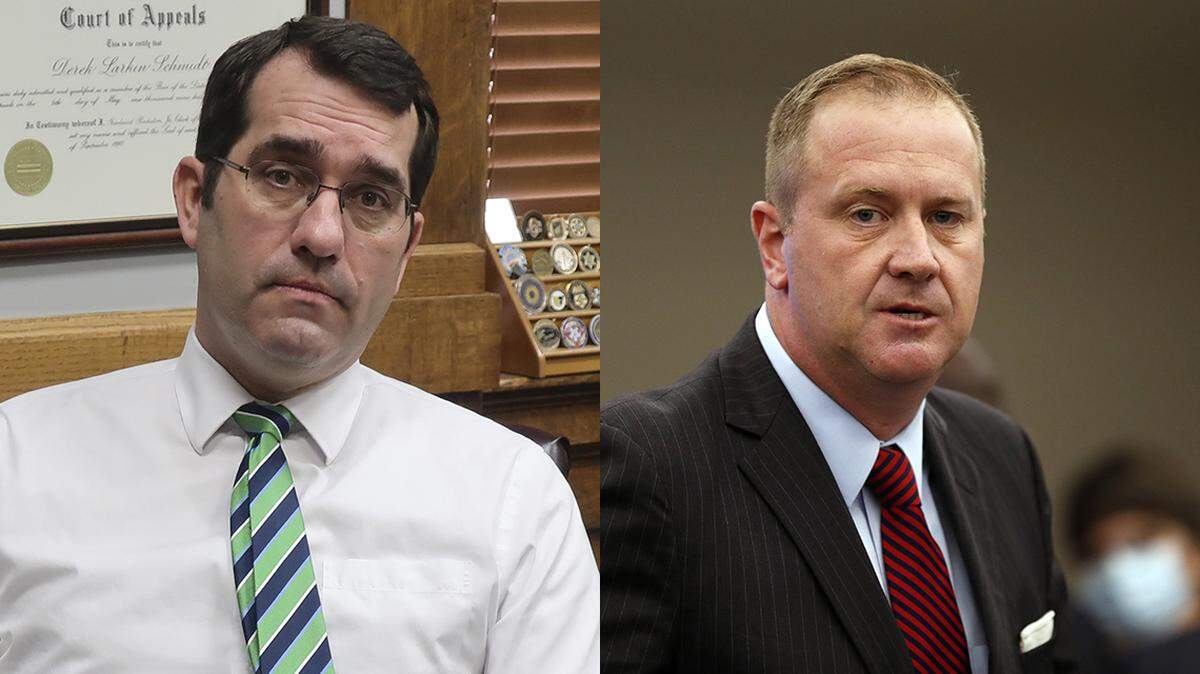
Before attack, Kansas and Missouri attorneys general backed ‘insane’ election challenge
READ MORE
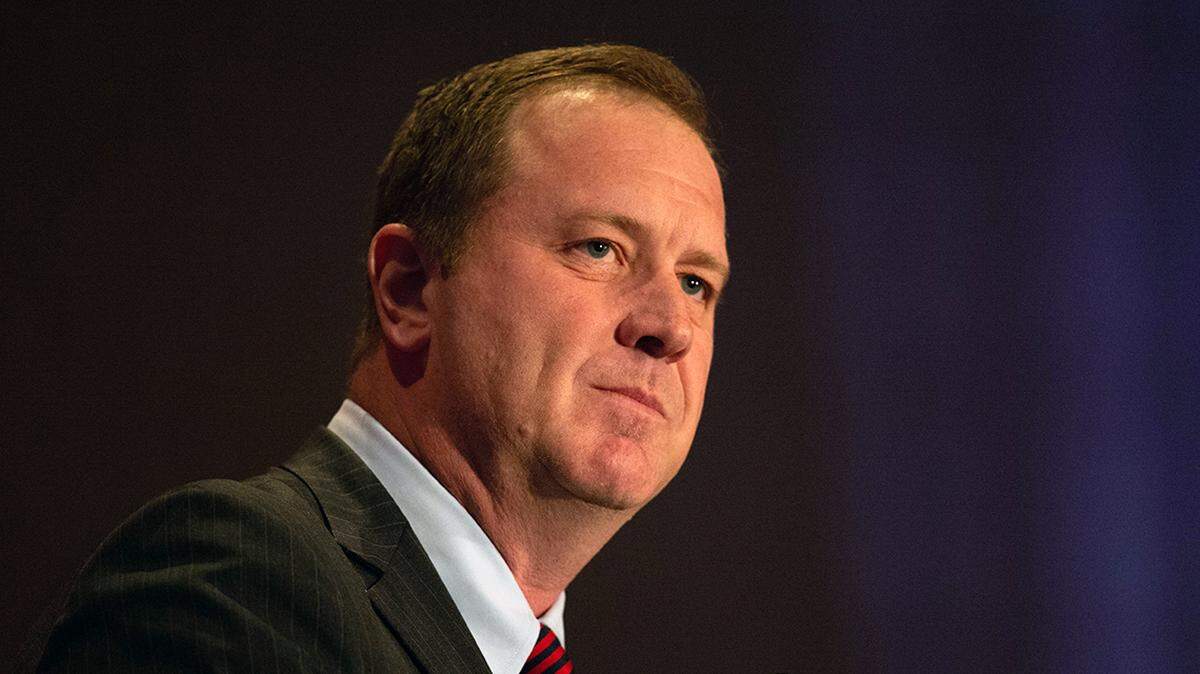
Who is Eric Schmitt?
Missouri Attorney General Eric Schmitt has drawn national attention for lawsuits challenging COVID-19 rules and the Biden administration. But has he always been like this?
Expand All
Before the November presidential election, Missouri and Kansas Attorneys General Eric Schmitt and Derek Schmidt pursued fairly typical conservative Republican legal agendas, whether it was defending abortion restrictions or suing China for spreading COVID-19.
But four weeks before a mob loyal to President Donald Trump stormed the U.S. Capitol, Schmitt spearheaded support among Republican attorneys general for a legal brief backing an extraordinary, baseless lawsuit that tried to overturn President-elect Joe Biden’s victory in key swing states.
“The integrity of our elections is of critical importance to maintaining our republic, both today and in future elections,” Schmitt said then.
The brief, also signed by Kansas Attorney General Derek Schmidt, urged the U.S. Supreme Court to take up the challenge. Justices dismissed the case two days later.
In the wake of the first ransacking of the Capitol since the War of 1812, the roles Schmitt and Schmidt played in challenging the election are drawing widespread criticism. Their decision to lend the credibility of their offices to a lawsuit feeding the perception that President-elect Joe Biden’s victory was legally suspect has been condemned by attorneys, legal scholars and Democrats.
The officials also face scrutiny for their ties to the Republican Attorneys General Association, whose policy arm made robocalls urging Trump supporters to head to the Capitol Jan. 6 to “stop the steal.”
No one is arguing that a dubious lawsuit sparked the insurrection that left five dead. But critics say Schmitt, Schmidt and Republican attorneys general across the country contributed to the combustible atmosphere—created by rhetoric from members of Congress and Trump himself—that ignited the riot.
“I think one of the challenges that we’re seeing in this country … is what happens when constitutional officers are using misinformation and disinformation to shore up a political base?” said Myrna Pérez, director of the voting rights and elections team at New York University School of Law’s Brennan Center for Justice.
Schmitt and Schmidt could both run for higher office in the future. Schmitt has been mentioned as a possible candidate for U.S. Senate in 2022 if Sen. Roy Blunt retires. Schmidt is considered a potential contender for Kansas governor in 2022.
Both attorneys general have condemned the violence at the Capitol. Their spokesmen didn’t make them available for interviews and didn’t directly answer questions about whether their work had contributed to perceptions of a stolen election.
Instead, they pointed to past statements.
“Every American has a right to peacefully protest but violence and lawlessness simply cannot be tolerated,” Schmitt said previously.
Through a spokesman, Schmidt suggested the Supreme Court’s decision not to take up an election case had itself contributed to the chaos in the wake of the November 3.
“He notes with sadness that Justice (Samuel) Alito’s prediction from October 28 proved correct – by declining to settle the question sooner the Supreme Court, ‘created conditions that could lead to serious post-election problems,’” Schmidt spokesman Clint Blaes said in an email, referencing a pre-election statement by the justice lamenting the possible consequences of inaction.
About Schmitt and Schmidt
Schmitt and Schmidt’s support for Texas Attorney General Ken Paxton’s lawsuit challenging election results in Georgia, Pennsylvania, Wisconsin and Michigan drew significant attention when they filed their brief on Dec. 9. Biden won all four states.
Schmitt organized an amicus or “friend of the court” brief signed by 17 state attorneys general, including Schmidt. The Texas lawsuit raised “important questions” about election integrity and public confidence in how presidential elections are administered, the brief said.
At its core, the Texas action challenged election procedures in other states. Some Republicans have advanced a legal theory that only state legislatures can set election rules. In response to COVID-19, courts in some states had ordered changes to when and how mail ballots were accepted.
The Supreme Court tossed the lawsuit on Dec. 11. In a brief order, the court said Texas lacked standing to sue. The decision effectively ended any chance Trump had of overthrowing Biden’s victory in the courts.
But the rejection didn’t come until Schmitt, Schmidt and countless other Republicans had already promoted the lawsuit. “The stakes of protecting our Constitution, defending our liberty and ensuring that all votes are counted fairly couldn’t be higher. With this brief, we are joining the fight,” Schmitt said at the time.
Austin Evers, director of the Washington-based ethics watchdog American Oversight, said GOP attorneys general framed the outcome of the election as an existential constitutional crisis. Portraying the issue as one of such magnitude led some people to believe drastic measures were appropriate, he said.
Attorneys general used the authority of their offices, built up over decades, to convince the public of constitutional violations, he said.
“These were formal court documents that carried the veneer of legitimacy,” Evers said. “The problem was that even a modicum of scrutiny revealed them to be completely without merit. They were insane legal documents pushing insane legal theories, where the only audience was the most extreme fringes of the Republican Party.”
Kansas state Rep. John Carmichael, a Wichita Democrat and an attorney, called Schmidt’s decision to sign the brief “beyond the pale.”
“Derek Schmidt is the chief law enforcement officer in the state of Kansas,” Carmichael said. “What in the world was he thinking when he tried to undermine the legitimacy of an election?”
After the Supreme Court declined to hear the lawsuit, Schmidt said the court’s decision “means it is time to put this election behind us.” Schmidt had been seeking an answer to the constitutional question about the role of state courts in the running of federal elections “since long before Election Day,” spokesman Clint Blaes said Tuesday.
The Missouri attorney general’s website, as well as Schmitt’s Twitter account, don’t show any comment from Schmitt about the Supreme Court dismissal.
Republicans in large numbers question the legitimacy of the election. A December poll by Quinnipiac University found 70% of Republicans said Biden’s victory wasn’t legitimate and 77% of Republicans said they believed there was widespread voter fraud.
Missouri state Rep. David Evans, a West Plains Republican who chairs the House Judiciary Committee, said he had concerns about election results in other states. Evans, a former circuit court judge, said in the courtroom you can look people in the eye and know they’re giving sworn testimony.
The same philosophy applies to voting, Evans said. “You just need to be careful who it is,” he added.
Scrutiny of robocall
Since last week’s insurrection, Schmitt and Schmidt have distanced themselves from robocalls sent by the Rule of Law Defense Fund (RLDF) a policy arm of the Republican Attorneys General Association (RAGA). The calls told listeners that “we will march to the Capitol building and call on Congress to stop the steal.”
Schmitt is vice chair of RAGA. Schmidt served on the RLDF board until August. Their spokesmen said neither had any advance knowledge of or involvement in the calls.
RAGA director Adam Piper resigned this week in the wake of condemnation of the robocalls. The organization didn’t respond to a request for comment.
Since last week’s attack, calls have grown for attorneys general to be held accountable, for both the robocalls and legal challenges to the election.
In South Carolina, a disciplinary complaint has been filed against Attorney General Alan Wilson, the Post and Courier reported. Wilson signed the same brief as Schmitt and Schmidt. Texas Attorney General Ken Paxton, who filed the election lawsuit, faces criticism in his state for spending public funds on the challenge, The Dallas Morning News reported.
“Would people have stormed the Capitol just because of the amicus brief? No, I can’t imagine that. Or just because Texas sued? I can’t imagine that,” said Charles Hatfield, a Jefferson City attorney who was chief of staff to Democratic Missouri Attorney General Jay Nixon throughout the 90s.
“Is it sort of another factor, is it another point where maybe, maybe we could have changed the course of history and avoided this?” Hatfield said. “Of course it is.”
This story was originally published January 14, 2021 at 5:00 AM with the headline "Before attack, Kansas and Missouri attorneys general backed ‘insane’ election challenge."