4 Wichita murders. 2 death penalty cases. More than 7 years with no trials. What’s taking so long?
A man living in a quiet neighborhood near Wichita’s largest university found her, naked and screaming on the grass in a ring of flames. Letitia Davis, a 36-year-old newly engaged mother of four, had been walking in Fairmount Park late on Nov. 14, 2014, when a stranger attacked.
When he was through with the assault, the stranger left Davis near the park’s tennis court, beaten and bloodied, raped and set on fire. Authorities eventually made an arrest. But Davis died after eight days in the hospital.
She suffered burns on more than half of her body.
Nearly five months earlier, on June 24, 2014, Wichita police had worked another horrific crime scene across town. A tidy, single-story home on a well kept south-side residential block became the site of a massacre when 45-year-old Tuyet Huynh; her 20-year-old daughter, Trinh Pham; and her soon-to-be son-in-law, Sean Pham, 21, were slaughtered as Trinh begged an emergency dispatcher for help.
Police discovered the suspect in the deadly shootings, Huynh’s boyfriend, in the home with the bodies.
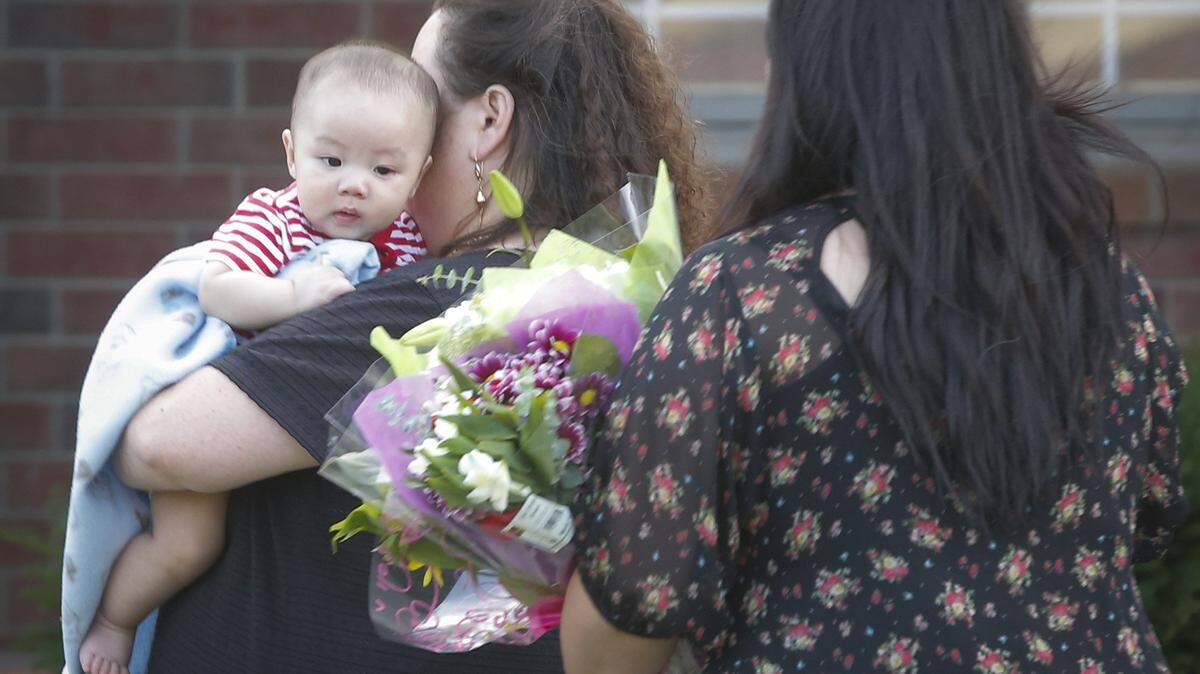
The younger couple’s 5-month-old baby was the only other person found alive.
At the time, the slayings shook the city: Four Wichitans were dead in two separate homicides with circumstances so chilling, prosecutors filed capital murder charges and announced they would seek the death penalty, the state’s harshest punishment for the worst premeditated killings.
But nearly eight years later, the families of the victims are still waiting for justice.
The men accused, Cornell McNeal and Vinh Van Nguyen, have been in jail since 2014.
McNeal, 34, is charged with capital murder, an alternative count of first-degree premeditated murder, rape and two counts of arson in connection with Davis’ death. Nguyen, 48, is facing capital murder and three alternative counts of first-degree premeditated murder for the triple shooting, court records show.
The men have pleaded not guilty. But neither case has gone to a jury yet.
The defendants have trial dates scheduled for this summer — Nguyen’s on June 13 and McNeal’s on July 5 — although Nguyen’s will likely be postponed, court filings suggest.
The two Wichita capital murder cases are among those that have taken the longest to resolve by a plea or jury verdict under Kansas’ contemporary capital punishment law, enacted in 1994.
Families angry, want resolution
The families of the victims are frustrated. They want to know: What’s taking so long?
“I’m very, very angry that this has not gone to trial yet,” Davis’ sister-in-law, Kimberly Donnelly, told The Eagle.
The wait has been “absolutely ridiculous,” she said.
“I have never heard of a trial taking eight years. . . . I understand appeals and all of that. But the very first trial, eight years? No. They’ve had him (McNeal) since five days after it happened.”
Sean Pham’s mother agrees. Since the triple murder that stole her son in June 2014, Le Pham and her husband have been raising the baby boy Sean and his fiancee left behind.
The child, who is 8 years old now, was his dad’s “whole world.”
His life “got cheated because both of his parents got taken away,” she said.
“Every time we go to court, he asks me when I get home, ‘How did it go?’” Le Pham said. “He is aware that the guy that murdered his parents is still sitting there.”
Each time she leaves the courtroom after one of Nguyen’s hearings, she feels like she’s “breaking down,” she said.
“I just want peace of mind for all of us.”
Capital murder cases
In terms of victim numbers, 2014 wasn’t the worst for murders in Wichita. Twenty-six people were killed that year. Wichita police investigated more than double that in 2021, 54 homicides.
But in a city where years sometimes pass with no multiple-victim slayings or capital murder cases, 2014 was notable. That year, three homicide cases investigated by Wichita police had two or more victims, and prosecutors filed capital murder charges three times, including in two of the multiple-victim cases.
Nguyen is one of the defendants facing capital murder for allegedly killing more than one person.
The other defendant’s case resolved long ago. Steven Wade Edwards II was sentenced to two life prison terms plus additional time in early 2017 after pleading guilty to reduced charges for the shooting deaths of an elderly Wichita couple over an alleged debt owed by their son. Prosecutors never sought the death penalty.
McNeal is the third defendant who was charged with capital murder in 2014. There was only one victim, but circumstances surrounding the slaying — Davis was raped and fatally injured intentionally, prosecutors contend — supported a capital murder charge under state law. So the Sedgwick County District Attorney’s Office pursued it.
Nguyen and McNeal could be sentenced to death if juries convict and unanimously vote to execute them. If either pleaded guilty, they would spend life in prison.
Since lawmakers brought capital punishment back to Kansas in the mid-1990s, juries have handed down death sentences to 15 men, the last in 2016.
So far, none have been executed.
Nine are still on death row. Two have died. The rest had their death sentences overturned and are now serving life in prison.
Delays in Cornell McNeal’s case
Attorneys and the court record say the delays in the two 2014 Wichita cases are the result of issues that commonly impact criminal proceedings, including appellate court rulings, evaluating a defendant’s competency to stand trial and attorneys and judges retiring or leaving for other reasons.
Fallout from COVID-19 is also to blame. The pandemic left courts nationwide with unprecedented shutdowns that stalled most proceedings for months starting in early 2020.
All of those issues have come into play in McNeal’s case, court filings show. He had mental health evaluations and was appointed new attorneys after he stopped speaking to his lawyers in 2015. While it is within a defendant’s rights to refuse to correspond or cooperate with their attorneys, courts must ensure the lack of communication is voluntary, not due to a mental illness, experts say.
Mental examinations and restoring a defendant to competency, if necessary, can take months, or even years.
A new judge, Jeffrey Goering, began overseeing McNeal’s case after the one assigned, Warren Wilbert, announced his January 2019 retirement. And one of McNeal’s defense lawyers, Val Wachtel, died, causing another hiccup.
Appeals in two unrelated Kansas cases — one involving an insanity argument from Osage County death row inmate James Kraig Kahler and the other involving an abortion rights decision that Sedgwick County death row inmates Jonathan and Reginald Carr used to argue they have an inalienable right to life under the Kansas Constitution — also slowed the case, court records show. Those issues have since resolved.
But McNeal’s attorneys still intend to hold a hearing later this month so their arguments stemming from the abortion-rights case decision become part of the court’s official record.
Asked to weigh in on the delays, McNeal’s lawyers, Peter Conley, Paul Oller and Mark Manna, provided a written statement.
“Cornell McNeal’s life matters. He is loved by his family, and is the father of a 10-year-old girl,” they wrote.
“The government attempting to take the life of one of its citizens requires careful scrutiny, and differs dramatically from any other state action. Complicating this, Cornell’s legal representation had been in flux. His current legal team is working hard to ensure a fair trial, where we can defend Cornell and share his story.”
Delays in Vinh Van Nguyen’s case
The circumstances delaying a trial in Nguyen’s capital murder case are even more complicated.
As in McNeal’s case, Nguyen’s lawyers have questioned his competency to stand trial. They argue that six medical professionals think Nguyen not only suffers from schizophrenia, a serious mental illness marked by delusions and hallucinations, but also an intellectual disability, which would prevent a death sentence from being carried out under a 2002 U.S. Supreme Court ruling.
Nguyen has experienced two lengthy stretches of incompetency since prosecutors filed charges, with the latest lasting nearly three years, from August 2018 until April 2021 , court records show. Being competent means a person understands the legal proceedings and can assist in their own defense.
People who are mentally incompetent cannot be convicted of a crime, regardless of how clear the evidence is.
Nguyen’s case was also handed off to a different judge, Kevin O’Connor, after Wilbert’s retirement, records show.
But the issue slowing progress toward trial the most at this point is his lawyers’ ability to conduct a deeply thorough investigation of Nguyen in his native Vietnam, where he spent most of his life before moving to the U.S. in the late 2000s.
Court filings from Nguyen’s defense team say the country’s strict travel policies have hindered their ability to send investigators abroad to conduct in-person interviews with family and to track down information about his relationships, childhood and school, employment and health histories. Such information is vital to the sentencing portion of a defendant’s trial because when death is on the table, jurors must also hear reasons their life should be spared.
While video or phone interviews might seem the solution to travel troubles, Washburn Law School professor Jeffrey Jackson says there’s debate about whether those workarounds violate a defendant’s constitutionally protected right to confront witnesses in open court.
Citing pandemic-fueled problems associated with conducting Nguyen’s life investigation, his lawyers in February asked the judge to either take death off of the table or to push the trial back until a time that their work could be completed.
It’s unclear when that might occur.
In a written motion the lawyers said “proceeding to a capital trial in June would violate many of the constitutional rights guaranteed to Mr. Nguyen” and that “all of the roadblocks . . . stem from the fact that this is a death penalty case.”
”Constitutional rights do not get thrown out the window just because they inconvenience the government’s desired timeline,” the motion states.
“Mr. Nguyen will be irreparably prejudiced in myriad ways if a capital trial moves forward in June.”
The judge denied the request to pull death off the table, court records show, but did not set a new trial date.
If execution wasn’t an option, the case would have ended long ago, Nguyen’s lawyers say.
Asked for comment on the case delays, one of the lawyers on Nguyen’s defense team, Timothy Frieden, provided a written statement.
“We are mindful of the families’ pain and frustration in this case. Mr. Nguyen is a person who grew up in a war-torn country, and in our view has a serious mental illness and an intellectual disability,” he wrote.
“Those things, combined with the pandemic, have created challenges unlike any other. Absent the decision to seek the death penalty, this case likely would have been resolved long ago. However, if we must proceed to a capital trial, we have a responsibility to fully prepare Mr. Nguyen’s life story for a jury.”
Death cases getting longer
Sedgwick County District Attorney Marc Bennett said in a recent interview where he spoke generally about capital punishment in Kansas that prosecutors are ready to take both cases to trial.
Because “death is different,” long delays “are not uncommon” in capital murder cases nationwide, he said.
Experts The Eagle asked to weigh in on the case timelines also said it is common for capital murder cases to take years to get to trial.
The U.S. Supreme Court requires a “super due process” for death cases because once the sentence is carried out, it cannot be reversed, said Jackson, the Washburn law professor.
“From the very start of when you want to try somebody, there are a lot of additional things that you have to take into account because we want to make sure that the defendants’ rights are protected.”
Long waits can lead to problems, though, such as witnesses forgetting details and evidence degrading, he said.
There’s also question of whether years of delays help or harm a defendant.
Jackson said judges are typically willing to grant continuances as long as the requests have merit. Judges are concerned with “getting it right” the first time so convictions and sentences are not reversed on appeal, which can drag cases out longer, he said.
“One misstep then you have to do it all over again.”
Jackson said McNeal and Nguyen’s cases are “a little on the long side” but probably not unusual, given the pandemic’s effect on the court.
Avoiding mistakes
But Manna, the head of the state’s Death Penalty Defense Unit, said that over the years the length of capital murder cases has gotten longer as the courts and attorneys continue to figure out how to move them through without mistakes.
“Twenty years ago, we were trying these cases within two or three years,” he said, speaking generally about capital punishment in Kansas.
The Carr brothers, who committed one of the most infamous multiple murders in Wichita history, were tried and sentenced to death in under two years, for example. John Robinson, a Kansas City-area serial killer linked to the deaths of at least eight women from 1985 to 2000, was convicted by a jury and sentenced to die less than three years after his arrest.
It was swift justice for victims and their families.
But defense teams found they “weren’t really prepared” so quickly, Manna said.
“There was a lot of things that weren’t getting done,” he said.
Poorly prepared lawyers can lead to ineffective assistance of counsel claims, which may result in convictions or sentences being overturned on appeal.
Robinson, whose death sentence was upheld by the Kansas Supreme Court in 2015, is currently making such an argument in civil court. Manna, who represented him at his 2002 trial, said he testified about case lengths and preparedness at one of Robinson’s hearings earlier this year.
If a judge sides with Robinson’s claims that his lawyers weren’t ready for trial, his death sentence might be in jeopardy.
“We began to learn over the years that there was so much more we could be doing on these cases” especially for the mitigation investigation and in pretrial litigation, Manna said, speaking generally.
Manna says now the minimum length for a capital murder case where prosecutors are seeking a death sentence is around three years.
But five to seven years had become standard, even before pandemic shutdowns.
To him, McNeal’s and Nguyen’s cases “are not abnormally long.”
“I know in a lot of other states, the capital litigation can sometimes be as much as eight, nine, 10 years. A lot depends upon what you’re dealing with,” he said.
For families, ‘a nightmare that never, ever stops’
But the explanations are little comfort to the murder victims’ families.
They say the delays have been detrimental.
“It’s like ripping the scab off” every time the case is brought up, Davis’ sister-in-law said.
“We’re hurt because he (McNeal) took her from us. We’re hurt that he’s not paying for what he’s done,” Kimberly Donnelly said.
For three or four years after her death, Davis’ father, Jeffrey Donnelly, said he couldn’t stomach the silence and solitude of sitting in alone a deer stand.
“She just popped in my mind all of the time,” he said. So he stopped hunting.
His wife still has the last text messages Davis sent in the days before her murder. And his family still lights a candle every year on her birthday. Davis was always smiling, he said.
“We just miss her dearly, and her kids miss her.”
David Holloway is a longtime friend and spokesman for Tuyet Huynh and Trinh Pham’s family. He said Nguyen’s case has taken so long that Huynh’s elderly parents wonder whether they’ll live long enough to see his trial.
“Every time they see something like this on TV, it brings back that day,” he said, adding: “It is a nightmare that never, ever stops.”
Le Pham says when she does get her day in court, she plans to ask Nguyen a question that’s plagued her since the night her son and the two women were killed.
Nguyen had an alleged history of aggressive behavior toward his girlfriend, Huynh.
But why murder the young couple, too?
“Why the kids? Why would he do what he did?” she said, her voice shaking with grief.
Asked whether she wanted Nguyen to be executed if he is convicted, she said:
“As long as I’m alive, I will not change (my mind). He took three lives. He should receive the death penalty.”
This story was originally published March 31, 2022 at 4:48 AM.