
Parasitic illness causing diarrhea is reported in KS. What to know about outbreak
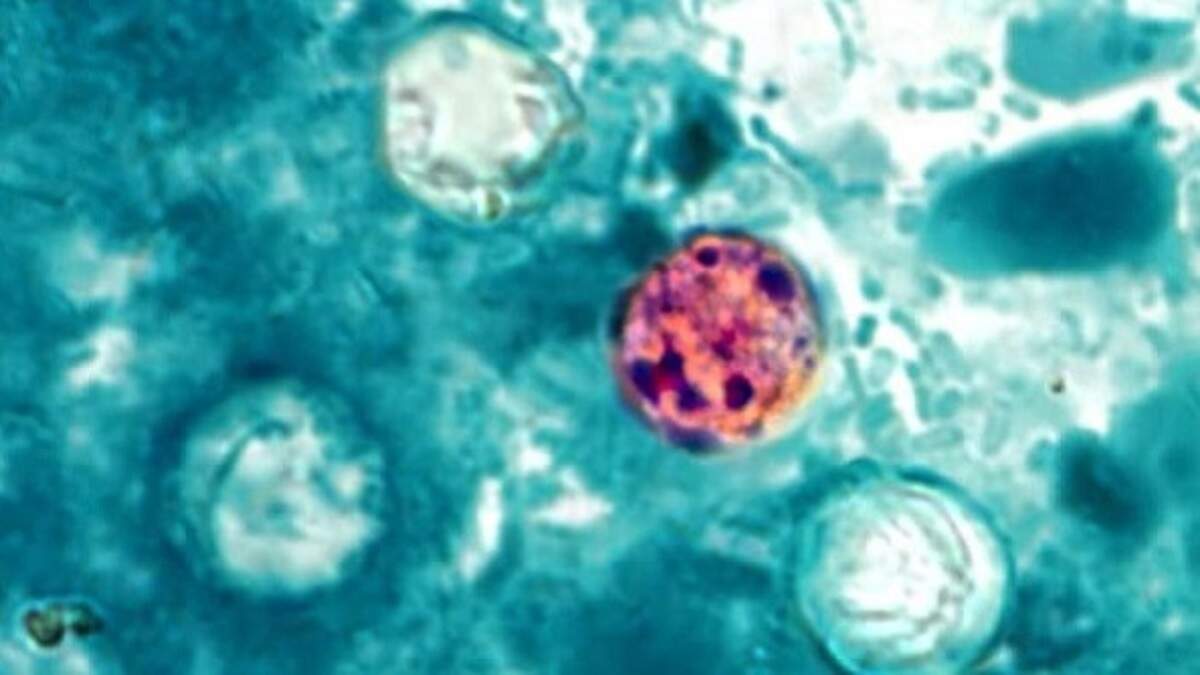
At least 22 cases of cyclosporiasis — a gastrointestinal disease known to cause watery diarrhea, cramping, nausea and fatigue — have been reported in Kansas this year.
All but one of the cases are part of a large outbreak across the U.S. that officially started May 1.
The Centers for Disease Control and Prevention has received report of 843 cases of cyclosporiasis acquired within the U.S. between May 1 and July 9. The cases are across 31 states and have resulted in 86 hospitalizations.
“These people became sick after eating food in the United States and did not report any travel during the 14 days before they got sick,” the CDC said, adding that an additional 343 cases have been reported in people who ate food outside the country that made them sick in the two weeks before they noticed symptoms.
Because not everyone will seek testing and treatment, the CDC said “the true number of people sick with cyclosporiasis was likely higher than the number reported.”
Cyclosporiasis in Kansas
As of July 8, the Kansas Department of Health and Environment reported there has been 22 cases of cyclosporiasis in 2026.
One case was reported in April, before the official start of the outbreak as reported by the CDC. Four cases were reported in May, 16 cases were reported in June and 1 case has been reported in July.
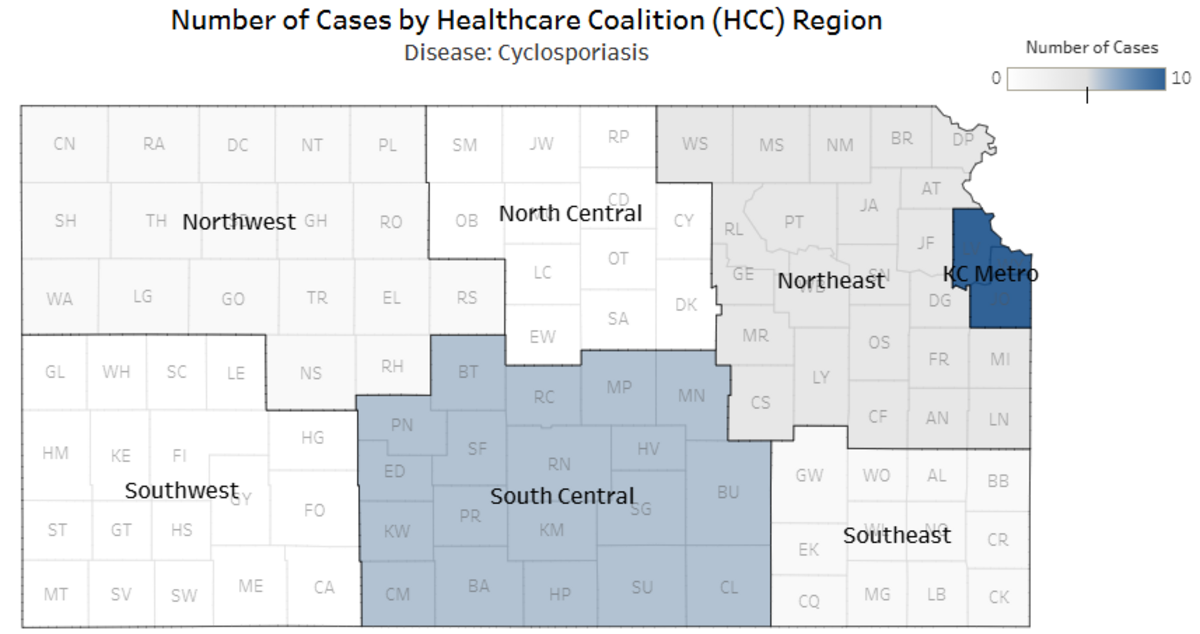
Ten of the cases were reported in the Kansas City metropolitan area, 6 were reported in south-central Kansas, 4 have been reported in northeast Kansas, 1 case has been reported in northwest Kansas and 1 has been reported in southeast Kansas.
The counties affected include Cherokee, Douglas, Ellis, Leavenworth, Lyon, Marshall, Osage, Reno, Sedgwick and Wyandotte.
All cases have been reported in people ages 20 to 74. The cases are evenly divided between males and females.
A KDHE spokesperson did not provide any additional information on cyclosporiasis in Kansas.
What is cyclosporiasis, and how does it spread?
Cyclosporiasis is an intestinal illness caused by a parasite most commonly known as cyclospora, according to the CDC.
People can become infected by eating food or water that has the parasite, federal health officials said. In the U.S., previous outbreaks have been linked to fresh produce.
The CDC has not said what food is causing the current outbreak.
It can be challenging to find the source of cyclospora because there’s a delay from when people consume the parasite to when they notice symptoms, The Washington Post reported.
Most people become sick in about a week, but symptoms can show up anywhere from two days to two weeks after becoming infected, according to the CDC.
“Direct person-to-person transmission is unlikely,” the CDC said.
Symptoms of cyclosporiasis
The most common symptoms of cyclosporiasis include watery diarrhea, loss of appetite, weight loss, cramping, bloating, increased gas, nausea and fatigue.
The less common symptoms include vomiting, headache, a low fever and other flu-like symptoms.
If you notice these symptoms, health officials say you should see your doctor. Most people with healthy immune systems will not need treatment to recover, but if not treated, your symptoms may last a month or longer.
How can you prevent cyclosporiasis?
“No one fully knows how cyclospora gets into food and water,” according to the CDC, but the best way to prevent cyclosporiasis is to avoid any food or water contaminated with feces.
To do this, safe food handling is critical. Here are some tips from health officials:
- Wash your hands with soap and water before handling raw fruits and vegetables.
- Wash all produce thoroughly under running water before cutting, cooking or eating. Produce labeled “prewashed” does not need washed at home.
- Scrub “firm fruits and vegetables,” including melons, with a produce brush.
- Cut away bruised and damaged areas on your produce before preparing or eating.
- Refrigerate your fruits and vegetables within two hours, but as soon as possible.