
This Kansas city is ranked among fastest growing in the country. Here’s why
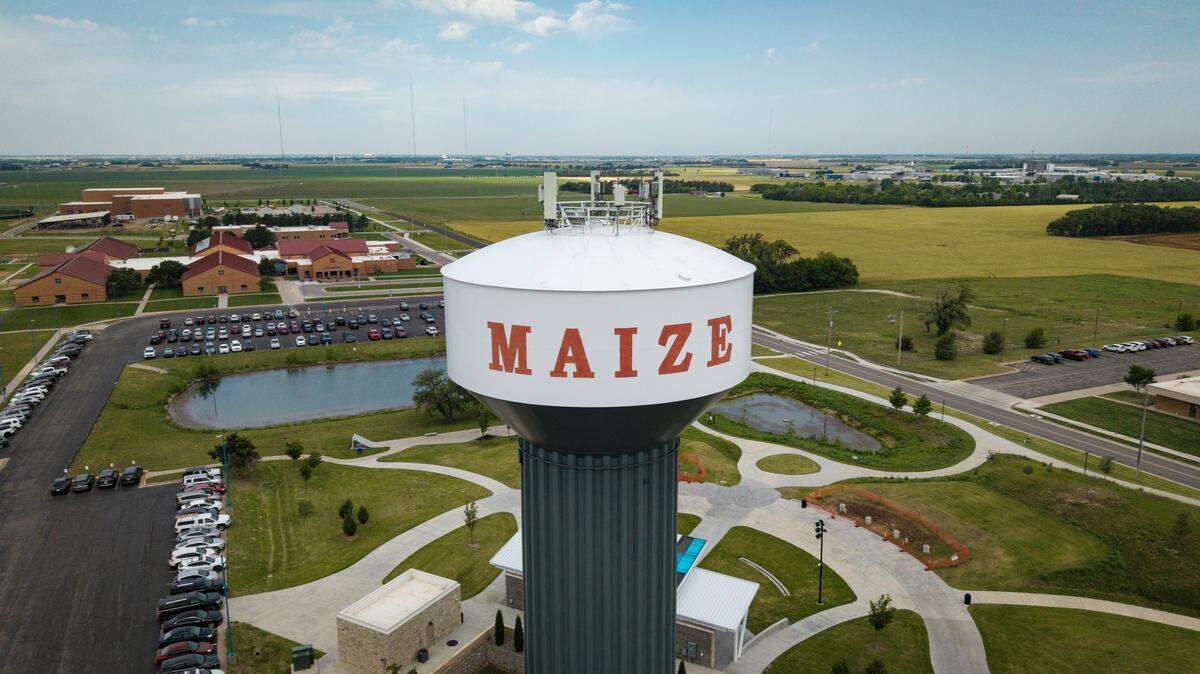
Sometimes it is difficult to comprehend just how fast Maize is growing.
Sure, new houses are being framed throughout the city. And the paint is still drying on several retail developments. But it’s the numbers that add context to the story.
The U.S. Census estimates that Maize’s population has grown by more than 36% since 2020, when 5,739 people called Maize home. By 2024, that number was estimated to be 7,041, and last year it reached 7,853.
From 2014 to 2023, Maize was the 43rd fastest-growing city in the country, according to research by RentCafe.com that based its findings on the number of new housing units.
But a Maize address wasn’t always the hottest ticket in Sedgwick County. In 1990, the town had all of 1,326 residents, according to the Census. A decade later, Maize’s population was still below 2,000 people — 1,868, to be precise.
The first decade of the 2000s is when Maize really took off, reaching a population of 3,420 in 2010, a gain of 83%. And between 2010 and 2020, its population shot up another 67.8% to reach 5,739.
So what’s happening in this northwest Wichita suburb?
“I think what it starts with is the school system,” said Maize City Manager Nick Gregory. “Our school district is one of the top school districts in the state of Kansas and, quite frankly, people want to be in, people want to build and live in a home where there’s good schools.”
Kresta Dundas, president of Our Community Chamber, which serves Goddard and Maize, agreed. In an email response to The Eagle, she said Maize’s high-performing schools have consistently attracted families and professionals.
In just the past decade, Maize Unified School District 266 opened Maize Intermediate School and Maize South Intermediate School. That happened in August 2021, and later that year it opened the Maize Performing Arts and Aquatics Center. At the same time, the school district has continued to grow what it calls its hands-on career pathway experiences through the Maize Career Academy, said Superintendent Raquel Greer in an email to The Eagle.
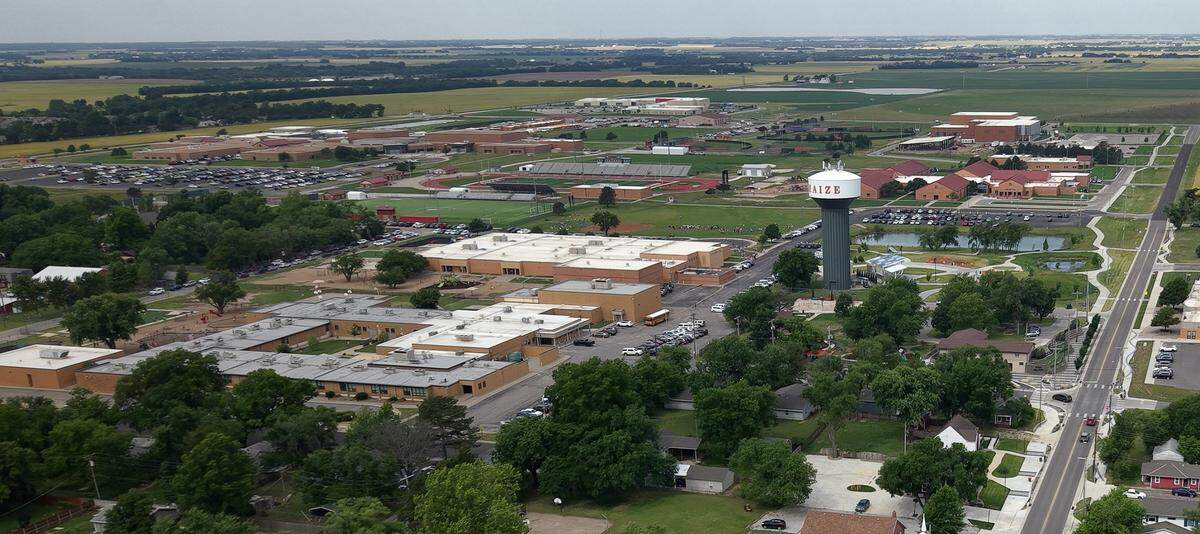
This year alone, Greer said, the Class of 2026 collectively earned 461 industry-recognized work-ready certificates, 5,841 college credits and four associate degrees.
Retail, roads, crime also play role in Maize growth
Another thing that has led to sustained growth in Maize, Gregory said, is the commercial development of the Maize Road corridor, which allows residents to be close to the retail options and services they want.
And the city’s perception for being a safe place to live only solidifies its position, he said.
Then there’s the ease of access from K-96 to downtown Wichita, which has made Maize more attractive to people who don’t work on the west side of town, added Deputy City Manager Joe Dessenberger.
The fact that Maize still has a lot of land that can be developed even as Wichita has grown to its city limits has been yet another contributing factor, Dessenberger said.
“We’re just fortunate from all those aspects,” he said.
And Gregory doesn’t see the growth slowing down anytime soon.
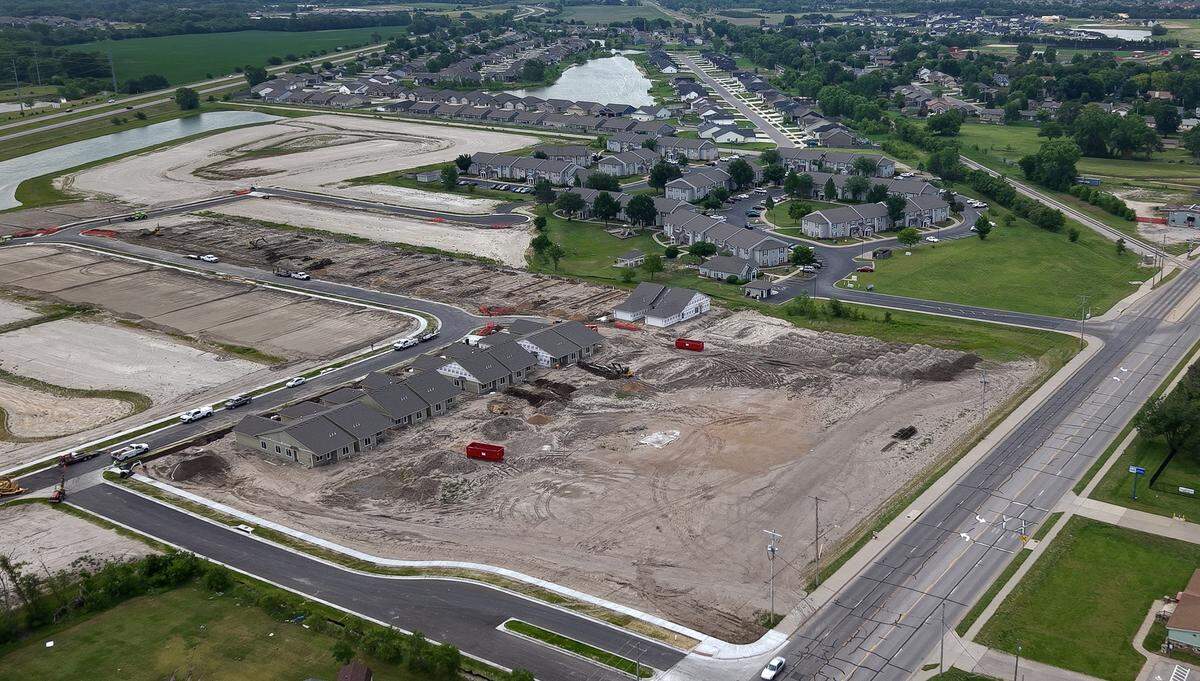
Maize has another 1,300 housing lots that already have been platted, meaning that each property’s individual borders and dimensions have been identified, and roadways and easements have been marked.
Development is occurring on both sides of 119th Street, with other projects being built out to 37th Street on one end and 53rd Street in the other direction. A large parcel north of 53rd Street between Maize Road and K-96 is also being marketed for what could end up being more housing, mixed-use or commercial, Dessenberger said.
“Obviously, the other side of K-96 is our future,” Gregory said.
Maize plans for future growth
The city is updating its comprehensive plan, the foundational long-range document designed to guide everything from land use, transportation and housing to parks, infrastructure and economic development strategies. The future role of K-96 is sure to be a key component when it comes to the transportation portion of that effort.
Since the mid- to late ’90s, there’s been discussion about the creation of a northwest expressway that would extend K-96 all the way to Goddard.
“That piece would be a huge part of our continued growth,” Gregory said. Currently, the state is doing a study to analyze whether that project is the right fit.
“That’s really going to make some decisions where we want to go as a community for the future,” Gregory said of the comprehensive planning process.
Those who want to participate in the process can attend a public session scheduled for 4-6 p.m. June 11 at City Hall.
Another thing that has kept Maize sprinting along has been the willingness of its residents to pay for improvements. Last August, for instance, Maize voters overwhelmingly approved a 1% local-option sales tax increase that went into effect last January. The majority of the proceeds, anticipated to be $6.7 million over 10 years, will be dedicated to street, sidewalk, drainage maintenance and improvements.
“We’re growing so fast that the reality of it is it’s difficult to keep up from time to time with infrastructure,” Gregory said.
More than a bedroom community
Population growth hasn’t been the only thing trending in Maize’s favor for the last 25 years. Several manufacturers, including Worthington Industries, The Vollrath Co. (formerly Carlson Products), Reiloy USA, Kyodo Yushi and Charlotte Pipe and Foundry have all contributed to helping Maize be more than just a bedroom community.
Of those, Worthington Industries now employs 140 people. Reiloy USA has 68 employees, Vollrath Co. has 50 workers, Kyodo Yushi has 35, and Charlotte Pipe opened in 2025 with a projected 50 workers, according to WSU research. The Maize school district is the city’s largest employer, with an estimated 1,200 people.
In addition to bringing jobs to Maize, these companies have also brought the need for a diverse workforce. Vollrath, for instance, makes kitchen utensils and cookware for commercial kitchens, Reiloy USA does precision tooling for the plastics industry, and Kyodo Yushi generates lubricants and oils for auto manufacturers.
Dessenberger said he didn’t think Maize is doing anything different than (other cities) in the area are doing when it comes to attracting new businesses.
“We all work with the Greater Wichita Partnership for a lot of this,” he said. “Because they’re looking for sites for people that are looking from outside the community going, ‘Hey, what do you got?’”
That Maize has significant tracts of undeveloped land and access to rail service has been critical in the decision-making process of some companies, Dessenberger said. He pointed to Kyodo Yushi and Charlotte Pipe as two companies that were drawn here in large part because of rail access.
Maize has taken the approach that growth — be it however measured — is critical to build the city’s tax base and, in the perfect world, lower its tax rate.
“A smaller community still has to do a lot of the same things a big community has to do,” Gregory said. “But the reality of it is when you’re a bigger community you’re bringing in more to be able to afford to do some of the things that you have to do.”