
Demand for food aid in Kansas: ‘This crisis isn’t going away’
Brian Walker showed up Friday at the Kansas Food Bank at 5:30 a.m., tall coffee cup in hand and a sense of dread swelling in his chest.
By Monday, the federal agency that hands out federal food assistance was slated to stop all payments to millions of America’s needy because of the government shutdown.
Walker and his Kansas Food Bank were scrambling to respond. A quarter-million people who come to food pantries in 85 of Kansas’s 105 counties would go hungry. Because of politics.
“I don’t want to blame anybody for this,” Walker said. “Politicians from both sides say misleading things all the time. But this SNAP debacle is the worst thing that has happened to the hungry in Kansas since the COVID-19 crisis, when our numbers spiked astronomically. And all because our politicians can’t agree? Come on.”
The worst thing, he said? The propaganda. The partisan or social media posts that tell us that “those people,” (Walker’s phrase) are “lazy loafers sucking tax money and benefits out of the rest of us.” He recalled seeing a recent Facebook comment from someone who claimed that “he had no sympathy for any woman who uses her alimony to go buy make-up.”
“My staff sometimes has to restrain me,” Walker said “They tell me to just stay off Facebook. Facebook is the worst thing we’ve ever inflicted on ourselves.”
“You have some people who will say, ‘Why don’t they get a job? You’re just enabling them to continue doing what they’re doing.’ I don’t love those negative comments.”
“There are also takers among our clients,” Walker acknowledges. But for the most part, the beneficiaries of food assistance are simply people left vulnerable by economic hard times.
Children. The elderly. One parent-families. Sometimes families where both parents are working jobs. That’s who needs help from one of the food pantries or soup kitchens supplied by the food bank. Forty-nine in Sedgwick County alone, 200 with food bank supplies in the state overall.
They “just can’t make enough,” Walker said. “And this is getting worse every year. When I started this job 29 years ago we doled out 3 million pounds of food in Kansas every year. Now it’s 17 million. We did not invent that extra need. It’s there.”
A federal judge’s order that the Trump administration must pay SNAP benefits during the shutdown could throw the program a lifeline. But that only moves the cliff down the road, through perhaps November. And it doesn’t guarantee the aid will arrive in time to meet people’s needs.
Frustration boils over sometimes.
There’s one image Walker said he’ll never get over.
“I was walking up and down the line at one of our food pantries, talking to people, and found this woman in line with several kids. While we were talking, I looked down and saw that one of her little girls didn’t have shoes, but only socks. You see that sometimes, in these long lines, people lined up two or three hours early, with their kids standing in the freezing rain, and they don’t have coats, some of them.
“And if you think they are lazy, how lazy is that?”
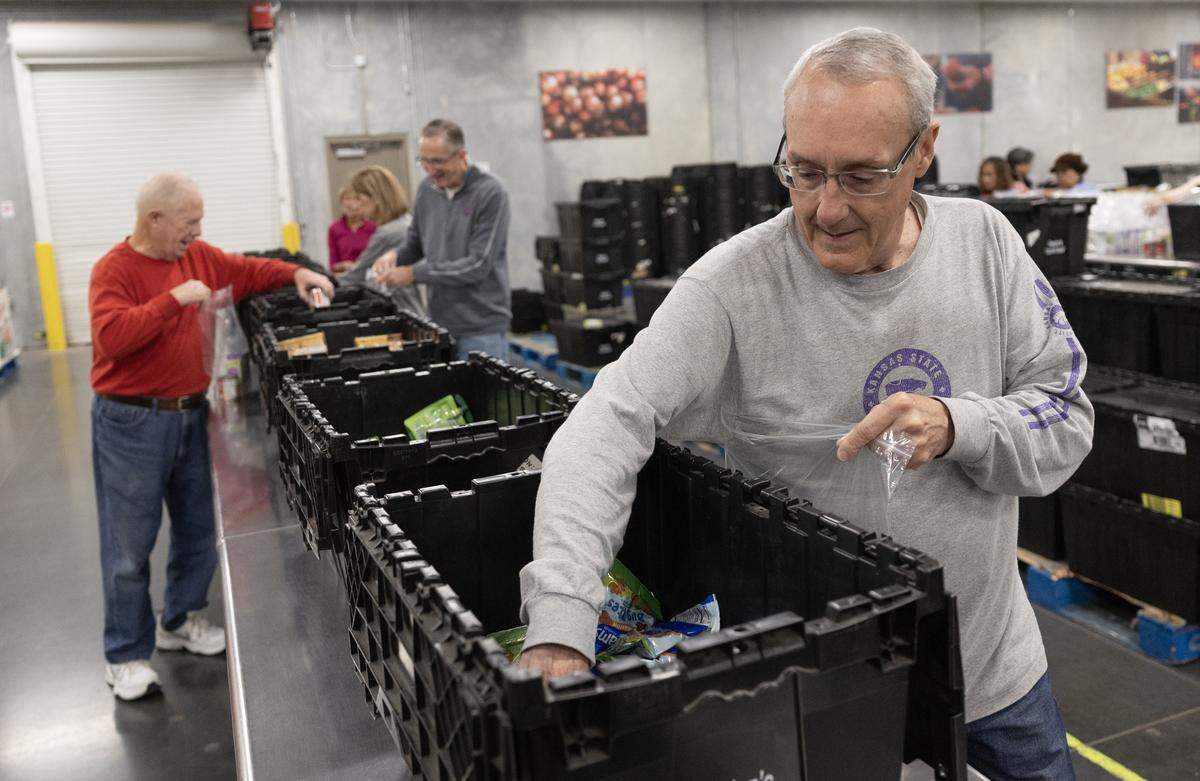
What might happen with SNAP, food need in Kansas
Even if rulings by judges take hold, the problem the shutdown created is only the latest blow to the poor, Walker said.
The food bank, long before the shutdown, had already seen much higher demand. At The Lord’s Diner’s location at Broadway and Central, the usual number of dinner guests nightly, for the first half of each month, is 350. It rises in the second half each month to as many as 500 as recipients’ benefits get spent out. On Thursday night it was 459.
“This crisis isn’t going away,” Walker said. “It was already here.”
One in seven Kansans go hungry at times during the year, he said. For Kansas children, the number is one in five.
And they are not lazy people, said Emily Thome, director of The Lord’s Diner with its seven locations in Sedgwick County.
“Of the 2,200 we feed during the week, the majority are housed,” she said. “Many have jobs, and are underemployed. The majority have some sort of income, whether it’s disability or whether it’s somebody in their home that they’re taking care of with a disability, whether they’re retired, living on a fixed income.”
It’s not all bad news, said Thome, whose name is pronounced like “Tommy.”
Wichitans generously support their vulnerable neighbors. “We’ve got a $2 million annual budget here and it all comes from private donations,” Thome said. “People want to help. Wichita truly is a generous place.”
Yet it won’t be enough if the SNAP money went away, Walker said. Not even close.
Trump administration moves have also dented the diner’s budget in a second and significant way, Thome said.
The biggest donor they have, even more than the rice and beans they get from the food bank, are the meats they get from the federal commodities program.
For three of the past six months, they got no food from that program, Thome said.
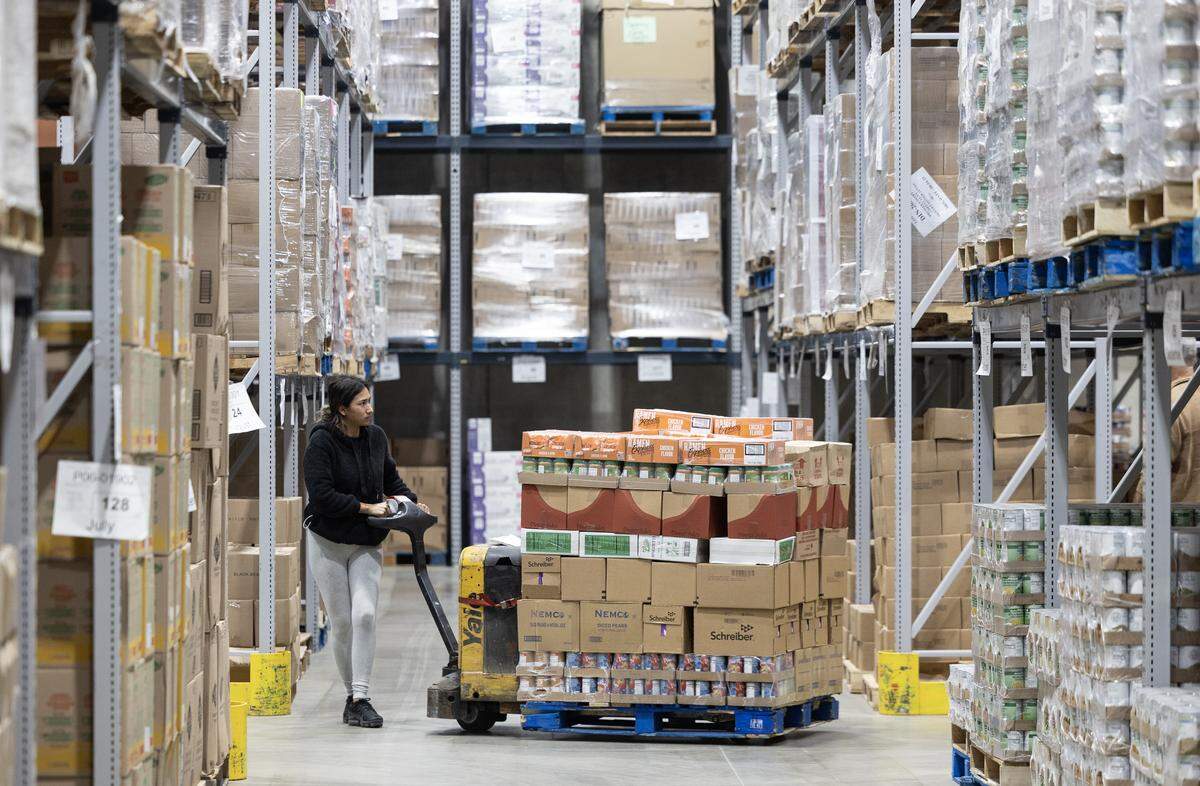
Guardian angels, while helping others, have needs, too
In any gathering of poor people, there are always at least one or more guardian angels, people who don’t have two nickels to rub together but who are always sober and relentless in looking after others. News reporters have seen this for decades. At the Lord’s Diner on Thursday, as on many nights, Carla Rice is a standout, the diner staff said.
She’s 55, though looks older; walks with a limp induced by a bad back and achy knees. Gray hair. No job or family support, and she babysits five days a week for free for a gal that she went to high school with decades ago. “She watched my kids, so I watch hers.”
Carla was all over the parking lot on Thursday, checking on people, asking what they need, passing along what she knows about spots to get meals or lunches or box lunches all over downtown. And on this Thursday night, she was less than 48 hours from losing her SNAP money.
“I’ll get by,” she said with a shrug. She walked away then because somebody she knew had shown up in the diner lot and she wanted to see if she needed anything.
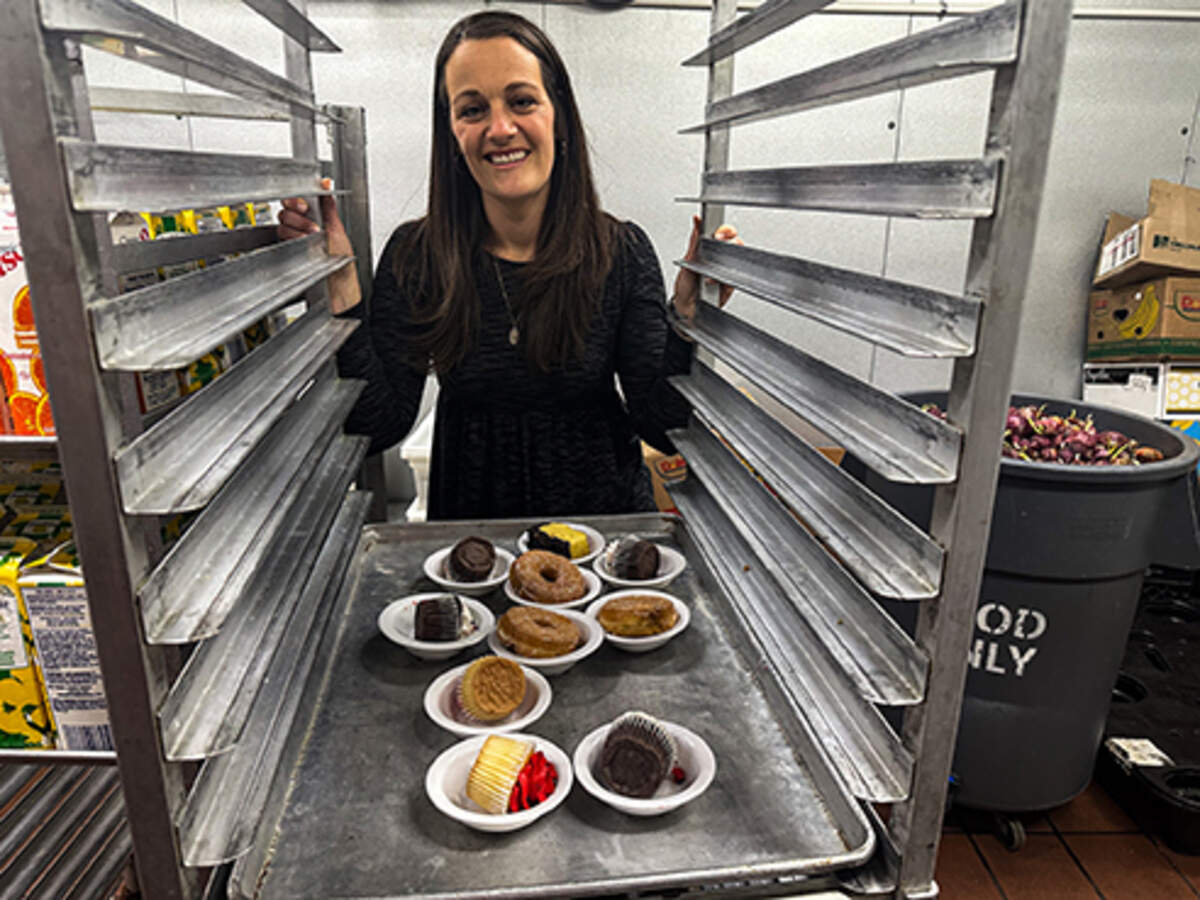
What Dole said about the need for food
The reason millions of people since 1977 got federal food support was because one of Kansas’s favorite sons (and a conservative Republican) Sen. Bob Dole of Russell teamed up with the liberal Democrat George McGovern and pushed through significant reform legislation, Walker said. The reforms, passed with bipartisan enthusiasm, helped clarify and streamline food support, taking for granted that food was a right in the country. Dole ended up as Senate majority leader for years before he ran for president in 1996.
“After he was long retired, he told me what happened,” Walker said. “In the past, Bob said, ‘We’d all disagree, and go at each other hard; but as soon as the clock showed six, we’d drop all that, and talk to each other as people. And that’s when legislation got done.’
“And then Bob said: ‘All that has gone away.’”
What has happened since then in Congress, Walker said, is not necessarily deliberate cruelty. “But it is stupidity.”
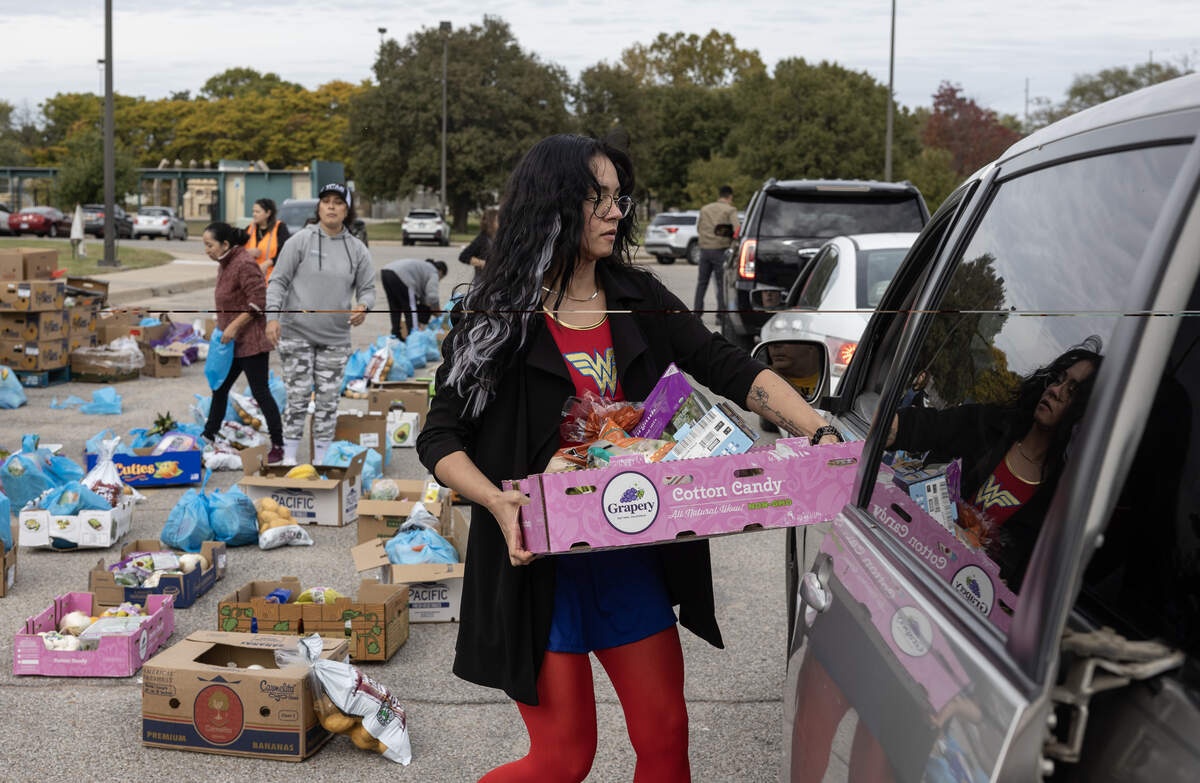
Congress could intervene and end the shutdown. But they were not doing so this past week, and the president wasn’t intervening to stop this debacle, as Walker calls it. If the SNAP money goes away, Thome said, that diner will likely see 550 guests a night, which will put a terrific strain on the Diner’s financial reserves.
“But God will provide,” Thome said. “He always does.”
She added one thing, though.
“Food is a fundamental right, in my opinion.”
The ending
This story will end with Laverne Darnell, a piano virtuoso whose lack of one leg does nothing to stop his fingers. He startled 459 diner dinner guests on Thursday night with an explosive performance of up-tempo blues and heart-stopping gospel melodies on the piano that sits near the servers in the dining room.
But first, here’s how to help:
The Kansas Food Bank needs donations and volunteers. 316-265-3663.
So does The Lord’s Diner: 316-266-4966
Catholic Charities: 316-264-8344
Sedgwick County has 49 food pantries served by the Food Bank, many of them run by churches or religious organizations, Walker said. Call them.
But now to Laverne Darnell and the piano – the point being that people are not abstractions. They are more than props for our social media posts and news stories.
They are human beings. Who suffer and play. Who grieve and sway to melodies.
As Emily Thome or Brian Walker will tell you, they are often delightful, no matter how hungry or destitute, no matter how they cannot see a future. On this night, Laverne with his one leg and two hands showed up hungry but gave more than he received.
The meal was half over at The Lord’s Diner when Shirrick Darnell and his father, LaVerne, approached that piano at the head of the dining hall.
Laverne, age 65, scooted his butt from his wheelchair onto the piano seat. He adjusted his short-brimmed cowboy hat and gave everybody a little grin.
He began to play.
His work-stained hands (he and his son are window-tinters when they can find work) pounded keys deftly and ferociously, up and down the board, notes cascading, ascending, descending. People stopped eating for a bit, though being hungry, they resumed. Gospel, country, rock ‘n’ roll, blues and more, done effortlessly, hands flying, crossing each other sometimes, and sometimes shifting to the lower bass keys to play out a stanza.
Listening were people black, brown and white, old and young. Abled and those with disabilities.
Laverne opened with “Amazing Grace.” Shirrick joined in, singing confidently while sitting in his father’s wheelchair.
A lanky young guy from Kenya, Hassan Melelek, put down his fork and sang along with Shirrick from a table away. Shirrick sang and nodded to Hassan to acknowledge him. Others sang across the room, some of them just mouthing the lyrics.
Hassan stood up, all six feet five or six inches of him. He walked over, put a hand on Shirrick’s shoulder and blended his African-inflected voice with that of the red-headed white man.
“…that saved a wretch like me…”
Supper ended, though it won’t be the last.
People left satisfied, some of them to tents set up on downtown concrete. Many, when they gave their dinner trays to the Diner staff, made a point of saying thank you.
They will come back.
And they will feel hungry again.
This story was originally published November 1, 2025 at 3:20 PM.