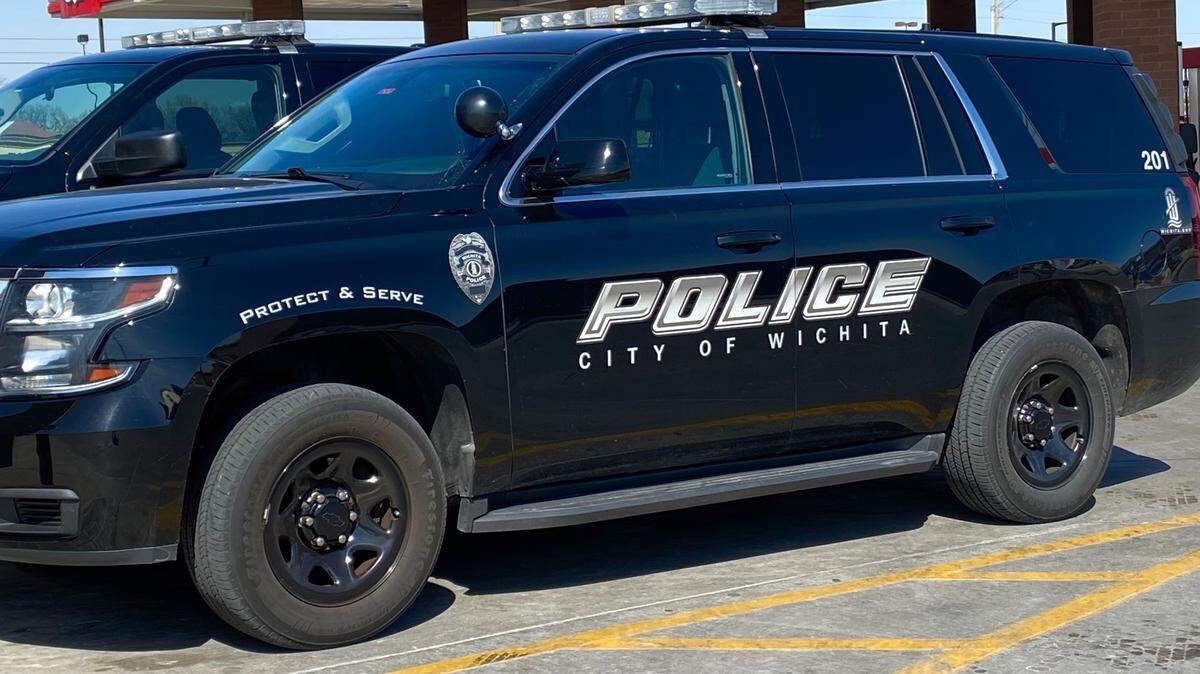
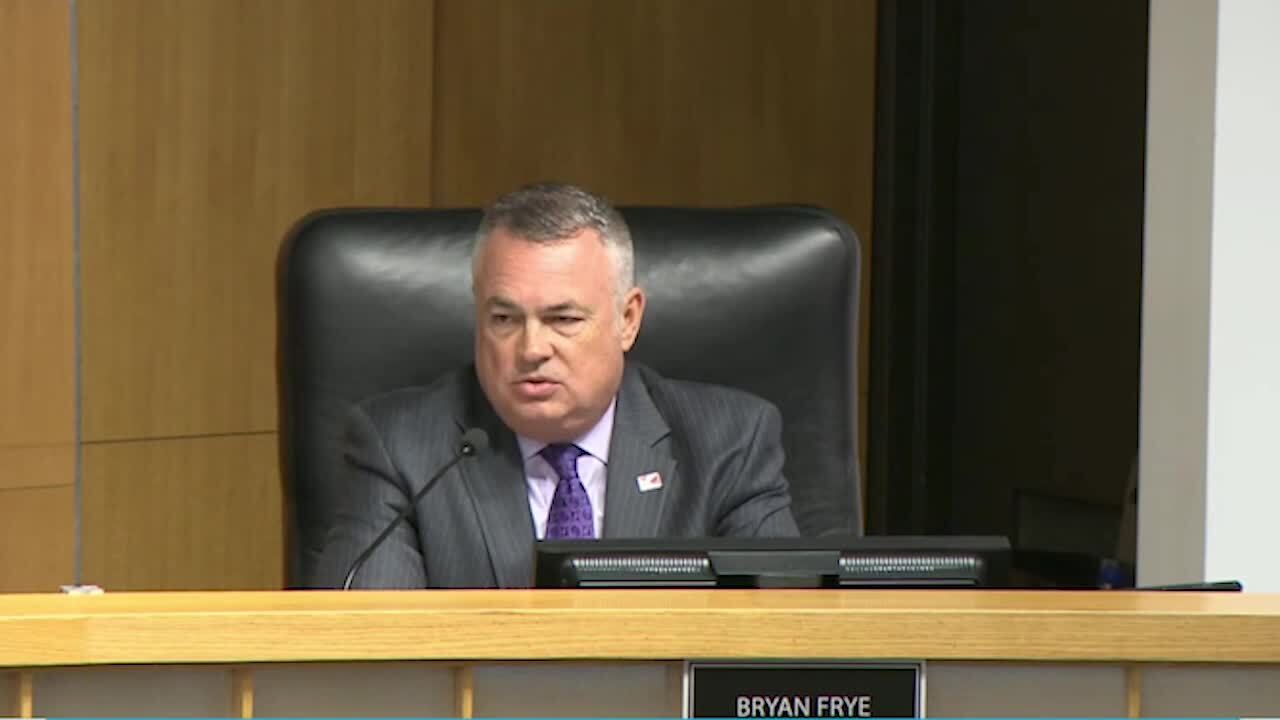
Police captain pulled from role with citizen’s board over missing details about messages
READ MORE
Secret messages among Wichita-area law enforcement
A pattern of racism and disdain for people shot by police has surfaced in private messages between a small group of Wichita-area law enforcement officers, including several who have shot civilians.
Expand All
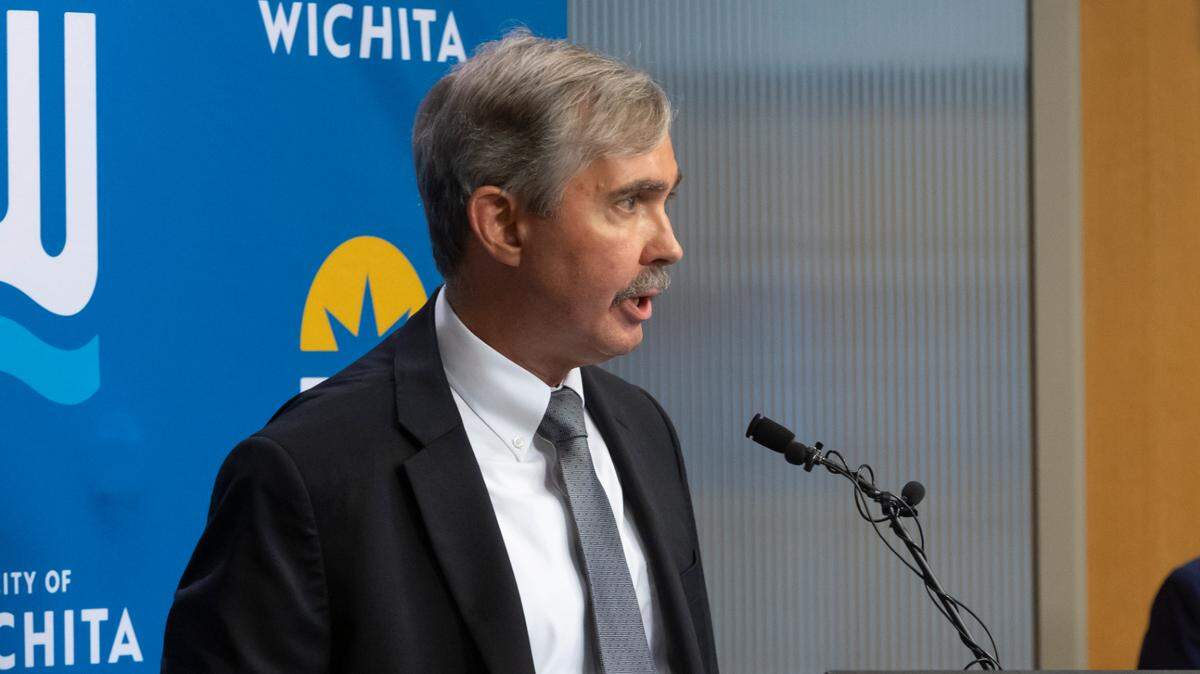
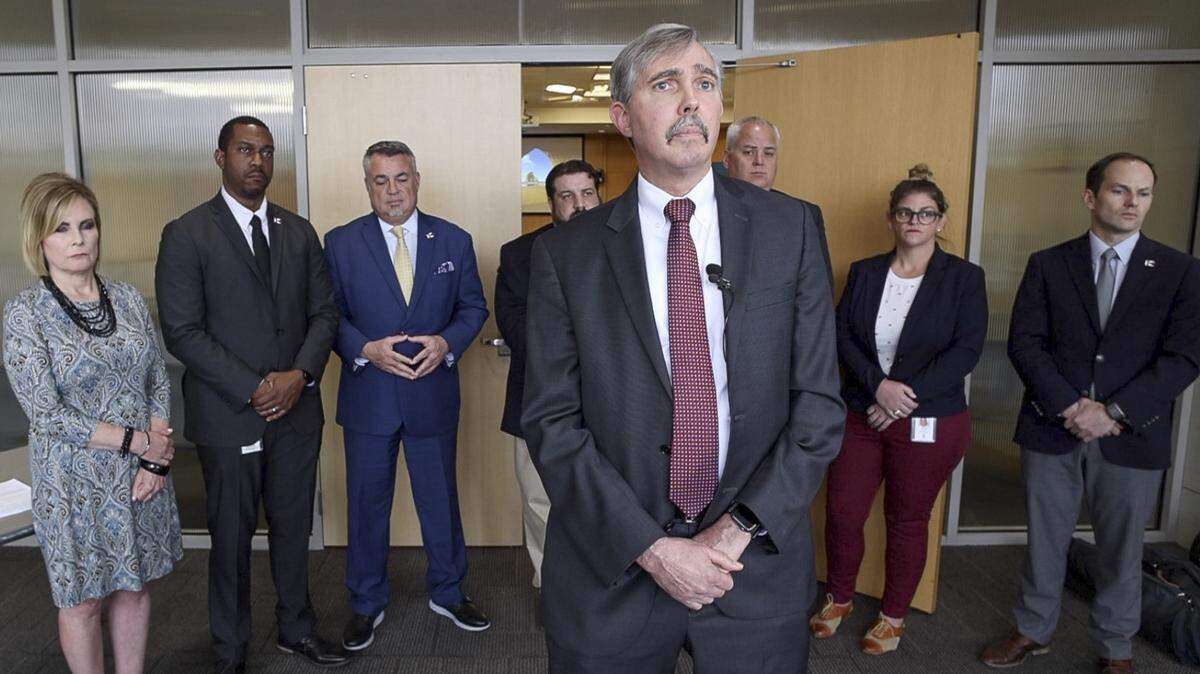
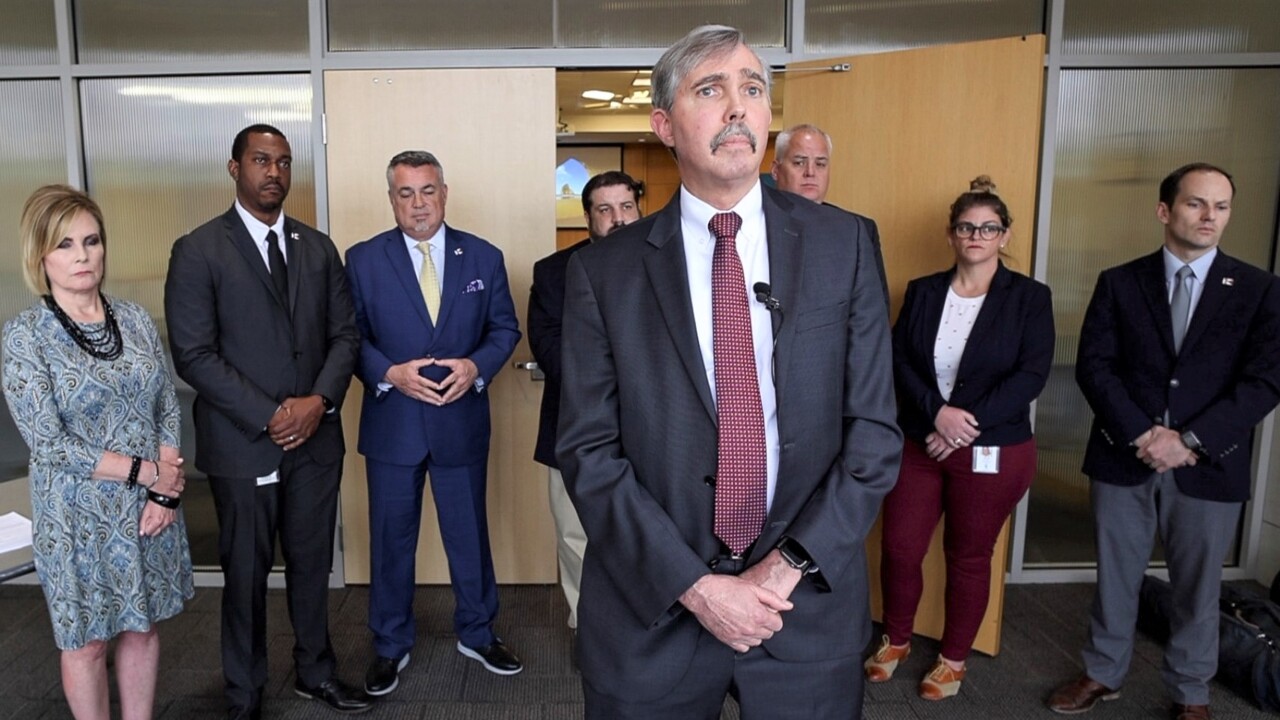
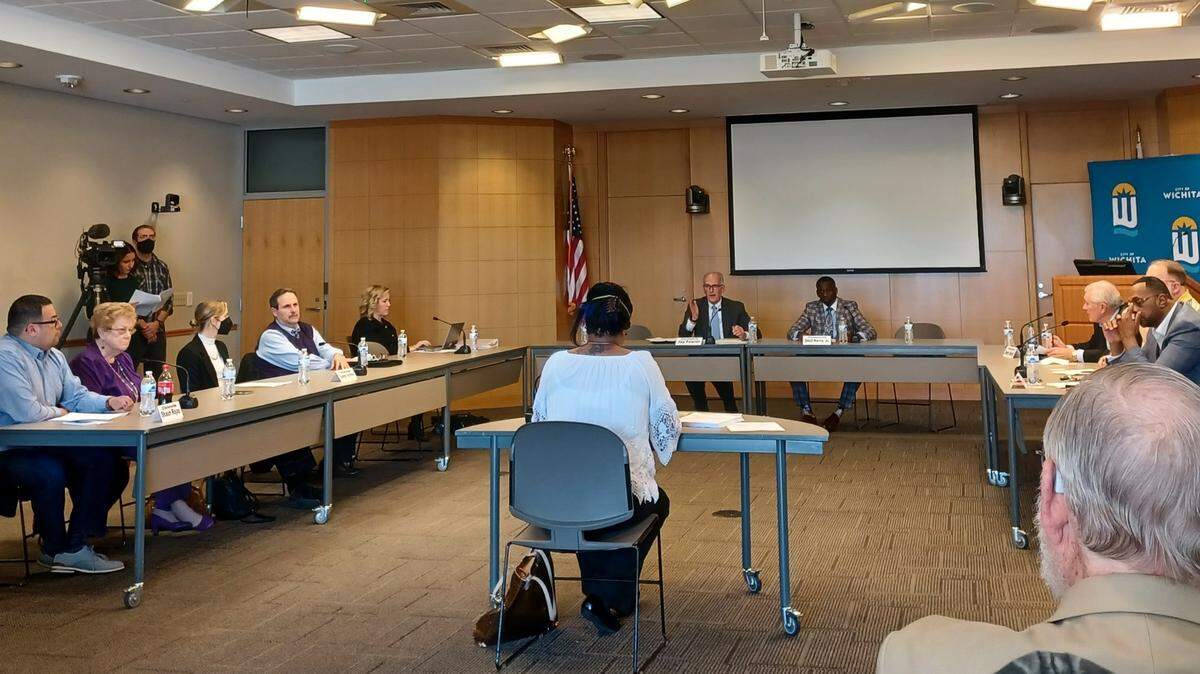
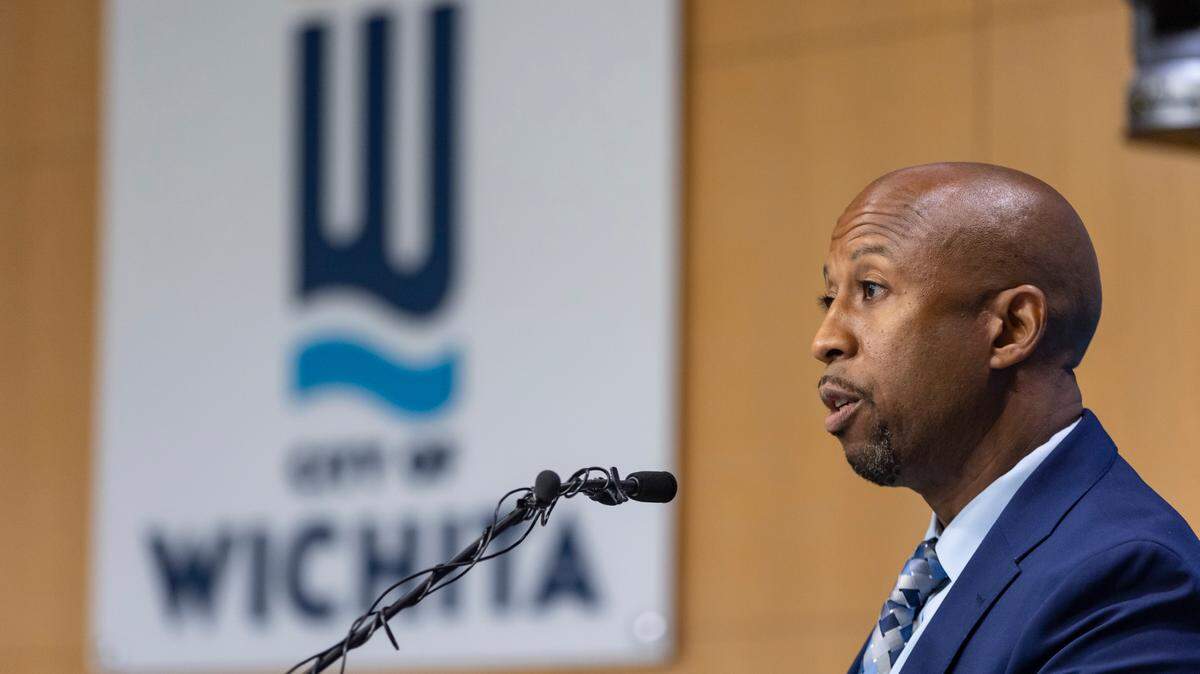
A Wichita police captain is being pulled from his role with the Citizen’s Review Board after key details about racist and inappropriate messages sent by officers were omitted from the board’s information packet, interim police chief Lem Moore said.
Capt. Wendell Nicholson said he provided the CRB with all the details investigators gave him.
Lt. Krys Henderson, who helps Nicholson oversee the CRB, and board member Pastor ODell Harris Jr. both said they don’t think Nicholson is to blame for missing details.
Moore, who inherited the case when he became interim chief March 1, said the missing details factored into his decision to move Nicholson. He said the move also was part of a regular rotation; Nicholson has served in the role since summer 2020.
“If the chief is blaming me for that, then I will take the responsibility,” Nicholson said.
Henderson and Nicholson both said leadership, including former chief Gordon Ramsay, limited some information given to the board. But that information, about closed cases the CRB could review, is different from the more detailed summaries of cases the CRB chooses to review. Those are written by Nicholson and Henderson from information provided by the professional standards bureau.
The removal of Nicholson from work with the board set up to promote police transparency is the latest development in a case The Eagle detailed in a March 21 report about messages between Sedgwick County sheriff’s deputies and Wichita police officers. Those messages included racist memes and inappropriate comments about shooting people. A white Wichita officer sent a photoshopped image of a naked Black man sitting on a dying George Floyd.
The Wichita Police Department has been widely criticized for its handling of the case.
The Eagle reported that key details were left out when the CRB first heard about the case in February.
The summary given the board mentioned a deputy messaging three Wichita officers about shooting civilians, but did not say the Wichita officers liked, loved and commented back. The deputy and three Wichita officers have all shot or killed civilians.
The messages came to light in April 2021 when investigators searched the phone of a Sedgwick County deputy in an unrelated case. Eleven Wichita officers and three deputies were investigated in connection with messages found on the deputy’s phone.
That deputy and two others who sent racist memes resigned or retired, which officers facing termination often do.
None of the Wichita officers were forced out. An officer who insulted police leadership, including calling former chief Gordon Ramsay a tool, was given a harsher punishment than the officer who sent the Floyd meme.
The police department did not notify the district attorney’s office of that racist message, which could affect the officer’s cases if he were shown to be biased.
One day after The Eagle’s story published, City Manager Robert Layton ordered a third-party investigation into the department’s handling of the case.
The additional scrutiny of the case has led police to finding out a Black officer sent the Floyd photo to the white officer, who then sent it on to a deputy. That officer is currently under investigation.
The third-party investigation also could determine who’s at fault for the details missing in the CRB packet. It’s unclear how many details, if any, the city will release once the investigation concludes.
Board hears complaints
The CRB was created to advance oversight and transparency in the police department.It reviews police misconduct and citizen complaints against officers.
It has limitations. It can only review closed cases. It can’t subpoena witnesses. It can’t overturn or enforce any discipline. It can recommend changes in WPD policy.
Board members get a brief description of closed cases each month and can ask to review any of cases in more detail at the next meeting.
The board relies on police for information in any case.
Board chair Jay Fowler complained in December about the dwindling details in the summaries of cases given to the board.
“We need enough to know the substance of what the allegation is if we’re going to call it for review, because otherwise I suspect we will ask for review more cases than maybe we need to,” Fowler said during the December meeting.
Fewer and fewer details had been provided in the last few months before that, Fowler said in a phone interview.
Nicholson told the CRB in December that after he edits case summaries provided by the professional standards bureau, then-chief Ramsay “cuts it down even further. I will tell him to leave more information in there.”
Henderson, who has been with the department for 21 years, said Ramsay and his chief executive officer, Lt. Robert Reichenberger, would trim down information already shortened by Nicholson and him.
“I can’t speculate about why (Ramsay) wanted them trimmed down” even more, he said. “Maybe a little too transparent than maybe the previous chief wanted.”
Henderson and Nicholson would eliminate things like officer names and trim down the PSB summaries into a synopsis. Then Ramsay and Reichenberger would shorten that further, he said.
Henderson said he never dealt with Ramsay or Reichenberger directly, but would see changes they made in red in emails from Nicholson. Henderson said Nicholson would frequently tell him Reichenberger and Ramsay “wanted them redacted more” until he eventually stopped editing those documents altogether, leaving it up to Nicholson.
In a text message Saturday, Ramsay, who left March 1 and is now running for sheriff in his home state of Minnesota, said WPD had been working to get the CRB more details after a recent complaint by the board.
“We worked to make the summaries more objective and less subjective,” he said. “The goal has always been to provide the basic facts and be as objective as possible in presenting the summaries.”
He did not answer additional questions about whether he and Reichenberger restricted what the board saw.
In an email, Reichenberger echoed what Ramsay said.
“Chief Ramsay’s goal was to make the (CRB) Summaries more objective and less subjective,” he said. “After Captain Nicholson made redactions to the summaries, he forwarded them to Chief Ramsay and me to review. The summaries were then reviewed for grammar, spelling, content and accuracy. After the review and any corrections were made they were sent back to Captain Nicholson to forward to the CRB.”
Henderson said, after constantly having his closed cases edited down, he changed his focus to writing only the more detailed summaries of cases the CRB asked to review. Nicholson and he would both write those summaries. Henderson said Nicholson wrote the February summary detailing the case about the messages using information from the professional standards bureau.
Henderson said he and Nicholson don’t have access to all the details that the professional standards bureau does and have to write based on what they’re given.
Limited information
Board member Pastor ODell Harris Jr. said the Holy Spirit led him to pick out the case that included the racist and inappropriate messages while scanning closed cases at the December meeting.
Otherwise, he would have never known.
The entire description the CRB saw on the case read: “An investigation was requested in reference to text messages involving officers of the Department and a member of an outside agency.”
That case number appears to be the one involving the racist message sent by the white officer, who was given a written reprimand.
When asked if the description was misleading about what actually happened, CRB chair Fowler said: “I’m not going to say it’s misleading, but I can see how you could reach that conclusion.”
Fowler said he thinks the police department has been forthcoming.
Harris called the lack of details “bullcrap.”
In February, the CRB’s summary of the case said that a deputy sent three Wichita officers a message about them being the “ultimate de-escalators” who “permanently deescalated people who needed permanent de-escalation.”
The summary did not say that they liked, loved the comment or what they responded back.
“That’s Capt. Nicholson’s responsibility,” Moore said, “he’s responsible for that and that’s who it comes from.”
A deputy chief assigned those Wichita officers coaching and mentoring
Henderson said he doesn’t think Nicholson would intentionally omit facts.
“I’ve worked with Capt. Nicholson for a long time. He’s been one of my mentors too as well. If anything, I think it’s just the opposite … where he would be more transparent as opposed to being less transparent,” he said. “I just know him well enough to know that I don’t see him trying to hide anything from the board or do anything like that. He has no personal gain from it.”
Henderson started helping with the board when Nicholson started. He decided to leave when Nicholson leaves in May.
CRB member Harris also didn’t think Nicholson would leave out key details.
“I just know Nicholson to be a stand-up man, regardless of being a police officer,” he said. “I have a personal belief, a community belief, a pastoral belief in Capt. Nicholson.”
Harris has been with the board since it started meeting in 2018. He said they’ve made good headway with Nicholson leading.
Harris also said the perception of removing a Black captain and replacing him with a white one when the board dives into a case involving racist messages would “raise some red flags.”
Moore, who is Black, said his decision was not based on perception.
“There were two white guys before (Nicholson),” he said.
This story was originally published April 6, 2022 at 12:00 AM.

.jpeg)