
Investigation complete into Wichita’s earthquakes; it’s not the oil and gas industry
A Kansas regulating agency on Wednesday released the findings of its investigation into the recent Wichita earthquakes, concluding they were not “related to oil and gas industry activity.”
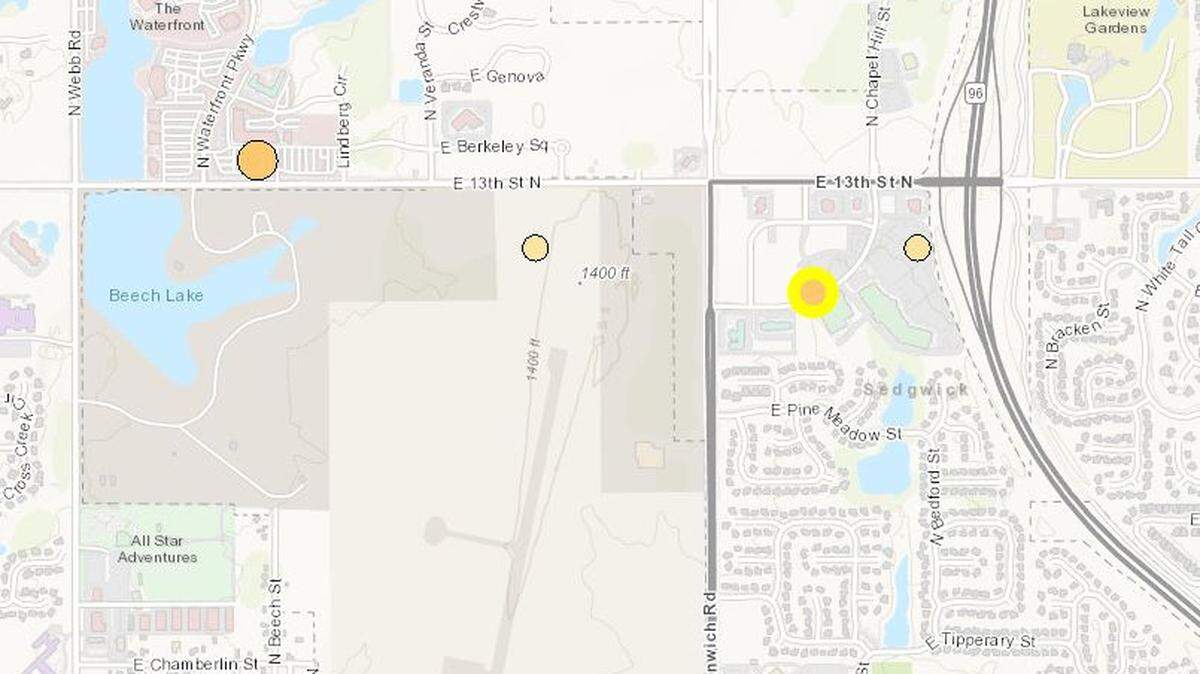
East Wichita has been the epicenter for 15 earthquakes in the past month, according to the Kansas Geological Survey. The latest was a 2.1 magnitude at 3:45 a.m. on Wednesday morning, the KGS shows. Eleven of the earthquakes had epicenters between 13th and Central and Webb and K-96. Two were just north of 13th in that area; one near 21st and Webb and then an outlier near 29th, east of the Stryker Sports Complex.
“Based on our investigation, KCC staff does not believe the seismicity in Wichita, Kansas is tied to any oil and gas activities in the area,” Ryan A. Hoffman, the Kansas Corporation Commission director of the conservation division, said in a news release.
The investigation included looking at historical records for Arbuckle and Granite Wash injection wells within a 6-mile radius of the earthquake epicenters, checking for new drilling within 3 miles of the epicenters of the earthquakes and checks in the area to verify “compliance with permit conditions” at the wells.
Five wells were in the 6-mile radius and none had recent volume increases, the report says. Also, no new wells were “recently completed within the area.”
The largest in the series of earthquakes was a 3.7 magnitude on Saturday, when the KGS reported five earthquakes. KGS Senior Scientist Rick Miller said the 3.7 magnitude could be the largest in Wichita since 1948.
Miller has said he believes the earthquakes are a natural event on a fault line, letting off built up energy.
“These sequences like this are going to happen and eventually they’re going to run out of energy … until some point in the future, maybe 100 years, before it comes active again,” he previously told The Eagle.
Miller said the actual drilling associated with fracking to extract oil or gas has been proven to lead to earthquakes in other areas, including Oklahoma, but not in Kansas.
However, wastewater injection associated with fracking has changed pressures in south-central Kansas. That pressure correlates with earthquakes in areas like Kingman, Harper, Sumner and part of Sedgwick counties.
“We don’t see that here” in Wichita, he said.
The generally considered threshold for feeling an earthquake is a 2.5 magnitude, Miller said. It takes a 5.5-plus magnitude earthquake to cause structural damage.
The KCC, which regulates oil and gas production, investigates earthquakes over a 3.5 magnitude or in a scoring process that takes into consideration multiple earthquakes. Wichita had a 3.7 magnitude and the series of earthquakes also scored high enough to set off an investigation.
Earthquakes statewide have spurred four KCC investigations this year.
This story was originally published December 23, 2020 at 9:55 AM.