
Don’t assume omicron is behind your COVID infection — delta still lurks. What it means
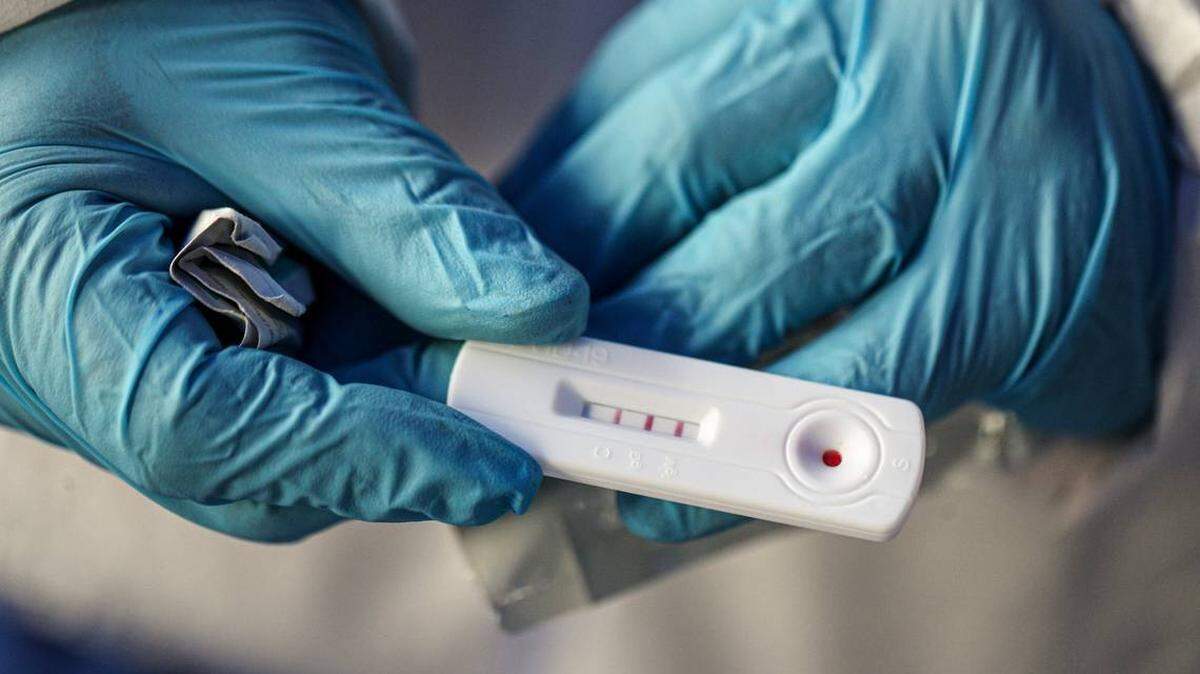
Although the omicron coronavirus variant is dominating positive cases in the U.S., don’t assume it’s behind your infection.
The delta variant still lurks amid the nation’s coronavirus surge, Centers for Disease Control and Prevention data shows.
Between Dec. 19 and Dec. 25, the omicron variant accounted for 58.6% of coronavirus infections, the delta variant made up 41.1% of infections, and .2% were attributed to “other,” according to the most recently available CDC data estimates as of Dec. 28.
However, in some regions across the U.S., the delta variant is the most dominant, data reveals.
It’s important to remember delta is still out there as a COVID-19 test only shows if you’re positive or negative for the virus — not whether you’ve been infected with the original virus strain or one of its variants.
Here’s why.
Both omicron, believed to potentially spread more easily, and delta are the only variants listed as ones “of concern” currently, according to the CDC, with delta having the potential to cause “more severe cases.”
Even though the data on omicron, discovered Nov. 24 in South Africa, is early, some research suggests the symptoms may be less severe than previous variants.
If omicron’s symptoms prove to be less severe as early data suggests — and delta is still around with a potential to create more severe symptoms — a false sense of security should be avoided if you test positive for COVID-19, assume its omicron and think it to be more mild.
Does one variant of concern make you sicker than the other?
Dr. Anthony Fauci, the chief medical adviser to President Joe Biden, said during an interview on ABC’s “This Week” on Dec. 26 that recent U.K. data from Scotland and England suggests that the omicron variant causes a “lesser degree of severity” in terms of illness.
A University of Edinburgh in Scotland study published Dec. 22 found early data that suggests there is a two-thirds reduction in the risk of being hospitalized with omicron compared to delta.
In England, Imperial College London published a recent study that found “evidence of a reduction in the risk of hospitalisation for Omicron relative to Delta infections.”
“Even though we’re pleased by the evidence from multiple countries, that it looks like there is a lesser degree of severity, we’ve got to be careful that we don’t get complacent about that,” Fauci warned.
According to the CDC, more data is needed to determine the severity of omicron infections.
Can you tell the difference between the virus variants?
With omicron, some of the most commonly reported symptoms are “cough, fatigue, and congestion or runny nose,” according to a CDC study of 43 people infected with the variant.
Compared with delta, there is “no clear difference in early symptoms (3 days after test),” according to data collected in London in the ZOE COVID Study, McClatchy News previously reported.
“The trick is you’re not going to be able to tell the difference between omicron, delta, lambda, plain COVID from the beginning,” Dr. Emily Landon, the University of Chicago’s chief hospital epidemiologist, told NBC Chicago.
How omicron and delta compare across the U.S.
The CDC’s most recent data, Dec. 19 through Dec. 25, shows omicron and delta variant infections differ in their prevalence across 10 regions that make up the U.S. and other territories.
The omicron variant dominated eight of the 10 regions, and delta dominated two.
In region one — Connecticut, Maine, Massachusetts, New Hampshire, Rhode Island and Vermont — the delta variant is responsible for 55.3% of infections compared with the omicron variant making up 44.5% of the infections. Just .2% of the total infections in the region were listed as “other.”
Region two — New Jersey, New York, Puerto Rico and the Virgin Islands — offers a different picture with 11.5% of infections attributed to delta and 88.4% to the omicron variant. There were 0.1% in terms of “other” infections.
Region three — Delaware; Washington, D.C.; Maryland; Pennsylvania; Virginia; and West Virginia — shows 42.1% of infections were due to delta and 57.7% of infections were omicron. Only .2% were attributed to “other.”
In region four — Alabama, Florida, Georgia, Kentucky, Mississippi, North Carolina, South Carolina and Tennessee — 21.5% of coronavirus cases were caused by delta and 78.3% of cases were due to omicron, with 0.2% being “other.”
In region five — Illinois, Indiana, Michigan, Minnesota, Ohio and Wisconsin — 31.7% of cases were delta, 68.1% of cases were omicron, and 0.2% were “other.”
In region six — Arkansas, Louisiana, New Mexico, Oklahoma and Texas — 13.2% of cases were identified as delta, and 86.7% of cases were identified as omicron. Just .1% were listed as “other.”
In region seven — Iowa, Kansas, Missouri and Nebraska — the delta variant dominates, making up 71.4% of infections, and the omicron accounted for 28.1% of infections. Only .4% made up “other.”
In region eight — Colorado, Montana, North Dakota, South Dakota, Utah and Wyoming — 43.1% of cases were delta, 56.7% were omicron, and .2% were “other.”
In region nine — Arizona, California, Hawaii, Nevada, and territories such as American Samoa, the federated states of Micronesia, Guam and a few others — 45.2% of cases were delta and 54.5% of cases were omicron, with .3% being counted as “other.”
In region 10 — Alaska, Idaho, Oregon and Washington — 25.1% of cases were delta, 74.8% of cases were omicron, and .1% were “other.”
The CDC uses a model called Nowcast that “estimates more recent proportions of circulating variants” and updates data each Tuesday, according to its website.
White House COVID-19 response coordinator Jeffrey Zients said during a Dec. 17 briefing that vaccines work against omicron.
“Especially for people who get booster shots when they are eligible,” he said.
“If you are vaccinated, you could test positive. But if you do get COVID, your case will likely be asymptomatic or mild.”
This story was originally published December 28, 2021 at 9:53 AM with the headline "Don’t assume omicron is behind your COVID infection — delta still lurks. What it means."
.jpg)