
Should you wait 6 months for a COVID booster? Omicron’s spread changing expert advice
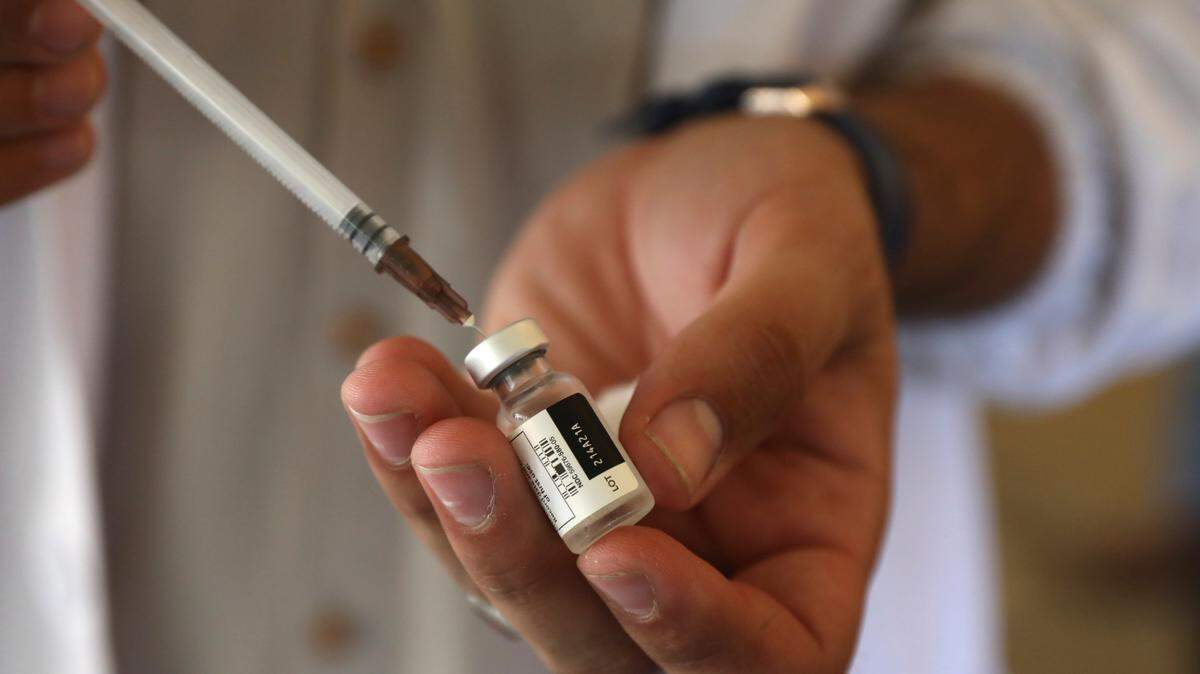
Since COVID-19 booster shots became available, health experts have cautioned the public to wait at least six months, or longer, between doses of the Pfizer and Moderna vaccines.
But with many people eager to maximize their protection as the highly infectious omicron variant rapidly soars to viral dominance, expert opinions are shifting.
Recently, Germany’s vaccination authority, STIKO, changed their recommendation from six months to three, citing fast-growing omicron cases.
In the United States, the omicron variant has accounted for over 73% of new coronavirus cases, Dec. 22 Centers for Disease Control and Prevention data show.
The official recommendation for adults who have received their two Pfizer or Moderna doses is to hold off for six months before getting a booster. For recipients of the Johnson & Johnson single-dose vaccine, the wait is two months.
Of the roughly 200 million vaccinated Americans, the smallest margin — 16 million — chose the J&J vaccine, outlets reported.
Given the current COVID-19 climate, a half-year wait might not be entirely practical for everyone, Dr. Daniel Barouch, head of virology research at Beth Israel Deaconess Medical Center in Boston, told NPR.
“In the setting of a new variant — and wanting a higher degree of protection for the holidays, then I do think that clinical judgment could involve boosting a bit earlier,” Barouch told the outlet.
Still, it’s important not to rush out and get boosted at the earliest opportunity, he said.
“I wouldn’t boost too much earlier,” Barouch told NPR. “For example, I wouldn’t boost a month or two after the initial vaccine or vaccines. But if somebody is in the second half of the six-month time frame, and if they really feel like they would benefit from a higher level of protection, then I don’t see a downside in getting boosted a bit earlier.”
So how did the six month rule come to be?
Vaccines need time to work, time for the antibodies to establish themselves and for the body to recover from the dose.
While six months is a somewhat “arbitrary” waiting period, it was settled on as a compromise between two competing factors, Miles Davenport, of the University of New South Wales’ Kirby Institute, told Bloomberg in November. Taking the booster too soon would make it less effective, but the longer people wait to get it, the more time they spend at a greater risk of infection.
“When you get the third dose, I would say, is probably going to be dependent on how much virus is circulating,” he told Bloomberg. “And if there’s a lot of virus circulating, you’re probably willing to compromise a little bit on your peak response in order to get the protection sooner.”
Results from lab studies suggest the first two doses of Pfizer or Moderna’s vaccines, or Johnson & Johnson’s single dose, don’t provide reliable protection against omicron infection, McClatchy News reported.
The Pfizer and Moderna booster shots both offer substantially improved infection protection, studies found, with a 25-fold increase in antibodies one month after a Pfizer injection, and a 37-fold increase with Moderna’s.
For the unboosted, there’s still some good news: Studies show the Pfizer and Moderna vaccines remain effective against COVID-19 — the disease caused by the infection — and significantly lower the chances of becoming severely ill or hospitalized, McClatchy reported.
This story was originally published December 22, 2021 at 2:14 PM with the headline "Should you wait 6 months for a COVID booster? Omicron’s spread changing expert advice."