Omicron variant is complicating ‘fully vaccinated’ definition. Should it be updated?
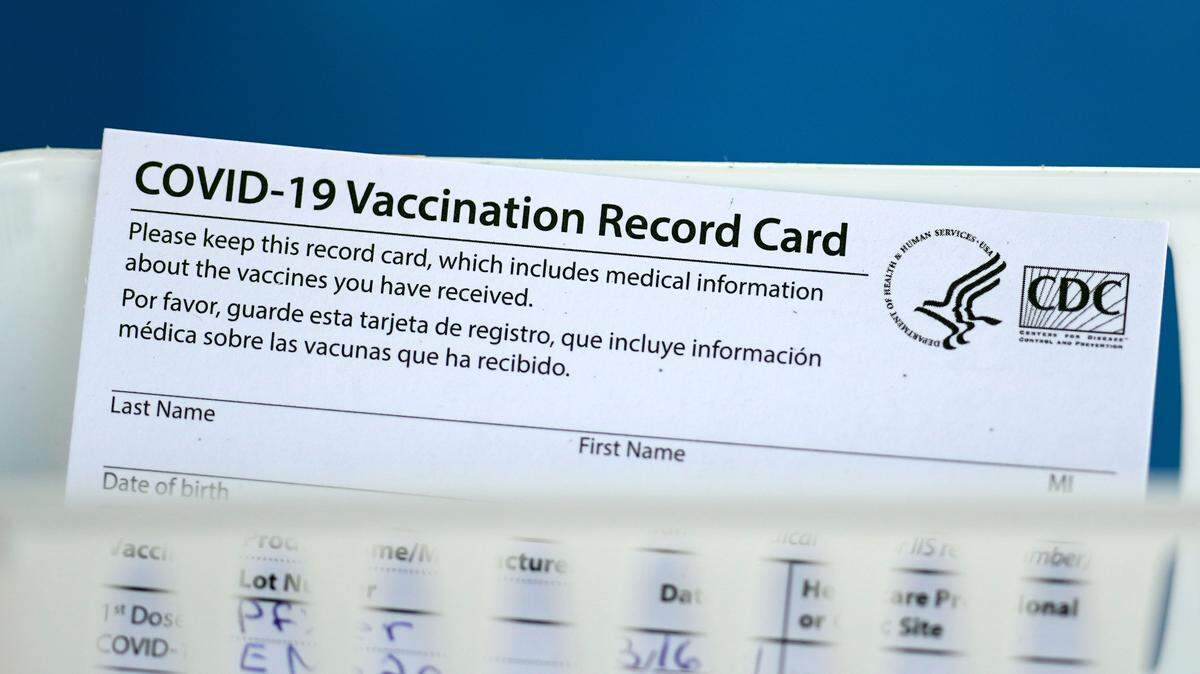
What it means to be fully vaccinated against COVID-19 is more than a definition. It’s the green light for some to go to work, attend school in person or travel outside the country. But the omicron coronavirus variant is complicating what we initially considered optimal protection against COVID-19.
You’re considered fully vaccinated two weeks after your second dose of the Pfizer or Moderna vaccines, or two weeks after your single-dose Johnson & Johnson shot. When boosters became widely available, the definition remained unchanged.
Now, emerging evidence, mostly from laboratory studies, suggests your primary vaccination series may not be enough to protect you from omicron infection — but it’s still highly effective against severe COVID-19, including hospitalization and death.
Booster shots, however, lead to a massive increase in antibody levels when put up against the omicron variant, leading many to believe COVID-19 vaccines should be a three-dose deal.
“We are fully vaccinated against the original SARS-CoV-2, but the original SARS-CoV-2 is not circulating anymore,” Ali Ellebedy, an associate professor of pathology and immunology at Washington University School of Medicine in St. Louis, told STAT. “Having that new variant is changing the rules.”
The mutant is now the dominant version of the coronavirus in the U.S., comprising an estimated 73% of cases as of Dec. 21; the delta variant makes up about 27% of infections.
Some experts speculate that public health messaging would benefit from a “fully vaccinated” definition change to include boosters, while others worry the update could contribute to complications in the workplace and overall vaccine hesitancy.
States, organizations taking the matter into their own hands
New York Gov. Kathy Hochul has said she’s working on including boosters in her state’s “fully vaccinated” definition, some colleges have mandated boosters for all staff and students, and the NBA has offered “incentives” for players to get a third shot.
This wouldn’t be the first time vaccine definitions have changed. In 1989, the measles/mumps/rubella (MMR) vaccine changed from a single-dose to a double-dose shot following a measles outbreak among vaccinated children.
As “science evolves, we will continue to review the data and update our recommendations as necessary,” Centers for Disease Control and Prevention Director Dr. Rochelle Walensky said during a Dec. 15 White House COVID-19 briefing.
Dr. Anthony Fauci, a leading voice on the pandemic and the White House’s chief medical adviser, said on Dec. 17 a definition update is “on the table and open for discussion,” but that “right now, it’s a bit of semantics.”
“I’m not sure exactly when that will happen,” Fauci told CNBC’s Andrew Ross Sorkin on “Squawk Box.” “But I think people should not lose sight of the message that there’s no doubt that if you want to be optimally protected, you should get your booster.”
COVID-19 vaccines should’ve always been three doses
Early data shows a Pfizer booster increases antibody levels 25-fold against omicron a month later compared to two doses. Moderna boosters, which are half the dose of the primary shots, offer a 37-fold increase in antibodies, and an 83-fold jump when given the original dose (100 micrograms).
Meanwhile, the J&J shots offer little to no protection against omicron. The company is working on collecting data on its booster.
“I’ve always said this is a three-dose vaccine,” Dr. Peter Hotez, a professor and dean of tropical medicine at the Baylor College of Medicine in Texas, told CNN on Dec. 15. “The reason is, when you get that third dose, you get a 30- to 40-fold rise in virus-neutralizing antibodies, and therefore there’s more spillover protection against new variants, including omicron.”
Eric Topol, the founder and director of Scripps Research Translational Institute in California, told STAT your booster status should determine whether you’re fully vaccinated against COVID-19.
“It was very clear that no one expected two shots to last a lifetime,” Topol told the outlet. “I consider now that the third dose — so-called booster — is an essential part of vaccination against COVID-19.”
Another doctor says a definition update is long overdue.
“Since the third shot is now considered vital to provide enhanced protection against hospitalization, it’s well past time to update the definition of fully vaccinated and move away from ‘booster’ semantics,” Dr. Vin Gupta, an affiliate assistant professor of health metrics sciences at the University of Washington, wrote in a tweet. “Businesses and schools develop policies based on this key definition.”
Changing ‘fully vaccinated’ definition not as easy as it seems
Updating the definition of “fully vaccinated” is not as simple as it seems, especially if states take the reins.
“I think states are going to have a hard time doing it, so long as the booster is under an emergency use authorization and it’s unclear when [the U.S. Food and Drug Administration] is going to give full approval to the booster — probably some time soon,” former FDA commissioner Dr. Scott Gottlieb told CNBC on Dec. 17.
“So, I think that they’re going to be reluctant to do that,” Gottlieb said. “I wouldn’t expect them to do that, certainly until the booster is fully licensed but maybe until next fall.”
This story was originally published December 21, 2021 at 2:23 PM with the headline "Omicron variant is complicating ‘fully vaccinated’ definition. Should it be updated?."