
With limited COVID vaccine doses in Kansas, Sen. Moran says he’s searching for answers
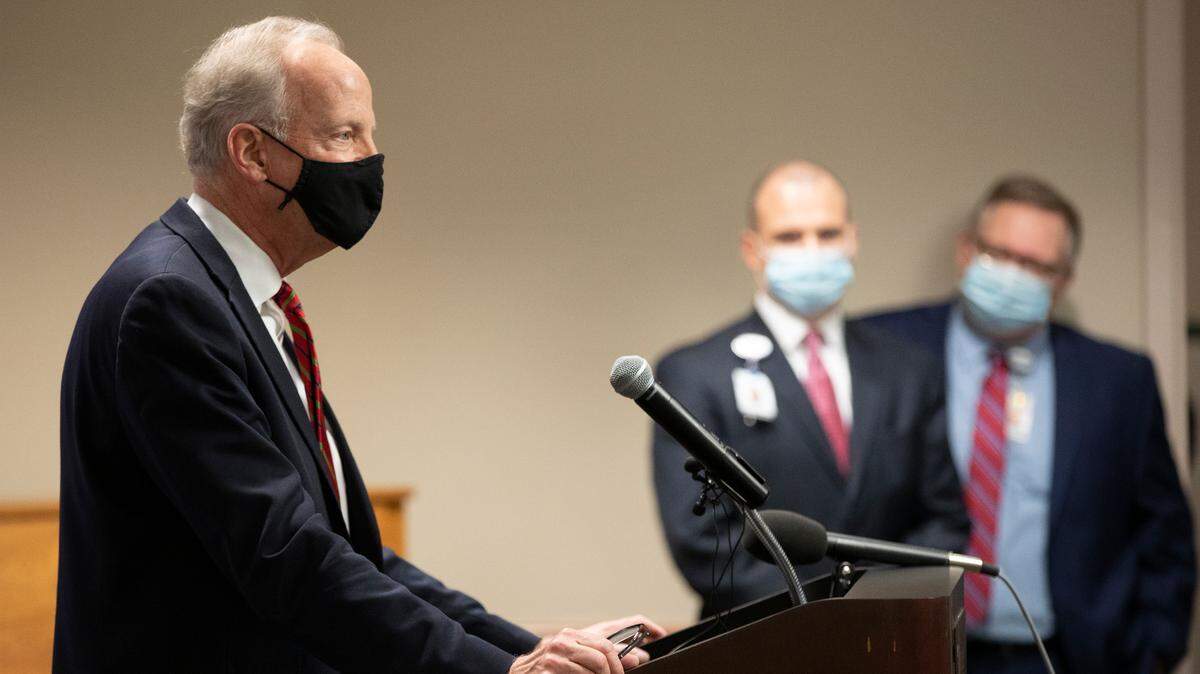
As the slow rollout of the COVID-19 vaccine continues in Kansas, Sen. Jerry Moran said he is looking for a way to get more doses to the state and in the arms of citizens.
Speaking Wednesday during a media briefing hosted by the University of Kansas Health System, Moran said he has heard concerns from across the state about the vaccine rollout and government transparency, at both a state and a national level. He noted the insufficient amount of doses allocated to Kansas, even though it has been proportional for the state’s population.
“I think an unanswered question is what is the capacity of those who manufacture Pfizer and Moderna to manufacture more?” he said. “That’s a quest that I’m on, trying to see if the problem is we need greater manufacturing capacity, or is most of the problem just in the logistics of getting it distributed.”
On Tuesday, President Joe Biden spoke of “the ambitious goal of 100 million shots in 100 days.” He estimated that would equate to 60 million people fully vaccinated because the current vaccines need two doses administered about a few weeks apart.
“I’m pleased that President Biden announced more,” Moran said. “In fact, I think the stated goal of 100 million doses administered within 100 days, we should double that.”
Biden’s goal has been criticized by some public health experts who consider it too modest, considering the country was already about on track to meet the goal. He later suggested a higher goal of 150 million shots.
The president did say the U.S. government is working to finalize the purchase of an additional 200 million doses, but they likely wouldn’t be delivered until this summer.
Moran said only about half of the doses distributed to Kansas have been administered, and the system needs to be improved to make it less “complex and convoluted” when vaccines are available more broadly.
Dr. Steve Stites, a the chief medical officer at KU, pushed back on Moran’s citation of 50%, suggesting it was higher. Health officials in the state have said they have prioritized getting shots in arms over filling out reports.
“My feeling is there’s a lot more been given, but it’s hard to register that you gave it,” he said.
Wednesday’s statistics from the Centers for Disease Control and Prevention showed about 43% of Kansas’s doses had been administered. The Kansas Department of Health and Environment’s data put the percentage at about 45%.
The Associated Press reported the percentage dropped from about 62% after a shipment of nearly 93,000 doses was delivered to pharmacies for use at nursing homes. Still, as of Tuesday, Kansas ranked 47th in the CDC’s inoculation rates.
Moran said “it bothered me” earlier this month when Kansas was reported to be last in the United States for administering the vaccine. At the time, state officials explained it away as a reporting lag.
“That makes sense to me,” Moran said with a shrug. “Although the question I had is why is Kansas last, if it’s a problem of filling out the report and submitting it, wouldn’t other states be in the same circumstance we are?
“It’s one of those things that we’re sorting through. I want to give people the benefit of the doubt. I’m sure that record-keeping is a part of it. It always is. But it’s not, shouldn’t, wouldn’t be just a problem for Kansas.”
Stites said the University of Kansas Health System has administered 80%-90% of its doses, and will give out the rest of the shots by the end of the week. He added that the question remains of whether a small degree of saving doses for second shots is affecting the data.
“I just don’t see a lot of first doses sitting on the shelf, because everybody’s running out,” Stites said. “This record-keeping thing isn’t critical. I think the big thing is let’s get the volume of vaccine up, let’s get it distributed.”
The doctor said he has spent hours trying to explain the rationale for how distribution has been prioritized.
“There are that set of people who are vaccine-deniers,” Stites said, “but man there are a whole lot of vaccine-now-ers: ‘I want it right now and why is somebody else getting it and not me.’ ... The base problem is not enough vaccine.”
Compromise on Congressional COVID aid package
Moran said he is one of eight Republican senators working with eight Democratic senators in a group dubbed the “Sweet 16” that is working on another COVID relief package. He said the plan has several economic measures, some of which have broad support and others that are controversial.
“Let’s move forward with the vaccine portion of the ... relief for COVID 19,” Moran said he told White House pandemic and economic advisers. “It’s one of my themes here: just because we can’t do everything, we can do some things. There is broad support for more money for vaccinations, more money to purchase more vaccine, more money to provide assistance to states and local units of government in administering the vaccine.
“With the other things that are going on in Congress, let’s do that now, and then continue to work on what the next phase of economic help should look like. Because I’m of the view that the economic well-being of our country is determined by how many people get vaccinated and how quickly we can slow and eliminate the spread of COVID-19. While we think of the vaccine as a solution to people’s health and well-being, it is also a solution to the economic opportunities that Kansans and Americans can have in light of the virus.”