
Lincoln Heights, ‘Bradley Fair of its day,’ celebrates 75 years, thanks to fruity twist
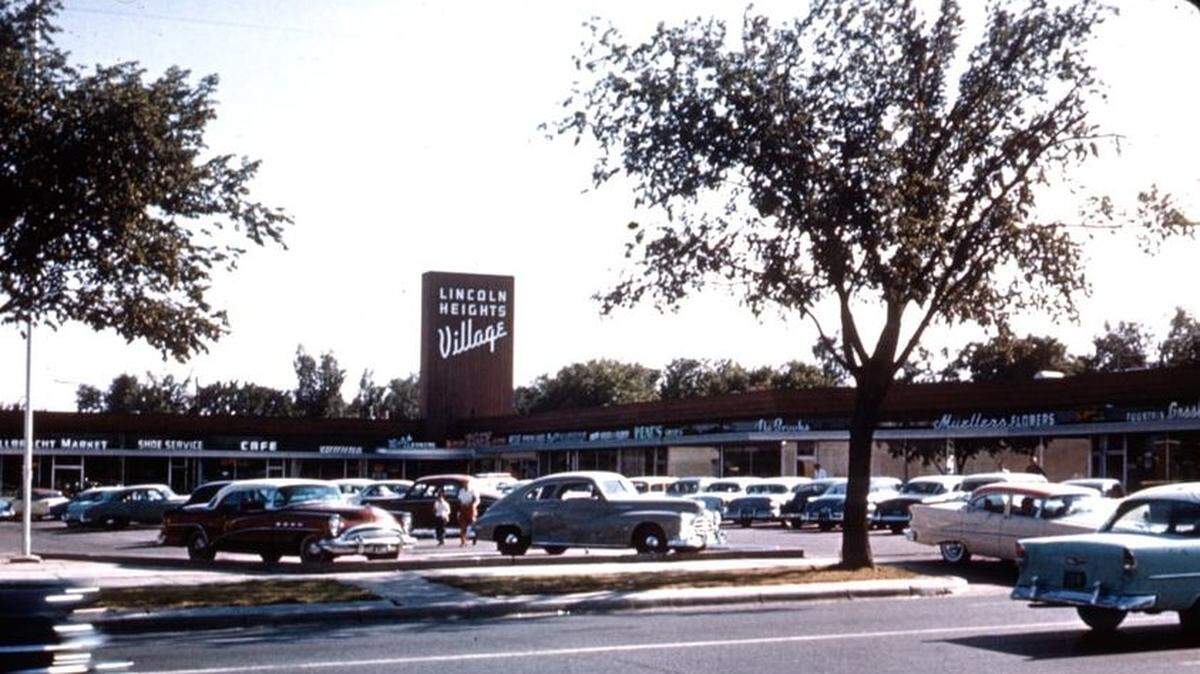
Without one crucial decision by Walter Morris, an Ohio transplant in 1888, Wichita’s landscape might have looked a lot different.
Not only would Lincoln Heights Village, Wichita’s first shopping center, not be celebrating 75 years, but hundreds of homes and a host of commercial properties either wouldn’t exist or certainly wouldn’t look the same.
According to a Dec. 5, 1948, article in The Wichita Eagle, Morris “had been planning to enter the fruit business. ‘But I drifted into real estate instead and I’m thankful for it,’ says the city’s oldest active real estate man.”
That was the year Morris, then 90, announced his Walter Morris Cos.’ plans for the emporium — just one fanciful term for the center — at the southwest corner of Douglas and Oliver the coming year.
Lincoln Heights, which is how it’s better known now but then was known as the Village, opened July 11, 1949. The month is noteworthy because, unlike most developments today, it meant the center was on time from when Morris said it would open.
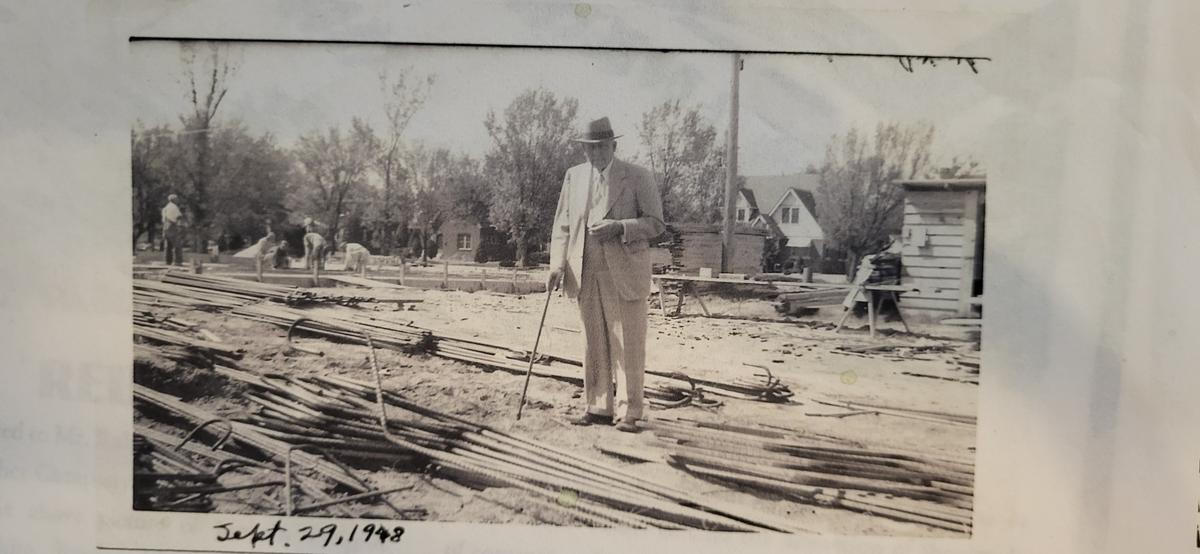
He’d actually started planning the center a couple of decades earlier, before the Great Depression and World War II intervened.
Not long before aviator Charles Lindbergh and his “Spirit of St. Louis” took a historic transatlantic flight in 1927, which was financed by the Knight family of St. Louis, the Knight family sold 80 acres in Wichita to Morris for $110,000.
As The Eagle quoted William Morris saying to his father: “Dad, we financed that flight for $110,000.”
Morris was “an ardent disciple of Abraham Lincoln,” according to the publication, and he named the area the Lincoln Heights addition.
The Eagle reported that Morris stood on the highest point of the farm property, pointed to a piece of land and said it was where he wanted a new kind of shopping destination to go.
“Twenty years from now, that corner will be worth what we paid for the whole 80 acres,” he declared.
By 1949, when the center opened, The Eagle reported it “is now conservatively estimated at $300,000 in value.”
The county currently has a similarly conservative estimate on the center today at $1.2 million.
According to calculations by at least one Wichita real estate expert, however, its value probably is more like $3 million.
Look at that parking
These days, when publications report on new shopping centers, they usually don’t mention large plate glass windows that allow customers to look into stores to see their wares or the awnings that protect them from rain and hot sun. They certainly wouldn’t mention a “spacious, hard-surfaced court,” which today is known simply as a parking lot.
In 1949, those were some of Walter Morris’ proudest achievements, particularly the parking lot.
When he moved to Wichita, it was a wild town with hitching posts for horses and no paved streets.
The Eagle called the parking lot “one of the greatest and most unusual features” of the center.
Morris was ahead of his time in knowing Wichitans and their preference for storefront parking.
“Nobody, definitely nobody need ever drive out there to trade without finding a parking spot right outside the store front, or very close to it.” Morris was quoted in The Eagle.
The publication reported, “Shoppers drawing into the parking slab in front of the center can do a tremendous part of their day’s shopping, without ever being more than a few paces from their car.”
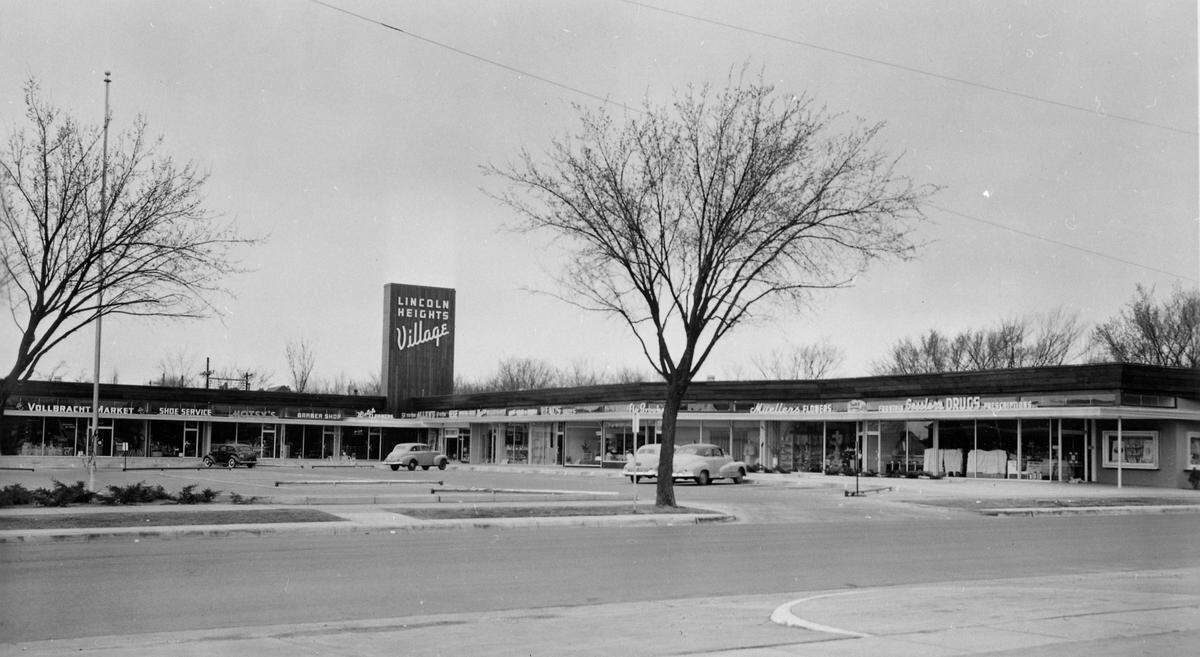
J.C. Nichols, who developed Country Club Plaza in Kansas City, Mo., visited the center and advised Morris that an array of shopping options that wouldn’t compete with each other would help Lincoln Heights succeed.
Indeed, that’s what Morris had with his original tenants, such as Gessler Drugs; Allen’s, where everything was 5 cents to a dollar; Welch Cleaners; Heads Shoe Store, which closed only in 2016; A-1 Barber; Hotsy’s Village Inn; and Vollbracht market among other businesses that shared the 19,000-square-foot space, with equivalent square footage in the basement.
Morris said the center’s design “was the result of many inspection trips” to other centers around the Midwest.
A year before Lincoln Heights opened, the Eagle heralded the center as “Wichita’s most progressively-conceived community center to date . . . embodying architectural beauty and shopping ease for steadily-growing eastern environs of the city.”
A year later, the publication called the center a success in a story the day after it opened.
“Just about everything a housewife could ask for in a handy shopping center in a residential section—away from the hustle, bustle and traffic of downtown.”
Who was Walter Morris?
For as much of an imprint as Morris made on Wichita, including creating the beginnings of Lake Afton, he also was someone who liked the simple life: camping, fishing and extensively growing flowers, said his great-granddaughter, Martha Gregg.
The “hardcore Methodist,” as she described him, never drank, and Gregg said his daily diary truthfully is kind of boring.
Still, Gregg said Morris could be eccentric.
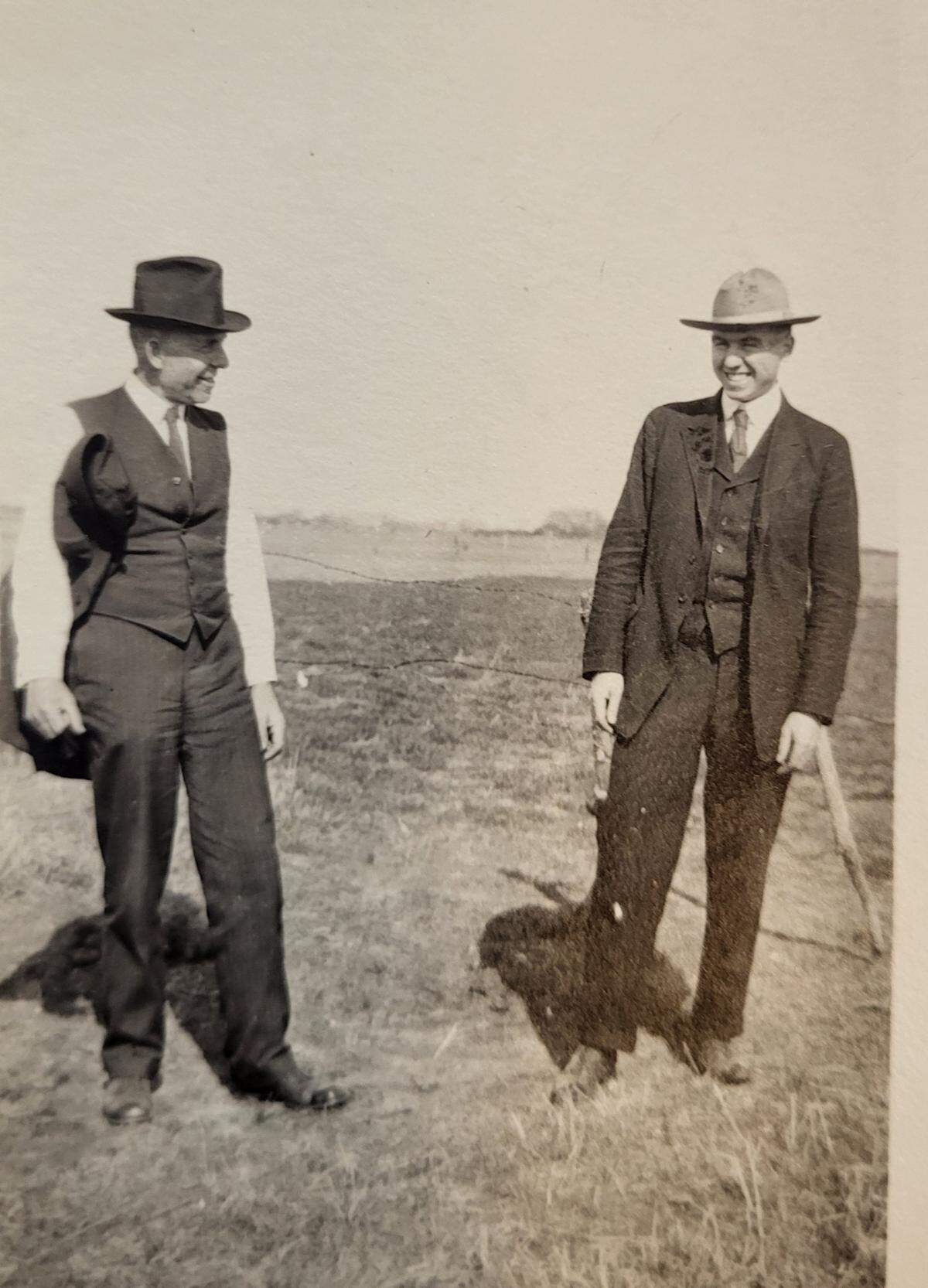
“He always wore kind of eccentric costumes of some kind.”
.JPEG "Resized_20241025_100148_1729869581378 (1).JPEG")
One of those included a pith helmet, which he was photographed in while surveying the construction of Lincoln Heights.
Also, although Morris was well traveled, he never drove.
“He finally learned how to drive . . . and he bought a car, but he abandoned it halfway to work and got out and walked and never got in it again,” Gregg said.
She speculated that her great grandfather’s daughters might have prodded him into getting the car.
Even though they also were going to his office at the Orpheum Building downtown, she said they “probably got tired of being his chauffeur.”
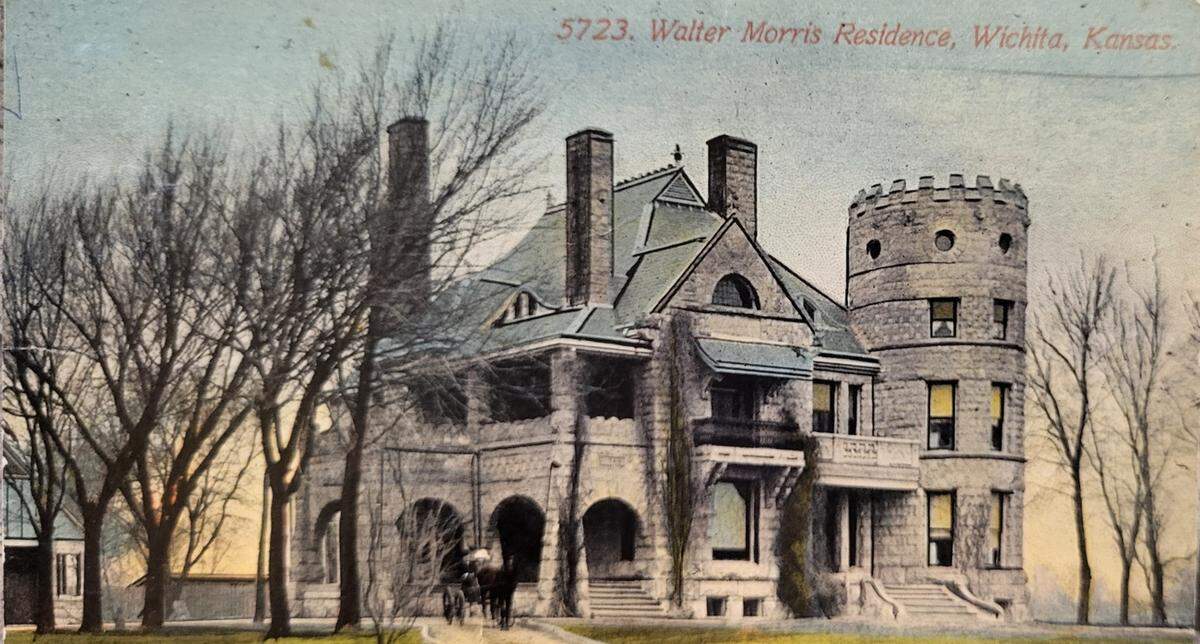
Morris did allow himself at least one luxury.
He’d always admired the Campbell Castle in Riverside, today known as the Castle Inn Riverside even though it no longer accepts guests, and declared he’d one day own it. Morris became the second owner after buying it from cattle baron B.H. “Barbecue” Campbell.
“We would go there for Sunday dinner,” Gregg said. “I remember rollerskating in the tower.”
She said Morris was too cheap to hire a maid, so he made his daughters clean the mansion.
“So the girls hated that house,” Gregg said. “They said it was super cold, too. It was freezing in the winter.”
When Morris built houses, he usually chose places along creeks, and his properties always featured lots of trees.
In fact, he’d advertise, “It’s the tree we are selling . . . ,” and say he’d throw in the house, too.
According to his 1951 obituary in The Eagle, in addition to developing Lincoln Heights, Crown Heights and Sleepy Hollow, among other areas, Morris also named a number of well-known streets, such as Old Manor, Edgemoor and Dellrose.
He reserved the most pride for Lincoln Heights Village, the article said.
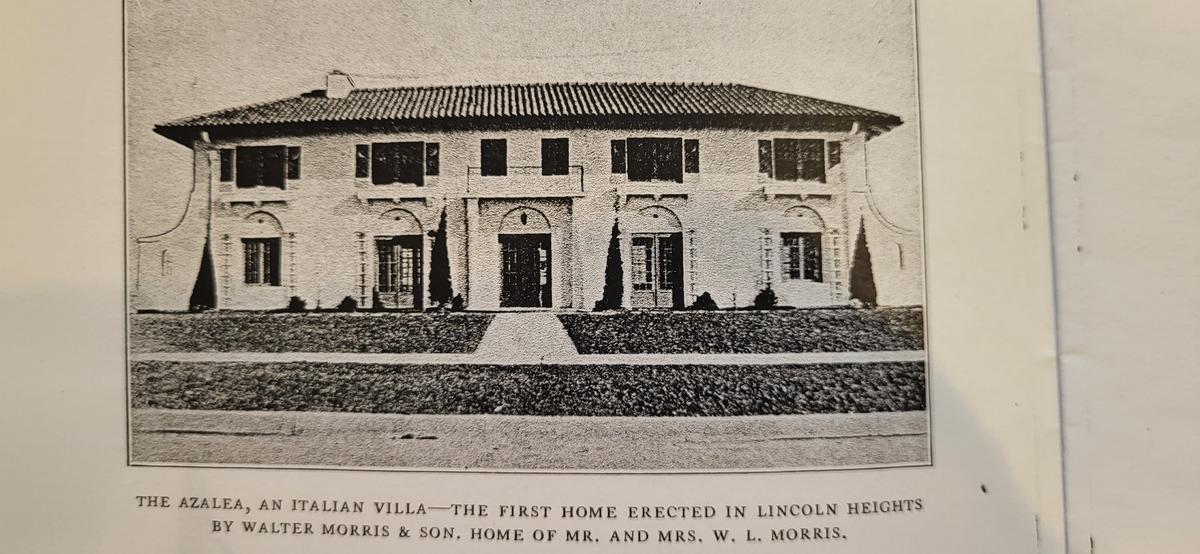
Gregg’s grandparents, William and May Morris, worked with the elder Morris to start developing houses in Lincoln Heights along with the center.
“William was the workhorse,” Gregg said. “It was Walter who had the vision and then rested on his laurels.”
That’s what her mother, Mary Boyd, used to say.
“She was half teasing, but it did bother her a little.”
For a time, the firm was known as Walter Morris & Son.
William and May Morris built a spec home at 136 S. Pershing. Then the stock market crash of 1929 happened followed by the Depression, and they had to move into the house since they couldn’t sell it.
The Morrises ended up living in the Italianate-style house for more than six decades.
Village memories
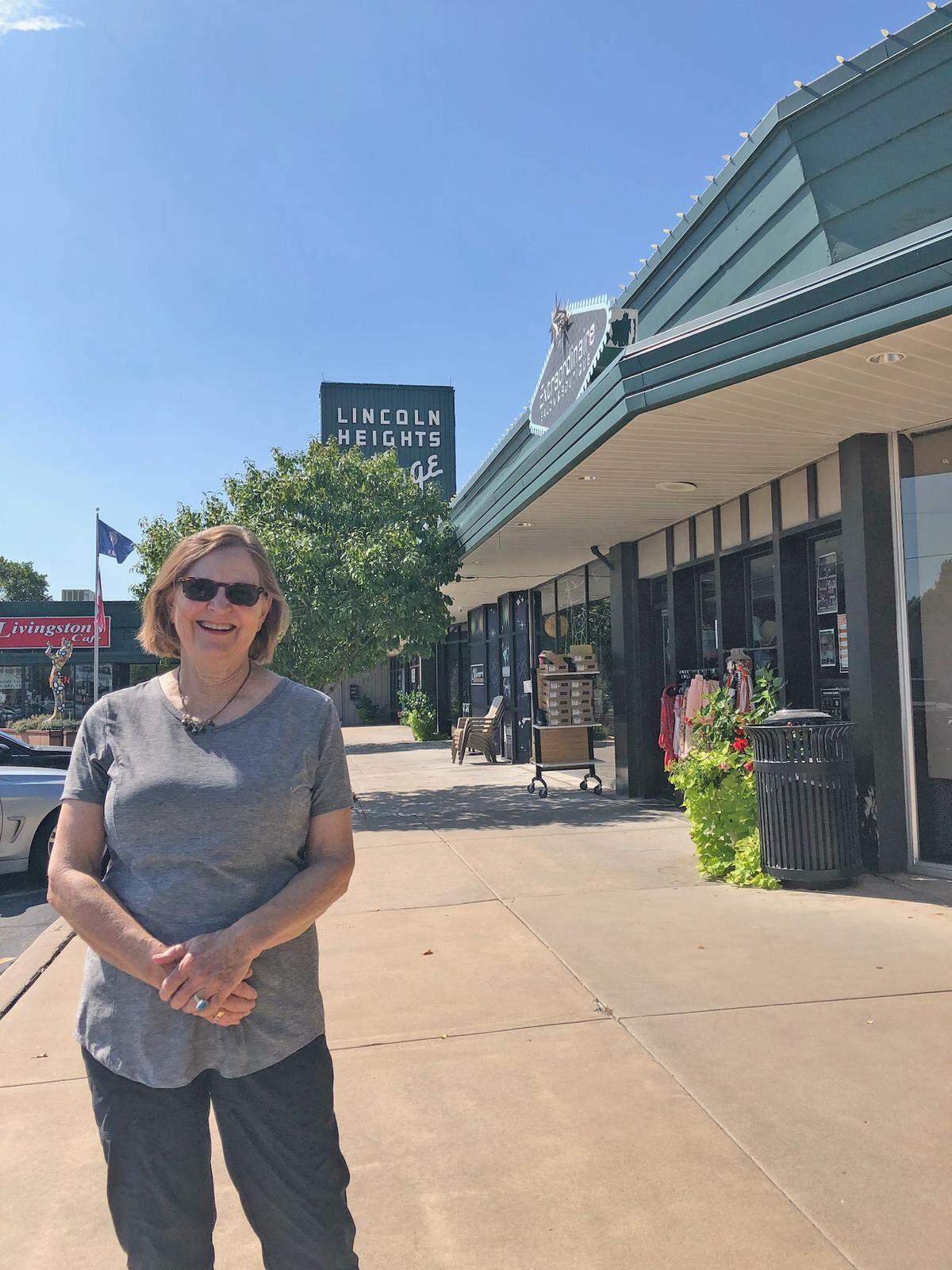
Gregg grew up in Larned, but she said, “I just remember how fun it was to visit my grandparents.”
She’d go to Gessler‘s at the Village and have a cherry Coke or root beer float.
“Those original businesses were fun. . . . It seems like such a pedestrian structure now, but at the time it was state of the art.”
She said her great-grandfather visited similar centers in California and learned that redwood resists pests and termites, so he used it at the Village.
“That was unusual.”
So was the large monument sign declaring the center’s name. Also, Morris used movable walls to accommodate various-sized spaces for tenants.
There was a trolley stop near the center, but Gregg said, “That was kind of the end of Wichita.”
She credits her brothers, Tom and Mike Boyd, for keeping the family’s real estate business going. In addition to being the oldest real estate firm in the city, it’s also one of the oldest businesses in the city.
Gregg said multigenerational businesses sometimes have trouble, and she thinks her family is unique for accomplishing so much. The Boyds have developed popular centers, sometimes with other developers, such as Greenwich Place at K-96 and Greenwich.
The family has developed throughout the city, and Gregg said her great-grandfather always believed Wichita had an abundance of opportunity.
“He was the biggest booster for Wichita. I mean, he just thought Wichita was the best place on the face of the earth.”
‘A bit revolutionary’
Lincoln Heights tenant Brent Allison, whose family owns both Extraordinaire Salon & Boutique and Oliver’s Lounge at the center, has taken advantage of the flex spaces Gregg mentioned.
“That was really not being done at the time. It was a bit revolutionary.”
Today, he said, “It’s just a quaint little neighborhood shopping center.”
When it was built, however, he said, “This was the Bradley Fair of its day.”
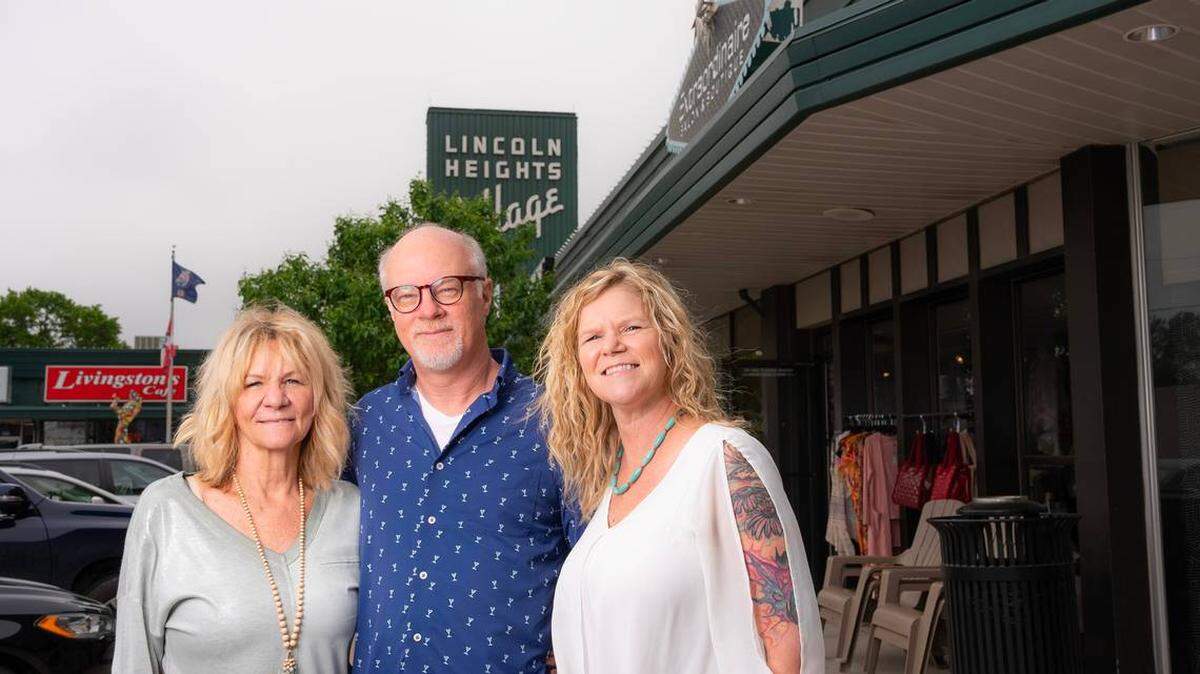
Allison said the significance and history of the building “is quite astounding, really, when you think about it.”
Another tenant with two spaces at Lincoln Heights is Vault Collection owner Allison Baker, who chose there to open something of a sister store to her Aspen Boutique, which is across the street.
The new store, which she hasn’t named yet, will open next to the Vault. That’s a store that sells furnishings and furniture in styles as diverse as Victorian, Art Deco, Art Nouveau and mid-century modern. The store’s contents go well with the center itself.
“The vibe or aesthetic of the center is a little bit old school,” Baker said.
That it is Wichita’s first such center is “super cool,” she said, and Baker said it’s also a lot of fun with people constantly coming and going.
“The parking lot is nearly always full,” said Eric Cale, executive director of the Wichita-Sedgwick County Historical Museum.
“If anything, it’s become kind of better established and more seasoned,” he said. “The center is historic as is the neighborhood, but both are still perhaps even more vital today than when they were built.”
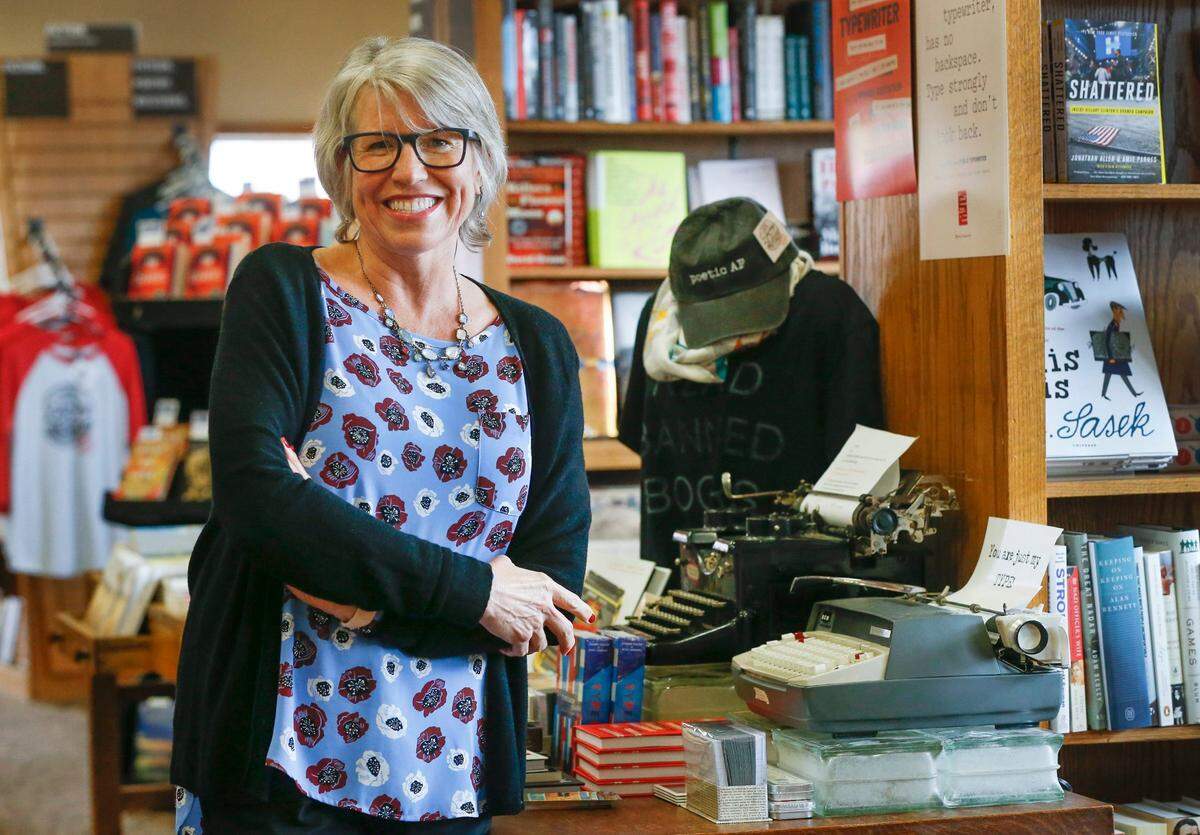
Cale’s wife, Sarah Bagby, consolidated her three Watermark Books stores into one at Lincoln Heights in 1996 along with adding a cafe.
She said the extended Morris family has “been amazing to us.”
Bagby said the planned neighborhoods of today are striving for what Walter Morris achieved 75 years ago.
“It’s a place that people feel nostalgic for,” she said.
“He would have been so thrilled. It was what he envisioned.”