
Fall garden checklist
It’s officially fall, and the cool nights let us know that things are going to be changing in a dramatic way one day soon.
The shock is easier to take when we’ve prepared the house and garden. Here are some tasks to do – or to prepare to do – moving into October. The average first fall frost (32 degrees or lower) for Wichita is Oct. 25, so hopefully there’s time. Hopefully, plenty of time.
Bring houseplants in
When low temperatures consistently veer toward 50 degrees, it’s time to bring houseplants indoors for the winter. Try to get them ready before that fateful night when you know it’s all over.
A strong spray from a garden hose can remove insects or mites from foliage, Ward Upham of K-State advises. And you can force insects out of potting soil by soaking the pot in a tub of lukewarm water for about 15 minutes, he says.
To help houseplants acclimate to lower light indoors and minimize dropped leaves, start the plants out in the sunniest part of the house, then gradually move them to darker areas if that’s where you want them, Upham says. Take four to eight weeks to make the total transition.
Transplant perennials
I have mountain mint, coral bells and a Japanese maple in containers from the summer. The mountain mint and maple need to go in the ground, while I’ll leave the coral bells to survive the winter outside in pots. You can do that if the plants can survive winters at least two zones colder than Wichita’s. That means Zone 4 or lower.
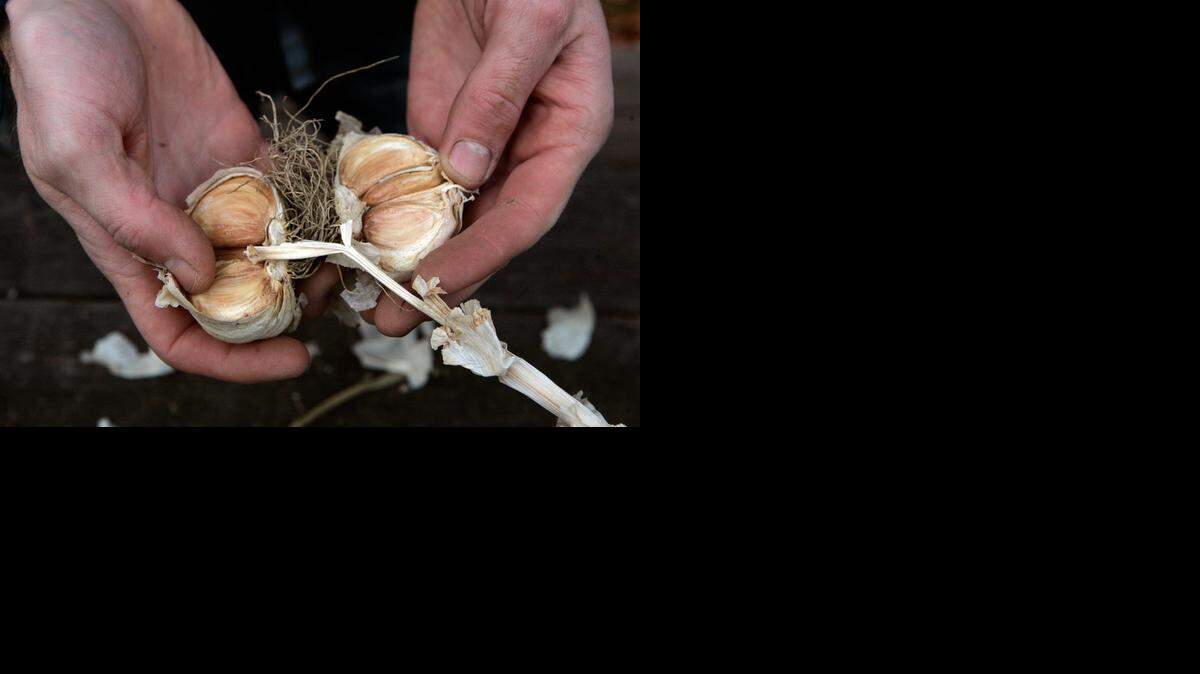
Plant garlic
You won’t have the garlic in hand for fighting off the vampires, but October is the month to plant garlic for harvest next summer.
Start by mixing into the soil 3 pounds of 10-10-10 fertilizer per 100 square feet, or fertilize according to soil test, Upham says. Plant individual cloves with the point up 6 inches apart and 1 to 2 inches deep. Larger cloves will produce larger bulbs, Upham says.
Water the garlic in well and mulch with straw to conserve soil warmth and encourage good establishment, Upham says.
Next summer, when the lower third of the foliage is yellow, do a test dig to see if the garlic has segmented and is ready to harvest. If they haven't segmented, wait another week or two, Upham says.
Elephant garlic also should be planted in October, but it has a milder flavor than garlic, being a closer relative to the leek, Upham says.
Overseed the lawn
If your fescue lawn is thin, or if you want to start over with a new fescue lawn, be sure to put down seed by Oct. 15. The earlier the better though.
You can put down sod instead, which will allow you to extend your grass-planting later than Oct. 15.
Also be sure to fertilize fescue if you haven’t yet in September.
Plant trees
Fall’s warm and moist soil makes it the ideal season for planting most trees. Those planted in autumn will get a head start on root growth that will help them weather the following summer’s heat, Upham says.
But you have to remember that those tree roots are growing even when the visible part of the tree is dormant, and you’ll need to water in the fall and winter when there isn’t enough rain or snow.
Mulching at planting time will minimize moisture loss and slow the cooling of the soil so root growth continues as long as possible, Upham says.
Trees whose roots do not undergo significant growth during the fall and that are better planted in the spring include beech, birch, redbud, magnolia, tulip poplar, willow oak, scarlet oak, black oak, willow and dogwood, Upham says.
Evergreens should be planted or moved at least six weeks before the ground freezes for the roots to become established.
Start a compost pile
Pile leaves in a corner of the yard for compost, or let them compost within a trash can with holes or another receptacle or bin. Add grass clippings and other yard debris along with some nitrogen fertilizer to get it cooking.
You can also rake leaves into a part of the yard where you want to smother the grass. But if you want the grass to live, don’t let a heavy carpet of leaves block water and sun from reaching the grass plants.
Plant bulbs
Tulips, daffodils, hyacinth, grape hyacinth and alliums are among the bulbs you can plant this fall for blooms first thing next spring. The bulbs can be planted starting in October; Election Day is a traditional target date for planting tulips. Just be sure you get the bulbs in the ground before the soil freezes.
Hit Botanica
Botanica is packed more full of plant life this time of year than at any other. Plants are at their summer height of growth, and all the mums have been planted for fall, with pansies following close on their heels. Butterflies are flitting everywhere – outside as well as inside the butterfly house.
A trip to the gardens reminds me of things that I want to plant, especially that in addition to wanting to attract pollinators, I need to look for plants with fragrance. Follow your nose.
Reach Annie Calovich at 316-268-6596 or acalovich@wichitaeagle.com. Follow her on Twitter: @anniecalovich.
This story was originally published September 26, 2014 at 4:11 PM with the headline "Fall garden checklist."