
No need to put the pots away in the autumn
Our container gardens of summer often will make a comeback for fall, blooming their hearts out until the first freeze if we continue to maintain them.
But other times the flowers fizzle out, tired from summer, and need replacing. Gardeners usually are ready for a new look anyway.
“Fall is the changing of the season,” Karen Hull of Johnson’s Garden Center says. “Then you start to get nostalgic.”
Garden centers offer lots of options for a fall refresher, from color-packed perennials and annuals to vegetables (ornamental or edible) and grasses. Even small shrubs and trees can be planted in pots if they are cold hardy enough.
Pansies can be tucked into pots where petunias or other annuals have given up the ghost; if they have lots of room and are planted away from the sides of the pot they also may survive the winter to come back in spring.
A fall annual that you may not have thought of is celosia, whether in vibrant pink or red. A new variety called Intenz is an iridescent pink, Hull said. Early-spring annuals such as snapdragons and Osteospermum daisies can come back out again in the cool of the fall, Ron Marcum of Dutch’s Greenhouse said.
Mums and asters are traditional fall flowers. Buy them in bud rather than in flower to be able to take advantage of the full flower show, extension agent Bob Neier says. Master gardener Kathleen Roberts likes to wind deep burgundy mums through yellow ones.
Many people simply toss the mums when they’re done blooming. But you can leave them in the pots, Roberts says. Clip off the flowers, be sure they get some water during dry spells in the winter, and in spring the mums will green up to provide a backdrop for fresh annuals. Keep the mums trimmed back to 5 to 6 inches high until July 15 and then leave them to flower again in the fall, Roberts says.
Lettuce can be tucked around flowers for texture, plus you can eat the greens, Hull said. Kale and Swiss chard also can go into pots. She recommends plants over seeds for instant gratification.
But you can start lettuce and spinach from seed this time of year as well, extension agent Rebecca McMahon said. The nice thing about fall gardening in containers is that you can move the pots to give them protection when needed, such as on cold nights. But lettuce can take temperatures as low as 28 degrees, spinach 24.
If you’re planting something new in a pot that had contained, say, a tomato during the summer, add fertilizer to the soil at planting time or use a soluble fertilizer on the plants, because the soil will be depleted, McMahon said.
A red cabbage in a pot would be striking to look at, but wouldn’t give you much to eat, she said.
“I’ve even seeded mustard greens. Giant red mustard would be cool,” Marcum said. The kales he likes include the upright Dinosaur, a silvery charcoal blue-gray. “It’s a different color with heavily savoyed leaves. It’s very, very cool.”
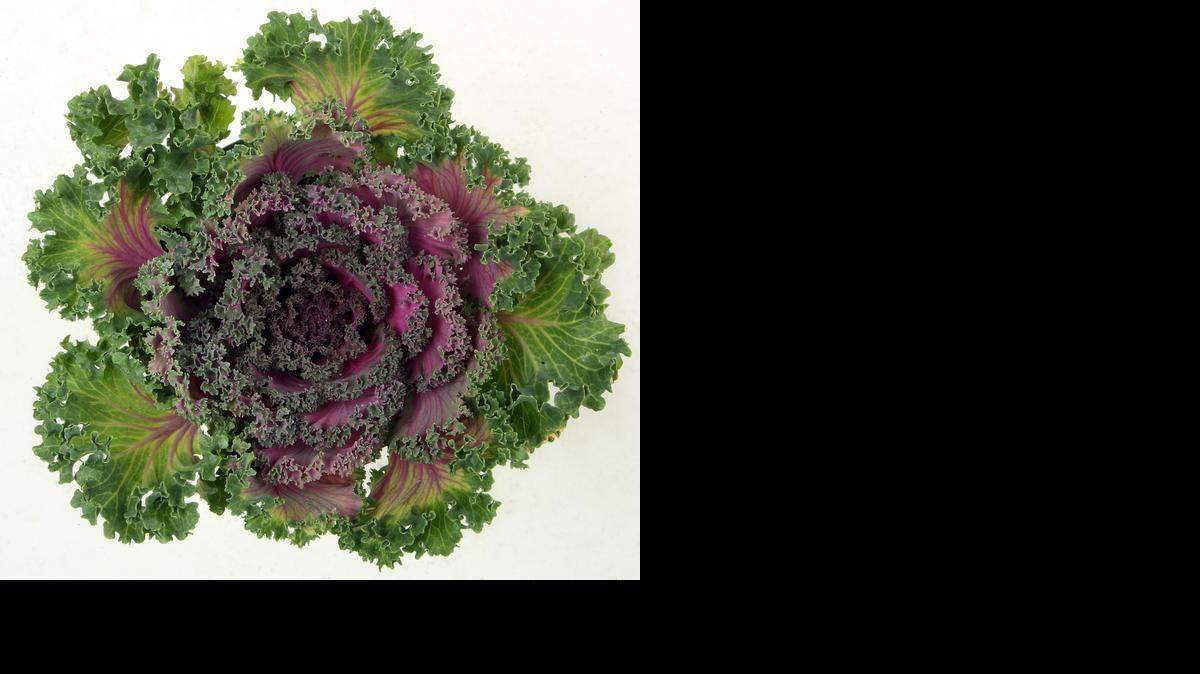
Ornamental versions of grains and vegetables bring home the harvest theme in the fall. Ruffly ornamental kale and cabbage are popular ingredients in an autumnal pot.
Ornamental peppers – some with black foliage – catch fire in the fall, and sedums can take on an autumnal tinge. Ornamental millet and ornamental corn, reminiscent of the farm, are beautiful accompaniments in fall pots.
Marcum recommends trying ornamental grasses and ground covers, including liriope and ajuga, in containers.
He looks for “tall things,” so that the containers don’t look like they’ve just been planted. “You can cut cattails, corkscrew willow, bittersweet. ... I’ve even bundled ornamental grass tops with seed heads with twine,” sticking them in pots where height is needed, Marcum said.
Perennials such as coral bells and anemones also look good in the fall, Marcum said. Coral bells can survive winters in pots.
In shade, tropical plants that are usually used as houseplants can be used. Marcum said. Black Coffee rex begonias are one shade example. “Black and orange become more popular” as we get close to Halloween, he noted.
If you want to plant things that can live outside over the winter, look for perennials, shrubs or small trees that are hardy to Zone 4 or lower – two zones colder than our Zone 6. They need to be able to take the lower temperatures because they won’t have surrounding earth to protect them.
Terracotta pots often will crack in the cold, so be sure that your pots are frost-proof, or that you don’t mind if they break.
Reach Annie Calovich at 316-268-6596 or acalovich@wichitaeagle.com. Follow her on Twitter: @anniecalovich.
This story was originally published September 14, 2014 at 7:00 AM with the headline "No need to put the pots away in the autumn."