
Be alert to armyworms in grass
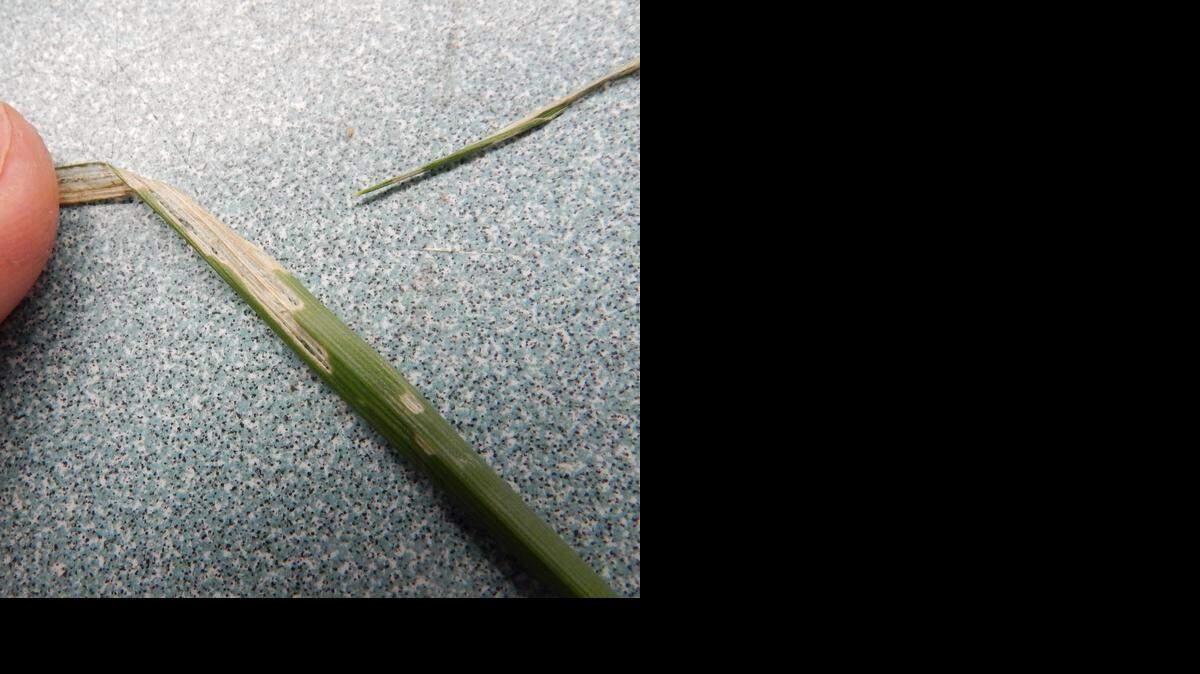
Lawn companies and the Extension Service have started to receive reports of armyworms in a few lawns in Wichita, extension agent Rebecca McMahon says. You may remember that the worms were a plague in 2000.
Check blades of grass for brown areas that have been chewed, McMahon says. Don’t confuse armyworm damage with the fraying at the top caused by a dull lawnmower blade; the armyworms create more of a “window-paning” effect that extends down the blade.
And look for caterpillars 1/2 inch long or so on the turf. To make it easier to spot them, you can dilute 2 tablespoons of liquid dish soap in 2 gallons of water in a bucket or watering can and pour it slowly over a 3-by-3-foot area, watching closely for five minutes to see whether any critters appear, North Carolina State University recommends.
The chewed grass usually recovers, but if you see one caterpillar per square foot, you may want to treat with an insecticide labeled for armyworms. K-State is finding that pyrethroid-based insecticides may not work as well as others, McMahon says. Other options are carbaryl (Sevin), cyhalothrin (Spectracide Triazicide and Bonide Caterpillar Killer), spinosad (Conserve; Borer, Bagworm, Leafminer & Tent Caterpillar Spray; Captain Jack’s Dead Bug Brew) and Dylox.
Reach Annie Calovich at 316-268-6596 or acalovich@wichitaeagle.com. Follow her on Twitter: @anniecalovich.
This story was originally published August 28, 2014 at 3:32 PM with the headline "Be alert to armyworms in grass."