
Change batteries in smoke detectors – or get new detectors
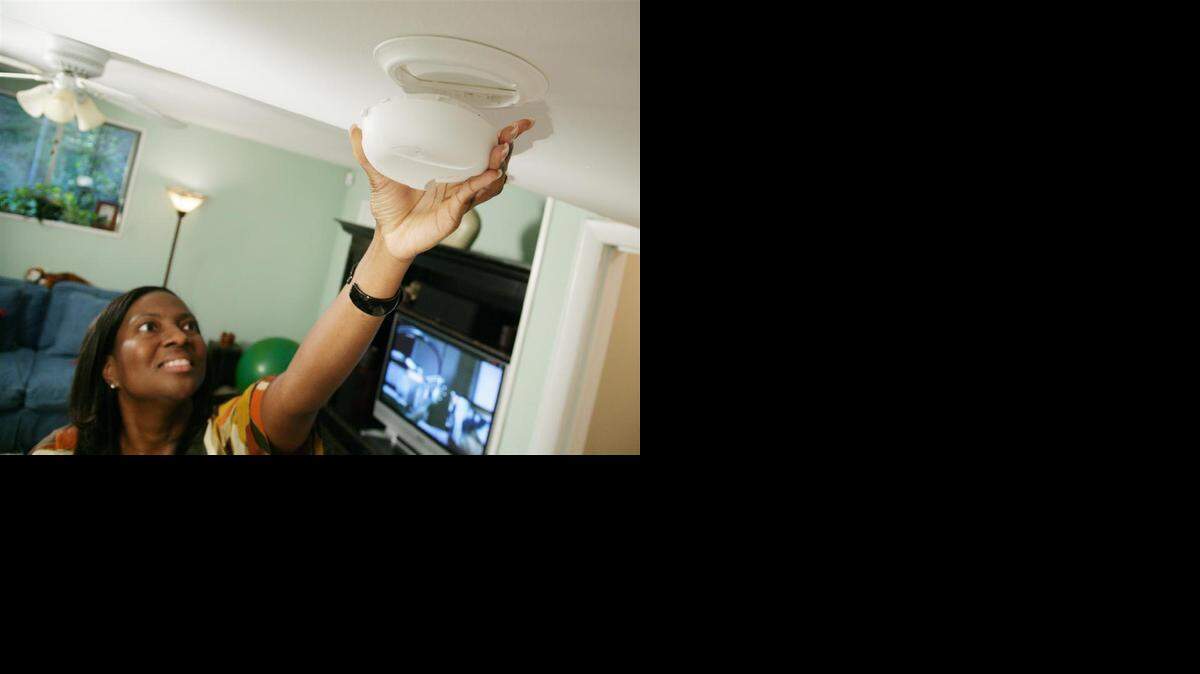
This weekend’s switch to daylight saving time is a reminder to change batteries in smoke detectors and carbon monoxide detectors. But you also may need to get new detectors. Once a smoke detector reaches 10 years old, it should be replaced, the U.S. Fire Administration says.
Smoke detectors with 10-year batteries also are available now, according to First Alert, one of the makers of the detectors. When the lithium batteries in those need to be replaced, the whole unit is replaced.
Technological advances also include a “smart battery” that can power a detector and a night light with an app that contacts you if you’re not home when a detector sounds. Combination smoke and carbon-monoxide detectors also are available.
If you need a smoke detector and can’t afford it, or need help installing one, the Wichita Fire Department has you covered. Call 316-268-4441. Fire marshal Brad Crisp said that the detectors that are available are typically of the photoelectric type; those detect smoke particles a little quicker than the ionization types, which better detect a sudden fire that has more fire than smoke better. It’s ideal to have both, though either type will do the job, Crisp said.
“Having an ionization detector closer to a kitchen or somewhere a faster fire might start may not be a bad idea,” Crisp said, with the photoelectric type closer to sleeping areas where smoldering fires in clothing and bedding would be more likely.
This weekend is a good one to be sure your home has enough smoke-detector coverage.
The U.S. Fire Administration recommends that smoke alarms be installed inside every bedroom, outside each sleeping area and on every level of a home, including the basement, and one CO alarm on each level and in a central location outside each sleeping area.
Here are some questions and answers adapated from FEMA’s Fire Administration website that can help you be more safe – including what to do when confronted with a smoke detector that is set off by cooking (don’t remove the battery!).
What types of smoke alarms can I buy?
There are many brands of smoke alarms on the market, but they fall under two basic types: ionization and photoelectric. Ionization and photoelectric smoke alarms detect different types of fires. Since no one can predict what type of fire might start in their home, the U.S. Fire Administration recommends that every home and place where people sleep have:
Both ionization AND photoelectric smoke alarms. OR
Dual-sensor smoke alarms, which contain both ionization and photoelectric smoke sensors.
There are also alarms for people with hearing loss. These alarms may have strobe lights that flash and/or vibrate to alert those who are unable to hear standard smoke alarms when they sound.
What powers a smoke alarm?
Smoke alarms are powered by battery or by your home’s electrical system. If the smoke alarm is powered by battery, it runs on either a disposable nine-volt battery or a non-replaceable 10-year lithium (“long-life”) battery. Alarms that get power from your home’s electrical system, or “hardwired,” usually have a back-up battery that needs to be replaced once a year.
Are smoke alarms expensive?
Smoke alarms are not expensive and are worth the lives they can help save.
▪ Ionization and photoelectric: $6 and up
▪ Dual sensor: $24 and up
▪ Smoke alarms with a microprocessor (faster to alert, fewer false alarms): $30 and up
▪ Radio frequency/wireless (communicate from one detector to the next without wires: $40 and up).
If you need a smoke alarm, you can call the Wichita Fire Department at 316-268-4441. It gives away detectors and even helps install them for those who need help.
Where do I put smoke alarms in my home?
Put smoke alarms on every floor of your home and in every bedroom and in the hallway outside of each sleeping area.
Choose smoke alarms that communicate with each other, so that if one alarm sounds they all will.
Place smoke alarms on the ceiling or high on the wall. Check the manufacturer’s instructions for the best place for your alarm.
Only qualified electricians should install hardwired smoke alarms.
How do I take care of my smoke alarm?
Is your smoke alarm still working? A smoke alarm with a dead or missing battery is the same as having no smoke alarm at all. A smoke alarm only works when it is properly installed and regularly tested. Take care of your smoke alarms according to the manufacturer’s instructions. Below are some general maintenance tips.
▪ Smoke alarm powered by a nine-volt battery:
Test the alarm monthly.
Replace the batteries at least once every year.
Replace the entire smoke alarm every 10 years.
▪ Smoke alarm powered by a 10-year lithium (or “long-life”) battery:
Test the alarm monthly.
Since you cannot (and should not) replace the lithium battery, replace the entire smoke alarm according to the manufacturer’s instructions.
▪ Smoke alarm that is hardwired into your home’s electrical system:
Test the alarm monthly.
Replace the backup battery at least once every year.
Replace the entire smoke alarm every 10 years.
What do I do if my smoke alarm sounds while I’m cooking?
Never take the battery out of your smoke alarm while cooking. If a smoke alarm sounds while you’re cooking or taking a shower with lots of steam, do not remove the battery. You should:
▪ Open a window or door and press the “hush” button.
▪ Wave a towel at the alarm to clear the air.
▪ Move the entire alarm several feet away from the kitchen or bathroom.
Disabling a smoke alarm or removing the battery can be a deadly mistake.
High-tech products
How to turn an old-style but still functional smoke detector into a Wi-Fi-connected smart sensor? Replace the 9-volt battery with a $40 retrofit Roos Smart Battery that adds a Wi-Fi chip to two lithium cells that should power the detector for as long as five years.
The chip, which will be available in June, connects to a home network and sends an alert, via smartphone app, when an alarm sounds or when the battery needs replacing. Information: smartroost.net.
Unless your smoke alarm is connected to a security system, it’s no good if nobody’s around to hear it. Enter the Leeo, a clever little night light that can detect a smoke alarm or carbon monoxide detector beeping ($99, www.leeo.com). It even keeps track of temperature and humidity.
Installation is as simple as plugging it in and downloading the app, which will call you in the event of an emergency. If you don’t answer, it will work its way down a list of emergency contacts. And it’s pretty, too: The twistable ring adjusts the brightness of one of 16 million night-light colors.
Chicago Tribune, Washington Post
This story was originally published March 6, 2015 at 12:41 AM with the headline "Change batteries in smoke detectors – or get new detectors."