
How to carve your Thanksgiving turkey (VIDEO)
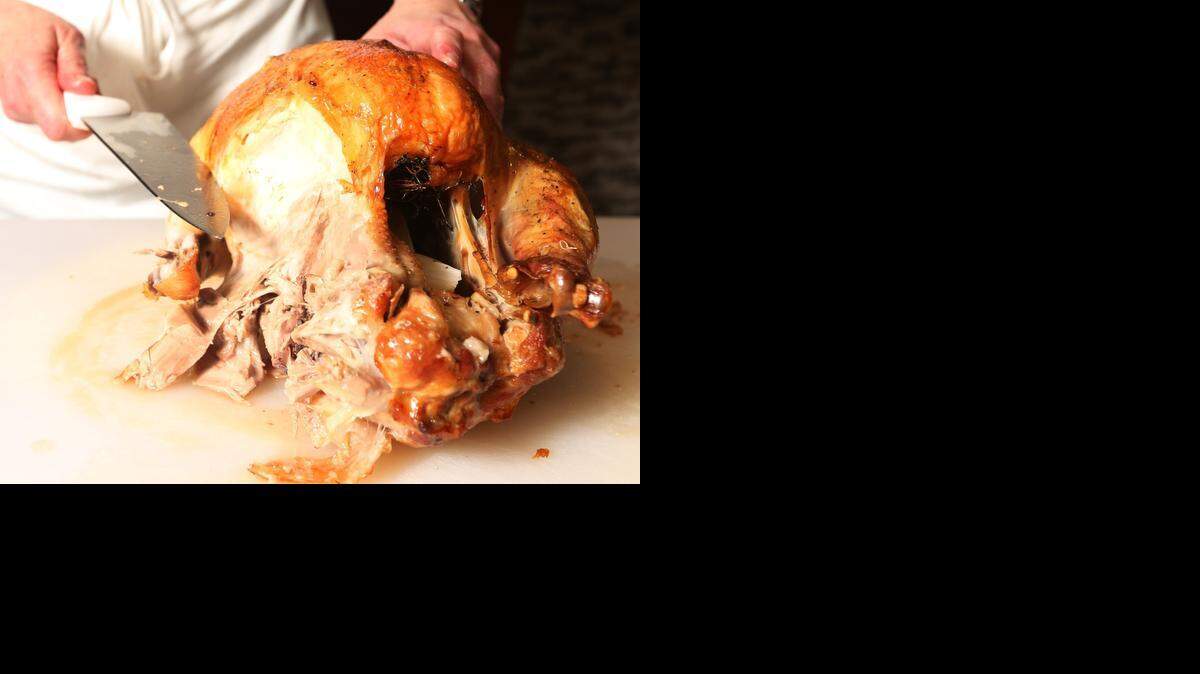
Carving a Thanksgiving turkey can flummox even an experienced home cook. After all, it’s a job most of us do just once a year. A crowd is usually waiting – and they’re hungry.
For expert advice, we turned to Janet Bourbon, a corporate chef with the Cargill Innovation Center in Wichita. In addition to professional experience, Bourbon usually cooks for a couple dozen family and friends each Thanksgiving, including what she calls two very hungry sons in their 20s.
Bourbon’s first piece of advice is to dispense with the notion that you must bring the turkey to the dining room table intact and dismember it in front of guests. “I always do it in the kitchen,” she said.
Her list of necessary equipment is short: a sharp knife, tongs or a carving fork, a cutting board and oven-proof serving platter. If your cutting board tends to move around, place a damp towel or non-slip mat underneath it.
The first step – do nothing. It’s important to let the bird rest at least 15 minutes after removing from the oven. That allows the juices to distribute evenly throughout the turkey, so they don’t all spill out when carving begins. (Tenting with aluminum foil will keep the turkey hotter but may also soften the skin).
A few minutes after turning off the oven, put your serving platter in the oven to warm.
From there, follow these steps to get you through the carving process and on to enjoying Thanksgiving dinner.
1: Place the turkey on a cutting board with the bird’s legs pointed toward you. Remove the plastic pop-up temperature sensor, if present, as well as the plastic clip used to hold the legs together. Using a sharp knife, cut through the skin and meat between the breast and one leg.
2: Pull the leg away from the body until you expose the joint where the leg and breast bones meet. Make a cut between those bones – you should not have to cut through bone, but you may need to use a little force – and pull off the leg. Holding the leg by the tip of the drumstick, cut the skin and meat between it and the thigh. Find the joint connecting them and cut between the bones. Cut the thigh meat into bite-size pieces and plate the drumstick whole “so later your family can fight over it,” Bourbon said. Cut off the wing where it meets that side of the body for those who like to gnaw on turkey wings.
3: On the side of the turkey, make a horizontal cut deep into the breast of the turkey, starting about where the leg had previously met the breast.
4: Starting on the outer edge of the breast, make vertical cuts down to the horizontal cut. The slices should “just fall right off,” Bourbon said. Repeat the steps on the other side of the turkey. Once the second leg is removed, you will probably want to use tongs or a carving fork to brace the turkey. Arrange the meat attractively on the warmed platter. Bourbon likes to garnish the platter with fresh herbs such as bay leaves she grows herself. “They’re beautiful and smell great,” she said.
Turkey talk
Some more turkey advice from Cargill corporate chef Janet Bourbon:
▪ Bourbon prefers smaller turkeys, in the 12- to 15-pound range, to those weighing 20 pounds or more. “I think they eat better. I have no data to back that up.” For bigger groups, she recommends cooking two smaller turkeys, or one whole turkey and one bone-in turkey breast. The usual planning guide is about one pound of whole turkey (bone-in, before cooking) per guest.
▪ Bourbon cooks her turkeys at a slightly lower heat – 300 degrees – than many recipes call for, believing a gentler, slower approach is better.
▪ She strongly recommends that home cooks invest in an instant-read thermometer, for cooking all types of meat.
▪ Bourbon keeps additions to the turkey simple. She places a quartered onion and lemon and fresh thyme in the cavity. She sprinkles the outside with kosher salt and freshly cracked pepper. She bastes the turkey with melted butter about every 20 minutes during cooking.
‘Sexy turkey’
Tired of the same old turkey recipe? Cargill corporate chef Janet Bourbon tried a technique called “spatchcocking” with a turkey recently and loved the result.
“That’s a sexy turkey,” she said of the bird, which came with a deeply roasted color and crispy skin all over.
To spatchcock a turkey, cut away its backbone with kitchen scissors or shears (or, in Bourbon’s case, garden shears). Then press or splay the bird out flat on a baking rack. The flatter shape allows the turkey to cook faster and more evenly, with the dark thigh meat getting done before the white breast meat dries out.
Bourbon roasted a spatchcocked 20-pound turkey at 450 degrees for two hours (cut the time by about 30 minutes for a 15-pound bird).
Side attraction
Bourbon’s Green Bean Salad is a favorite make-ahead side dish. Start by cooking 2 pounds of trimmed beans in salted water until just short of crisp-tender (they will continue cooking after being drained). While the beans cook, whisk together 6 tablespoons olive oil, 2 tablespoons red wine vinegar, 2 teaspoons Dijon mustard, 1 minced garlic clove, and salt and pepper to taste. Toss the cooked beans into the dressing while still hot. Refrigerate beans until ready to serve.
Leftover ideas
Bourbon grew up in Canada, where Thanksgiving is celebrated in October to mark the fall harvest, but her ideas for turkey leftovers are all-American.
▪ First up are sandwiches of cold sliced turkey, dressing and jellied cranberry.
▪ The next day, she usually bakes leftover turkey, vegetables and gravy under a pie crust or biscuits for a version of shepherd’s pie.
This story was originally published November 24, 2014 at 2:38 PM with the headline "How to carve your Thanksgiving turkey (VIDEO)."