
Original Portobello Road sign that turned up at Wichita estate sale finds a forever home
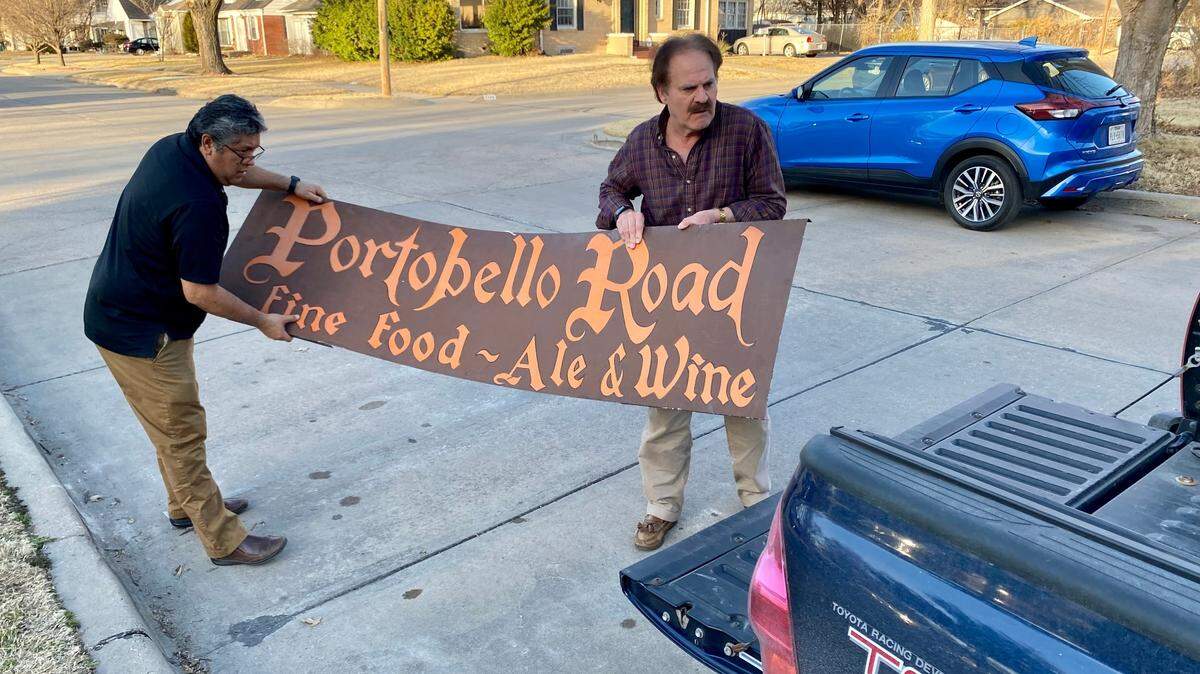
The original Portobello Road restaurant sign that turned up this week at a Wichita estate sale has found a home — one where it will be protected and preserved.
And in an interesting twist, it turns out that the identical backside of the sign is also out there, hanging in the garage of one of the famed Wichita restaurant’s original employees.
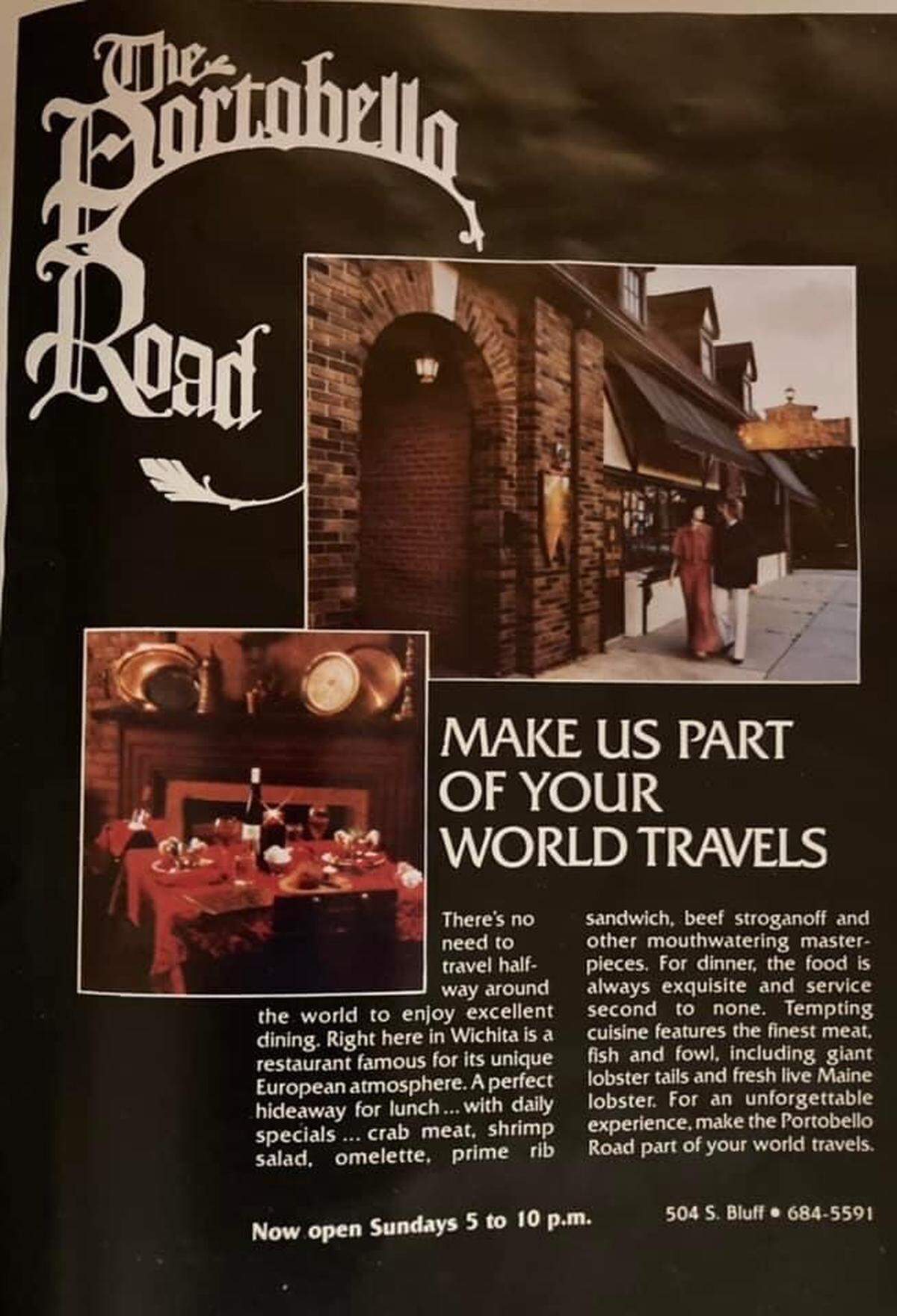
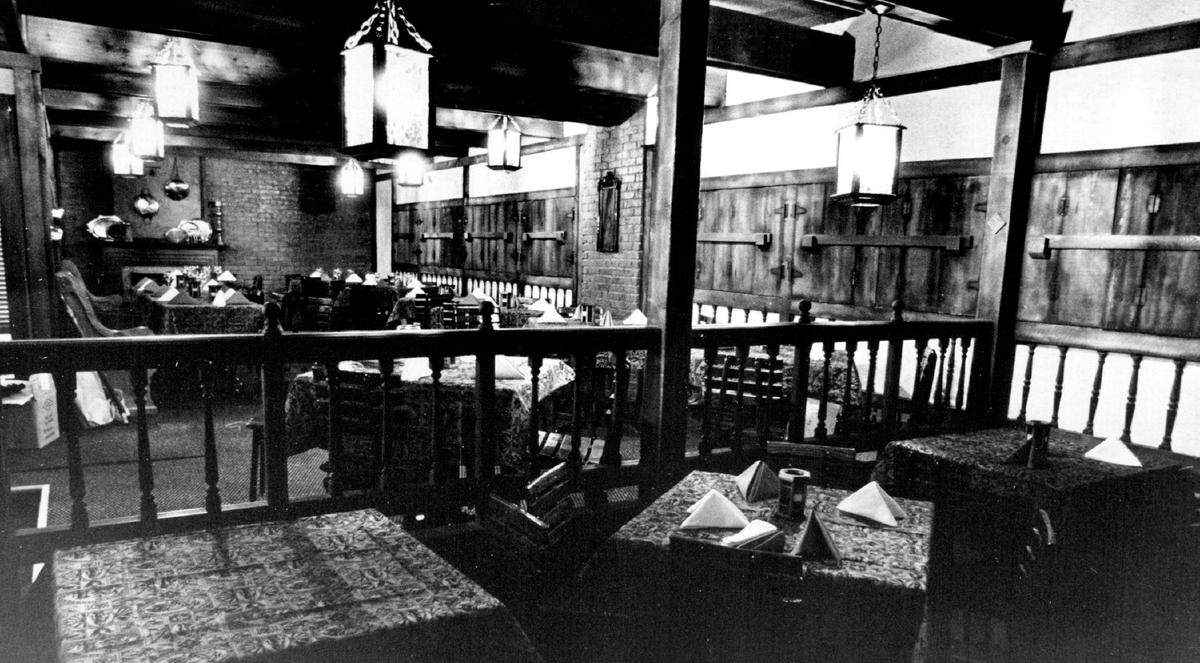
Earlier this week, The Eagle published a story about an estate sale near Kellogg and Edgemoor that included the original sign from Portobello Road, a fine-dining restaurant that operated at 504 S. Bluff from August 1973 until it closed in 1996 when the building — which was in the way of Kellogg construction — was targeted for demolition.
Designed to resemble an English pub, the restaurant — owned by Larry Frasco, Bill Lusk Jr. and Mike Osterhout — served high-end dishes like steak au poivre and attracted many Wichitans in search of special occasion meals. It’s still one of the restaurants long timers mention most when waxing nostalgic about restaurants from the past.
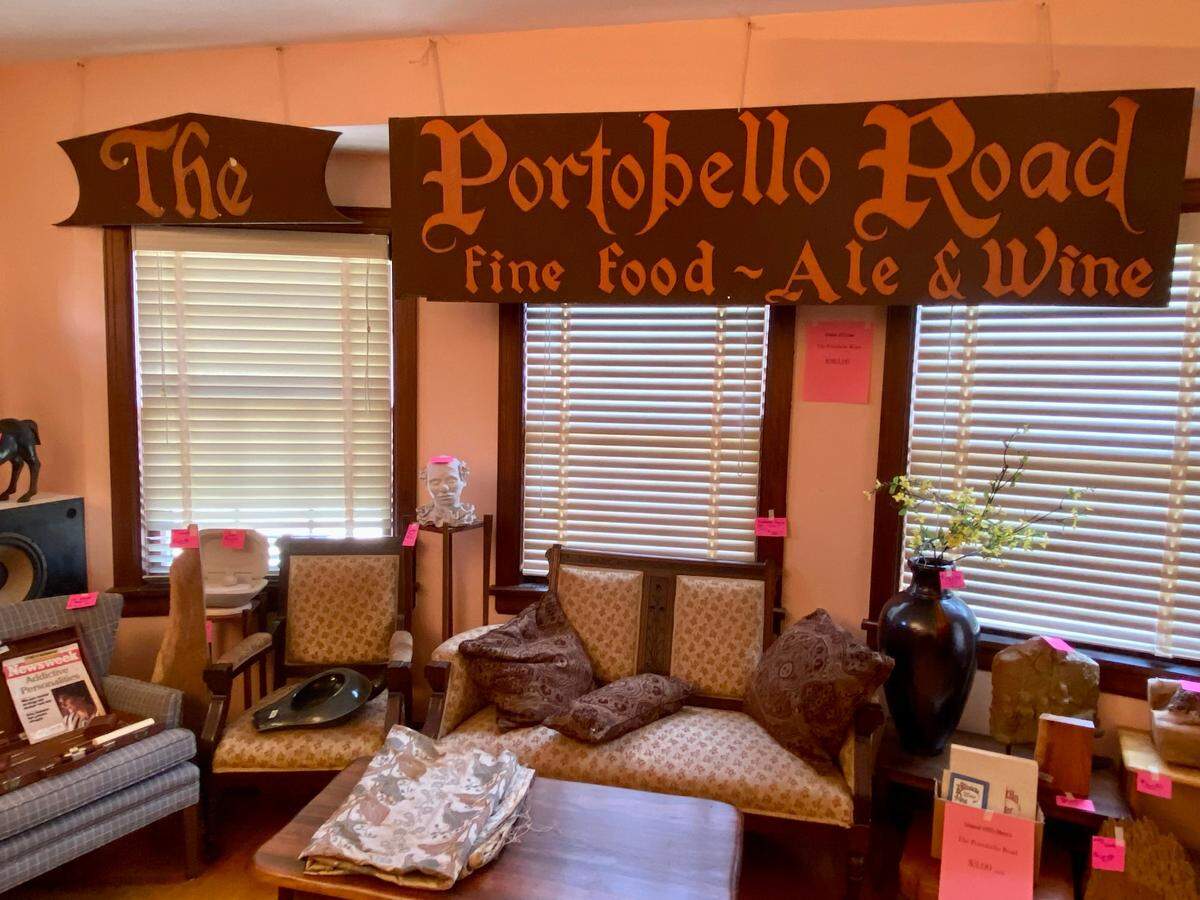
The sign was discovered in the basement of the home owned by Andy Solter until he died in November. Solter, a woodworker and onetime owner of a company called Sunrise Construction Co., was the contractor hired to turn the old Elizabeth’s Restaurant into Portobello Road when it first opened. Somehow, when the restaurant on Bluff was closing, Solter ended up with the sign. Over the years, he tried to sell it but couldn’t find much interest, his family said.
As soon as the story about the sign was published this week, people flooded the sale at 703 Marcilene Terrace, said Lilly Butler, whose mother, Carol Stegman, owns C&S Estate Sales. Many were carrying copies of the newspaper, she said, and they were all there to see the sign.
They gathered in the living room, gazing at the sign, and they reminisced about meals they’d enjoyed at the restaurant and about engagements that happened there.
“I had a lot of people come in and say, ‘That was my first job,” Butler said. “It was pretty awesome.”
The first people who arrived were also able to grab $3 copies of 1990s-era Portobello Road menus that Solter also had snagged, but those went fast.
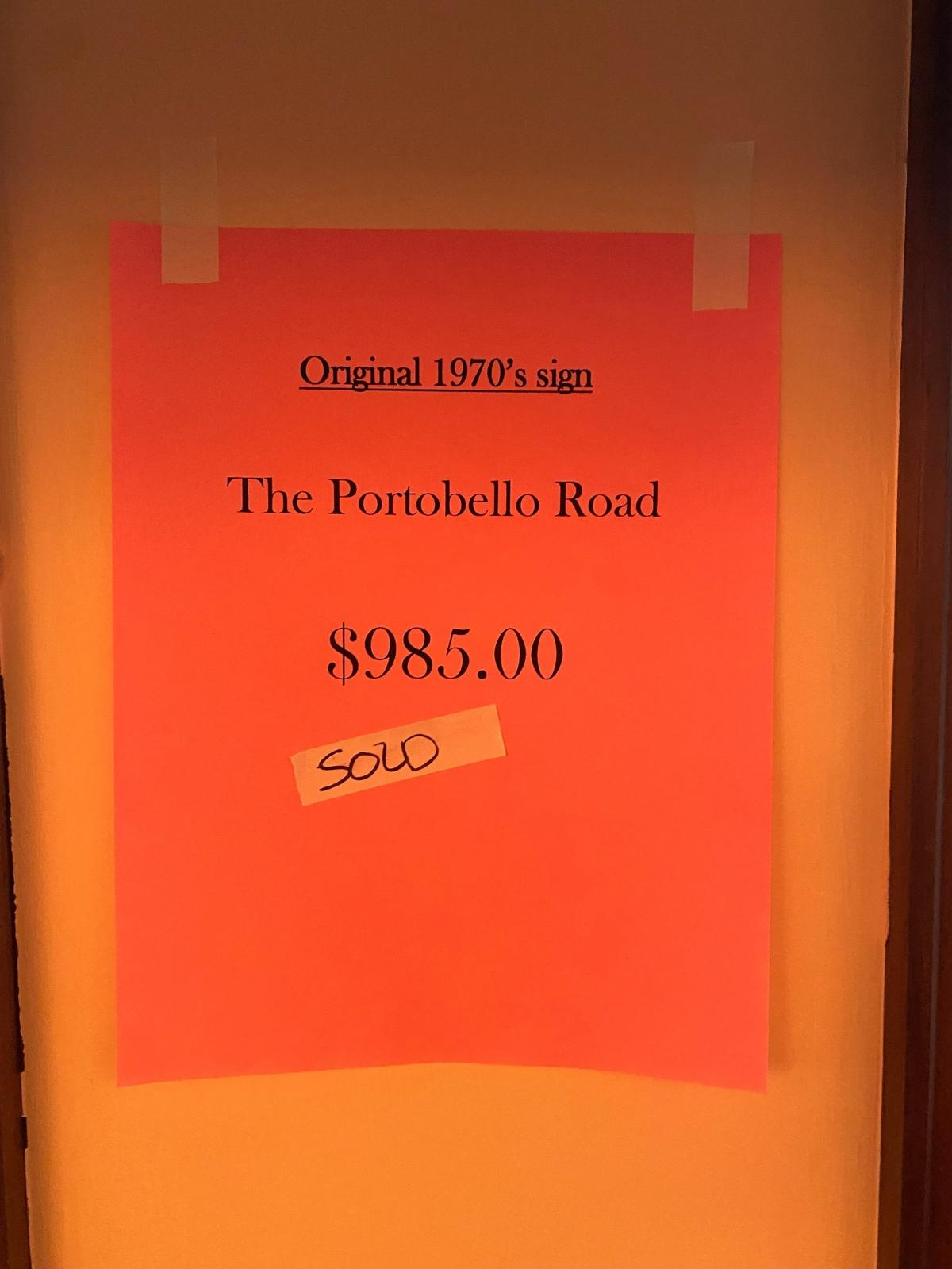
No one, however, was ready to pay the $985 the sale was asking for the sign, which is metal and hand-painted brown with gold lettering.
Then, on Wednesday, Greg Kite learned about the sale. Kite is the famously passionate president of the Historic Preservation Alliance of Wichita and Sedgwick County, and over the years, he and his board have rescued numerous relics from Wichita’s past, which the alliance stores in warehouses across the city.
Among the items it has: the original Orpheum Theatre marquee, stonework and decorative tiles from the Allis Hotel, the signs from the old Willie C’s restaurant, and a 30-ton rail car from the Arkansas Valley Interurban. It also has dozens of items salvaged from Joyland, including the original street sign and the Old Woman Who Lived in a Shoe’s house.
When Kite saw the story about the Portobello Road sign, he rushed over to the estate sale.
“I was staggered,” he said. “I couldn’t believe it, and I thought, ‘I’ll go over there, and it may not be what I think it will be. But by God, it was.”
The sign was still there, hanging inside above the living room’s front windows. And when Kite learned that everything at the sale had been dropped to 50 percent off, including the sign, he didn’t hesitate. He immediately paid the $490.
Kite said he remembers dining at Portobello Road, which he described as an “enchanting” place that was cozy and special to the city. Saving the sign was a no-brainer, he said.
“The Historic Preservation Alliance is always interested in preserving and protecting Wichita’s history and heritage, and restaurants and entertainment are certainly important elements of our history and heritage,” he said.
On Thursday, Kite and David Perez, who works for alliance friend Grant Rine at his Old Town Architectural Salvage, 126 N. St. Francis, went to the house to retrieve the sign.
Lilly Butler helped Perez take it off the wall, then he and Kite carefully carried it to a waiting pickup truck and wrapped it in a blanket. Kite said he’ll store it at one of the alliance’s buildings.
Several shoppers who’d come just to see the sign were there when it was removed and reminisced with each other as they watched it go. Among them was Gene Carr, who said he’d never heard of “aged meat” until he dined at Portobello Road in the 1970s.
“I remember it well,” he said.
Another visitor who’d stopped by earlier, Butler said, was Sandy Rupert, who was one of Portobello Road’s first employees. Rupert told Butler that she actually had the backside of the sign hanging in her garage at home.
Contacted this week, Rupert said that she was on Solter’s original construction crew that put Portobello Road together and that during that time, Frasco invited her to join the staff. In addition to bartending, she also was a longtime sous chef there.
She was also a longtime friend of Solter’s, she said, and three or four years ago, he asked her if she wanted to take the other side of the sign, which he also had in the basement. She happily accepted and hung it in her garage, where she could see it regularly.
When Portobello Road had to close, she remembers, Frasco’s widow, Jill, offered to let employees take whatever they wanted. Solter also has an original plate with the restaurant’s logo as well as some brass wall hangings that decorated the dining room.
Rupert said she also grabbed an old menu when she visited the sale. Being in her old friend’s house and seeing his belongings go was difficult, she said, but it also resurfaced fond memories. She still has many close friends from her days at Portobello Road.
“I remember the camaraderie, the friendships that began and stayed with me forever,” she said. “We were all there for a reason. It was for Larry Frasco and the success of that restaurant.”
This story was originally published March 4, 2022 at 12:01 PM.
.jpg)