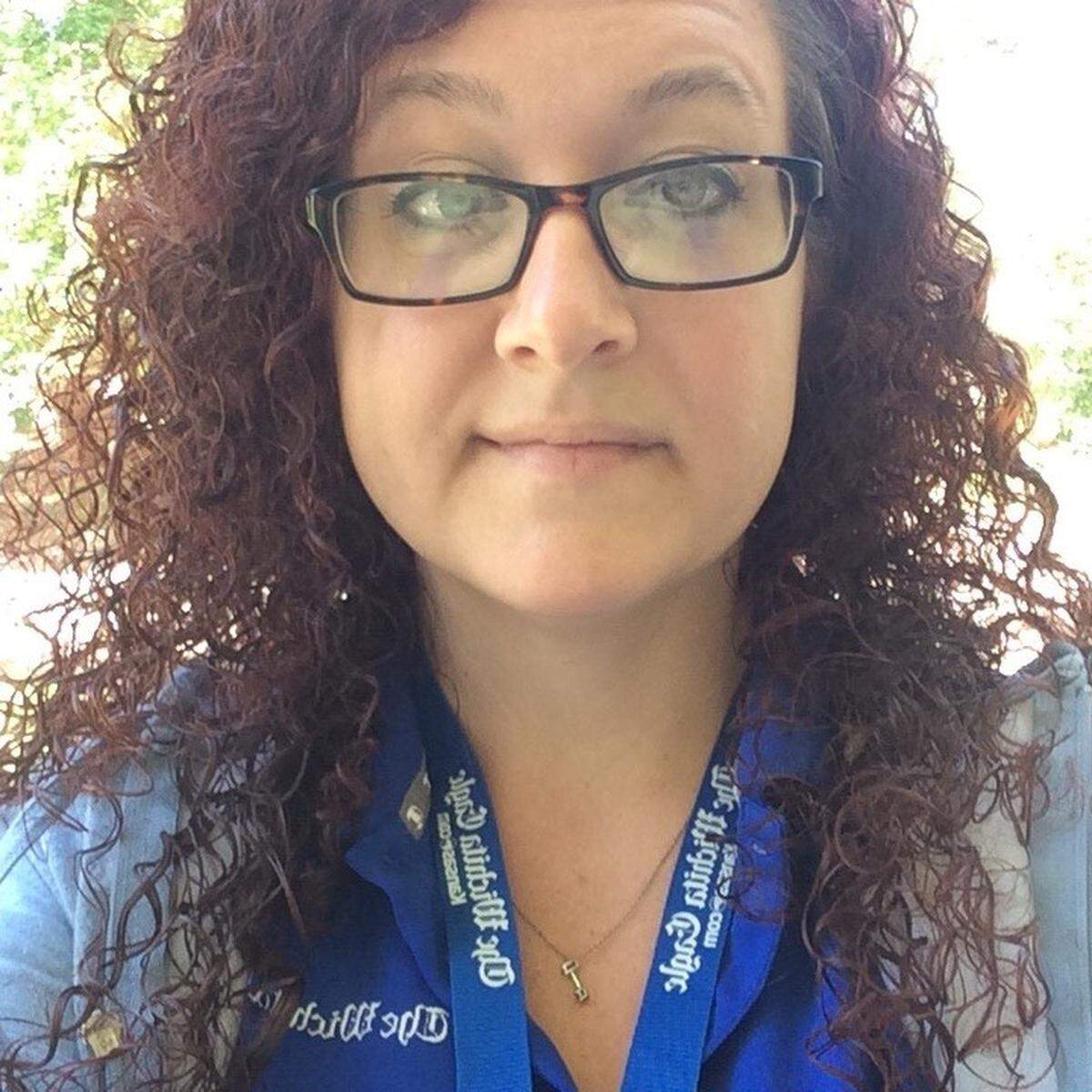
Wichita Eagle reporter’s new book takes bite out of city’s storied restaurant past
Wichita Eagle reporter Denise Neil is an authority on all things dining in and around Wichita.
For years, the conversational style and charm of her “Dining with Denise” blog and newspaper stories have been a go-to source for the latest restaurant openings and closings, local food trends and the city’s best places to chow down.
But since 2019, she’s also been chewing on something new.
In her latest endeavor, Neil has taken on the role of author.
Her new book, out Monday, pays homage to the city’s most memorable eateries and their proprietors since its incorporation in 1870.
“Classic Restaurants of Wichita” is a 152-page part history guide, part stroll-down-memory-lane that takes readers decade by decade through Wichita’s storied dining past with profiles of around 100 restaurants that helped turn its food landscape into what it is today.
In addition to stories that cover Wichita’s Wild West phase all the way through the swanky 1980s, the book features dozens of black-and-white photographs that Neil found during her research, which included combing through newspaper archives and interviewing families of some of Wichita’s greatest restaurateurs.
“I spoke to the daughter of the man who ran Albert’s on Kellogg for most of the time that it was open. I talked to the descendants of Wolf’s Cafeteria and Holly Cafe and Pan-American Cafe,” Neil said.
“They were all very excited to tell me the stories of their relatives who had an impact on the dining scene.”
A Dodge City native whose love of dining started as a kid, Neil has been writing about restaurants in Wichita since 2000.
She moved to the city in 1997 to take a reporting job for The Eagle and immediately started exploring its food offerings.
Over the years, some of her most-read articles have been about restaurants of the past.
“One of the types of stories that’s the most popular with readers are nostalgia stories where we look back at restaurants that aren’t around any longer, but that people have these fond memories of going to for proms or engagements or family dinners,” she said.
“I always wanted to dig deeper into the past of some of these places.”
So when Arcadia Publishing & The History Press approached her in 2019 with the idea of doing a Wichita-centric dining history guide, she was quickly drawn in.
“I already knew what I was going to say in that book. I just needed to sit down and do it.”
Although most of the establishments featured in “Classic Restaurants of Wichita” closed long ago, its final chapter is an ode to iconic spots that you can still eat at today.
“These are all places that would definitely be in the book if they’d closed, but somehow they’ve managed to survive” such as Livingston’s, Angelo’s, NuWay Cafe, Connie’s Mexico Cafe and Scotch & Sirloin, Neil said.
“In the case of Livingston’s, their roots go all the way back more than 100 years.”
The book is available in paperback and costs $21.99 at local book sellers and on Amazon.com. You can also snag an autographed copy from Neil herself by emailing classicrestaurantsofwichita@gmail.com or attending one of her book signing events:
- 1-3 p.m. Aug. 14, Best of Times gift shop, 6452 E. Central in Wichita
- 11 a.m.-4 p.m. Aug. 15, Shop & Grub Market at Naftzger Park at Douglas and St. Francis in downtown Wichita
- 5-8 p.m. Aug. 17 at The Loft at 420, 420 S. Commerce. This public release party will include a presentation at 6:30 p.m. and a cash bar
Recently, Neil sat down with The Eagle to talk about her new book and answer questions about her writing process and what she wants Wichitans to learn from her work.
Portions of that conversation appear below. It’s been edited for length and content.
What prompted your interest in Wichita’s restaurant scene?
I am somebody who has always liked eating out. I grew up in Dodge City, which had some restaurants — we had several good Mexican and Chinese restaurants and a couple of steakhouses. But even from the time I was a little kid if we would go to visit my grandpa in Joplin, Missouri, which for me was the big city, I wanted to go to Red Lobster. I dreamed of it the whole year because I just loved going out to dinner, and I thought back then that was the pinnacle of fine dining.
When I came to the Eagle, I became close with one of my colleagues, Diane Lewis, who covered the restaurant scene for years after Kathleen Kelly did. And she and some of her friends got me interested in cooking and restaurants. That really kind of sparked my interest.
Had you always dreamed of writing a book?
Of course as a writer I thought, Could I write a book? But I know I don’t have a fiction story in my brain. When I read novels I wonder how they come up with all the details.
I am used to writing about real life. So when they said this will just be a long-form version of what you’re already doing every day, I thought, now that’s something that I could do.
What did you do to put you in the mood to write?
Most of it was done during COVID. So a lot of it was just at my dining room table where I had just finished my Eagle work. It was nice that I had nowhere to go because there were no temptations to get me out of the groove.
But there was a period in February when I was on the final push to get it done, and I needed to just get out of my house and away from my family and my dog and all the distractions. So I spent four days at the Bartlett Arboretum on that weekend in February where it was freezing cold. My friend Robin (Macy) invited me out there, and I sat in this old cottage on her property watching it snow with an antique potbelly stove burning behind me. That was just about the dreamiest, most perfect way to write a story about history.
What did you find most interesting as you researched this book?
Today, we have hundreds and hundreds of restaurants. Back in the very earliest days, there were a dozen, maybe two dozen. In the teens and ‘20s, all the restaurants were really congregated off of Douglas, Broadway, Market and Main. That’s where everything was in town.
When I drive around town now I’m kind of haunted because I see everything that used to be there. I just see restaurant ghosts everywhere I go.
Was there anything surprising that you came across during your research?
I’ve written about Patrick Shibley, who owns Doo-Dah Diner, for most of my time at The Eagle, and I had no idea until I researched this book that his father was also a restaurant pioneer. His father, Kay, started a club in the ‘70s called Kamiel’s that was incredibly popular. There’s a menu hanging up in Doo-Dah Diner today, and I had no idea what the connection was until I’d written this book.
Did you eat at any of the restaurants listed in your book?
I went to a lot of the ones from the ‘80s — the Amarillo Grill, Joe Kelly’s Oyster Dock, Bombay Bicycle Club and the Grape. Willie C’s was still open when I moved here in ‘97, and so I did have a couple of nights out there.
One of the things that is very disappointing to me, though, is I moved here in ‘97, and Albert’s on Kellogg, which was a Chinese restaurant everybody loved, didn’t close until like 2001. I didn’t know I was supposed to go there. I was new in town. I didn’t know. And I didn’t go and I could have. That really upsets me. I could kick myself.
Which restaurant you went to was your favorite?
I loved going to The Grape when I first got here because I was a young person in Wichita. It seemed like a really sophisticated nightlife place to go.
But I also went to the Bombay Bicycle Club as a young teen with my dad. When we were living in Dodge City we came to Wichita, he met with one of his business clients and we had lunch there. And that was one of the places that I thought, this is just the ultimate — I can’t believe people get to live in a town that has restaurants like this.
Which restaurants do you wish you could have eaten at?
There was a place on Douglas in the ‘70s called The Looking Glass that was a bar that was filled with ferns, and all of The Eagle folks would hang out there after work. It was a journalist hang out. I would do anything to go there.
Of course, I would love to go to the Innes Tea Room. And I also got kind of intrigued by a place in the ‘70s called the Lancers Club, in the downstairs of the Century Plaza building. It was a nightclub that had pink shag carpeted walls and every night there was a Las Vegas lounge act. Frank Sinatra Jr. played there and lots of other famous regional people. It was just like I envision the ultimate carefree ‘70s hangout.
What was the most visually interesting restaurant you came across?
The Wolf’s Cafeteria really caught my attention because it was a beautiful, old downtown building. It was on the parking lot there behind Century Plaza where Quiznos used to be and where Knolla’s is now. The photo I have in the book shows this giant two- or three-story stone building that used to sit right there and have this amazing two-level cafeteria in it.
It was torn down to build those parking lots, which I know were necessary at the time. But just to think about the building still being there — what it could be now — it just sort of strikes you about the things that are gone.
What were the most interesting menu items you found?
In the early days, restaurant menus were made up of a lot of what we would think of today as grandma-type foods. Tuna salad sandwiches and liver and onions — just more basic things than restaurants have these days. It was all a lot more steak and potatoes or dainty tea lunch-type things. So we’ve definitely come a long way.
Do you have any favorite stories from your research or writing?
When I was writing the book, the publisher sent me some examples of books that have been done in other cities on this topic, and one of them was from Columbia, Missouri. I had relatives who are from Columbia visiting me, and I showed them the Columbia book to give them an example of the kind of thing I was doing.
Within minutes, they were both just completely engrossed in it. And I thought, this is exactly what I want to do for Wichita.
How has the interest in your book been so far?
I’ve had strangers and friends contact me, and some are people who just want to support me. But a lot of them are people who are really tickled about being able to go and see these places, see photos of them and see if I got the ones they remember.
Do you think your book will be important to the city?
For Wichitans, especially the readers that I’ve had for the last 20 years, nostalgia is a topic that they are very interested in. Mostly what I heard from the relatives of the people I interviewed was just how grateful they were that these stories were going to be captured, and that the history is going to be written down before too many years had been gone where the memories weren’t there anymore. So I hope that it’s a historical document where all the important restaurant history or most of it is in one place and won’t be lost.
What do you hope people will learn?
I just think people will find it interesting to see how far our restaurant scene has evolved. I think that they’ll also learn a lot about the people who were key to getting our restaurant scene to where it is today, including a lot of hardworking people, a whole lot of immigrants — people like Antoine Toubia who started with his Olive Tree in the ‘70s and really is responsible for modernizing Wichita’s dining. He’s the first person that introduced sauces and a continental-style of dining to our meat-and-potatoes town.
What are you most proud of with this book?
I feel like I got the biggies that people really remember, and I just want people to enjoy it and use it as a reference.
Do you have any plans to write another one?
I don’t have plans at the moment. But I could definitely be persuaded to do a Volume 2. There’s at least 50 restaurants that I didn’t get in but wanted to, and in the days since the book’s come out I’ve heard of 50 more that need to be included.
This story was originally published August 9, 2021 at 4:53 AM.