
Mourning DeFazio’s? Love Angelo’s? You can make some of their famous dishes at home
DeFazio’s at 2706 N. Amidon has closed, and the restaurant’s longtime fans are distressed.
But perhaps this will provide a small amount of comfort to the people who didn’t make it to the front of the line at the restaurant’s last-chance carryout sale that was cut short on Saturday when owner Pete DeFazio ran out of food.
You can make a couple of DeFazio’s dishes at home.
Back in 2002, as a holiday gift to readers, DeFazio was one of several local chefs who shared a recipe with the Wichita Eagle. His was for his Pasta Fagioli soup, which I’m re-sharing below.
I made it this week as part of an online Community Education cooking class I teach for Wichita State University, and I thought it was both simple and delicious and tasted even better after a night at rest in the refrigerator. When DeFazio gave the recipe to then-food editor Joe Stumpe, he said that it was one his mother and grandmother always made and that it was “real popular with immigrants because everything was easily found here.”
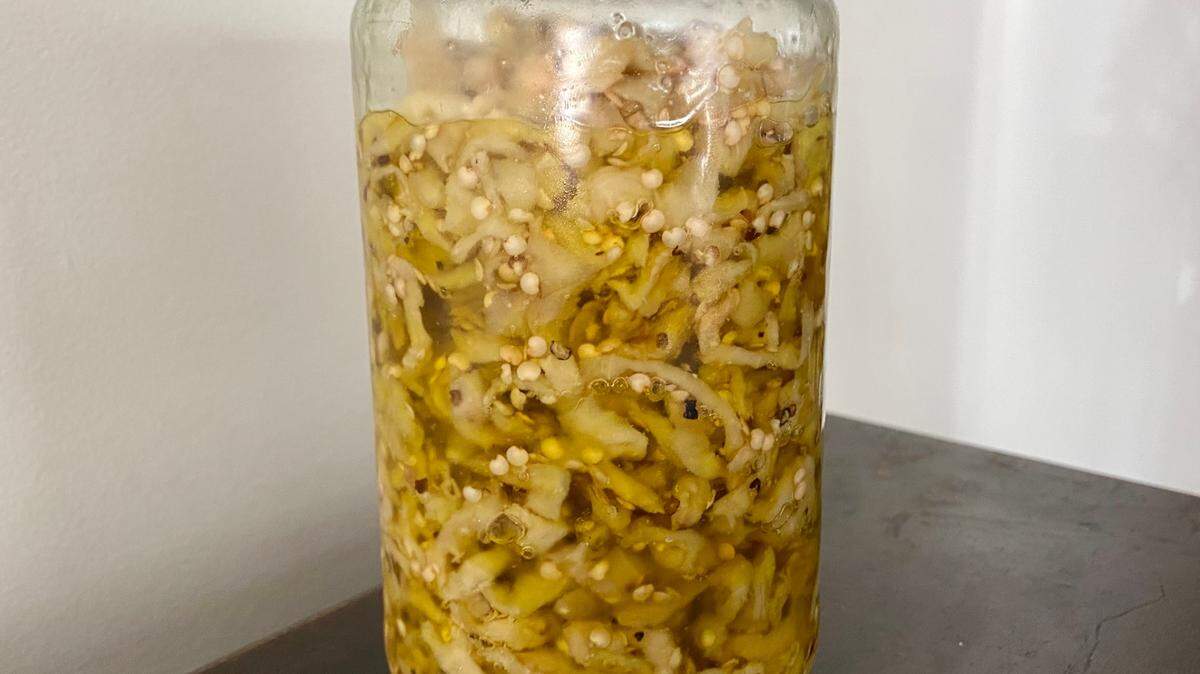
DeFazio’s was also known for its pickled eggplant, which it would use as a topping on its Italian salads. You can still get that picked eggplant at Angelo’s at 5900 E. Central. But you can also make it yourself, and it’s a fun little cooking project.
We don’t have DeFazio’s recipe, but Angelo’s founder Angelo Fasciano shared his recipe with former food writer Kathleen Kelly in 1979. He verbally explained the recipe to Kelly, and she translated it into a written recipe for her “Kitchen Kibitzing” column.
It’s been printed and reprinted in The Eagle over the years. I made a jar of it for the cooking class as well and now have plans to make jars of it to give as gifts for the holidays. It takes a little muscle to get it done, but the results are worth it. I even threw a bit of the eggplant on top of my DeFazio’s soup, and it gave the dish another interesting layer. And I don’t even like eggplant.
Here are those recipes.
DeFazio’s Pasta Fagioli soup
1/4 cup diced prosciutto or pancetta
1/2 medium onion, diced
1 rib celery, diced
1 carrot, diced
2 tablespoons olive oil
1 tablespoon minced garlic
Pinch crushed red pepper
6 cups beef broth
1/2 cup marinara sauce or tomato sauce
5 cups cooked cannellini beans (2 15-oz. cans, drained and rinsed)
Salt and freshly ground black pepper
1 1/2 cups dry ditalini pasta (can substitute ziti or elbow macaroni)
Parmigiano reggiano cheese
Pepperoncini
Saute prosciutto, onion, celery and carrot in olive oil until softened, about 5 minutes. Add garlic and red pepper; saute an additional 5 minutes.
Add beef stock and marinara sauce and bring to a simmer. Add beans and bring to a slow boil. Season with salt and pepper to taste.
Add pasta and cook for 8 minutes, or until pasta is al dente. Remove from heat and let rest 10 minutes before serving.
Garnish each serving with cheese and pepperoncini.
Note: To make this vegetarian, omit prosciutto and substitute vegetable stock.
Makes eight servings.
Angelo’s Pickled Eggplant
Five pounds of fresh eggplant
White vinegar
Salt
Pepper
Oregano
Garlic powder or granules
These measurements will produce a smaller batch of pickled eggplant. When Fasciano gave the recipe to Kelly, he recommended that the home cook start with at least a bushel of fresh, tight eggplant to make the project worthwhile.
First, wash the eggplant and cut off the stems. Be sure to take off enough so that you have no hard core remaining. Peel the eggplant; a good vegetable peeler does the best job, though you may use a knife.
Slice the eggplant 1/4-inch thick; then slice again into julienne strips. Sprinkle the strips heavily with salt (pickling or non-iodized), mixing the salt and eggplant thoroughly. Place in a relatively narrow container — crockery, plastic or enameled, not aluminum. Place a plate that fits inside the container on top of the eggplant and weigh it down.
The salt and weight will remove liquid (it will be dark in color) from the eggplant. Drain this liquid and continue to squeeze the eggplant until no more liquid can be extracted. At home you can use two stainless steel colanders, one small enough to fit inside the other, and allow the juice to run out, and just keep squeezing, Fasciano said.
When enough liquid has been squeezed from the eggplant, it will be a greenish-gray wad. The importance of getting all the juice out can’t be overemphasized, Fasciano told Kelly. If juice is left in the eggplant, it will dilute the vinegar and oil used for pickling. The juice may make the pickle bitter and reduce its keeping qualities.
Break up the mass of eggplant and place in a non-aluminum container. Bring enough white vinegar to cover (or use half vinegar and half water) to a boil and pour hot over the eggplant. Let stand 15 minutes or so to allow the vinegar to penetrate the shards of eggplant. It can be allowed to stand for several hours in the vinegar, if necessary.
Drain the vinegar from the eggplant and squeeze again, though not so dry as before; some of the vinegar flavor should be retained. Spice according to your own taste. You’ll need to season with salt, pepper, oregano and garlic powder or granules (not garlic salt). Kelly found a recipe in an Italian cookbook that recommended 1/2 tablespoon garlic powder and 1 1/2 tablespoons oregano for 5 pounds of whole eggplant.
Mix in spices and enough good-quality olive oil to saturate the shards of eggplant. Stir occasionally to mix well. You should be able to taste the vinegar; if not, add more to the mixture. Neither the garlic nor the oregano should dominate the flavor.
If you make a mistake and add too much of anything, correct by slicing, salting and squeezing, steeping in vinegar and squeezing another eggplant to add to the mixture.
Before storing in the refrigerator, pour a layer of oil over the top of the mixture to form a “seal” that will keep air from getting into the eggplant. Cover with a lid.
This story was originally published October 12, 2021 at 11:19 AM.
.jpg)