
Sedgwick County Zoo’s new superstar, a 400-pound goofball rhino baby, is drawing crowds
The Sedgwick County Zoo has a new superstar — a 400-pound potato who likes to roll in the mud, pretend to charge at visitors, and run around like a clumsy puppy who isn’t quite used to his feet.
He’s such a star that he’s lured lots of visitors since the zoo at 5555 W. Zoo Boulevard reopened post-COVID-19, officials there say. And he’s so popular that he even has his own merch display in the zoo’s gift shop.
But for as much joy as he’s brought to zoo staff and to Wichita zoo visitors, KJ the baby black rhino — born on March 1 — has a bit of a sad backstory. He was a surprise to his keepers, who didn’t even know his mother, longtime zoo favorite Bibi, was pregnant until 13 months into her 16-month pregnancy.
And KJ never got to meet his father, an “sweetheart” of a rhino named Klyde who had been living at the zoo for almost nine years when, last September, he died unexpectedly of a heart attack at age 18. Rhinos in captivity usually live about 30 years.
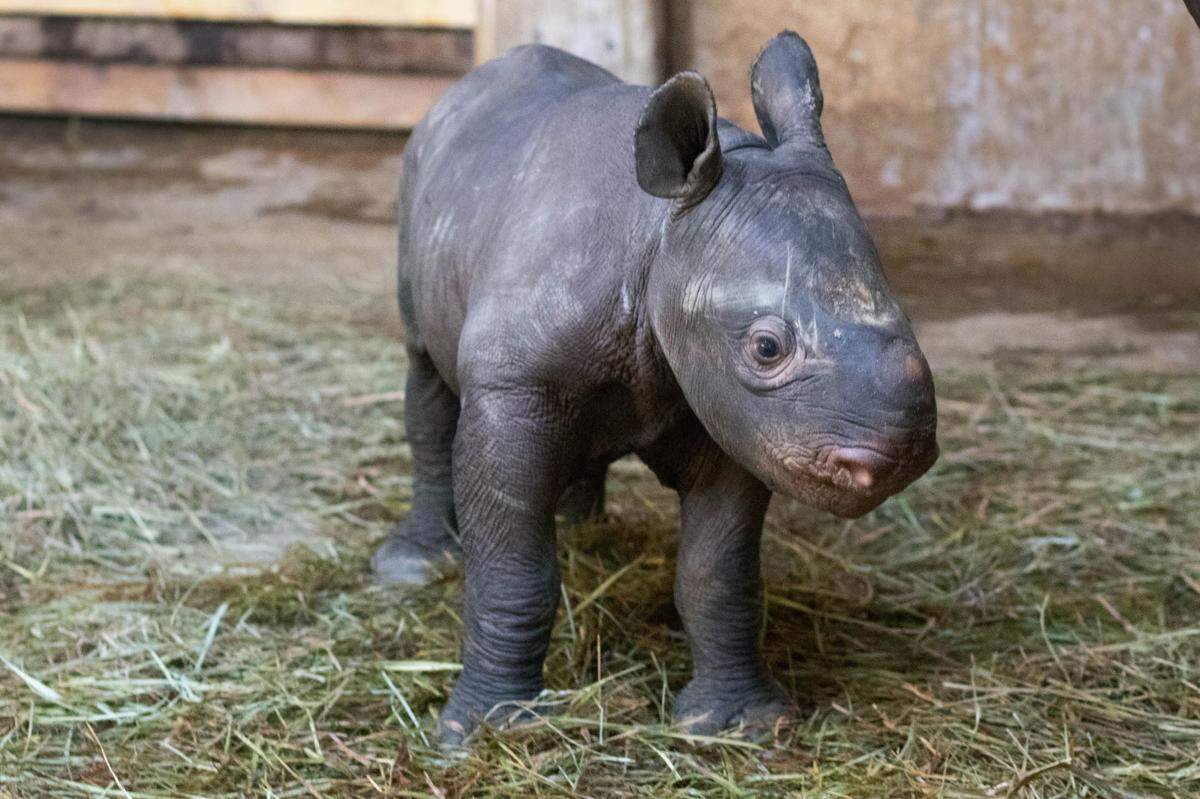
But one of the things the zoo staff loves so much about the goofy baby rhino in their care is that he reminds them of his father, who was mild mannered for a 3,500 pound mammal and whose keepers described him as a “lover.”
In fact, KJ is named for his father. The letters in his name stand for Klyde Junior.
“KJ is definitely like his dad,” said zookeeper Jonathan Miller, who has been with KJ since his birth. “He’s a big sweetheart, and we love that.”
Surprise delivery
Bibi, the black rhino who came to the Sedgwick County Zoo from Japan in 2001, had given birth to two babies during her time at the zoo, and the staff was hoping for another.
They tried to mate Bibi, now 23, with the younger, less experienced Klyde, but it didn’t seem to be taking, keepers said.
When rhinos are courting, they fight, and mating is successful only when the female indicates she’s ready to submit. Bibi wasn’t into that, and Klyde was so mild-mannered, he’d give up quickly, Miller said.
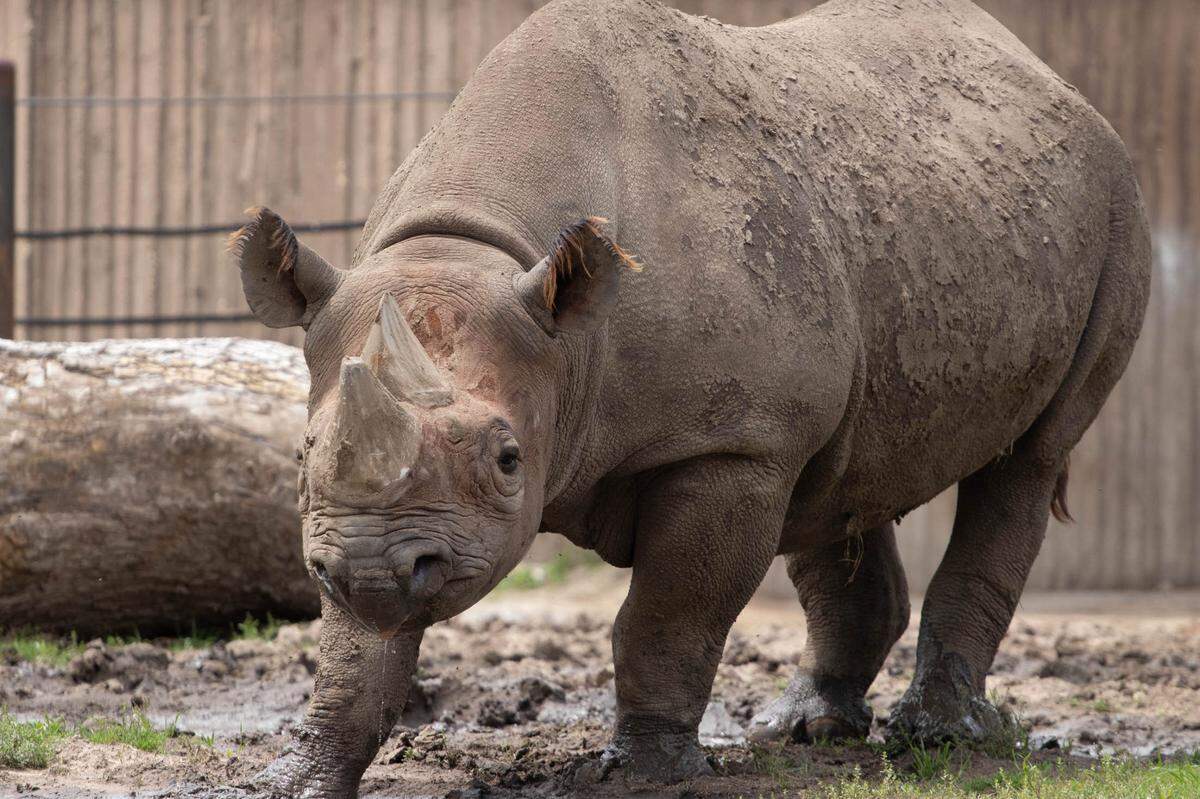
They’d leave Bibi and Klyde alone for overnights, but the keepers found little evidence that romance had bloomed. They decided to send off Bibi’s stool samples to a lab hoping that results could help them better track her cycle and find the best time to set her back up with Klyde.
But the lab had some surprising news.
“Her progesterone levels were through the roof,” Miller said. “And when we first heard that, most of us didn’t think it was a positive. We thought it was a negative. What kind of cancer could that be? What kind of sickness or illness does this mean? But our vets basically said that in rhinos, that pretty much means she’s pregnant.”
It’s hard to tell when a rhino is pregnant, Miller said. Their bodies don’t really show any noticeable changes till they’re about to give birth.
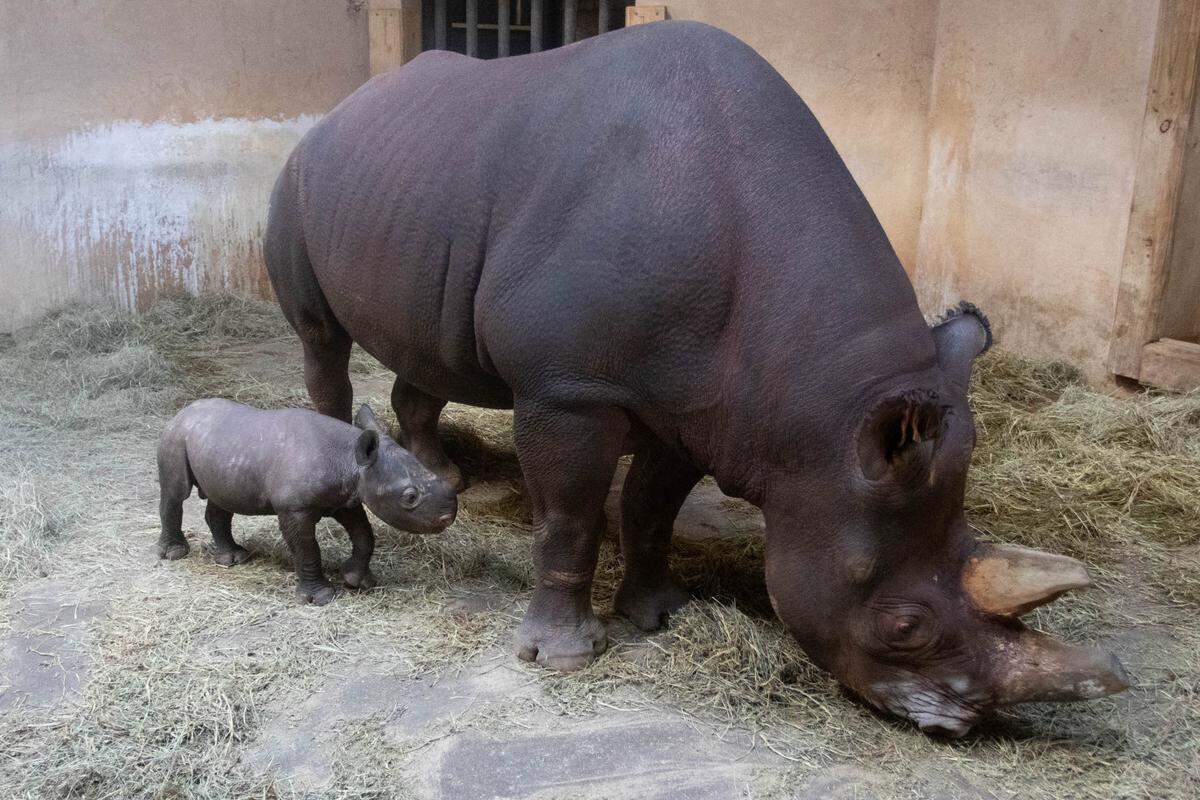
Three months after they got the surprise news, KJ appeared. At birth, he weighed about 50 pounds, and he was scrawny as could be.
“But he was very stout, very muscular,” Miller said. “He literally looked like mom but a small version.”
The keepers were still grappling with their grief over Klyde, who seemed fine the morning of the day he died but who collapsed in his habitat and could not be revived. KJ’s arrival soothed them a bit, and after a short discussion, they decided that the baby should definitely be named for his late father.
Bibi has been a good mother and is still nursing her baby, who gets about 85% of his diet from her. Now that KJ has his teeth, keepers are able to also give him treats like sweet potatoes, apples, carrots, cottonwood branches and bananas. KJ is gaining between 15 and 20 pounds a week, Miller said, and he’s expected to grow to be between 3,000 and 3,500 pounds.
Recently, his rhino horn has started growing in.
Bibi loves her baby, Miller said. But she’s like any frazzled mother on her third child. Keepers were not sure at first how she’d take to them touching and loving on her baby, but she seemed completely unconcerned, they said with a laugh.
If the keepers love on KJ too much, they said, Bibi will gently push the baby aside, but only to remind the keepers that she needs attention, too. She’ll let her little boy “play spar” with her to a point, but she quickly gets tired of his roughhousing and lets him know it.
“She definitely has third baby syndrome,” he said.
Goofy boy
When KJ was first born in March, the weather was still pretty cold. Baby rhinos can’t self-regulate their body temperatures, so he had to stay inside. He also needed time to bond with his mother, and the zoo staff needed to baby-proof his habitat.
That meant that KJ wasn’t visible to the public or to most of the zoo staff for months, and people were getting restless to meet him.
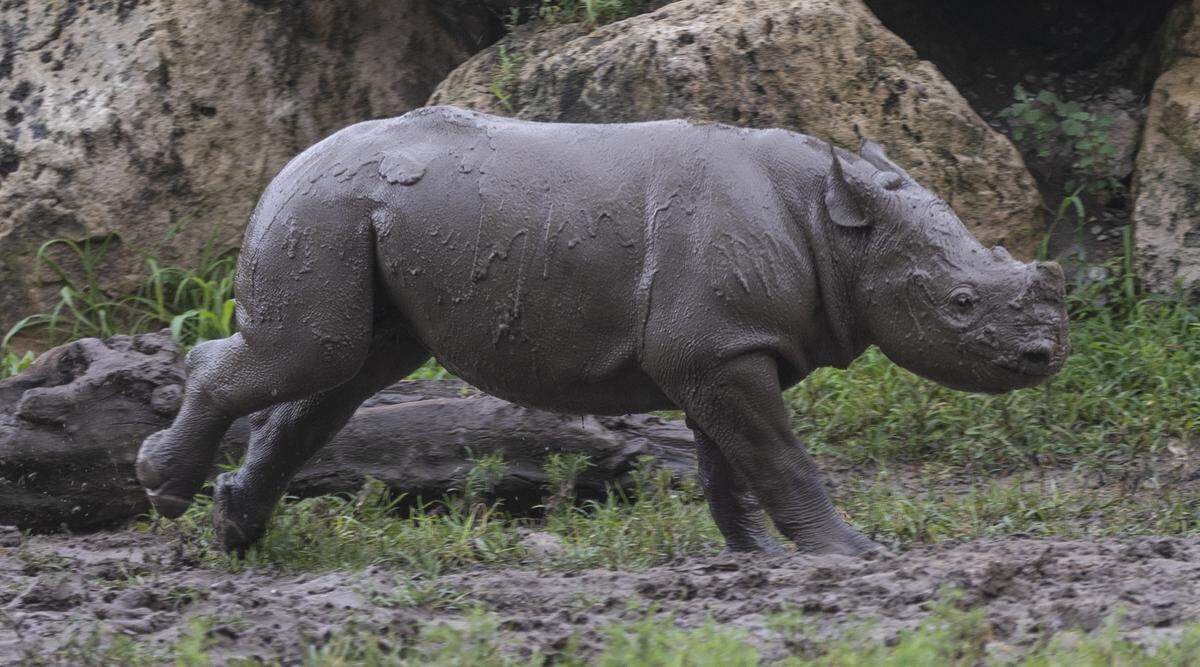
Once the weather got warmer, though, both KJ and Bibi started to go outside more, and now, it’s easy to spot them. KJ is a rambunctious little boy who likes to run circles around his habitat and act like a tough guy — but only when his mother is nearby, his keepers say. He’s a performer who likes to pretend as though he’s going to charge at visitors who are watching him, only to peel away as he approaches the fence.
On a recent rainy day, KJ was in rare form. People at the zoo were getting drenched, but KJ was loving it. He rolled in the muddy puddles that the rain created in his habitat and raced around in circles. Occasionally, he’d stop to get a banana snack or a pat from keeper Andrea Przybylski, whose hands were quickly as muddy as KJs hide.
Zoo visitors have been charmed by KJ, his keepers say, partially because he’s just so cute. People are particularly drawn to larger baby mammals, they said, and it’s been years since the zoo’s had one. The last might have been Bibi’s previous babies, who were born in 2004 and 2007.
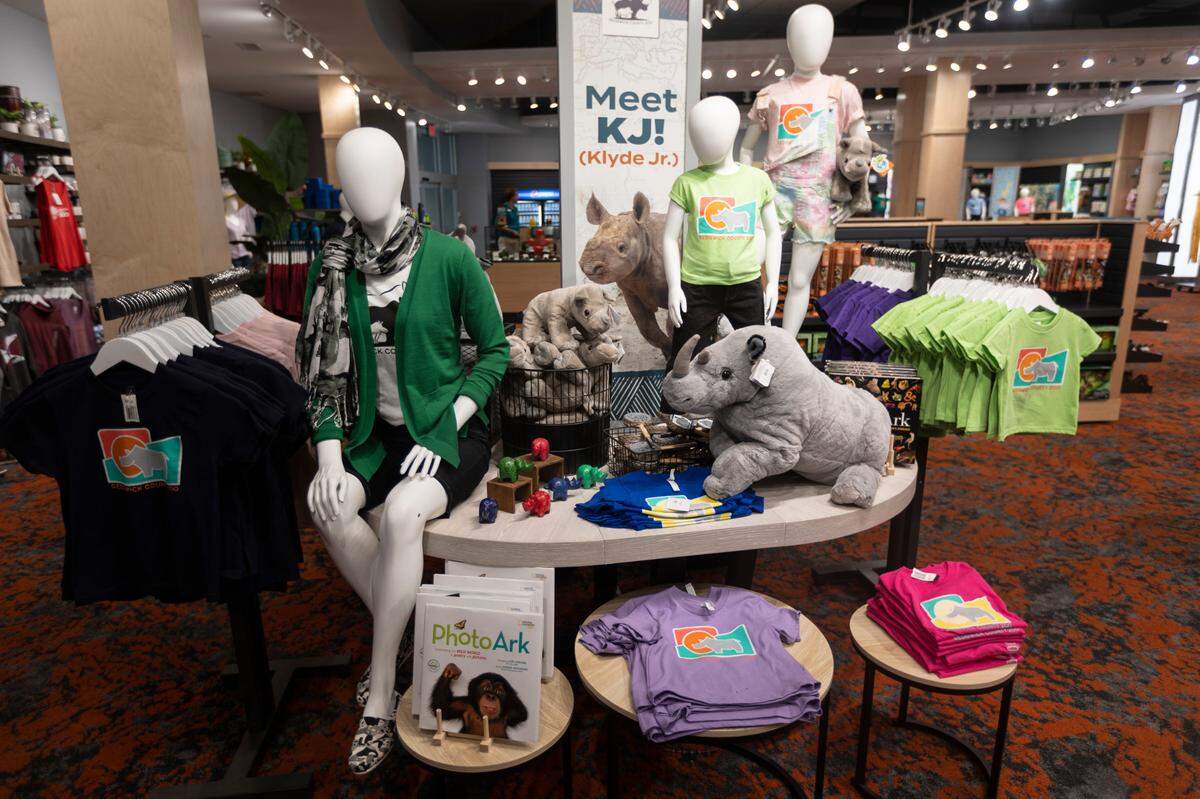
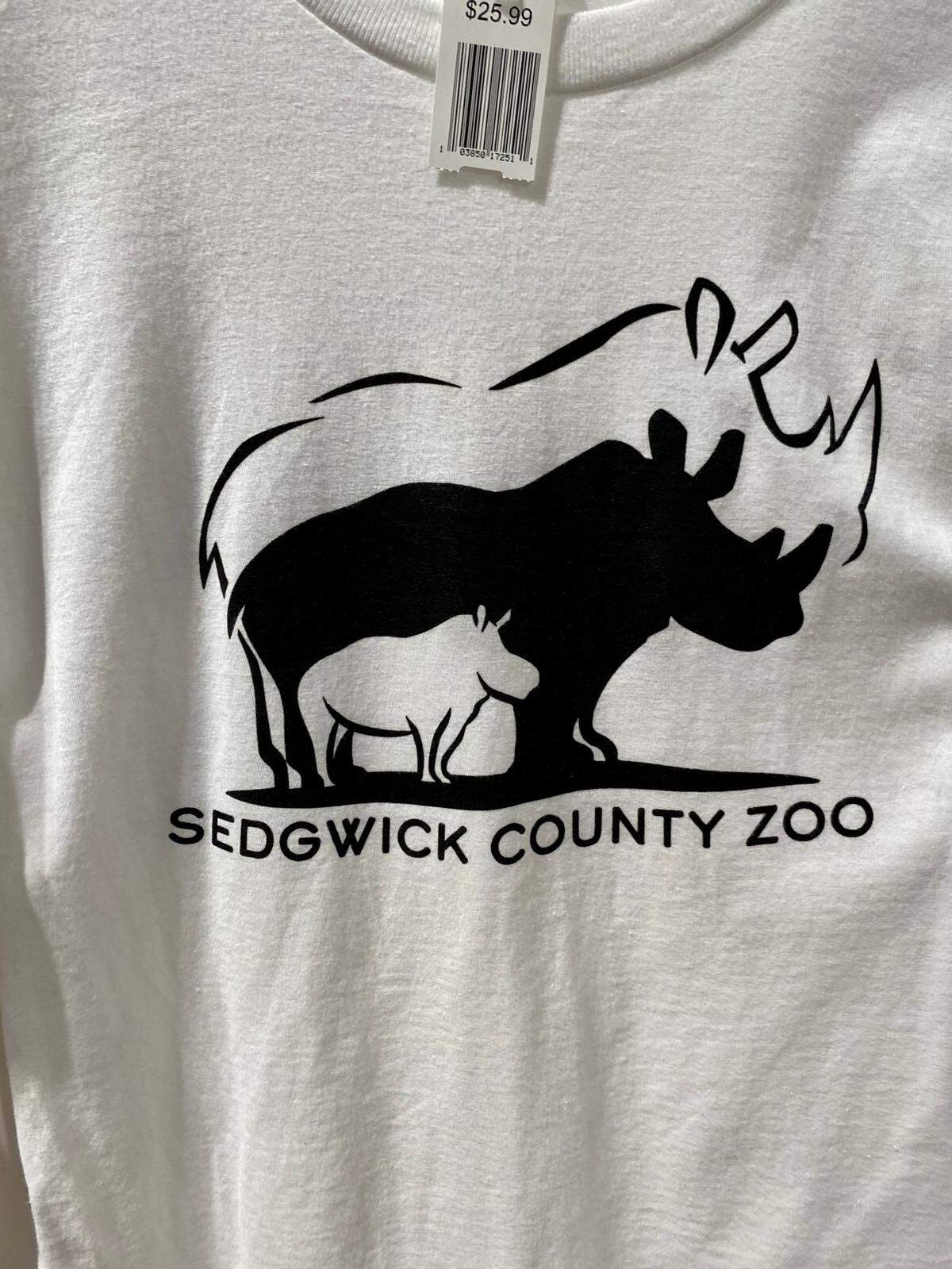
Jennica King, the zoo’s director of strategic communications, said that the zoo has definitely noticed an uptick in visitors who are coming specifically to see KJ. He’s so popular that he has his own merchandise stand just inside the gift shop doors. A table with a sign that reads, “Meet KJ, Klyde Jr.” is loaded with stuffed rhinos, T-shirts with images of a baby rhino, and baby rhino wood carvings. Postcards and magnets featuring photos of a newborn KJ are all over the gift shop, and one of the zoo’s graphic designers created a logo that features silhouettes of a dad rhino, a mom rhino and a baby rhino as tribute to Klyde. That image is printed on shirts that are for sale.
KJ should continue to look like a baby for at least a year, his keepers say. And the zoo will get to keep him for at least two or three years. After that, whether he stays or moves to another zoo will be up to the Species Survival Plan, a program run by the Association of Zoos and Aquariums.
Bibi will probably live out the rest of her life in Wichita, though there are no guarantees, Miller said. KJ will likely be her last baby.
The zoo staff and its visitors, though, are trying to soak up every moment of cuteness they can get while KJ is still his silly baby self.
“Everybody wants to come and see KJ running around and playing around,” Miller said. “We see guests come running this way all the time, especially when KJ is out running around and rolling around and playing in the mud and play-sparring with mom. He has probably brought in a ton of new guests to come and look at him.”
.jpg)