
2000: Living a miracle
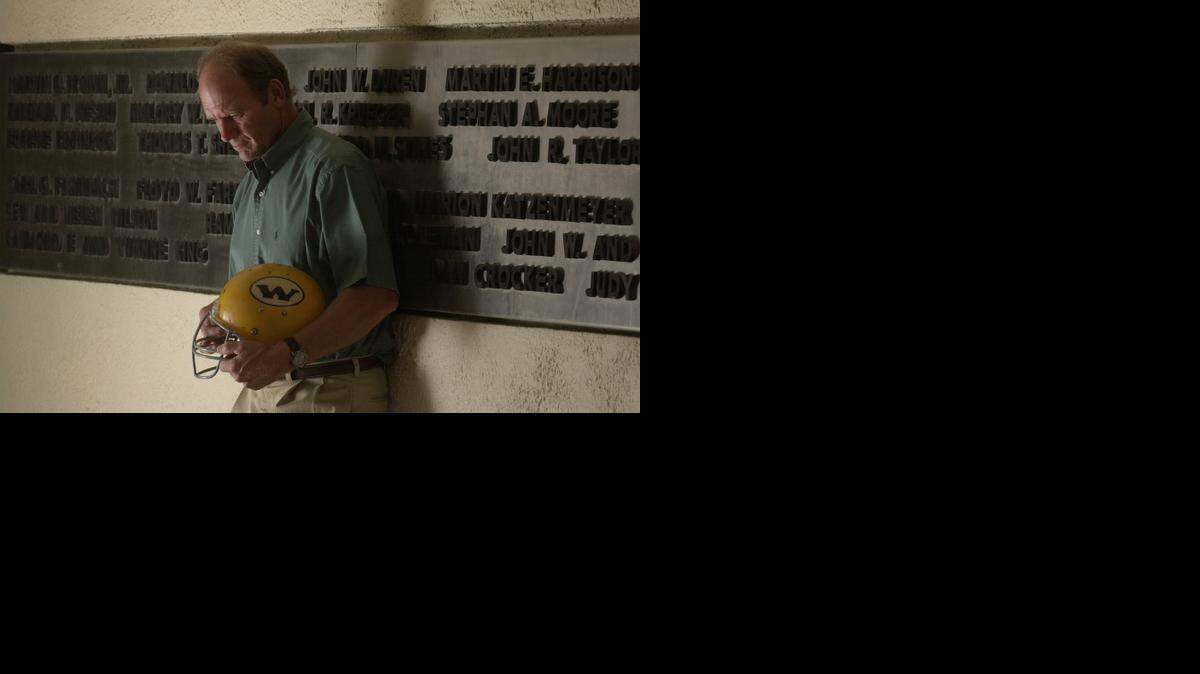
This story originally appeared in The Eagle on Oct. 1, 2000.
John Hoheisel easily could have been killed on that Colorado mountainside 30 autumns ago. Fourteen of his Wichita State University football teammates, his closest friends, lost their lives in the crash of a Martin 404 airplane that was carrying part of the Shocker football team to Logan, Utah, for a game. So did 17 others – some from WSU’s administration and support staff, a few boosters, head coach Ben Wilson and three crew members.
Hoheisel could have died with so much more time to live.
He wouldn’t have known the thrill of marrying, of having two children, of coaching football, of teaching.
He has been able to pass on his legacy to a son who, at 21, is a few months older now than his father was when the plane crashed.
That son, Nick, is a football player, too, a fullback at Kansas State.
But only because his father lived.
Hoheisel was one of nine survivors. One of the lucky ones.
“I don’t have guilt about surviving,” he said. “But . . . if you said somebody else could have lived and I would have died – I could have made that choice. That’s something I could do.’’
Most of the time, Hoheisel doesn’t think about Oct. 2, 1970, which is the way he likes it.
Then an anniversary rolls around and people start calling him and the memories, no matter how hard he tries to block them, return.
“When these anniversaries of the plane crash come up, I always worry about saying the right things,” Hoheisel said. “You don’t want to step on people’s toes. If the plane crash is something special in people’s lives, then I don’t want to be somebody who says, ‘Hey, let’s get on with our lives.’ If this is something that is holding you together, then that’s fine.’’
* * *
All 14 players who were killed were 21 or younger.
All but one – Gene Robinson, who had two young children – never knew the thrill of holding a newborn or of watching their sons and daughters walk for the first time or shuffle off for their first day of kindergarten.
Hoheisel has experienced such joy with his two kids – a daughter, Holly Engle; and Nick, his boy.
John and Nick are bonded in a way most fathers and sons are, but it goes deeper because of the crash.
They don’t talk about it much, if at all, but it’s always right below the surface. They can feel it, almost touch it. They just don’t speak it.
When Nick was much younger, he and his dad played football in the ice and snow near the country farm where they lived until they could not feel their noses.
Hoheisel gave Nick an old, beat-up football helmet, and Nick held on to it like it was made of gold.
If it’s a miracle that Hoheisel survived the plane crash – and he thinks it probably is – then his children are miracles, too.
“I thank God every day that my dad was able to come out of that crash all right,” Nick said. “And that I have the opportunity to be here now.’’
* * *
John Hoheisel is 50 and walks with a gimp in his left leg, a reminder of the injuries – countless cuts, bruises and abrasions – he suffered 30 years ago.
He says he doesn’t even know he’s limping until somebody reminds him.
The plane he and his teammates were riding refueled in Denver, then took off for Logan. The pilots changed their flight plan, deciding to give their passengers a scenic view of the Rocky Mountains. But they could not pull the overweight plane out of a box canyon.
The second plane carrying WSU football players followed the original flight plan, north toward Laramie, Wyo., to gain altitude before crossing the Rockies.
Eventually the pilots of the doomed aircraft were blamed for the accident by the National Transportation Safety Board.
The last thing Hoheisel remembers before the crash is looking out the window and watching the plane’s wing clip off the tops of trees.
He doesn’t remember the impact into Mount Trelease, just west of Silver Plume.
“There were no announcements that we were in trouble that I recall,” Hoheisel said. “We were just down. I don’t think many of the people on the plane knew what was happening.
“But I was looking out the window. I saw those treetops being clipped by the wings of the airplane. I heard the rumble.’’
Then, just a few seconds later, it was eerily quiet. Hoheisel couldn’t see because of the smoke but was able to get out through a hole in the back of the fuselage.
He heard people moaning from inside the plane, but it was engulfed in flames.
It was too late to help.
A dazed Hoheisel and a few of his teammates were met on the mountain by a construction worker who was helping build the Eisenhower Tunnel on I-70, below the crash site.
The worker offered to call for a helicopter, but Hoheisel and his friends opted to slide down the mountain instead, “on our rear ends.”
They were taken to a medical clinic in nearby Silver Plume.
“We were moving pretty good down that mountain,” Hoheisel said. “We didn’t feel much pain until we got down.’’
* * *
Clearly, there is pain in Hoheisel’s memories of the crash, which is why he’s uncomfortable talking about them.
He remembers 1970 as if it was yesterday and seems shocked when he figures out that 1970 was, indeed, 30 years ago.
“Maybe that’s why I shy away from talking about it because to me it seems like it was just yesterday,” Hoheisel said.
Hoheisel is a coach and industrial arts teacher at Valley Center Junior High School. He lives in west Wichita with his wife, Cathy.
It’s a simple life. Hoheisel loves to coach and spend time at home.
“Occasionally, I’ll see some of the other guys who survived the crash,” Hoheisel said. “Maybe Randy Jackson or Rich Stephens.
“But most of the others, I never see them. Maybe that’s something I need to do, look back and find those guys and talk to those guys. But it’s just something I’ve really separated myself from.’’
Just more than three weeks after the plane crash, WSU started its “Second Season’’ with a game against Arkansas in Little Rock.
There were 40,000 people in the stands, and when the Shocker team captains walked to the middle of the field for the pregame coin toss, there was a thunderous roar.
Hoheisel, on crutches, was one of those captains.
“So emotional,” he said. “Unbelievable.’’
Ninth-ranked Arkansas won that game 62-0. The Shockers fielded a team of mostly walk-ons and freshmen, who had been given special permission to play by the NCAA.
WSU lost all six games of the Second Season, but it didn’t matter. Simply putting a team on the field was victory enough.
Hoheisel returned to play in the 1971 season, but football just wasn’t the same.
“I don’t think at that time, when I went back to play, that I had the same trust in the guys I was playing with like I had before,” Hoheisel said. “Like Steve Moore – I knew if I was out there playing linebacker with Steve.…”
Hoheisel’s voice broke as he remembered another of his teammates who had died. He put his face in his hands.
“There were so many games when Steve would come to the huddle and he’d be knocked silly,” Hoheisel continued. “We would have to tell him where to line up. But I knew if he was out there, he wasn’t going to let anything or anybody get by him. And I just assumed he trusted me the same way.’’
* * *
Nick Hoheisel was a tremendous high school athlete at Newton, a star in football and basketball.
He says his father never pushed him into sports, but because he was always around them, it surprised no one that Nick pursued them with vigor.
“Nick has always wanted to achieve,” his dad said. “He wants to play, he wants to be a team player, and he’ll do anything you ask of him. He may not have some of the natural ability of others, the speed or the power, but he’ll work hard.’’
Hoheisel and Nick have had thousands of father-son talks. But not many of them have dealt with the plane crash.
Nick, in fact, has almost no knowledge of what happened on that brisk day in October 1970.
“My dad is really modest about things,” Nick said. “I ask him about it a little bit. I understand how difficult it must be for him to talk about it.’’
When Nick was a freshman at K-State two years ago, he and the rest of the Wildcats boarded a plane for San Antonio to play in the Alamo Bowl against Purdue.
Nick remembers what his dad told him before his first plane ride.
“He said the lucky seats were the ones two rows from the back,” Nick remembered. “In the right-hand row. That’s where he was sitting.’’
* * *
Hoheisel has some bitterness. He doesn’t deny that.
He wonders how WSU’s athletic administration at the time could have loaded a football team and others on two such questionable planes, one of which landed safely in Logan.
There was anger, too, when WSU decided to drop its football program following the 1986 season. Hoheisel considered that decision, made by then-president Warren Armstrong, an insult to everyone who had played Shocker football, especially to those who were killed in the plane crash.
“I’m not as proud as I should be to be a Shocker,” Hoheisel said. “You wonder what those people were thinking when they put us on those planes.’’
He also thinks the decision to drop football was a mistake.
“All they said then was that the decision was made because they were so much in the red,” Hoheisel said. “If they dropped football, they’d get back in the black and everything would be OK. Well, it’s been how many years? And nothing has happened. It wasn’t the football program that caused that debt.’’
Hoheisel is skeptical that football will ever make a comeback at Wichita State. To tell the truth, he doesn’t really care.
* * *
Hoheisel wants his son’s notoriety to come from his own accomplishments, not because his father was fortunate enough to survive a plane crash.
“Nick’s his own person,” Hoheisel said. “If he’s able to achieve at Kansas State, it’s going to be because of what he has done. It’s not going to be because I’m on the phone saying, ‘This is John Hoheisel, and I survived the Wichita State plane crash.’”
Nick goes about his life in the same fashion as most college athletes. He lives with several roommates, scratches for spending money, stays up late and gets up early.
He sounds thankful that his father has shielded him from the plane crash as much as possible.
Like son, like father. Nick is soft-spoken and polite. You know he has been raised well.
Best of all, he’s among the living. That’s the most valuable blessing his father handed down.