
Letters on marijuana vote, storm debris, military costs, Kansas courts, nurse practitioners
Does democracy in Kansas work?
When the people vote, do our lawmakers follow the decisions of the majority, or do they rule the vote null and void if it disagrees with what they think?
I think that noncriminal penalties for first possession of marijuana are less dangerous to society than elected officials who would go to court to overturn the votes of the people who elected them into office (“Loosening of marijuana penalties gets voters’ OK,” April 8 Eagle).
MERLIN SUDERMAN
Wichita
Military costly
If you are an average taxpayer in Kansas, you will spend a little more than $11,000 on federal income taxes this year. Where does it go?
About 27 percent, or $3,055, will go for the military. Veterans’ benefits are also military spending, and for that, you’ll shell out another $659 (or 5.8 percent). So we’re up to 33 percent.
Economist Robert Higgs estimates that more than 90 percent of the national debt is the result of military spending. Paying the interest on that debt will cost you $1,559, or another 14 percent, this year.
A little-known program is the Military Retirement Fund. It paid out $52 billion last year. That’s another $225 for our Kansas taxpayer. About $60 billion is allocated to homeland security, which is spread among a dozen federal agencies and entities. Rack up a $260 charge for that.
Other costs should include part of the Justice Department’s expenses, with its terror-fighting FBI; the Department of Energy, which is responsible for storing and cleaning up nuclear missile waste; and $14 billion in military foreign aid. Our average Kansas taxpayer will fork over another $138 for all that.
Add it up, and more than half of your federal income taxes goes to military or military-related spending.
If we want to reduce taxes in this country, and I do, then we need to cut the biggest unfunded expense our country incurs – military spending.
BRAD BEACHY
Wichita
Change courts
Recent letters to the editor supporting the current court “independence” use well-supported and correct arguments when debating a functioning court. But those arguments are the smoke and mirrors used by the status quo or uninformed who are oblivious to how the Kansas court system has become stagnant and dysfunctional.
The assault is not being perpetrated on the courts (March 28 Letters to the Editor), but it is the court’s own assault on core values and common sense that jeopardizes a functioning democracy.
One defect is the control of the courts by the assignment of the head judge. This is a structural plotted methodology by the status quo guaranteeing control, one of many organizational problems our elected officials need to examine.
Another is the refusal of noncriminal courts, such as family court, to address drug use. Drug use is a prohibited subject as it would interfere in the expediently easy mongering of the money. By demanding money transfer to the addicted party without question, the judge enablers have become the largest organization of drug dealers in the state.
The court has not supported the school in the quest for discipline. This alone should anger all Kansans into action, demanding the courts become awake or at least conscious of more than just money problems.
We can enact all the laws that can be dreamed of for a good cause, but the true implementation is at the end of a gavel. Change the sound for the better.
KENT ELDER
Udall
Pick up debris
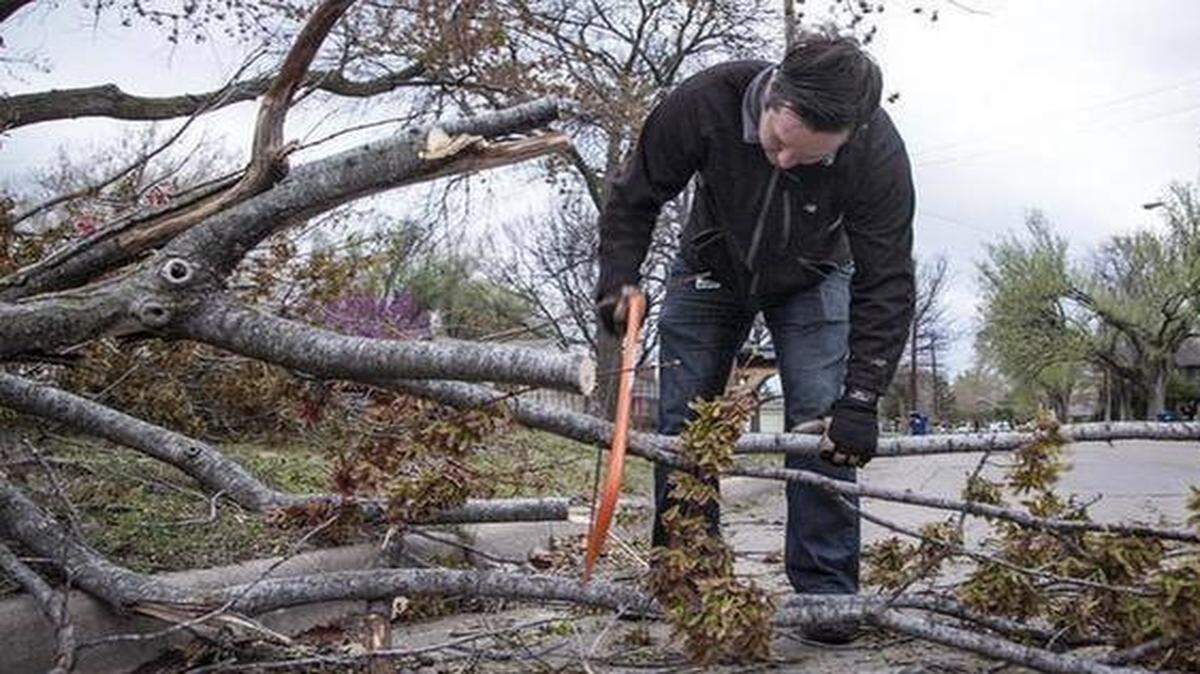
An article reported that “residents can drop off storm debris at Brooks Landfill” (April 6 Local & State). I do not think “can” is the correct term to use. Residents “may,” but most cannot. Most of us do not own trucks. Many of us are too frail to do the work.
Knowing how much residents of Kansas hate government, I still think it would be mighty nice if we instituted a little collectivism/socialism and had regular bulky trash pickup organized and paid for by (gasp) our local government. This would benefit all residents. And it could cut down the nasty problem of illegal dumping.
KRISTEN JACKSON
Wichita
Grant authority
As a nurse practitioner I support Senate Bill 69, which would grant full practice authority to Kansas’ nurse practitioner workforce (nurse practitioners, clinical nurse specialists and certified nurse-midwives).
Nurse practitioners are educated and clinically trained to deliver high-quality health promotion and disease prevention outcomes. Nurse practitioners are more likely to live, work, play and pray where they can serve patients with the need for full practice authority. This is significant, as Gov. Sam Brownback and the Legislature consider expanding the state’s Medicaid program, KanCare. Nurse practitioners will need full practicing authority to help provide care to nearly 175,000 low-income Kansans and reduce health disparities in our state.
Twenty states and the District of Columbia have implemented full practice authority for nurse practitioners, with better access, lower costs and improved health outcomes as a result. Let’s make Kansas the 21st state.
PAMELA BEVAN
Wichita
Letters to the Editor
Include your full name, home address and phone number for verification purposes. All letters are edited for clarity and length; 200 words or fewer are best. Letters may be published in any format and become the property of The Eagle.
Mail: Letters to the Editor, The Wichita Eagle, 825 E. Douglas, Wichita, KS 67202
E-mail: letters@wichitaeagle.com
Fax: 316-269-6799
For more information, contact
Phillip Brownlee at 316-268-6262, pbrownlee@wichitaeagle.com.
This story was originally published April 9, 2015 at 7:03 PM with the headline "Letters on marijuana vote, storm debris, military costs, Kansas courts, nurse practitioners."