
Bill would let home-schooled students play on public school sports teams
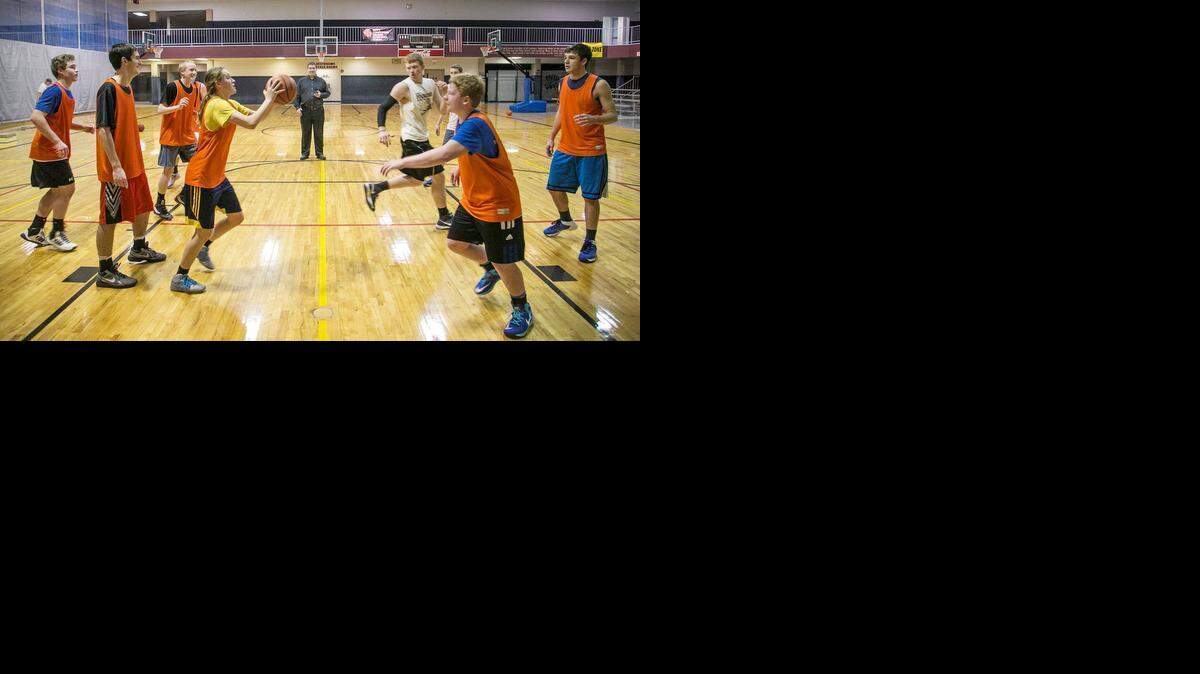
A new proposal in the Kansas Senate would let home-schooled students participate in sports and other activities at public schools.
Senate Bill 60, awaiting a hearing in the Education Committee, is only half a page long and void of much detail. But athletics officials say it could transform the high school sports landscape in Kansas.
Gary Musselman is executive director of the Kansas State High School Activities Association, the state’s governing body for high school sports and other activities. He opposes the proposal.
“If a child shows up at the door and says, ‘Gee, I want to play, too,’ this isn’t just an all-comers team,” said Musselman, whose organization represents more than 750 high schools, middle schools and junior highs.
“Eligibility is a status that is earned through a student’s work in school … and those schools are held to very strict standards that member schools are held accountable to,” he said. “What we’re talking about here is a totally different model.”
The measure would allow any student living in a school district to participate in any activities offered by the district, regardless of whether he or she attends a public school full time. It also would allow students to participate for four consecutive school years, up to age 20 and even if the student graduates before the fourth year.
Such measures often are dubbed “Tim Tebow bills,” named for the former Heisman Trophy winner and NFL quarterback who was home-schooled in Florida but was allowed to play football at his local high school. Roughly half of U.S. states have passed laws making home-schooled students eligible to play on high school teams.
The proposal is listed as a federal and state affairs committee bill, with no author specified. In Kansas, lawmakers can introduce bills anonymously by submitting them as committee proposals.
Sen. Steve Abrams, R-Arkansas City, chairs the Senate Education Committee and says the bill will be considered.
“I do not know where it’s going at this point in time, but we are going to have a hearing,” he said. “I’m willing to hear the evidence and listen to what people have to say about it.”
Benefit to rural areas
Supporters say opening high school sports to home-schooled kids could benefit small schools in rural parts of the state, which often struggle to find enough players to field a team. Home-schooled students in remote areas, meanwhile, sometimes have to travel hundreds of miles to participate in home-school sports leagues.
“Out in western Kansas, at some of those itty-bitty schools out there, it could be a good thing,” said Kenny Collins, athletic director for the Wichita Warriors, part of the Wichita Area Homeschool Athletic Association.
“In the bigger cities like Wichita and Kansas City, it’s not going to matter as much,” he said. “Most of our kids do not want to play for public schools. We just want the ability to play other schools.”
The Warriors and the Wichita Defenders, another home-school team, both have “approved school” status from the KSHSAA, which allows them to face member schools in games or invitational tournaments but not participate in postseason play.
At KSHSAA member schools – which include most public, private and Catholic high schools in Wichita and surrounding areas – players must be enrolled and passing at least five classes each semester to be eligible to compete. They also must meet attendance requirements and behavioral guidelines established by the organization and the school.
The KSHSAA oversees high school sports as well as extracurricular activities such as band, choir, drama and debate.
Because home schools vary widely regarding what they teach, how students are evaluated and how often, Musselman said, schools could not guarantee that home-schooled students meet the same academic standards and other criteria as public school kids do.
“How do I evaluate those kids on equal footing?” he said.
“To simply say, ‘We’re going to declare you to have the same privilege as other hard-working boys and girls who obey the rules, do all the work, do everything you ask them to do,’ to say ‘You get this on a free pass’ is a disservice to 100,000-plus kids in the state,” he said.
Getting recruited
Jerod Martin, 19, who plays basketball for the Wichita Defenders, said he would like to have the chance to play football in high school.
He played club football in junior high and considered playing for Trinity Academy, a private school in east Wichita, but didn’t want to stop home-schooling. He also decided against playing eight-man football with the Wichita Warriors.
“It would be nice to be able to get a little bit of both sports and also get new connections,” Martin said.
Collins, the Warriors’ director, said his team’s home-school status has not discouraged college recruiters from scouting players or offering scholarships. Over the past two decades, he said, the Warriors have boasted nearly 80 kids who received athletic scholarships, some from Division I schools.
Nevertheless, home-school families sometimes opt to enroll their children in public or private high schools or virtual school programs at least in part because of sports and other activities.
A policy approved in 2006 allows e-school students to participate in activities at their base schools if they are enrolled and attend class at the brick-and-mortar school for at least one academic hour a day.
“It’s easier to get publicity at the public schools,” said Matt Brown, athletic director and basketball coach for the Wichita Defenders. “Recruiters just naturally go there.
“Home-school sports organizations are probably a little less well-known, so we’ve had to learn different avenues to get some of our kids recruited, but it does happen.”
Martin, for example, hopes to play Division I basketball and said he has gotten looks from several college recruiters. After a recent early-morning practice at Immanuel Baptist Church in Wichita, where the Defenders train, he said he doesn’t think home-schooling has limited his athletic prospects.
“You just have people around you who get you the people you need to talk to,” he said.
Brown, the Defenders’ director and the father of five home-schooled children, said he has “mixed emotions” about a measure that would open up public high school teams to home-schooled students.
“For the most part, my point of view would be less regulation,” he said. “I love having the option of working with an organization like the Defenders.
“But if I’d prefer the option of having my child participate with a school program, I’d like to have that as well.”
School pride
Musselman, the KSHSAA director, said any measure to change the current system should be more fleshed-out than the current half-page Senate bill and should address funding issues. Under the current system, districts get per-pupil state funding only for students who are enrolled at their schools.
In general, he said, such measures ignore one of the fundamental reasons for high school activities – to connect students to their schools, foster teamwork and encourage school pride.
“If anybody can just walk in the door and do it, regardless of what kind of student you are, the privilege means very little,” he said.
“It diminishes the value of what it means to wear that uniform for East High or wherever, to earn your place on that team or to go cheer like crazy for your classmates.”
Reach Suzanne Perez Tobias at 316-268-6567 or stobias@wichitaeagle.com. Follow her on Twitter: @suzannetobias.
Senate Bill 60
An act concerning schools; relating to the Kansas state high school activities association; relating to participation by certain students.
Be it enacted by the Legislature of the State of Kansas:
Section 1. Any student who is a resident of a school district shall be permitted to participate in any activities offered by such school district regardless of whether such student attends a school in such school district on a full-time basis. Nothing in this section shall be construed to permit a student to participate in an activity if such student is otherwise prohibited from participating for any reason other than attendance, or if such student is prohibited from participating because of truancy. Any student participating in high school activities shall be allowed to participate for four consecutive school years regardless of whether such student graduates prior to the completion of the fourth school year, provided such student is 20 years of age or younger at the time of participation.
Sec. 2. This act shall take effect and be in force from and after its publication in the statute book.
This story was originally published February 1, 2015 at 8:45 PM with the headline "Bill would let home-schooled students play on public school sports teams."