
Kansas House approves measure to enable campus religious groups to restrict membership
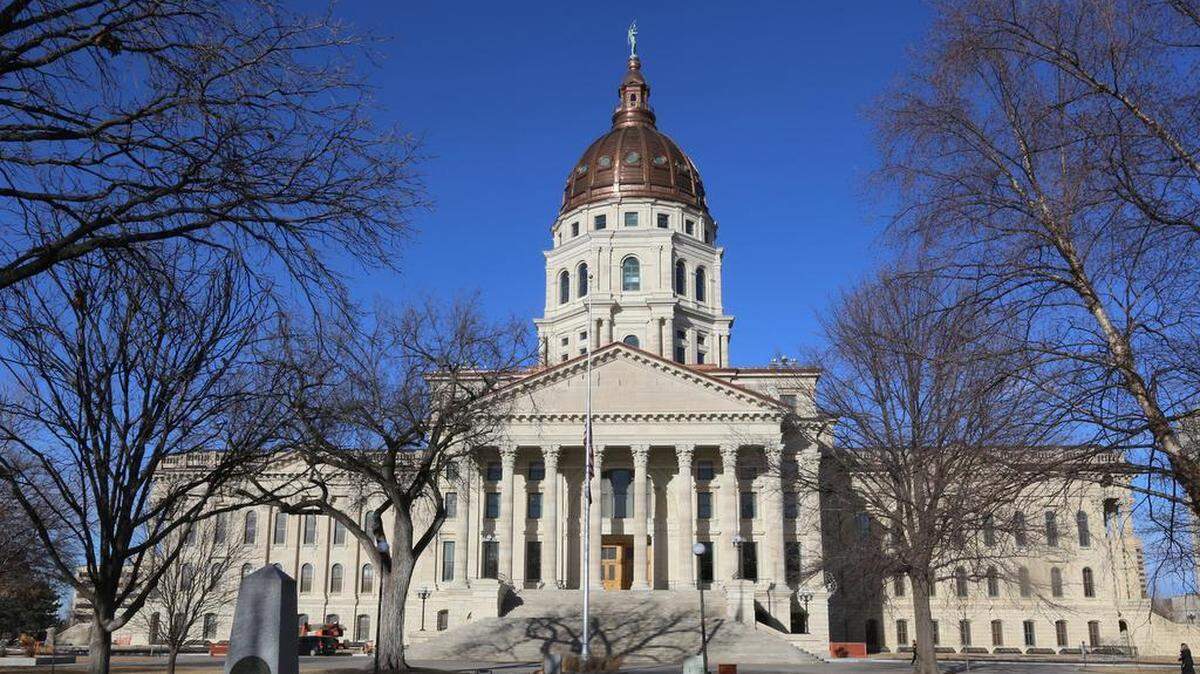
A bill that would allow campus religious groups to exclude members who do not adhere to the group’s beliefs could soon be headed to the governor’s desk.
The bill would prevent the state’s universities from taking any action against student religious groups that restrict membership.
The Kansas House approved SB 175 by an initial vote of 80-39 Tuesday despite advice from the Kansas Board of Regents that the bill could jeopardize eligibility for federal financial aid because it would “require universities to recognize and fund student organizations that discriminate against protected classes” including on the basis of gender as forbidden by federal statute Title IX.
The bill will go up for a final vote Wednesday. It passed the Kansas Senate last year and would head straight to the governor’s desk if it gains final passage.
Supporters say the bill aims only at protecting campus faith groups’ freedom to exercise their religious beliefs, but opponents say it would allow for widespread discrimination at publicly funded universities.
The bill is a reaction to controversies in the state of California surrounding an Evangelical Christian group’s loss of recognition on California State University campuses for its refusal to adopt an “all comers” policy.
The bill forbids universities from taking any action against campus religious groups that require their leaders or members to adhere to the organization’s “sincerely held religious beliefs” or comply with its “sincere religious standards of conduct.” It also gives student groups the ability to sue universities in court if the schools fail to follow these rules.
Democrats and a handful of moderate Republicans argued that these provisions could be abused to enable discrimination on the basis of sexual orientation, race, gender and for a number of other reasons.
“People died to end discrimination, and this bill legalizes it again,” said Rep. Diana Dierks, R-Salina.
Rep. Brandon Whipple, D-Wichita, offered a series of amendments that would have explicitly barred campus religious groups from using the legislation to discriminate, but all of them were voted down.
Rep. Joseph Scapa, R-Wichita, mocked opponents of the bill, such as the American Civil Liberties Union and National Organization of Women, as “liberal secular organizations.”
Scapa said that if a Catholic or Jewish student group wants to make sure it is led by a member of that faith, “that’s common sense.”
Kansas State University’s office of general counsel wrote last year that the bill would protect a “religious student organization adhering to a religious belief that people of one race were inferior to the people of another race” and make universities vulnerable to lawsuits from such groups.
Student governments of the University of Kansas, Kansas State University and Wichita State University have voiced opposition to the bill in the past.
House Speaker Ray Merrick, R-Stilwell, had halted the bill from advancing to the floor last session, saying at the time that lawmakers needed to focus on the state’s budget shortfall instead. The decision to revive it this year caught some of its opponents by surprise.
“Bigotry wrapped in religion is still bigotry,” said Tom Witt, executive director of Equality Kansas, a gay rights organization, rebutting claims from supporters that the bill is designed to prevent discrimination of religious groups.
“What they did today is they perverted the entire notion of non-discrimination by saying that taxpayer- and student-funded groups can discriminate against the very students who are paying for those groups. And they called that protection from discrimination,” Witt said. “This is a perversion of the entire concept of non-discrimination.”
The Kansas Catholic Conference supports the bill and disputes that it would lead to a loss of federal funding.
“The premise of the bill is simple,” executive director Michael Schuttloffel said in a statement. “The Baptist Student Union should not be forced to have an atheist president by hostile university administrators. No student religious group should be forced to have leaders who reject the group’s faith, but that is precisely what is happening in other states and we don’t want it to happen in Kansas.”
Rep. Chuck Weber, R-Wichita, the newest member of the Wichita delegation, speaking on the House floor for the first time, argued the bill would protect “the great silent majority out there of men and women who experience a same-sex attraction.”
Weber said lawmakers shouldn’t impose a choice on these individuals and argued that the bill would protect them from pressure from both sides.
“Men and women who experience a same-sex attraction are torn in our culture. They are pressured to either join in the gay agenda, whatever that may entail, or they are driven to isolation,” Weber said when asked to clarify his remarks. “And what I’m saying is there is a great number of men and women who experience a same-sex attraction who would like to work it out. And what the bill would do on campuses is allow them to do that without pressure one way or another.”
Weber said that a person struggling with this issue might seek out a chastity group to learn “that sexual relations are reserved for men and women in marriage” and that “without this bill there’s the potential that someone could come in and say, ‘that’s not what I believe.’ So people coming to understand what chastity’s all about, they wouldn’t be able to have the freedom to understand that point of view.”
Bryan Lowry: 785-296-3006, @BryanLowry3
This story was originally published March 15, 2016 at 4:24 PM with the headline "Kansas House approves measure to enable campus religious groups to restrict membership."