
Anti-blight bill divides Sedgwick County, Wichita leaders
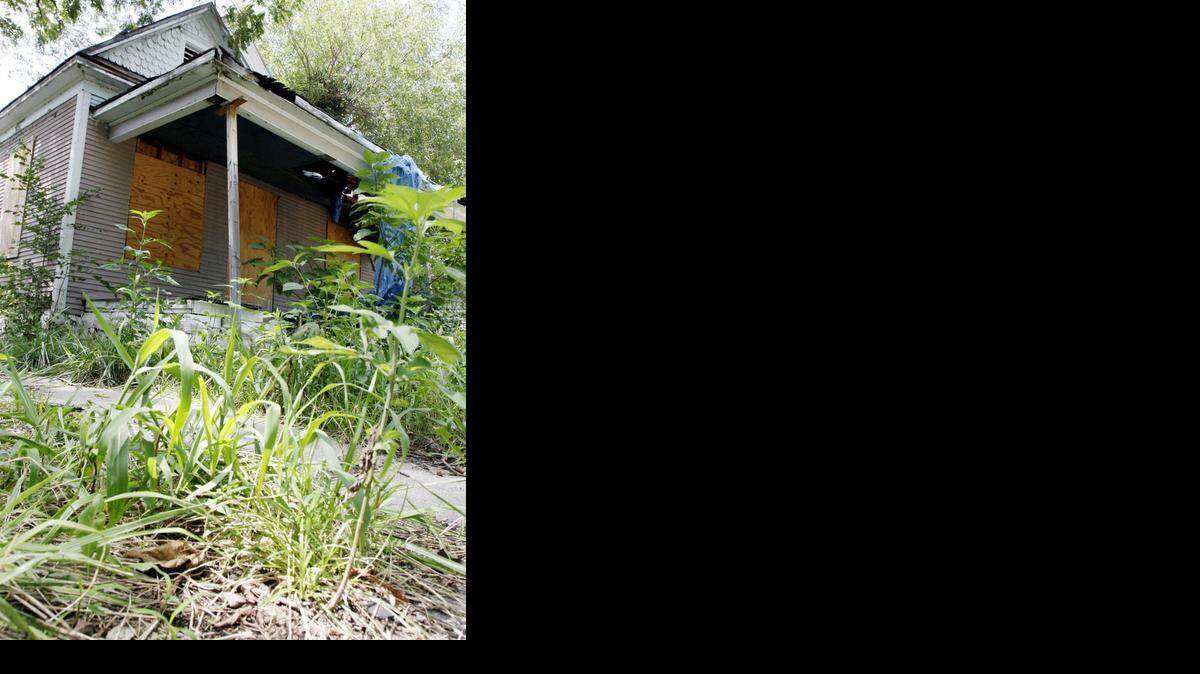
Sedgwick County and the city of Wichita are locked in a fight over blight.
The dominant governments in south-central Kansas are at loggerheads over Senate Bill 84, a proposed law that would make it easier for cities, Wichita in particular, to transfer abandoned houses to nonprofit groups that rehabilitate properties to provide housing for the poor.
A majority of county commissioners say they’re afraid the bill would allow cities to take property from private owners for economic development projects, opening a loophole in current state law that prevents that. They liken it to the U.S. Supreme Court’s Kelo Decision, a 2005 case where the court allowed New London, Conn., to take a woman’s waterfront home by eminent domain to facilitate a planned redevelopment project that was later abandoned due to lack of financing.
A letter from Commission Chairman Richard Ranzau to the South-Central Kansas Legislative Delegation quoted an opponent to the bill who called it “eminent domain light” and said cities have other means of dealing with blighted and overgrown property.
“The problems with giving the city another tool for their toolbox that they don’t need is they will want to use it,” Ranzau’s letter said. “And like handing a child a hammer, everything will begin to look like a nail.”
“That’s not the intent at all,” responded Wichita City Council member Lavonta Williams. “The intent is to stop creating holes in our neighborhoods. … We want to preserve these homes.”
The bill originated with Kansas City, Kan., which has neighborhood blight problems similar to Wichita’s. Williams said support for the bill came from a study group trying to figure out what to do about abandoned and dilapidated houses that are scattered throughout her council district in north-central Wichita and other older inner-city neighborhoods.
SB 84 would allow the city to go in and take possession of houses that have been vacant and neglected for six months or more and are deteriorating into blight. It lays out a set of rules for cities to go to court to take possession and turn the houses over to charities, such as Mennonite Housing and Habitat for Humanity in the Wichita area.
At its staff meeting this week, the commission ordered Assistant County Counsel Robert Parnacott, who tracks state legislation for the county, to increase the effort to oppose both SB 84 and a similar measure introduced in the House, House Bill 2236.
The Senate Commerce Committee held a hearing on the bill last week and is scheduled to vote on it Thursday.
Williams said the vacant homes targeted by the bill are magnets for squatters, drug dealers, metal thieves and other undesirable elements that can drag down an entire neighborhood.
Although the city can now seize and demolish homes that deteriorate into eyesores, Williams said that leaves neighborhoods dotted with unsightly vacant lots.
“I would love them (commissioners) to take a field trip with me and have them take a look at some of the houses we’re talking about, and ask neighbors what it’s like to live next to a house like that,” she said.
What neighbors say
One of those neighbors is Lucy Daniels, who lives on Estelle Street next door to two houses the city eventually razed. She said she’d have much rather seen them fixed up and occupied by new neighbors.
When the houses were vacant, “you had gang members coming in and beating girls. You’d hear screaming coming from over there.”
“They’d been shot at at least three times,” she added. “I had to close the door and run into the basement.”
Even the eventual demolition of the houses didn’t solve the problem, because there’s no one to take care of the vacant lots to ensure they don’t get overgrown with weeds and trees.
Daniels said although she doesn’t own the lots, she pays out of her own pocket to have them mowed so she doesn’t have to constantly pick weeds from her garden from drifting seeds.
“Right now as I speak, somebody’s got a trailer full of trash sitting on the property,” she said. “It’s been out there now for three months.”
Wichita lobbyist Dale Goter said the city can’t act effectively to alleviate blight under existing state laws, which allow the homeowner to retain the title unless property taxes haven’t been paid in more than three years. He said when the city moves to condemn and transfer a property, owners will often pay the third year of back taxes to prevent it, making the process start over the next year.
Defining ‘abandoned’, ‘blight’
In addition to its Kelo criticism, the County Commission also objects to definitions of “abandoned” and “blighting” that they say are too broad.
“The definition of blighting influence is somewhat confined by a rather lengthy list of conditions such as safety hazards, ‘uncleanliness,’ aesthetic concerns, etc.,” Ranzau wrote. “What would be ‘unclean?’ What is dilapidated or in disrepair? When are growths or appearances ‘unsightly?’ Do they have to be very unsightly, or perhaps just slightly unsightly? And again, who gets to determine the conditions exist?”
County Treasurer Linda Kizzire, who participated in the study group with Williams, Goter and other city officials, said she supports the underlying concept of rehabilitating abandoned houses into homes for those who otherwise can’t afford them, particularly when the new homeowners have to put in “sweat equity” by doing some of the fix-up work themselves, a requirement of the housing rehab programs.
But, she said she thinks the six-month time frame for declaring a property abandoned is too short. A homeowner could be away that long on military deployment, recuperating from illness, or other legitimate reasons, she said.
Reach Dion Lefler at 316-268-6527 or dlefler@wichitaeagle.com.
This story was originally published February 18, 2015 at 7:35 PM with the headline "Anti-blight bill divides Sedgwick County, Wichita leaders."