
Study: Youth drug overdose and death rates quadruple in Kansas
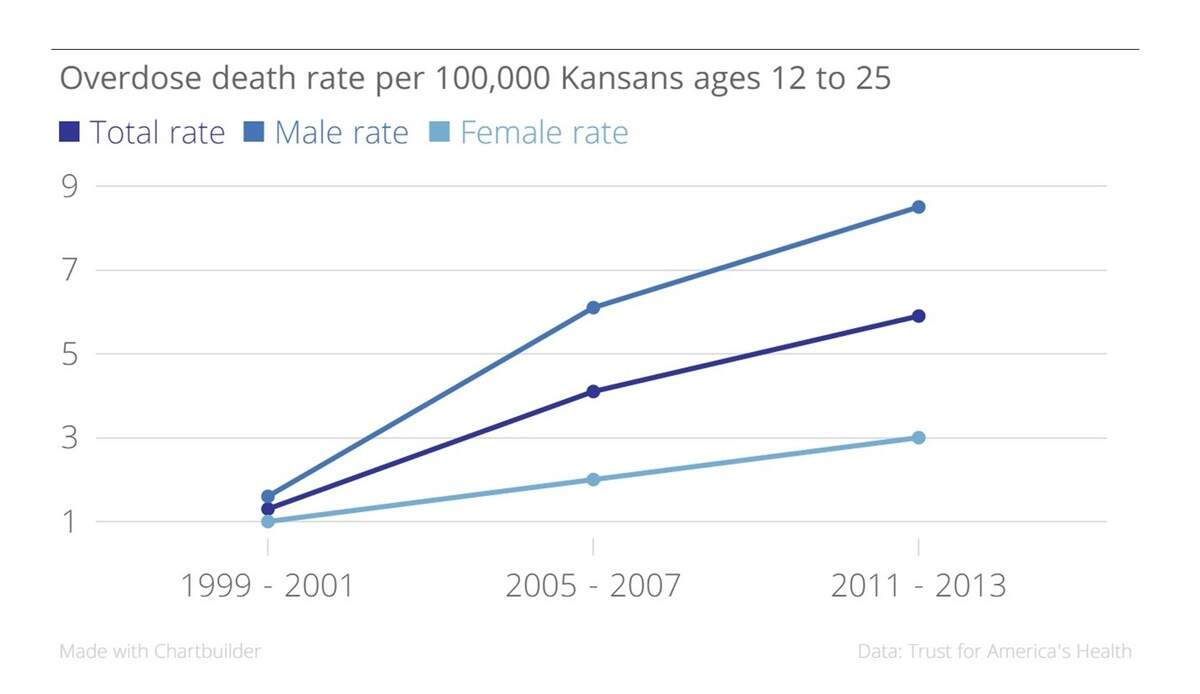
Youth drug overdose rates have more than quadrupled in Kansas over the past 12 years, according to a study released Thursday by Trust for America’s Health, a national nonprofit.
The study includes state-by-state rates for youth overdose and death rates and score cards for policies and techniques that combat youth drug use.
Jeffrey Levi, executive director of Trust for America’s Health, said the rise in overdose and death among youth points to the larger need for states to move toward policies and programs with statistically effective track records.
“We need to move beyond ‘just say no’ and putting our heads in the sand thinking this is just a problem of willpower,” he said.
We need to move beyond ‘just say no’ and putting our heads in the sand thinking this is just a problem of willpower.
Jeffrey Levi
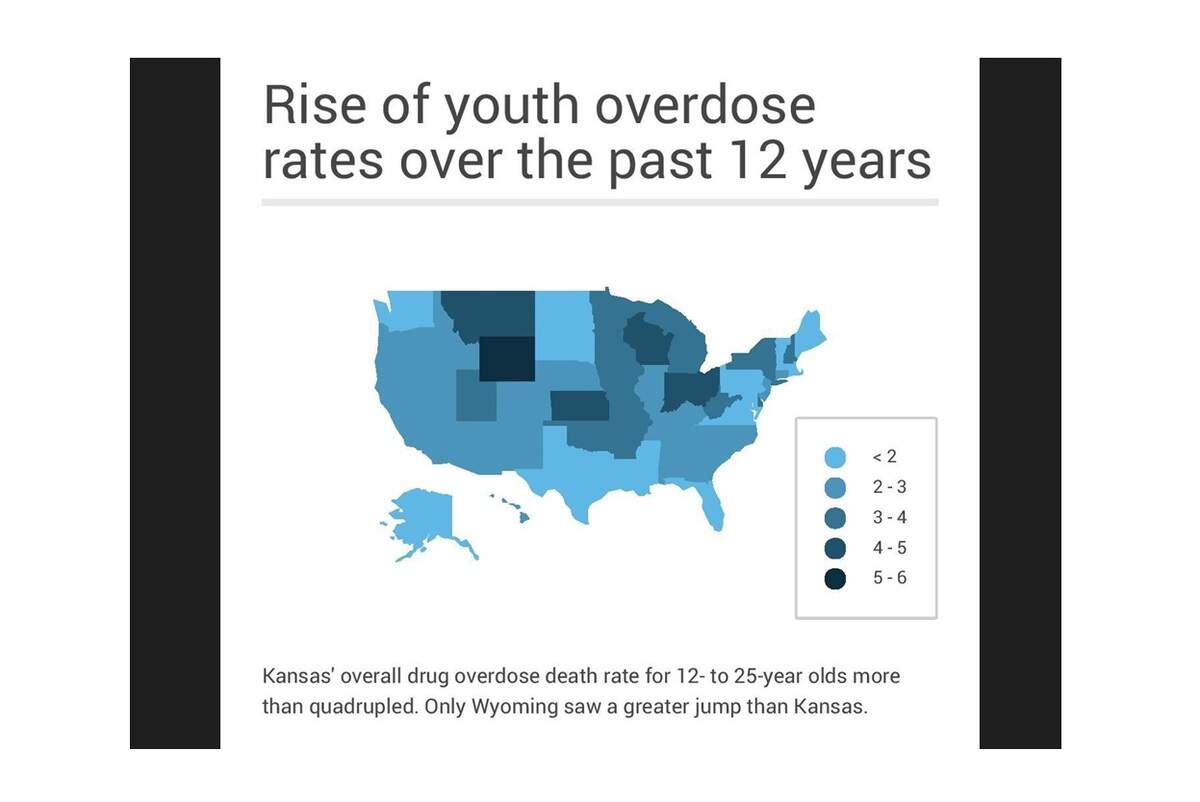
executive director of Trust for America’s HealthKansas’ overall drug overdose death rate for 12- to 25-year-olds sits below the national average at 5.9 deaths for every 100,000 youths, compared with 7.3 deaths nationally for every 100,000 youths. But the Kansas rate jumped more than four times over the past 12 years.
Only Wyoming saw a greater jump than Kansas.
The study included drug overdoses from both prescription and illicit drugs.
The Trust for America’s Health study highlighted 10 state policies helpful in preventing drug misuse. Kansas has half of the policies in place. One policy that Kansas does not have is a Good Samaritan law, which would offer some immunity from criminal charges if someone seeks help for someone who is overdosing.
Levi highlighted screening and intervention as a primary area in need of improvement.
“Many teens and tweens are never asked about substance use,” he said.
Compounding the problem, he said, is that “often they are given signals they should hide their problems because of related stigmatization.”
He also said the country as a whole has a treatment gap in providing treatment for those who need it. He said the problem is exacerbated in rural areas.
Stacy Chamberlain, director of addiction services for the Kansas Department for Aging and Disability Services, said the state has a waiting list of people who need help for addiction.
The list is for people who need funding from the state in order to receive treatment.
Chamberlain said the waiting list has increased over time but really started to spike about three years ago. She could not provide specific numbers.
She said treatment centers previously treated those patients for free, but could no longer afford to absorb the costs.
Anecdotally, Stacy said she’s seen a shift in the demographic of people in treatment since she started working for the state 15 years ago. When she started, she said, many substance abusers in treatment were older. Now, she said, that has shifted toward young adults. Eighteen- to 25-year-olds accounted for 30 percent of Kansans who received treatment last year.
During the fiscal year that ended in June, 1,648 Kansans younger than 18 years old received treatment for substance use, according to state data. During the same time period, 3,881 Kansans 18 to 28 years old received treatment.
Brian Bumbarger, a researcher at Penn State University who helps states develop plans to combat substance abuse, said there’s an overall gap in research, policies and programs for young adults.
“It’s a peak time for the age crime curve,” he said.
He said most drug prevention and surveillance happens through school, so the system doesn’t extend to people who choose not to pursue higher education or trade school.
He recommends states develop policies to help young adults.
Better education
Nationwide, heroin use has more than doubled among 12- to 25-year-olds in the past decade. The rise of prescription painkiller misuse has been a major contributor to the increase because many painkiller users turn to heroin as a relatively cheap alternative, according to the report.
Sarah Fischer, prevention program director for the Kansas Department for Aging and Disability Services, said a work group formed a year and a half ago to address drug abuse. She said the group hopes to finalize its plan toward the beginning of 2016.
She said the state tries to incorporate prevention into various areas of treatment. One example is education.
For example, the state started asking pharmacists and medical providers to prescribe fewer painkillers, such as giving three instead of 30 when appropriate.
She also said the education extends to patients and community members about how to properly dispose of prescription drugs – to take them to disposal centers rather than throwing them in the trash or flushing them down the toilet.
Fischer said she finds the Kansas overdose statistics alarming but said she also was alarmed about the national rise in use and overdoses.
While important, the issue competes with widespread underage drinking and binge drinking, along with other public health concerns, she said.
“The Kansas-specific data has not shown a large number of overdoses in comparison to the totality of issues we have to address with the resources we have,” she said.
Gabriella Dunn: 316-268-6400, @gabriella_dunn
This story was originally published November 19, 2015 at 10:40 AM with the headline "Study: Youth drug overdose and death rates quadruple in Kansas."