
Economist: Jobs regained in Kansas not the same ones lost in recession
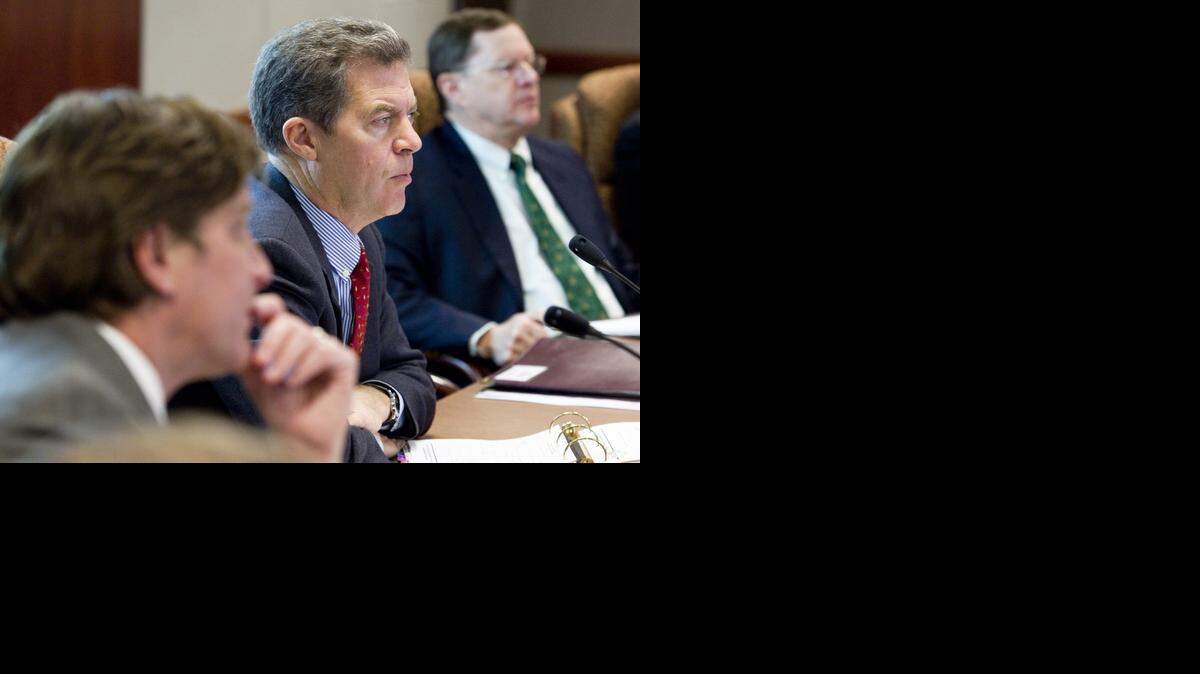
Kansas has regained as many private sector jobs as it lost during the recession, but few are manufacturing jobs, an economist for the Kansas Department of Labor said Wednesday.
The state has seen significant growth in professional and business services. But it has gained back only 600 of approximately 29,000 manufacturing jobs it lost, said Tyler Tenbrink, a senior labor economist with the Department of Labor, at a meeting of the Governor’s Council of Economic Advisors.
“There’s been a restructuring happening in the state and that’s not unlike the U.S.,” he said.
Gov. Sam Brownback asked if this meant the state had traded plant workers for engineers.
Tenbrink explained that the category includes a wide range of jobs: scientists, accountants, attorneys, secretaries and other administrative workers. It also includes temporary employees.
Bob Wheeler, a member of the council and the retired CEO of Pet Nutrition Inc., said he thought it was unlikely that the manufacturing jobs would return.
“Manufacturing companies tightened their belt, let a lot of people go, didn’t refill positions … and haven’t come back to the same level and probably won’t come back to the same level because they’ve become a lot more effective and efficient,” he said.
The state saw a bump in private sector nonfarm employment during the month of October – with more than 7,000 jobs gained – putting it above its pre-recession peak in April 2008 by more than 1,000 jobs. Private sector nonfarm jobs are considered a key indicator of the state’s economic health.
The state lost nearly 77,000 private sector nonfarm jobs between April 2008 and February 2010.
Real wages, the money workers are paid adjusted for inflation, have risen in the past year but remain below pre-recession levels, The average weekly wage for a Kansas private sector worker in May 2009 was $770.73 if adjusted for inflation. In September of this year it was about $760. Average real wages hit a bottom in September 2011 at $740.74 per week.
“We have been making progress in wages. We haven’t gotten back to pre-recession levels at this time,” Tenbrink said.
Economic indicators suggest the state should continue to see an increase in nonfarm employment over the next six to nine months, Tenbrink said.
Of the state’s 105 counties, only one had an unemployment rate higher than the national average for October: Wyandotte County, with 6 percent, compared with the national rate of 5.8 percent. This figure includes private and public sector jobs.
“Most of the state is in really good shape, under 3 percent (unemployment). There are a few pockets of higher unemployment,” Tenbrink said. He pointed to Linn County and the greater Wichita area as areas where unemployment persisted.
Places that rely heavily on manufacturing, such as Wichita, “took a big hit” during the recession and are recovering more gradually, he said. Sedgwick County’s unemployment rate was 4.7 percent in October, slightly higher than the state’s average of 4.4 percent.
Regarding the state’s job gains, Bob Page, another member of the council, commented, “I like the trend but what are the goals?”
Brownback tapped the table and said his goal is to double private sector job growth during the next four years.
“And we feel like we’re in position to be able to do that,” he said.
“And it’s private sector job growth,” he added. “There’s nothing wrong with public sector jobs, but our target is doubling the private sector job growth.”
Despite the solid job gains, which coincided with national job gains, the state is projected to hit a budget shortfall of $279 million by the end of June.
Asked to reconcile the job gains with the dismal budget outlook, Brownback blamed federal tax policies, as he has done since April, rather than the state’s own income tax cuts, which economists point to as the primary reason for the shortfall.
Brownback expressed confidence that the recent job gains are a sign the state is on the right track. “We’ve just got to keep going,” he said.
Reach Bryan Lowry at 785-296-3006 or blowry@wichitaeagle.com. Follow him on Twitter: @BryanLowry3.
This story was originally published December 3, 2014 at 4:18 PM with the headline "Economist: Jobs regained in Kansas not the same ones lost in recession."