
Wesley isolation unit could treat Ebola patients
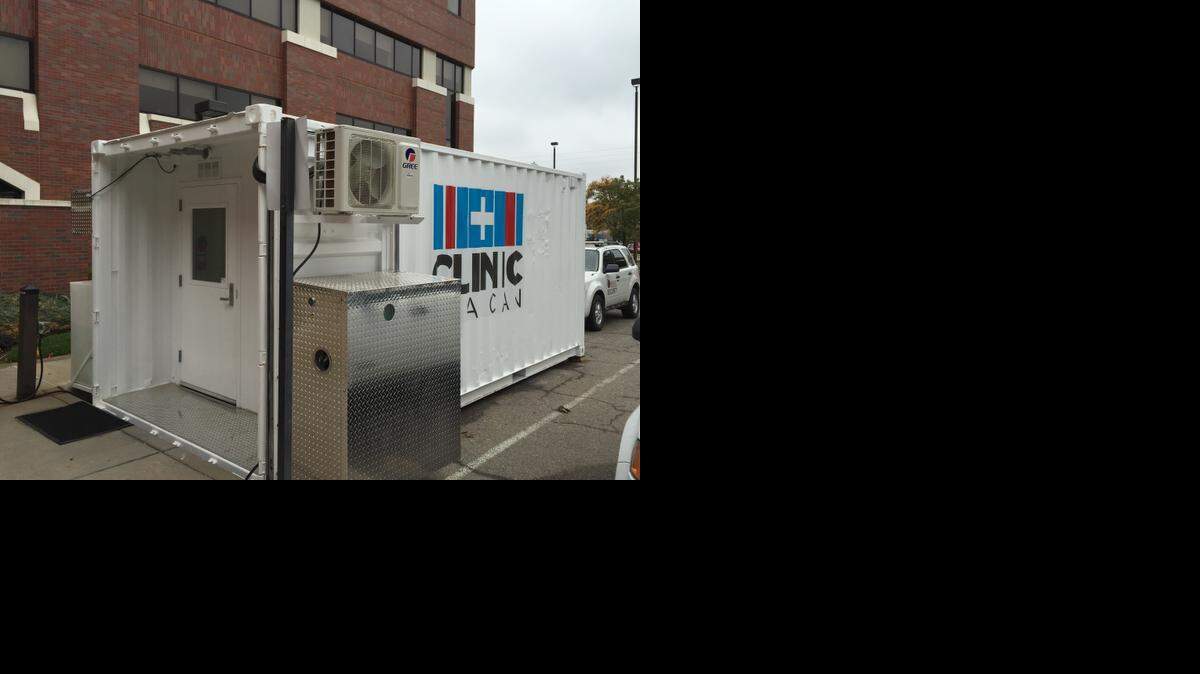
With the recent occurrences of Ebola outside of West Africa, Wesley Medical Center is purchasing a Clinic in a Can – a converted 20-foot shipping container – for use as an isolation unit, hospital officials say.
The isolation unit will be fully equipped with a hospital bed, medical exam equipment, monitoring equipment and lights and will be outside the hospital’s main emergency department.
A temporary isolation unit for training and education is currently on site with a new custom unit on its way in three weeks at a cost of about $50,000, according to hospital officials.
The unit will be accessible only from inside the hospital and will have fencing around it. Staff will be able to put on personal protective equipment just outside the unit door. The unit will be grid-powered and used only for patients who meet certain criteria.
The new isolation unit is meant to further reduce the risk of exposure to others, said Mike Wawrzewski, founder of Wichita-based Clinic in a Can and a physician’s assistant at Wesley.
“Having an isolation unit external from the hospital allows the same level of care available inside the hospital for staff and other patient safety,” Wawrzewski said.
Clinic in a Can also is trying to raise $300,000 to send eight of its solar-powered units to affected countries in West Africa.
The organization, which built its first clinic in 2005, has sent clinics to South Sudan, to Haiti after the 2010 earthquake, to the Philippines after Typhoon Haiyan last year and to tornado-ravaged Moore, Okla., in 2013.
Wesley has 16 negative-pressure isolation rooms in its intensive care unit, according to hospital officials. The hospital would use the same precautions as it would to treat patients with airborne illnesses if a patient comes to the hospital with Ebola symptoms.
Ebola is not an airborne infection but only spreads through contact with the bodily fluids of an infected person.
So far, more than 9,911 people have been reported as infected in Guinea, Liberia and Sierra Leone, leading to more than 4,868 deaths, according to the World Health Organization.
The WHO declared Nigeria Ebola-free on Monday. The country has not had a new case of the virus for more than 42 days.
Cases outside Africa have been reported in Spain and Dallas. One patient in Dallas died after traveling to the U.S. from Liberia.
Reach Kelsey Ryan at 316-269-6752 or kryan@wichitaeagle.com. Follow her on Twitter: @kelsey_ryan.
More about Ebola
▪ Ebola is a virus thought to have originally been transmitted from animals to people. Now it spreads from human-to-human contact.
▪ The average fatality rate is 50 percent but can be higher or lower depending on the outbreak.
▪ The first outbreaks occurred in Central Africa in 1976.
▪ There is no cure for Ebola, but there are treatments being developed using blood, immunological and drug therapies, as well as two vaccines being tested.
▪ The most recent outbreak in West Africa began in March and is the largest outbreak of the disease since it was discovered.
▪ Ebola is spread through direct contact with blood, secretions and other bodily fluids of the infected or surfaces contaminated with those fluids.
▪ The incubation period for the disease is two to 21 days. People are not infectious until they develop symptoms.
▪ Symptoms include fever, muscle pain, headache, sore throat, vomiting, diarrhea, rash and sometimes internal and external bleeding.
Source: World Health Organization
This story was originally published October 23, 2014 at 1:27 PM with the headline "Wesley isolation unit could treat Ebola patients."