
America’s No. 1 offense? Friends has it using a scheme no one else dares to run
AI-generated summary reviewed by our newsroom.
- Friends runs the flexbone and leads NAIA with a 57.2 points per game average
- Offense posts national records: 5,641 rushing yards and 78 rushing touchdowns
- Harrison builds culture and clinics that spread flexbone adoption in high schools
In an era where the spread offense is king and college football coaches obsess over run-pass options, the flexbone should have been dead and buried by now.
Most coaches treat it like a museum exhibit: something to admire for what it once was, not something to actually embrace.
Friends University coach Terry Harrison has made a career out of being the exception, the coach bold enough to chase success in a direction the rest of the sport has stopped looking.
Now the Falcons are 12-0 entering into Saturday’s NAIA Football Championship Series quarterfinals against Benedictine with the No. 1 scoring offense in America — powered by the oldest scheme in the sport.
No one expected a flexbone team to lead the nation at 57.2 points per game. No one expected a college offense to average 8.7 yards per carry. No one expected the national records for rushing yards (5,641 and counting) and rushing touchdowns (78 and counting) in a season to belong to a formation viewed as outdated.
Harrison, the architect behind it all, takes delight in proving the football world wrong one win at a time.
“It’s just so different, so I don’t think very many people understand it,” Harrison said. “It ain’t for everyone and we like it that way.”
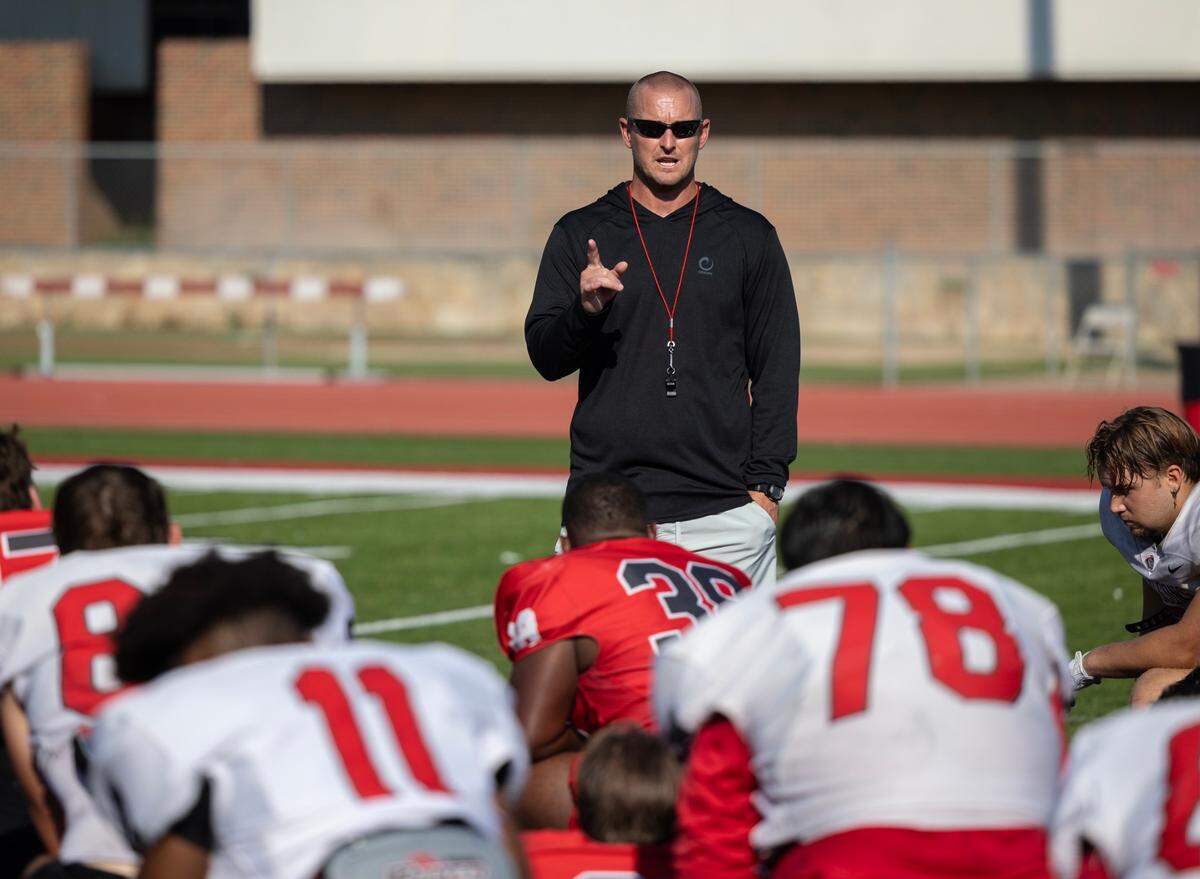
Where Terry Harrison learned the modern flexbone
Harrison’s introduction to the flexbone came not in a film room, but at the end of his own college career.
He was a struggling quarterback at Sterling College when head coach Andy Lambert arrived, dumped the offense and moved Harrison to tight end. Lambert installed the flexbone and Sterling — a program mired in a 20-game losing streak — suddenly finished 6-4. It wasn’t magic. It wasn’t new players. It was a change in philosophy.
At the same time, just 25 miles down the road from Sterling, Randy Dreiling was building a dynastic monster at Hutchinson High, winning seven state titles in eight years using the flexbone. For Harrison, those two examples planted a seed: maybe the flexbone wasn’t antiquated at all. Maybe it was the key to leveling the field.
The person who helped that seed grow the most was Rick Wheeler.
Wheeler hired Harrison away from Valley Center and turned him into an assistant at Wichita Heights. The two formed a bond that still defines their relationship today. Wheeler had studied Dreiling’s blueprint and installed the flexbone at Heights years earlier, eventually riding it to the school’s only state championship in 2010. Working under Wheeler was Harrison’s first true experience seeing the offense’s inner workings — not just the scheme, but the identity it created.
“It’s actually similar to how a pocket passer goes through their progressions to receivers,” Wheeler explained. “A flexbone quarterback’s process is very similar, but instead of making a read in two seconds like a drop-back passer, they’re making reads in a half-second.”
That half-second is where the offense wins — and where untrained defenses lose.
To the uninitiated, the flexbone looks like a blur of motion: a dive, a keep, a pitch. But beneath the surface is a pressure cooker. The quarterback is reading an unblocked defender on every snap. The ball can hit any gap. One misstep by a linebacker can become a 40-yard gain. Defenses feel like they’re trying to plug three leaks at once, never knowing which one will burst.
And while fans marvel at the misdirection and speed, Harrison is drawn to something deeper: the way the offense forces a team to value unselfishness, toughness and precision.
“In this world of college football, which is centered around chaos and ‘What can you do for me?’, I do think we have a competitive advantage,” Harrison said. “When you build your team culture around unselfishness, you have kids who truly care about the guy besides them. I think it naturally blends loyalty and toughness.”
When Harrison finally earned his first college head coaching job at Bethel in 2018, he installed the flexbone immediately. After one rebuilding year, the Threshers went 26-7 over the next three seasons and led the NAIA in rushing.
When he returned to Wichita to take over Friends in 2022, the pattern repeated: one rebuilding year, then a meteoric rise. The Falcons have gone 32-4 in the last three seasons.
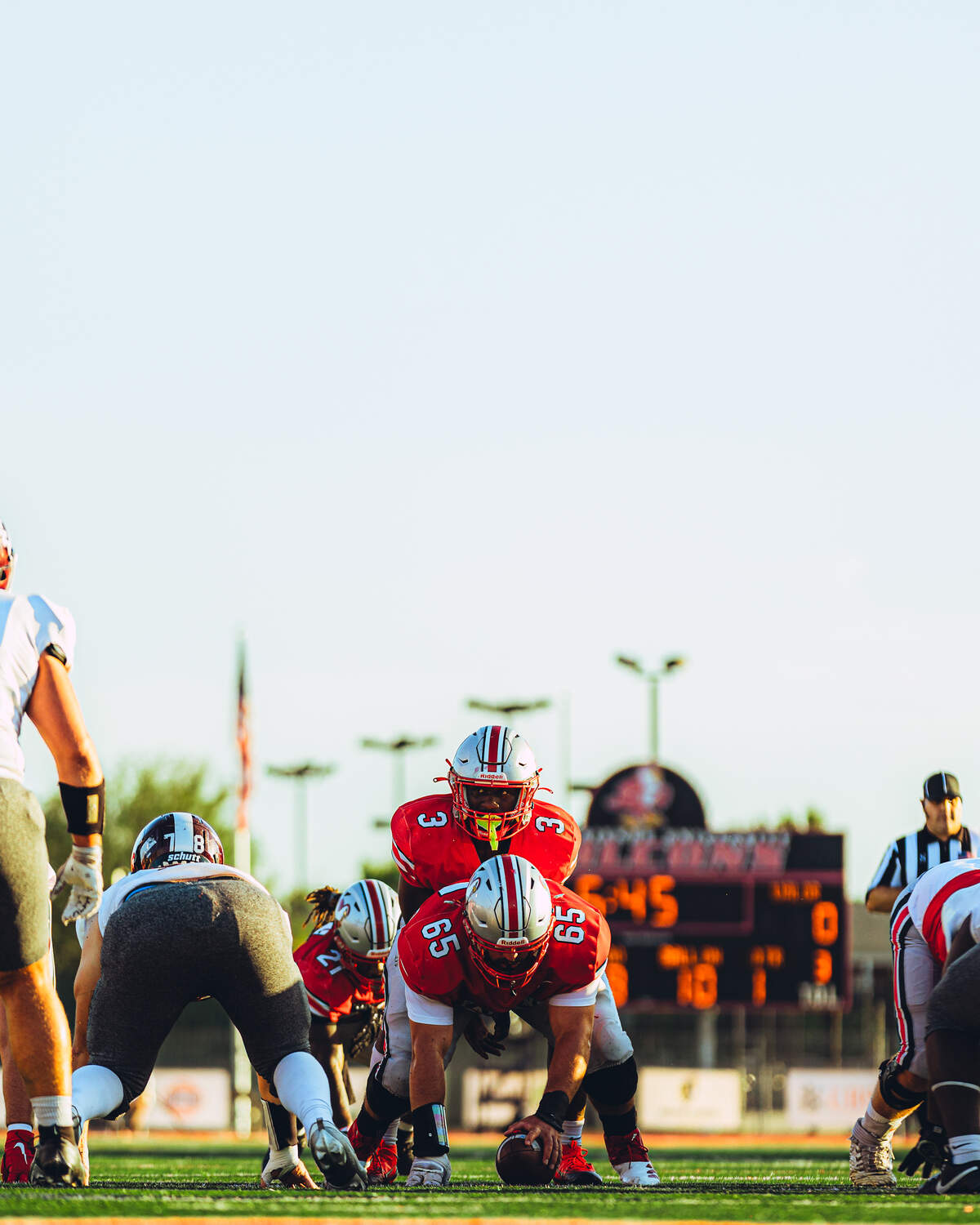
Inside the most explosive flexbone offense in America
Ask any opponent of Friends this season and the first thing they mention isn’t the formation or the misdirection.
It’s the violence.
“We play gladiator-brand football,” sophomore fullback Nick Cordova said. “It’s super violent and physical and aggressive. It’s a lot of fun for us.”
Friends has speed all over the backfield, but all of that flash is meaningless without dominance up front. That’s why the offensive line — led by five seniors in Kyree Watkins, Kenyon Vigil, Cole Herman, Kel Stroud and Doug Grider — sits at the center of everything they do.
Watkins, an All-American, doesn’t look like a prototypical lineman at just 6-foot and 250 pounds, but in Harrison’s system, he’s perfect. He fires off the ball low, quick and angry. .
“I love the violence of it,” Watkins said. “Not a lot of people want to play four quarters against us with how physical we are. You can see the guy across from you begin to quit and not want to play anymore. You can literally see their will to play be taken away from them. I love that.”
The receivers share the same mindset. They almost never touch the ball, yet the offense cannot function without their blocking. Sam Becker, Austin Pratt and D.J. Pearson have turned one of football’s most thankless jobs into a defining strength.
Then there is the depth. Ten different players have at least 200 rushing yards. Fullbacks Nick Cordova and E.J. Sykes are the battering rams that power the interior, while wingbacks like Michael Lopez and Kaden Rigsby terrorize the edges.
“We know that when anybody touches the ball, they can make a play,” Lopez said. “It’s scary for a defense because if they key in on one guy, then we can just pitch it out to another guy and he’s gone.”
Rigsby added that Friends loves being different.
“We do take pride in knowing that nobody else is running this and we’re showing that it can still work in the modern era,” he said. “We’re physical and we’re tough and we run the ball down people’s throats and there’s not much they can do about it.”
And over it all is quarterback K’Vonte Baker, the three-time KCAC Player of the Year and perfect conductor of the controlled chaos. The best athlete on the field most weeks, Baker manipulates defenders like chess pieces. And when defenses finally over-commit, he uncorks a deep shot that serves as a gut punch.
He’s only completed 14 passes this season. Seven have gone for touchdown. He averages 36.5 yards per completion, the highest figure in America.
“It’s just incredible the difference it makes where you snap the ball,” Harrison said. “If we were a shotgun team, people would say we’re the most explosive offense in all of college football. But because we snap it under center, it’s different. I’m pretty sure any school in the country at any level would take 56 points a game.”
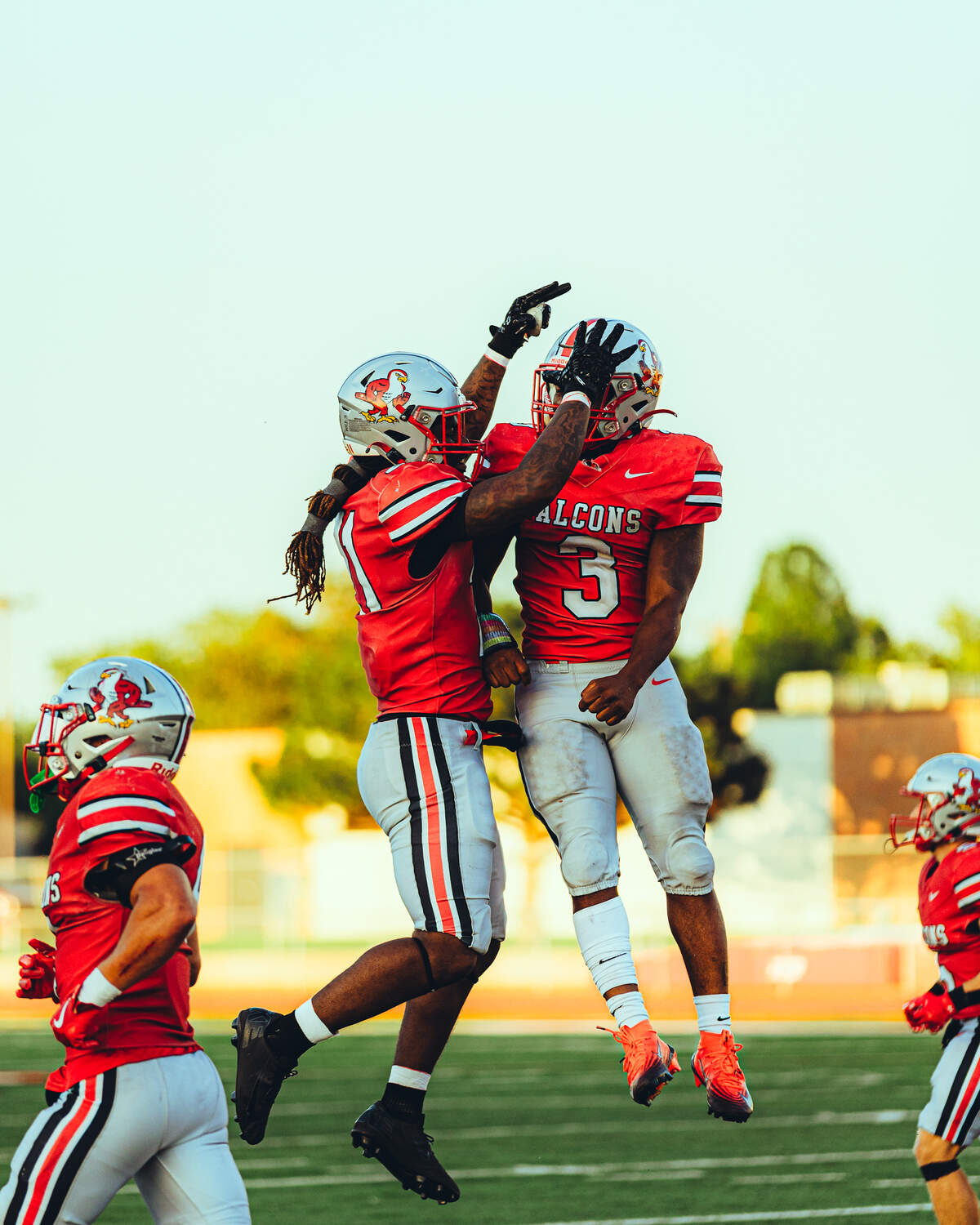
How Friends is spurring a flexbone movement in Kansas
There aren’t many flexbone apostles left in America. Kenny Wheaton at Harding University is considered the godfather, while Dreiling is still the king in the Kansas high school ranks and Harrison has become the expert in the state at the college level.
“It’s like people think we’re in a cult or something,” Harrison joked.
And yet the movement is growing, at least in the high school ranks, because coaches are watching Friends and realizing the offense still works.
High school staffs routinely visit Friends to study the scheme. Harrison and his staff run clinics. And the results are trickling outward.
“I can’t say enough good things about Terry,” said Sterling High coach Brent Schneider, whose undefeated 1A state title this year traces back to a summer camp Harrison ran for his team in 2022. “We had them come out and run camp for us and it was like, we’re not trying to reinvent the wheel here. Tell us what to do and we’ll do it.”
Despite coming off a state title, Schneider feels like he’s only “at the tip of the iceberg” when watching how Harrison calls games.
“What I’ve always appreciated about Terry is that you can have real conversations with him,” Schneider said. “He never makes you feel dumb. You can come up with a question that he’s probably been asked a thousand times, but he will always take the time to explain it to you. That’s how a lot of flexbone coaches are. They want you to succeed.”
Wheeler, Harrison’s mentor, sees the same traits. But what stands out to him even more is the team culture that Harrison has created at Friends.
“It’s not just about offensive scheme, it’s about the program he’s built,” Wheeler said. “He’s getting kids from all over to come play small-college football in Wichita, Kansas and they’re loving it. They don’t leave.”
So while the flexbone may give Friends a competitive edge, Harrison insists that it isn’t what defines the program.
“I’d be lying if there wasn’t a little of a chip on our shoulder about it,” Harrison said. “But it’s never really been about that. We know if we get great players here and we have the best team culture in the country, all of that stuff is going to take care of itself.”
Before the records and the accolades, before all of the wins and the transformations, Harrison still remembers the line that lit the fuse.
He was a young assistant at Valley Center, hungry for his first head coaching job, begging with his principal to take a chance on him and the flexbone. The response?
“Maybe you should go coach 8-man football to prove you can coach.”
Harrison never forgot it.
“Hopefully I’m qualified now,” Harrison said with a smirk.
For the last decade, Harrison has made a habit of proving that notion wrong. Now he’s leading an undefeated team shattering records with a scheme tossed to the side.
So why aren’t more college coaches brave enough to join him?
“I guess they just hate scoring points,” Harrison said with a grin.
This story was originally published December 5, 2025 at 6:02 AM.
.jpg)