
After 40 years, Mitch Fiegel faces hardest challenge yet: Life without basketball
AI-generated summary reviewed by our newsroom.
- Mitch Fiegel retires after 36 years at Collegiate and 864 total games coached.
- Fiegel claims six state titles and the most high school wins in Wichita history.
- His career impact includes mentorship roles beyond strategy and game outcomes.
The office was nearly bare, its walls once lined with framed photos, quotes and mementos from a career that spanned four decades, 623 wins and six state championships.
Only one relic remained on Mitch Fiegel’s desk: a letter from Dean Smith.
Typed on a typewriter, signed in crisp ink, the legendary North Carolina coach had written to share his thoughts on DeAngelo Evans, one of Collegiate’s earliest stars, even adding a handwritten note at the bottom: “Indiana with Bob Knight would be a good pick for DeAngelo. Of course we think North Carolina would be great too.”
For 36 years at Collegiate, Fiegel was too busy building his own legacy to linger over keepsakes like this. Only now — with his coaching career officially over — was there time to stop and think about the lives he’d shape.
“You can only crank it up to that level for so long,” Fiegel said from his office. “I’ve coached 864 games and been in more than 2,000 practices. That’s a lot of days in the hole, my man.”
At 64, Fiegel is retiring with more high school victories than any coach in Wichita history, 17 state tournament appearances and a spot among just 10 coaches in Kansas history to win at least six state titles.
But his legacy runs deeper than the numbers suggest.
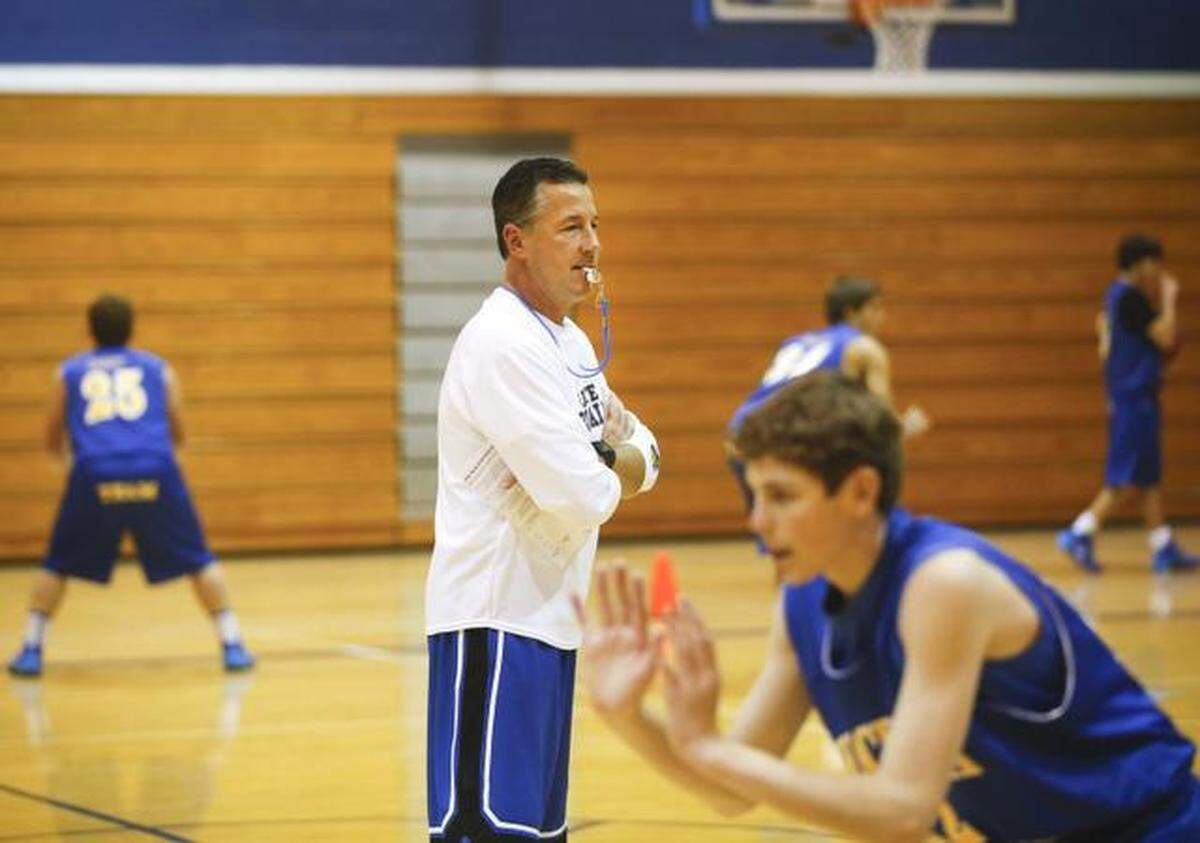
For four decades, Fiegel was equal parts tactician, motivator, taskmaster, counselor and, to many, father figure. He could go from fiery on the sideline to philosophical in his office in minutes. Basketball consumed him, but he also used it to shape generations of young men who played for him.
“If you’re going to cut corners in practice, you’re going to cut corners in life,” said Hamilton Hill, who played for Fiegel from 1990-94. “Don’t touch the line, don’t box somebody out, if you do that in life, it’s going to come back and get you. That’s why we say he wasn’t just a basketball coach. He was a life coach.”
A vision beyond one season at Collegiate
From the first day at Collegiate in 1989, Mitch Fiegel made one thing clear: he wasn’t there just to run practices and call plays.
He was there to build something that would last.
“My vision when I got to Collegiate was I didn’t want to just coach a team,” he said, “I wanted to develop a program.”
To set the tone, he coined a phrase that’s been with him since Day One: Defense decides championships. It’s been printed on team gear for decades and painted on the walls inside the Collegiate gym.
His Sunday practice tradition became just as embedded in the program’s fabric: three special practice jerseys handed out each week — Mr. Burn, Mr. Charge and Mr. Deflections. To outsiders, they might have seemed like gimmicks. To Fiegel, they were the DNA of winning basketball.
“You won’t find guys who do the dirty work on social media,” he said. “You’ll see dunks and stuff that don’t really matter. But we tried to stay true to the things that do matter. It didn’t matter if it was 1993 or 2024, if your team won’t get on the floor, won’t box out and won’t be disciplined, you’re not going to be successful.”
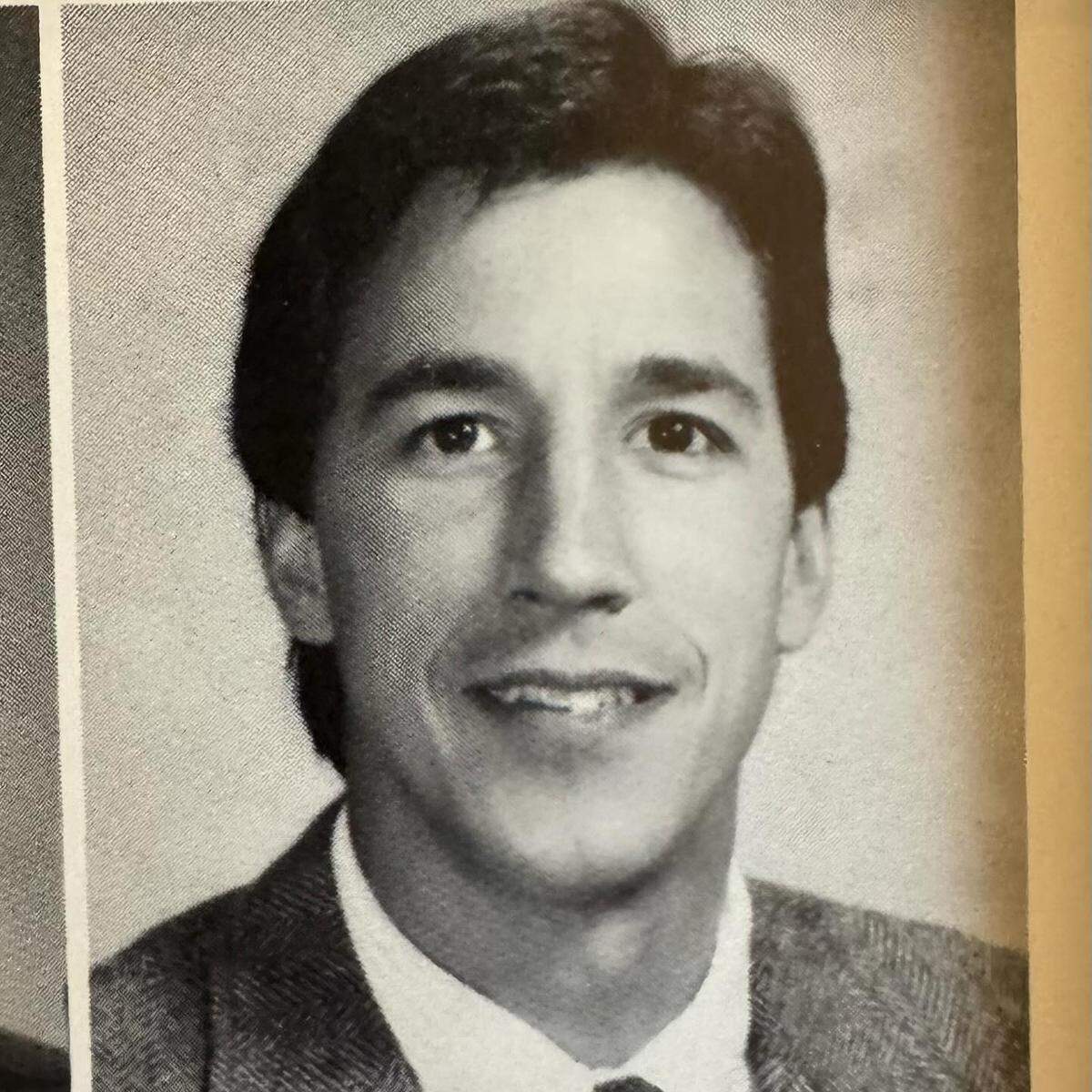
Fiegel never claimed to be the best clipboard coach. Growing up in western Kansas with an uncle, Chuck Fiegel, who won two state titles of his own, he learned early that success was about more than drawing up plays.
“Getting kids to play hard and share the basketball and be great teammates will take you a lot further than any X’s and O’s can,” Fiegel said.
At Hutchinson Community College summer basketball camps in the early 90’s, Fiegel and then-new head coach Steve McClain would coach kids by day, then stay up past 2 a.m. trading ideas and dissecting the game.
“Culture is a word that gets used a lot, but culture is what you stand for every day,” McClain said. “And you saw that in Mitch early in his career that he was going to create a culture in his program.”
If there’s one word players use most to describe Fiegel, it’s relentless.
His teams reflected that. Talent was a constant at Collegiate, but the Spartans’ identity was built on outworking and out-competing opponents. That’s why Fiegel’s players were almost always on the floor, diving for loose balls, crashing the glass and emptying the tank — because that was the expectation every single day in practice.
“He has a way he thinks something should be done and he’s going to hold you to that standard,” said Hamilton Hill, who played on some of Fiegel’s first Collegiate teams. “Over the course of time, you figure out you’re either going to do it the right way or you’re not going to play.”
His relentlessness was obvious from his first season at tiny Quivira Heights in 1988-89, when he took a losing program to the Class 2A state tournament. During one halftime, he grew so animated that water bottles went flying — and so did one of his loafers, which landed squarely in a locker room urinal.
“He’s still just spitting everywhere, face red and he didn’t miss a beat,” said Bryan Roelfs, a Quiviria Heights player at the time. “And we’re just trying not to crack a smile because we know we would have had to run until we died if he saw us.”
To Fiegel, every detail mattered — from how a screen was set to how many Gatorades were packed on the bus. He was a master motivator, part psychologist, part drill sergeant, part poet, with a knack for making kids believe they could run through a wall and then convincing them to actually do it.
That connection was built not just in practices, but in hundreds of conversations throughout the year — a quick chat over lunch, a heart-to-heart in his office. That’s how he sold his famous five-in, five-out substitution pattern, which required complete buy-in to work.
“What Mitch does better than anybody is he gets every kid to play as hard as they possibly can,” longtime assistant Ron Watson said. “In his mind, everyone is equal on the defensive end. It’s can you get 15 kids to buy in and play as hard as they possibly can?”
Like in 1993 when he yanked Hill, a pass-first guard, from a key game against Moundridge and told him if he passed up another open shot, he’d spend the rest of the night on the bench. Hill took the message to heart. Months later, when Beloit double-teamed star DeAngelo Evans in the state championship game, Hill scored 22 points to help secure Collegiate’s first title.
“Deep down, I think every kid really wants to work that hard, they just don’t know how,” Fiegel said. “You have to show them how. Whatever you expect from them, that’s what they’ll give you.”
He always loved his players, but that love often came in its toughest form. Being liked in-season wasn’t his goal.
“Your job is not to be their friend,” Fiegel said. “I’m over 60, I don’t need 15-year-old friends. You want to coach them, push them, prod them, challenge them and help them understand it’s not always going to be easy. And if you do it right, then they’ll appreciate it for the rest of their lives and be your friends later in life.”
Another staple of the program was Fiegel’s weekly inspirational quotes. Long before Google searches and social media, he spent hours digging through books and magazines to find the right ones. The players would roll their eyes at first, but he made them memorize each quote and explain what it meant to them.
“This was before the Internet took off,” said Josh Anderson, who played at Collegiate before 1993-96. “He would research these quotes and print them out and post them all over the locker room and make us memorize them and tell him what they meant to us. He wasn’t just preparing us to win a basketball game, he was preparing us to win at life.”
A Fiegel family sacrifice
For all the wins, championships and the fierce loyalty of his players, Mitch Fiegel’s most meaningful seasons were the ones spent coaching his two sons, Cole and Ty.
It’s the ultimate dream for any coach — and Fiegel lived it — winning three state titles between them: 2007 with Cole, then back-to-back in 2009 and 2010 with Ty.
But anyone who’s ever mixed family and competition knows the truth: dreams don’t come without friction.
Fiegel credits his wife, Allison, as the steady force behind the scenes — his personal rock and the only person who could talk him off the ledge after a bad practice or crushing loss. While her husband lived and breathed basketball, Allison admits she never really learned the game. She found more joy in cheering on the boys she once taught in her fifth-grade classroom than in trying to grasp the intricacies of the game.
But when basketball consumes everything, it can strain a family. For Allison, those early years were especially tough — home with two toddlers while Mitch was pouring himself into the foundation of what became a dynasty.
“I’ll be honest, it was hard in the beginning, especially when we had kids,” she said. “No one really gave me a heads-up how it was going to be. I knew he needed space, but he was gone a lot and I always felt like he could have given me more time.
“I don’t mean this in a bad way, but he spent more time with everyone else’s children than his own. But that’s the life of a coach.”
Coaching his boys brought its own challenges: Cole, the oldest, had the same stubborn, Type A personality as his father — a blessing when it came to competitiveness, but also a constant spark for conflict.
“There were definitely some times I got kicked out of practice,” Cole said, laughing. “We had our ups and downs, but not that many parents and kids get to win a championship together. It was hard to appreciate those things while they were happening, but now that you get a chance to reflect, you realize how special it actually was.”
Mitch had been coaching both of his boys, and most of their friends, since biddy basketball. By the time they reached high school, his expectations were ingrained. Ty, the younger brother, remembers that there was no escape from those standards.
“After a tough day at practice, everyone else got a break,” he said. “I had to go home and eat dinner with the guy.”
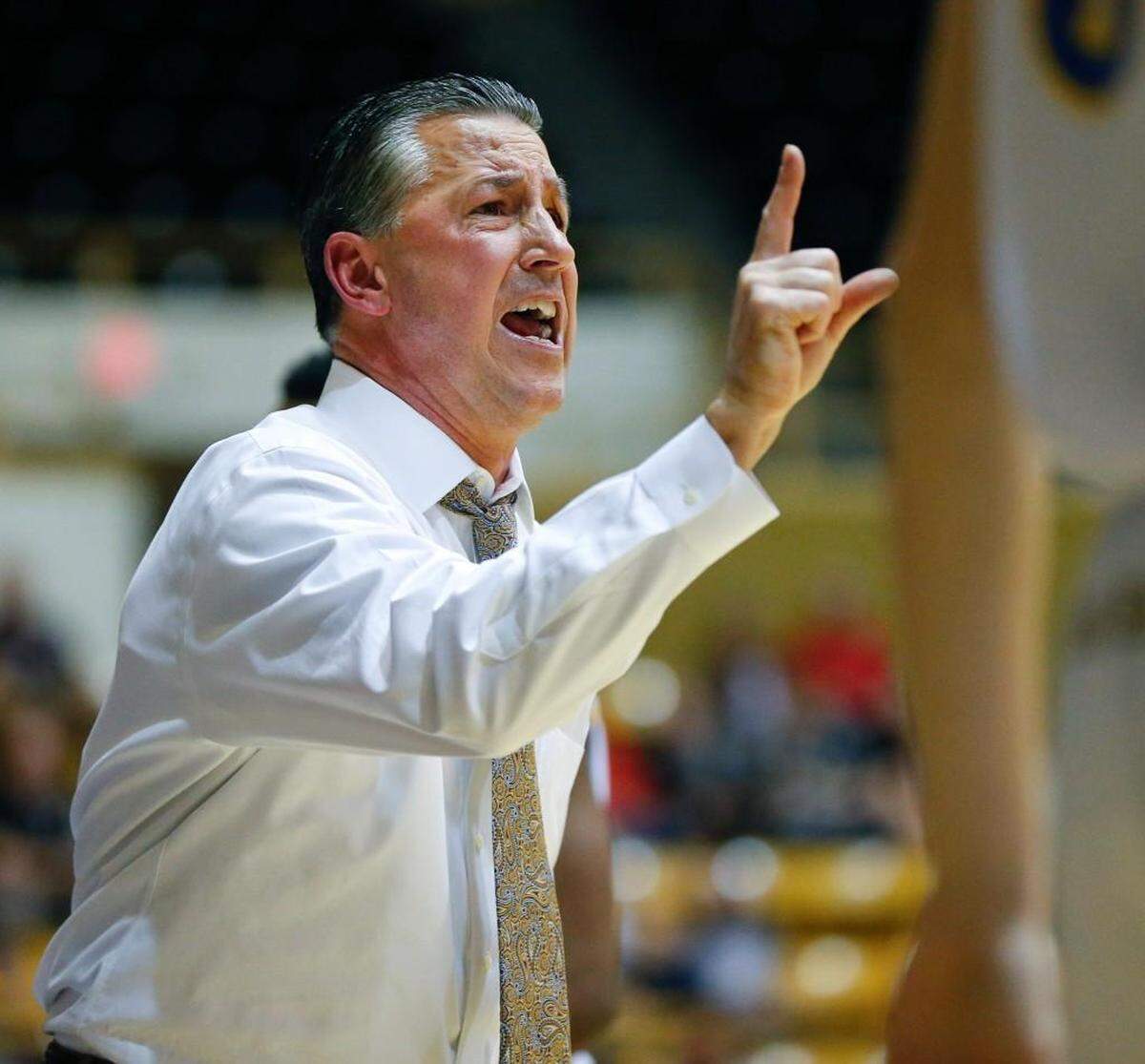
At home, the family insists Mitch is “more normal than you would think,” but his perfectionism shows up everywhere — most notably in the laundry room.
“He’s laser-focused on laundry,” Allison said. “He wants everything to match and look good. His outfit is a big deal to him. He tells me I can’t do laundry right, which is fine with me because I just let him do it. It’s got to be his way.”
“If somebody messes up the laundry,” Ty said, “that can turn into an hour-long lecture about how to do laundry correctly.”
As much as father and sons clashed, the bonds forged in those years have only deepened. Whenever the family gathers, often with old teammates in the mix, the conversation inevitably drifts back to those title runs.
“Every time we get together with our old teammates, we love to reminisce about those times,” Ty said. “We relive those days, have our jokes, and laugh about the times we got in trouble. We definitely cherish that big time now. He really is the best dad in the world and I’m so appreciative of him.”
Cole agreed.
“It’s hard to top winning that state title in 2007 with all of those guys I grew up with for years and years,” he said. “That gets more special every day.”
In a career full of memories, Mitch said nothing can top those championships with his sons.
“I don’t think there’s a coach alive who wouldn’t tell you that wouldn’t be No. 1 on his bucket list,” he said. “Those were some good times, but at the time, I never really took the time to embrace it. Now that I can look back, it means even more.”
The Ferris wheel awaits
The night of Feb. 9, 2024 felt less like a regular-season game and more like a high school basketball version of a Hall of Fame induction.
Collegiate’s gym was packed shoulder to shoulder. All six of Mitch Fiegel’s championship teams were represented, as well as three players from his first-ever head coaching season at Quivira Heights in 1988-89. In total, around 100 former players — men in their 20s, 30s, 40s and 50s — had made the trip, each with their own stories of a time when they were one of Coach’s guys.
When Fiegel was introduced, the roar hit a different pitch. It grew even louder when the school announced the gym would be fully renovated and soon bear his name — Mitch Fiegel Court. Everywhere he looked, he saw a familiar face from some bygone era of his career.
“It didn’t really seem real to have all of those guys there from three different decades,” Fiegel said later. “There’s no way you can replicate a night like that unless you were fortunate to stay at one place a long, long time.”
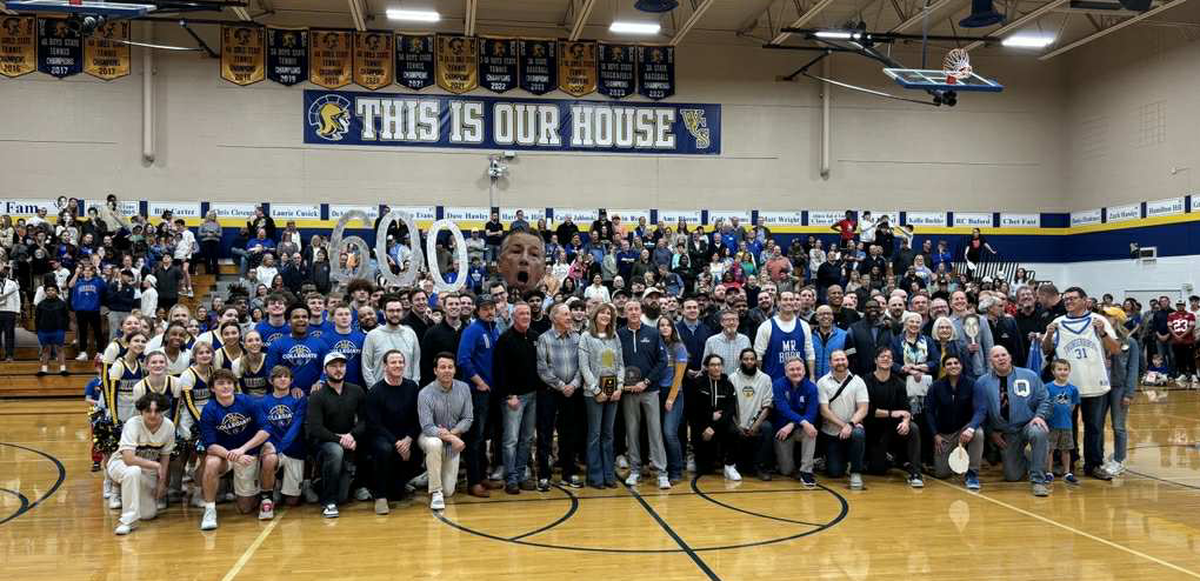
Some players wore their old team shirts. Others dug letter jackets and jerseys out of closets for the first time in decades. Josh Anderson, a 1996 grad, showed up in his original “Mr. Burn” practice jersey from more than 30 years ago.
Maurice Evans — the most accomplished player in Collegiate history — flew in for the occasion. A nine-year NBA veteran who played under legends like Phil Jackson, Rick Adelman and Flip Saunders, Evans doesn’t hesitate to place Fiegel in that company.
“He ranks right up there for me personally with the best coaches I’ve ever played for,” Evans said. “Because of the wisdom he imparted on me. He prepared me for those types of coaches I went on to play for in the NBA.”
For Evans, the night wasn’t just about honoring a coach. It was about honoring the man who had been a father figure when he needed one most.
In high school, Fiegel devised a system so Evans could swing by his house, grab a key left on a post and unlock the school gym whenever he wanted.
“That was my refuge, my safe haven,” he said. “I could have been lost to the streets if not for him. That really helped me build my confidence and hone my craft and do something that I had a deep passion for.”
Steve McClain, now an assistant coach at Texas, echoed the sentiment.
“Everybody wants to be a coach at Kansas or Texas,” McClain said. “But I tell people all of the time that some of the most successful coaches I know are high school coaches like Mitch Fiegel. They stay at that level and help so many young people change their lives, whether they went on to play Division I basketball or become a lawyer or a doctor. The rewards for that are so unbelievable.”
The Quivira Heights contingent — Bryan Roelfs, Chris Huggans and Trevor Rolfs — made the trip, too. They only played for Fiegel for one season, but the impression lasted decades.
“He taught us that high expectations lead to high results,” Roelfs said. “But we only had him for one year and then he was gone. We were too young and dumb at the time to know, but we spent a lot of years after saying, ‘Man, if we would have had Mitch…’”
They remember the “psycho” version of Fiegel — young, hungry and fresh out of college.
“It was consistent intensity,” he said. “From the minute he showed up every morning to practice that night, he was just a driven, organized and disciplined person. There’s a line about how when you look at a great coach, you’ll find a whole lot of players just like that. He instilled that in all of us. And you can get a long way in life with discipline.”
It was a career that began with clipboards and VHS tapes and ended in the era of TikTok and group texts. Through it all, Fiegel’s principles didn’t change — and that included collecting cell phones before meals so his players had to talk to each other face-to-face.
“Basketball is a game of communication and communication is a skill,” he said. “How do you get a skill? You have to practice it. And you can’t practice it looking at a phone.”
Now 64, Fiegel faces a winter without a season plan taped to his office wall. Waiting instead: a 180-acre farm near Saint Leo, a little more than an hour outside of Wichita, anchored by a 125-year-old family farmhouse with a creek winding through the land and horses, pigs and chickens roaming the property.
Once renovations are completed, he and his wife, Allison, will move there.
“There’s a project from now until the day I die to be done out there on that farm,” he said with a grin.
He’s not sure how he’ll fill the void once basketball season rolls around. Even in retirement, his fire for the game still burns just as hot.
“A great basketball season is like a really good, old, wooden rollercoaster,” Fiegel said. “It’s rough and it’s fast and it’s fun. And the offseason is like a Ferris wheel. I’ve never been much for a ferris wheel. I like to go fast and hard.”
Sunsets will replace Friday night tip-offs. Early mornings feeding animals will stand in for shootarounds. And for the first time in his adult life, he won’t have to think about scouting reports, practice plans or breaking down game film.
The man who has more than 600 games and six state championships now faces a different challenge — figuring out who he is without the whistle.
“I don’t even hardly know what my first name is,” he said, a half-joke and half-truth. “For as long as I can remember, I’ve always been ‘Coach.’”
The Ferris wheel is waiting.
This story was originally published August 18, 2025 at 6:05 AM.
.jpg)