
Wichita golfer Sam Stevens stays in U.S. Open contention heading to Sunday
AI-generated summary reviewed by our newsroom.
- Sam Stevens shot a 2-over-par 72 in the third round at Shinnecock Hills.
- Gusts of 30 to 45 mph hit Shinnecock Hills and scores plummeted.
- Stevens remained near the top of the leaderboard and advances to Sunday.
The ball kept flirting with the edge of the cup, kept sliding past by inches, kept leaving Sam Stevens with the same cruel reminder Saturday afternoon at Shinnecock Hills.
At a U.S. Open, especially one played in a howling wind, there is a fine line between surviving and thriving.
Stevens did plenty of surviving in the third round. He just could not quite find enough magic on the greens to keep pace with leader Wyndham Clark.
The 2014 Kapaun Mt. Carmel graduate shot a 2-over-par 72 on Saturday, a round that felt more like a steadying act than a step back in the harshest conditions of the week at Shinnecock Hills in Southampton, New York. With gusts ranging from 30 mph to 45 mph, scores across the leaderboard plummeted as the historic course showed its teeth.
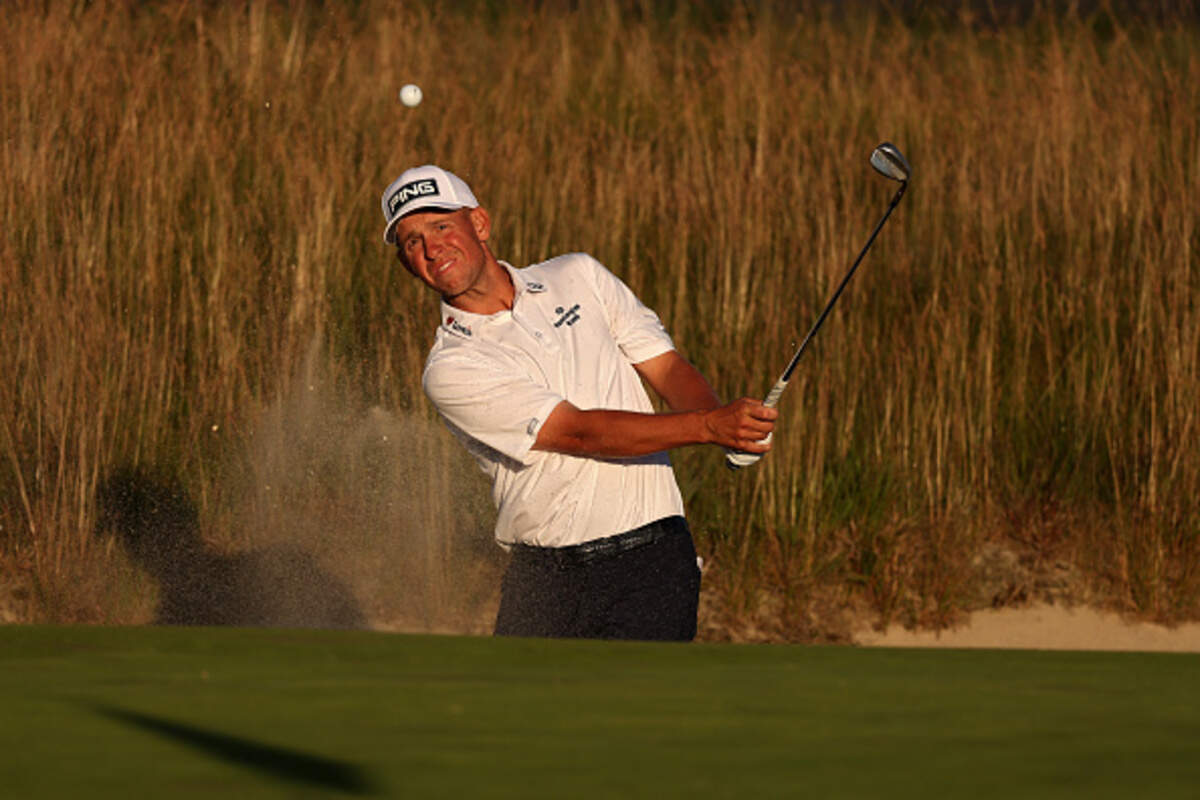
Stevens finished the day at 1 under for the tournament, tied for second place and six shots behind Clark, who seized firm control of the championship at 7 under. While Clark will enter Sunday with a commanding advantage, Stevens is still in position to deliver the best major finish of his career — and potentially the largest payday of his career (second place at the U.S. Open is worth $2.43 million).
For Stevens, a 29-year-old in his fourth full season on the PGA Tour, Sunday represents a major opportunity. He has made the cut in all eight major championships he has played, a testament to a game that has performed well on the sport’s most demanding stages. But he has never finished in the top 20 of a major.
That very well could change on Sunday.
Saturday began with the kind of escape shot that briefly made it feel like Stevens might be ready to make a serious run at the lead.
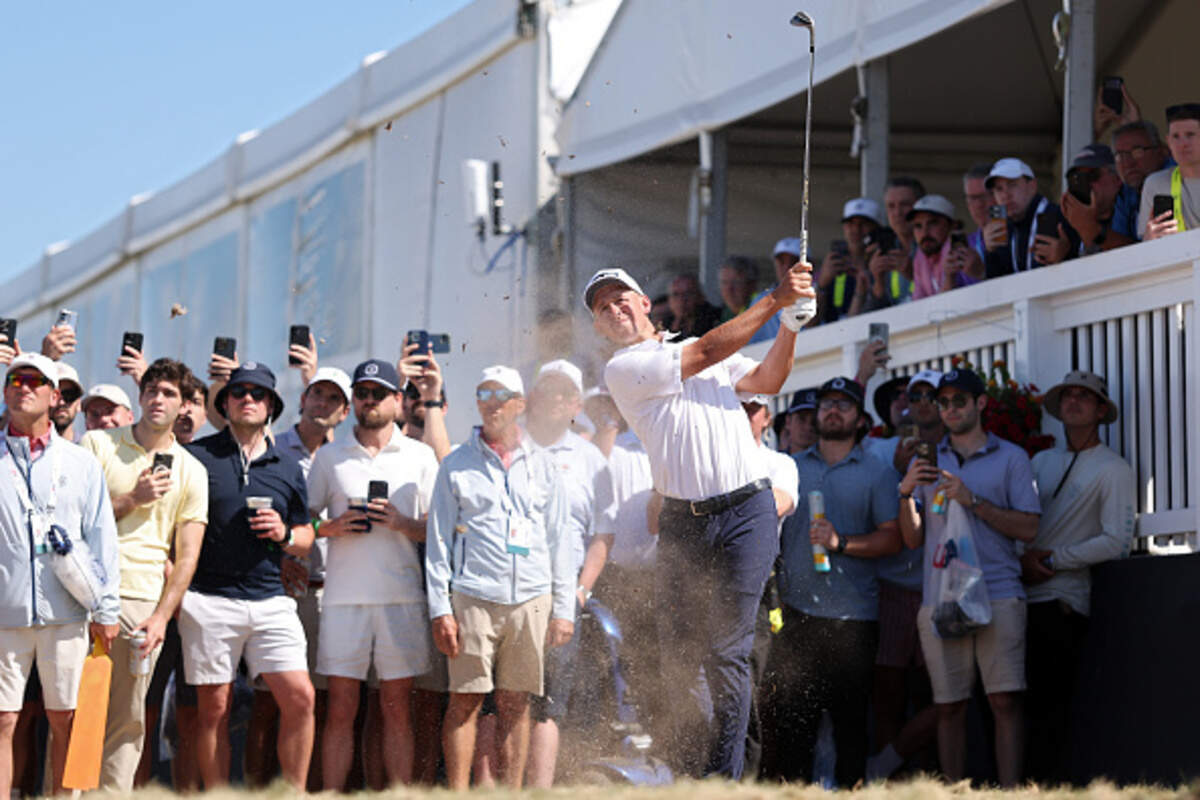
His opening tee shot was yanked so far left that it nearly reached the media center, coming to rest on a patch of dirt. From there, Stevens produced one of his best shots of the day, nearly one-hopping his recovery into the hole. When the ball rolled just past, he calmly made the 7-foot birdie putt to open his round with a jolt.
But on No. 3, Stevens missed the fairway and found the tall grass, forcing him to chunk the ball out just to get back in position. He had a 13-foot putt to save par, but left it just short for his first bogey of the day.
Then came the 584-yard par-5 fifth, where Stevens briefly pulled himself right back into the championship picture. He hammered a 318-yard drive, followed with a strong second shot that left him with a short pitch near the front of the green, then chipped inside 10 feet.
The birdie putt was vintage U.S. Open golf: slow, delicate and fully dependent on trust. Stevens started it left, let the green take over, then watched the ball sweep toward the hole and drop.
That moved him to 4 under, just two shots behind Clark.
For a good stretch of the front nine, Stevens was right there. He had long birdie looks on Nos. 2 and 6, then gave himself three quality chances in a row. On the par-3 seventh, his tee shot settled 13 feet away, but the birdie try stayed wide left. On No. 8, he split the fairway with a big drive, hit wedge to 14 feet and watched another birdie attempt slide under the hole. On No. 9, he launched a 340-yard drive down the fairway, then stuck his approach inside 16 feet, only to miss wide right.
Stevens made the turn in 1-under 34, an impressive front-nine score on a day when the wind was knocking players backward all over the course.
It also felt like it could have been more.
The back nine was about pure survival.
His approach on No. 10 rolled off the back of the elevated green and down the slope, leaving a difficult chip that finished 26 feet from the hole. He missed the par putt and made bogey. On the par-3 11th, Stevens missed the green again, chipped from the rough to 17 feet and could not convert the save.
Then came No. 12, where his drive sliced down the right side and ended up in another dirt area. Stevens managed to get the ball on the green, then lagged a 65-foot putt to within five feet. But the par putt lipped out, giving him three straight bogeys to start the back nine.
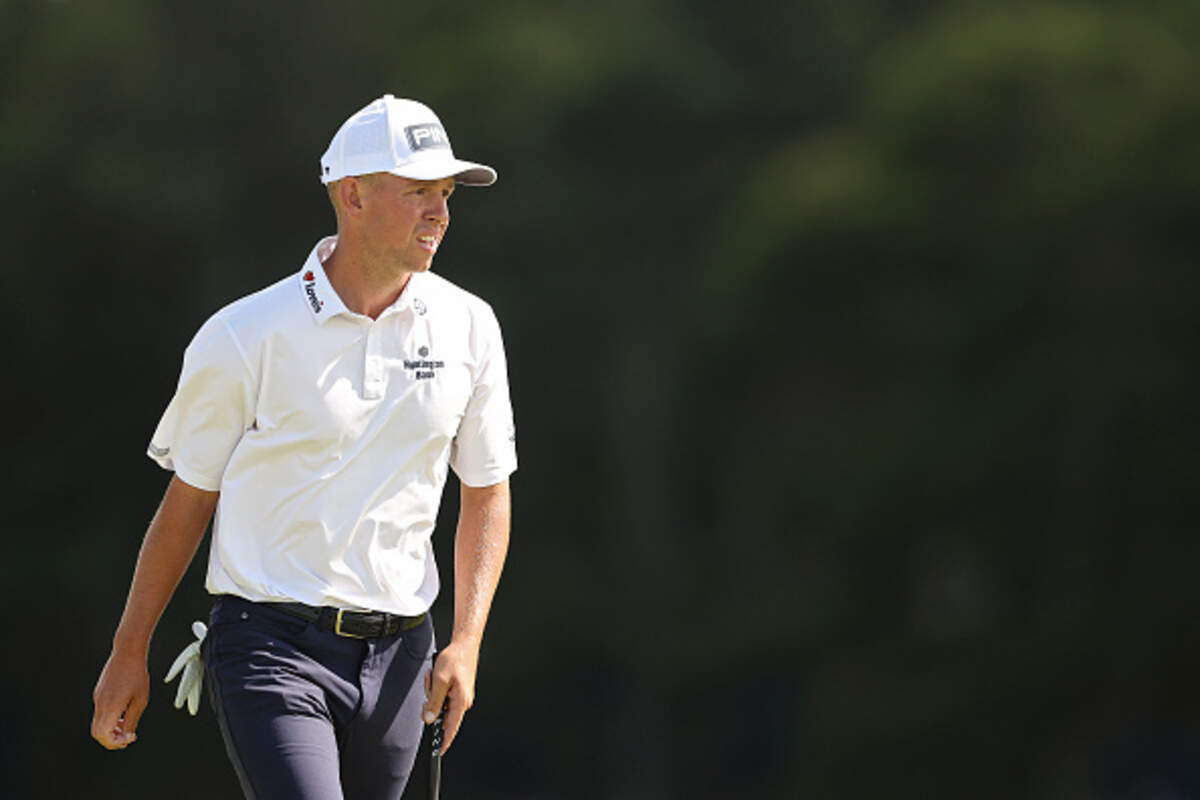
To his credit, Stevens steadied himself.
On No. 13, he missed the green with his approach, then nearly chipped in for birdie. The ball trickled toward the cup before stopping inches away, leaving a tap-in par that stopped the slide. On No. 14, his driver strayed again into the tall grass, forcing a punch-out, but Stevens wedged from 84 yards to inside eight feet and rolled in the par save.
That may have been one of his most important putts of the day.
The next three holes told the story of Stevens’ round: strong ball-striking, quality recovery work and just enough missed chances to wonder what might have been.
On No. 15, he missed another fairway and had to punch from the tall grass, but still reached the green and lagged a 59-foot putt to within three feet for par. On the 604-yard par-5 16th, Stevens blasted a 336-yard drive, then hit a 275-yard fairway wood into a greenside bunker. His bunker shot checked to seven feet, giving him a golden birdie look. But the putt peeled off at the last moment.
On the par-3 17th, Stevens had a 32-foot birdie putt that nearly fell, touching the back edge of the cup before refusing to drop. On No. 18, he gave himself one more chance from 22 feet, but the putt slid about an inch outside the hole.
It was that kind of day.
Stevens’ putter, so dialed in during his opening round Thursday, never quite found the same rhythm Saturday. He finished with 31 putts and averaged 1.92 putts per green in regulation, right around field average. That was the difference between a round that kept him near the lead and one that could have applied real pressure to Clark.
The rest of his game was sharp enough to stay in the hunt for a career-best major finish.
Stevens struggled off the tee, hitting only six of 14 fairways and losing 1.41 strokes to the field in strokes gained off the tee. But his iron play was among the best in the tournament. He led the field Saturday in strokes gained on approach at plus-3.19, and through three rounds he is tied for first in greens in regulation at 76%. He also ranks second in the field in strokes gained on approach for the week.
That is the reason Stevens is still near the top of the leaderboard, even after a back-nine stretch that could have undone his tournament.
For most of Saturday, Stevens was close enough to feel the possibility. Close enough to chase Clark. Close enough to imagine what a few more putts might have meant.
Now he gets one more round to turn a strong week into the best major finish of his career.
This story was originally published June 20, 2026 at 7:19 PM.
.jpg)