
He beat leukemia before he could remember. Now he’s chasing a Kansas golf title
Cohen Museousky did not need a state golf leaderboard to prove he had learned how to keep going.
But there was his name on Tuesday afternoon at Tallgrass Golf Club, right where every high school golfer in Kansas would want it — tied for the lead after the first day of the Class 5A state boys golf tournament.
The Goddard sophomore shot an even-par 71, matching Eisenhower senior Luke Springer, a Drake signee, for the clubhouse lead in a field of nearly 100 golfers. It was the kind of round that could announce the arrival of a talented young golfer as a championship contender.

But to everyone who knows Museousky, the number beside his name has never been the most remarkable thing about him.
Not the 71. Not the 300-yard drives. Not the short game his coach calls “second to none.” Not even the fact that Junior Golf Scoreboard ranks him as the second-highest-rated Kansas golfer in the class of 2028.
The most remarkable thing about Museousky is the way he lives.
With gratitude. With purpose. With a rare kind of optimism that can feel like an outlier in a sport built to test patience and punish imperfection.
To understand why, it helps to start with a story Cohen is too young to remember.
Before he was chasing a state championship, before he was walking fairways with a chance to become the first championship golfer in Goddard history, Cohen was a 20-month-old boy weighing 22 pounds when his parents began noticing strange bruises on his body.
They took him to the doctor for blood work. At first, they wondered if it might be a blood disorder. More testing followed. Then came the diagnosis that changed the family’s life: leukemia.
“It was terrifying,” Cohen’s mother, Jamie Museousky, said. “It was an awful time in our lives. You get on Google and everything is just terrifying.”
Doctors told the family Cohen had a 50% chance to survive.
There was no family history, nothing that could have prepared his parents for that conversation and nothing that could make sense of hearing that their baby had cancer before he was old enough to understand the word.
Cohen underwent seven rounds of chemotherapy, each lasting anywhere from five to 10 consecutive days. His treatment plan lasted nearly a year with long hospital visits between chemo treatments. After those seven rounds, the cancer went into remission. Six years later, he was cancer free.
Cohen does not remember the treatments. But his mother does.
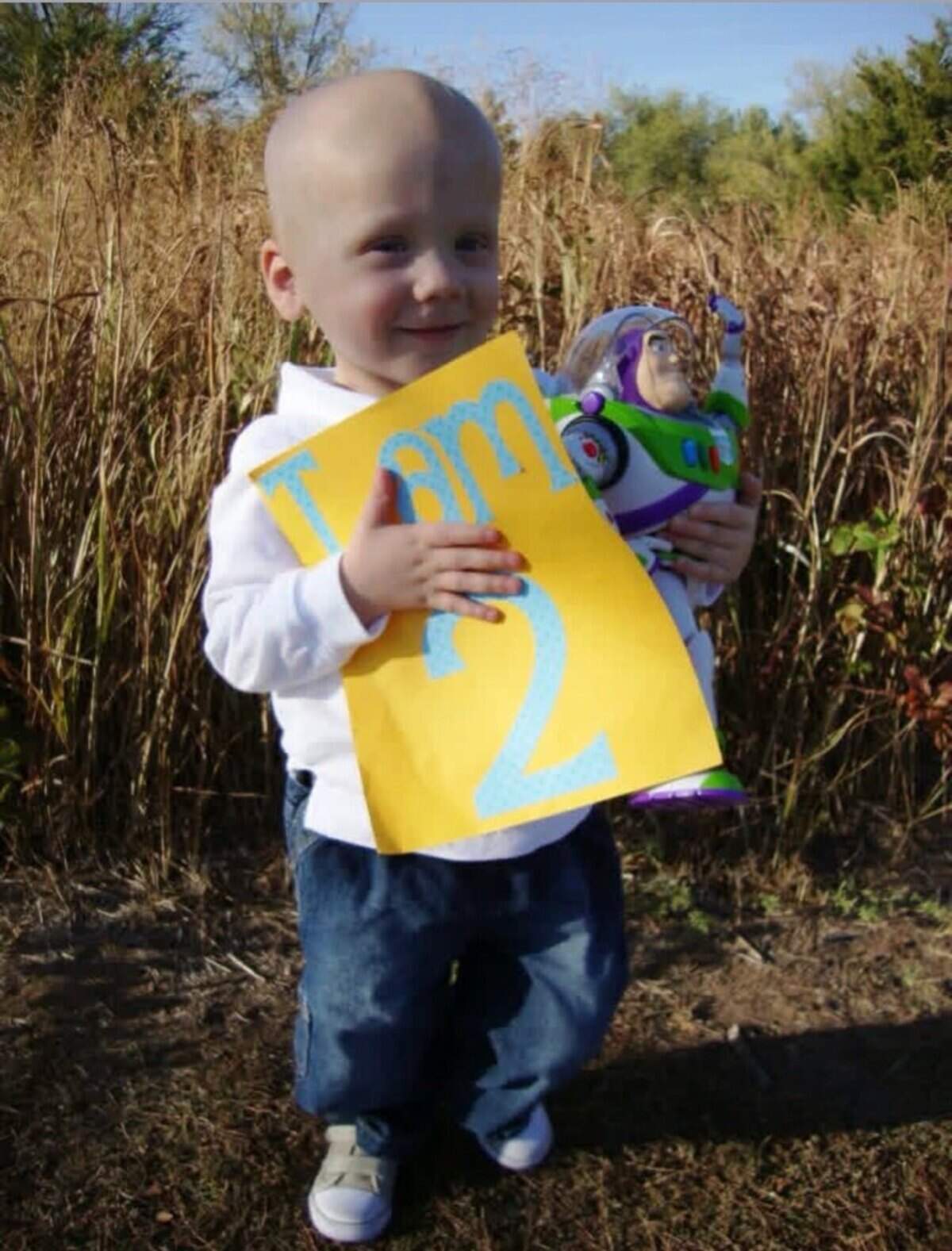
She remembers the long hours at the office of Dr. David Rosen, a pediatric oncologist in Wichita. She remembers the toys in the room. She remembers Cohen being connected to an IV pole and still wanting to play. She remembers him climbing into a plastic car while she followed behind, pushing the IV pole and trying to keep up.
That image has stayed with her: a toddler fighting cancer, still moving forward.
Years later, that same spirit is easy to recognize.
Cohen has a 4.429 GPA at Goddard. He serves on student council. He is a member of the Future Health Professionals club. He is active in his youth group at church. He has volunteered with Neighbors United, helping with community service projects for residents and organizations in Goddard. He has also volunteered with the Arkansas River cleanup project.
And now, after everything doctors once did for him, Cohen thinks he might want to become one someday.
The experience did not leave him bitter. It left him with a sense of responsibility.
“It’s the reason why I view life like I do,” Cohen said. “Like I wouldn’t be the same way today without something that happened that I wish never happened.”
That is the center of his story.
Cohen does not pretend cancer was a gift. He wishes it never happened. He wishes his family never had to live through the fear, the hospital visits and the chemo treatments. He wishes leukemia had never entered his life at all.
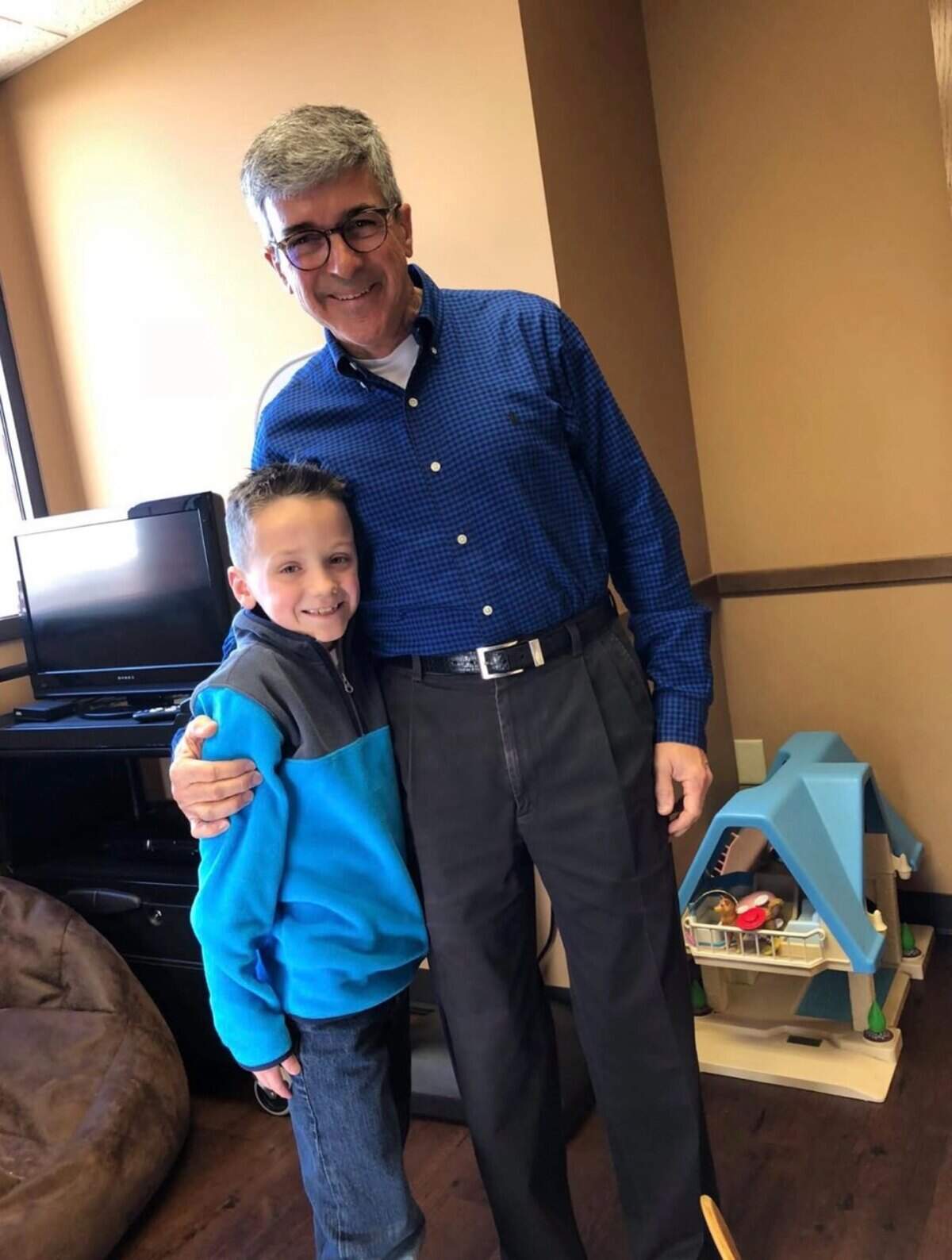
But he also understands that surviving cancer shaped him.
It shaped the way he treats people. It shaped the way he leads. It shaped the way he handles missed putts, bad breaks and frustrating rounds. It shaped the way he thinks about why he is here.
“I feel like going through what I went through, it makes me persevere even more,” Cohen said. “I remember that I’m lucky to still be here, so that drives me to want to motivate myself and others to keep going. I feel like I’m here for a reason.”
That reason shows up in the way he carries himself on the golf course.
Goddard coach Jim Zimmer teaches business classes at the school and has Cohen in class. He sees the same traits there that he sees at practice: humility, discipline, kindness.
“For as talented as he is, he is so humble, and he truly cheers on everybody,” Zimmer said. “He’s the kind of kid who puts everybody else first before himself. It’s pretty impressive to have a kid that talented who is as genuine as Cohen.”
That is not always easy to find in elite young athletes.
Cohen is good enough to play a different kind of game than many of his teammates. Some Goddard golfers are newer to the sport. Some are developmental junior-varsity players. Some are still learning how to break 100.
Cohen could separate himself from them. Instead, Zimmer said, he encourages them.
When a teammate is frustrated, Cohen reminds him that everyone starts somewhere. When a younger player struggles, Cohen does not dismiss him. He helps. He treats the player trying to win a tournament and the player trying to survive a round with the same respect.
“I can’t imagine a better kid to lead other kids,” Zimmer said. “And I’m not just talking about in the game of golf. I’m talking about in life.”
That makes Cohen’s talent even more striking.
He does not look like a player who can overpower a course. He is slender and unassuming when he walks to the tee box. Then he takes the club back and sends a drive 300 yards, straight down the middle.
Cohen has the rest of the game to match. He is long off the tee, sharp with his irons and especially skilled around the green, where Zimmer raves about his touch.
But what Cohen seems to love most about golf is not what he has already mastered. It is what he has not.
The game is a constant chase. There is always something to fix. Always a shot to replay. Always a putt that could have been struck better. Always a swing that can be refined.
For some players, that can become exhausting.
For Cohen, it is part of the joy.
“Golf is a game of ups and downs,” Cohen said. “When you go through the tough times, you have to work to get back to the highs because it makes you feel so great. And you can’t feel great about the highs without going through the lows.”
That sounds like a golfer explaining his sport.
It also sounds like a cancer survivor explaining his life.
“Golf is definitely a game where you’re going to have negative experiences,” Cohen said. “You’re going to miss a putt that you think you should have made. But you’ve just got to remember that having a negative attitude is not going to help you get any better. I know having a positive outlook on things has helped me a ton.”
Zimmer understands that perspective better than most coaches could.
He is also a leukemia survivor.
Zimmer grew up in Beloit and was diagnosed when he was 7. He made the long drives to Wichita to be treated by Rosen, the same doctor who would later treat Cohen. Zimmer overcame his own battle with leukemia and was declared cancer-free at 11.
For years, Cohen and Zimmer did not know their stories were connected.
That changed last fall, when Cohen was raising money for a charity golf event and donating proceeds to the Leukemia & Lymphoma Society. The charity caught Zimmer’s attention because of his own childhood battle with leukemia.
That is when the two started piecing together the improbability of it all. Both had battled leukemia. Both had survived. Both loved golf. Both ended up at Goddard. And both had been treated in Wichita by Rosen.
“The probability of all of those things is just incredible,” Zimmer said with a laugh.
For Zimmer, the memories are still vivid.
“I remember everything,” Zimmer said. “It’s not one of those things you tend to forget.”
He remembers Rosen. He remembers the nurses. He remembers the staff. He remembers how they tried to make a frightening place feel less frightening for children going through treatments no child should have to experience. Zimmer said he remembers an environment built to comfort kids, even during spinal taps, bone marrow draws and long treatment days. The way the staff cared for him during the hardest time of his life never left him.
About 10 years ago, Zimmer was driving to play golf at MacDonald Golf Course when he saw Rosen on a billboard. It spurred him to schedule a checkup with him. He was not worried the cancer had returned. He simply wanted to see the doctor who had helped save his life and thank him.
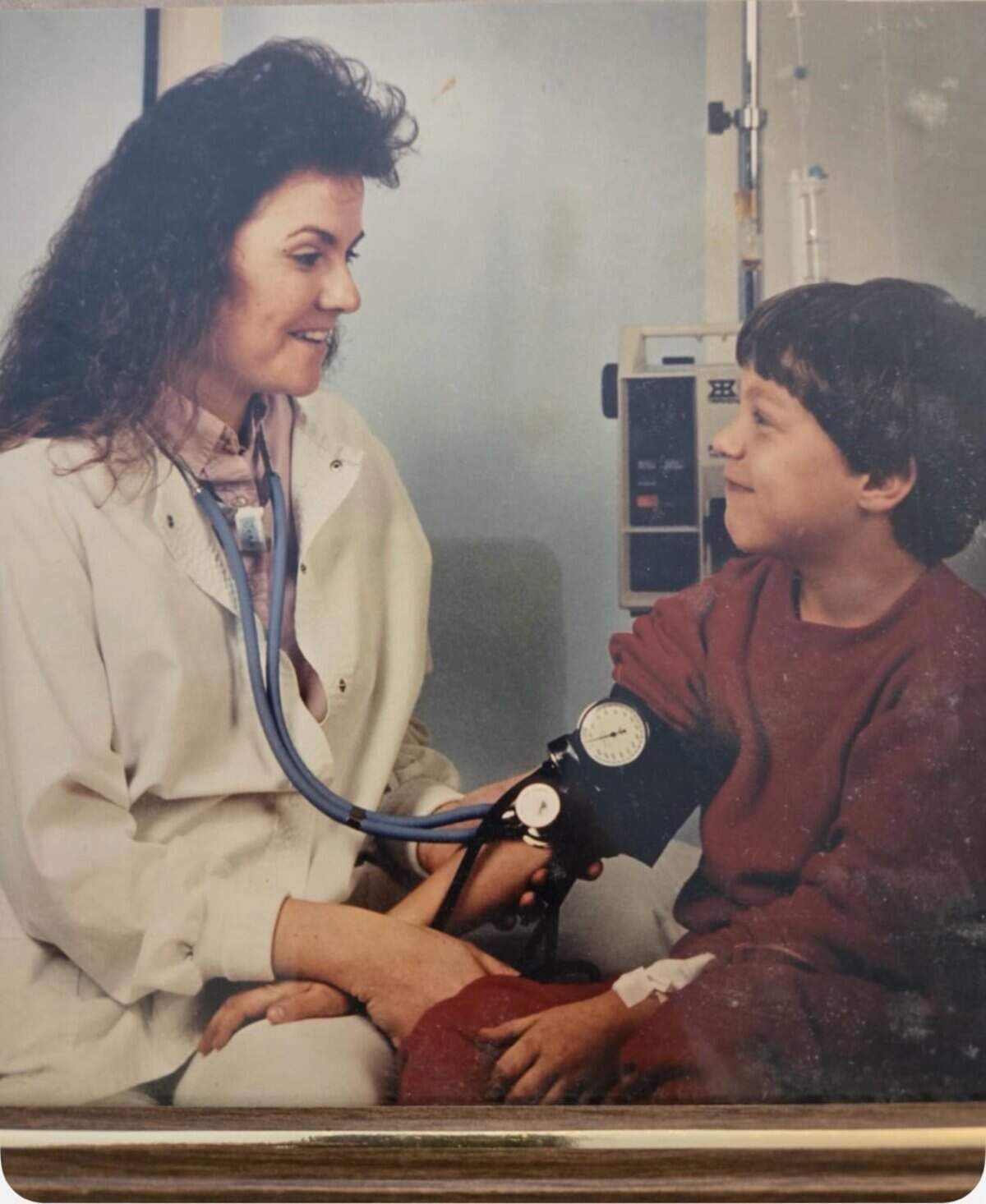
When Zimmer walked back into the office, he was stunned by how familiar it felt. It looked the way he remembered it from decades earlier. Even the secretary was the same. She recognized him immediately.
Now Zimmer coaches another of Rosen’s former patients.
“As a teacher and a coach, you always try to build those bonds with students,” Zimmer said. “But to have this kind of connection, it’s pretty special. We can talk about golf and life and all of the things in between, so I think it’s pretty cool.”
Zimmer and Cohen have talked about cancer. About survival. About the details and emotions that only people who have been through something like that can fully understand.
Cohen was too young to remember his own treatments, but he is old enough now to understand what surviving meant.
Zimmer sees that understanding in how Cohen lives.
“When you beat cancer, it’s like a second chance at life,” Zimmer said. “I can reflect on my own experiences, and I think you see that in how Cohen lives his life. He is determined to make the most of it.”
That is part of why high school golf means so much to Cohen. He has played at a high level on the junior circuit, but he still loves the team aspect of the high school season. He loves seeing teammates improve. He loves seeing players fall in love with the game at their own pace.
“I think it’s just fun to see positivity spread around the team,” Cohen said. “Regardless of your level, we all start at different points and improve at different rates in golf. So I just think it’s fun to see other people progress and love the game of golf.”
On Tuesday, Cohen gave Goddard another reason to follow him.
His even-par 71 put him in position to chase a Class 5A state championship on Wednesday. He has already shown he can contend on the state stage. He has already shown he can handle the expectations that come with being one of the top young players in Kansas.
But the leaderboard only tells part of the story.
It can show that Cohen Museousky is tied for the lead.
It cannot show the toddler in the plastic car, pulling an IV pole behind him.
It cannot show the mother who remembers every terrifying hospital visit.
It cannot show the coach who survived his own battle with leukemia, then found one of Rosen’s former patients on the team he was coaching.
The state tournament will decide whether Cohen leaves Tallgrass with a championship medal.
His life has already shown what he plans to do with the second chance he was given.
This story was originally published May 26, 2026 at 4:36 PM.
.jpg)