
Sterling tennis star finds sense of belonging in journey to win Kansas state title
All Chelsie Brown has ever wanted in life is to be treated the same.
That hasn’t always been the case for the 16-year-old from Sterling, who was born hard of hearing and has worn hearing aids for as long as she can remember.
She has always felt self-conscious about needing a sign-language interpreter to communicate. People had the tendency to speak directly to the interpreter instead of her, while other children would sometimes avoid her altogether or become frustrated when asked to repeat themselves to her.
“I just wanted to belong,” Brown said. “I’ve always felt left out because of my hearing.”
When Chelsie reached middle school, her parents encouraged her to join a sports team. So she gave tennis a try for the first time in the seventh grade. It took time just for her to figure out her balance on the court before she could worry about ground strokes, but she was intrigued by the solo nature of the sport and soon became enamored with it.
It didn’t take long when she started playing on the summer circuit for her to realize she didn’t have years of experience or live in a metropolitan area (Sterling is about a 70-minute drive to Wichita or Salina) like her competition. But in the Brown household, excuses were forbidden and Chelsie was taught the virtue of hard work.
“Sports teach you how to fail and how to get back up again and go after it,” said Sherry Brown, Chelsie’s mother. “If you fall down once, you’ve got to pick yourself back up. And if you keep falling down, you’ve got to keep getting back up and going forward. I think sports teach kids so many learning lessons and it teaches them that you’ve got to put in the work to become a champion.”
.jpg "att.0Cqi_VjvENtCm8aMnk1nHzrtpBnM0STbKBZiJ-BCfgU (1).jpg")
An interpreter still accompanies her to classes in high school, but Chelsie no longer needs one for her tennis matches. She has developed a keen eye for let calls, while out-of-bounds calls can be communicated by hand signals between the competitors.
She takes pride in never requesting special treatment during her matches due to her disability.
“Chelsie has never used it as an excuse,” said Janet Glaser, who coaches her during the summer. “She has never asked for special treatment because she doesn’t need it. If you watch her play, you would never notice her disability, you would just see pure joy with how she plays the game. She makes it look effortless out there.”
Chelsie went from an above-average singles player as a freshman at Sterling to a state medalist as a sophomore. After years of steady progression, she is in the midst of a breakthrough following a summer where Chelsie played more than 40 tournaments on the United States Tennis Association circuit, earned a No. 3 ranking in the state of Kansas for the 16-and-under division and was chosen for the USTA Kansas team that competed in the Junior Team Tennis sectionals.
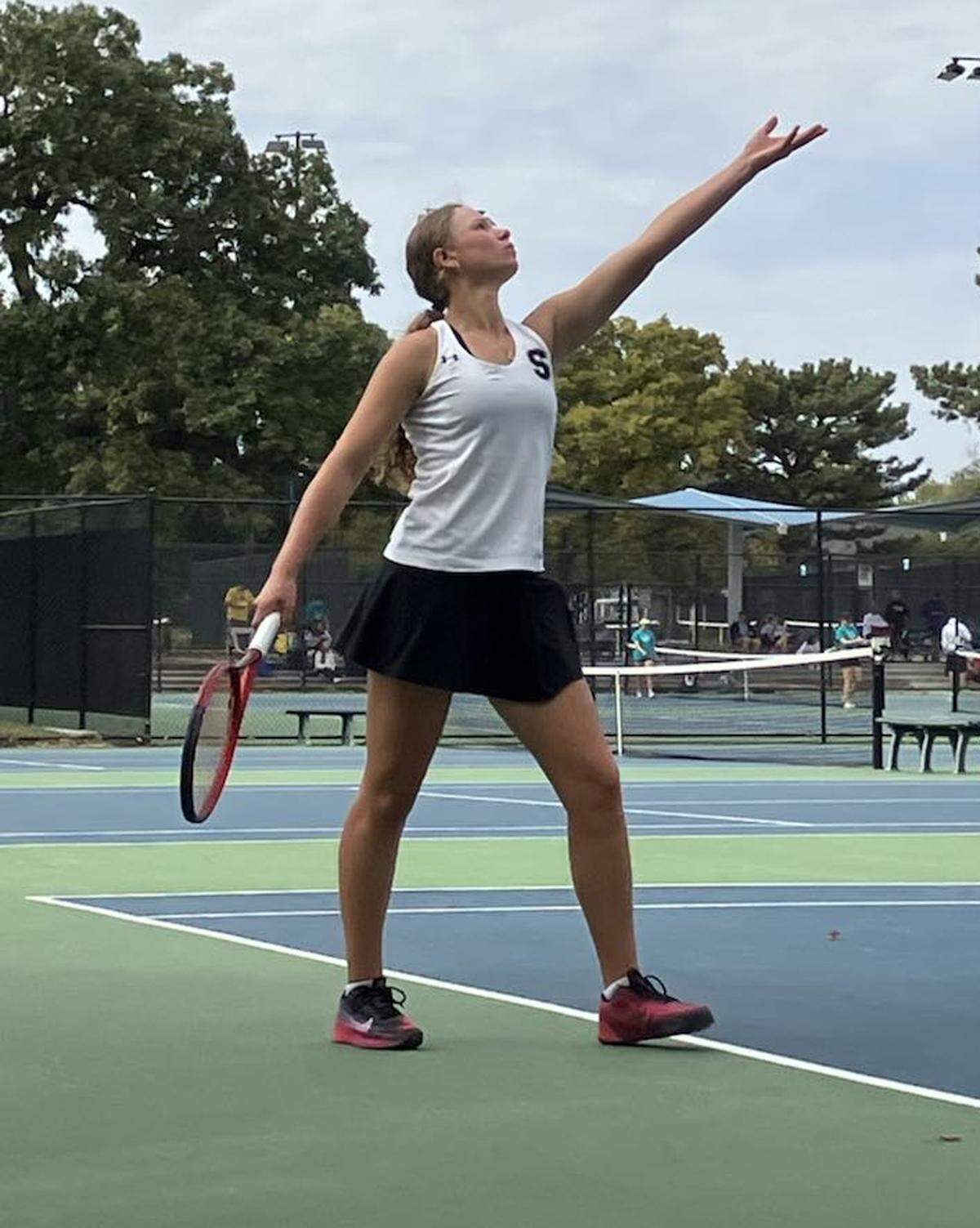
She is more agile and more consistent with her ground strokes, but her biggest strength — what she calls her “superpower” — is her serve. She has been clocked close to 100 mph off the racket, which is power seldom seen in the Kansas high school girls tennis ranks.
“Tennis is her thing at Sterling and everyone knows that Chelsie is an amazing tennis player,” Sterling coach Janae Ryan said. “She has worked so incredibly hard to get to this level and to see her hard work pay off is so exciting. You can see her just light up and see her confidence grow.”
Years of hard work culminated this past weekend at the Class 3-1A state tournament in Wichita, where Chelsie finished an utterly dominant junior campaign by winning the singles championship match to complete a perfect 36-0 season.
Not only did Chelsie claim every set played this season, she won 324 of 366 games for an 89% success rate against her opponents.
“I think what I’m most proud of her for is that she had to really work to win a championship,” said Sherry Brown, her mother. “She fell down and had to get back up. Through the bad losses and the good wins, she kept moving forward and it had nothing to do with her disability. It’s just because she’s a dang good tennis player.
“Sometimes people think that people playing sports with a disability are different, but they’re not. They can do anything and Chelsie is showing that you can make it happen when you believe in yourself.”
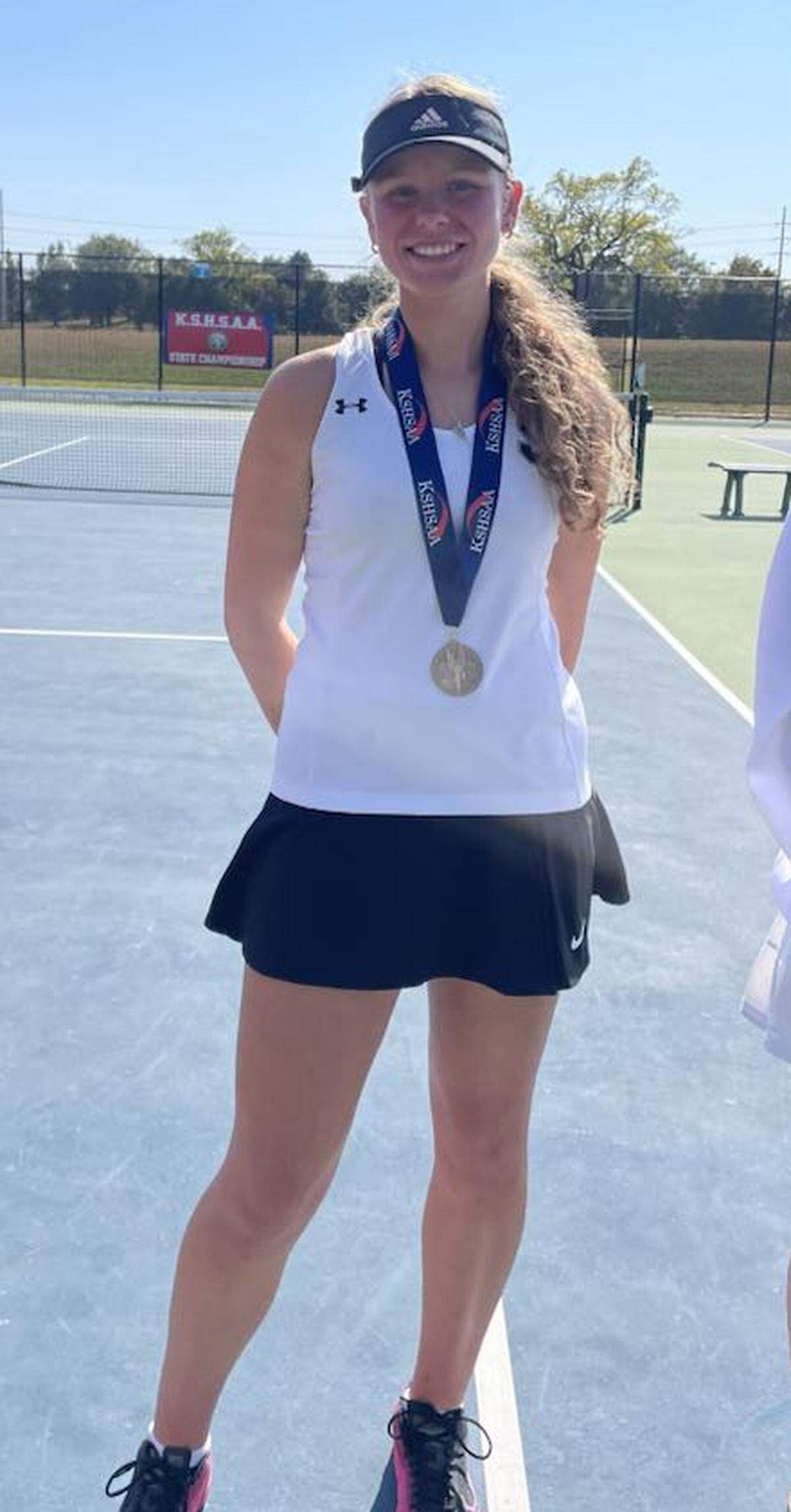
While working as the state tournament director this past weekend, recently retired Collegiate coach Dave Hawley, with 59 state titles to his name, couldn’t help but notice the amount of opponents from rival schools who funneled their way to Chelsie for hugs and chats before and after matches.
And when Chelsie was awarded her medal at the championship ceremony, the crowd erupted with the loudest applause of the day. Hawley isn’t sure if he’s ever seen a more popular player.
“You could just tell the love and support was genuine,” Hawley said. “I don’t think anybody is rooting for her because she wears hearing aids. They’re rooting for her because she is just a great player and treats people the right way and is just an all-around great kid.”
On the ride home to Sterling, Chelsie clutched her gold medal and felt a deep sense of pride in her accomplishment. She was a state champion, but more important than that, she cherished the respect she had earned from her peers through hard work, sacrifice and determination.
After years of feeling like an outcast, she has found a home in the tennis community.
“I just felt so… loved,” Chelsie said. “I’ve met so many good people through tennis and had so many people help me, it just felt really nice to feel that kind of love. I truly felt like I belonged.”
This story was originally published October 22, 2024 at 6:01 AM.
.jpg)