
Firearms season shaping up as more of the same for Kansas hunters
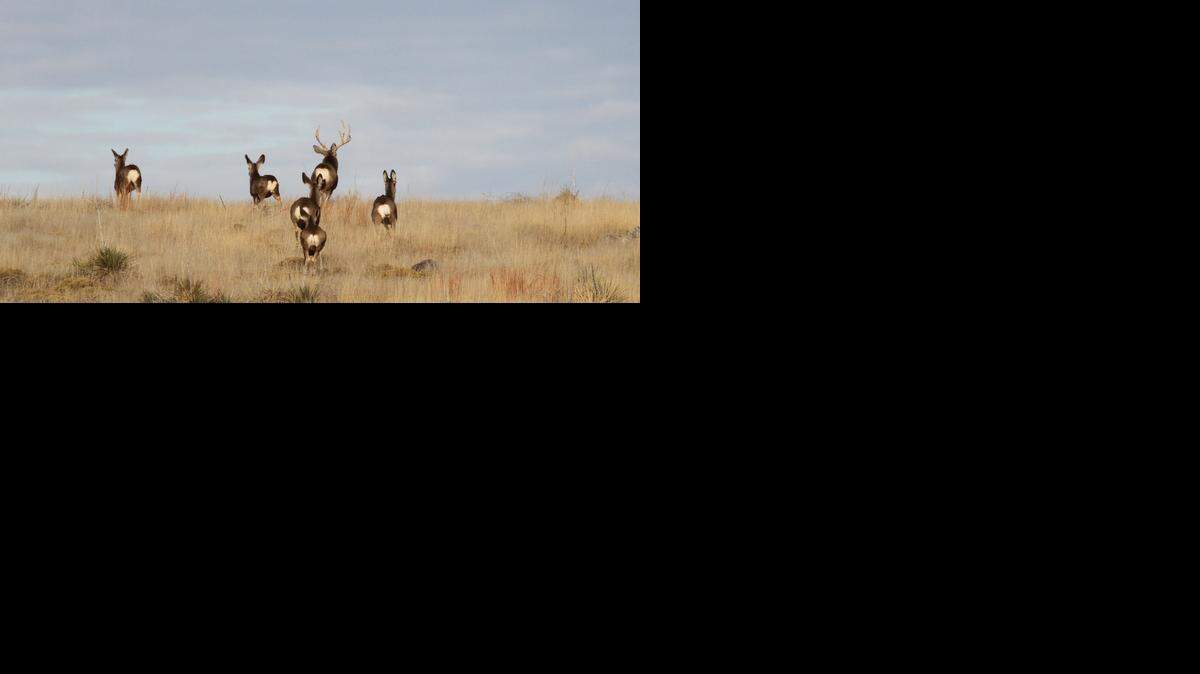
Those heading out for Wednesday’s 50th opening day of Kansas firearms deer season are likely to find things mostly similar to last year, according to fall surveys.
“We’re not seeing any significant change in deer densities,” said Lloyd Fox, Kansas Department of Wildlife, Parks and Tourism big-game program coordinator. “We should be a little bit better as far as older deer go, though.”
Kansas biologists are winding up their annual distance sampling survey. The survey totals about 2,000 miles of night-time driving across all 18 deer management units. Fox said most units have routes of around 20 miles through private lands and shorter routes, though they’re more numerous on public areas.
The surveys are done at night and during the fall, when bucks are the most active. The annual survey began in 2002.
In most parts of Kansas, this is the first full year since two or more years of drought impacted the Kansas deer population. In many areas of central and western Kansas, the dryness meant poor habitat and a higher-than-normal mortality rate on fawns and even adult deer.
At the same time, the eastern half of Kansas was hit hard by epizootic hemorrhagic disease. Passed from deer to deer by tiny insects that thrive in stagnant waters, it decimated some localized populations
“That was the highest EHD mortality that I’ve seen in my lifetime, and the further east and north you went, the worse it was,” Fox said. “We got hit hard, but not anywhere as hard as some places in Nebraska and parts of Iowa and Missouri.”
Rains earlier this year seemed to improve fawn production in eastern Kansas. Fox said that part of the state appears to be making somewhat of a recovery. Not so much in other parts of Kansas.
“Unit 16 is the one that has me the most concerned right now,” Fox said. “That herd is down and it’s just not going to bounce back as fast as other parts of the state. When conditions are great, Unit 16 can grow a lot of deer, in a hurry, but it can be slow to come back when it’s down.”
Largely located in the Red Hills region, Unit 16 is one of the state’s most popular with resident and non-resident hunters. The unit has also been hit by some large-scale poaching operations and steady increases in the number of out-of-state deer permits.
Fox also is concerned how quickly drought-stressed populations in units 17 and 18, in southwest Kansas, will be able to recover.
As per this season’s harvest, Fox expects hunters to kill around 90,000 deer, like last year, of which about 43 percent will be antlered bucks. Those numbers are slightly below the kill in 2012.
This year’s wet summer, and the ample food it brought, speaks well for trophy potential for this year’s gun hunt, too. Better-than-average groceries for the deer often leads to better than average antler growth.
“The people who really get out there, they’re seeing some real quality deer,” said Kendall Shaw, owner of McPherson taxidermy business that draws deer from across much of Kansas. “Guys have been taking bucks in the 170s and some in the 180s. I’m already at about 60 percent of what I did last year and it’s not even rifle season yet. It’s a good year for antlers, for sure.”
As always, it’s a good for hunters to know of any regulation changes, too. Here are a couple:
▪ The use of dogs to track or locate wounded or dead deer is now legal. The dogs must be kept on a leash, and can be used at night, but all regulations pertaining to legal shooting hours, weapon requirements and trespass regulations apply.
▪ Special over-the-counter whitetail antlerless-only permits will not be valid for Unit 18 this season, and that area will not be open during the special January season. Hunters need to know that the January season dates vary greatly around the state for the upcoming seasons.
This story was originally published November 28, 2014 at 1:09 PM with the headline "Firearms season shaping up as more of the same for Kansas hunters."