
Elk addiction
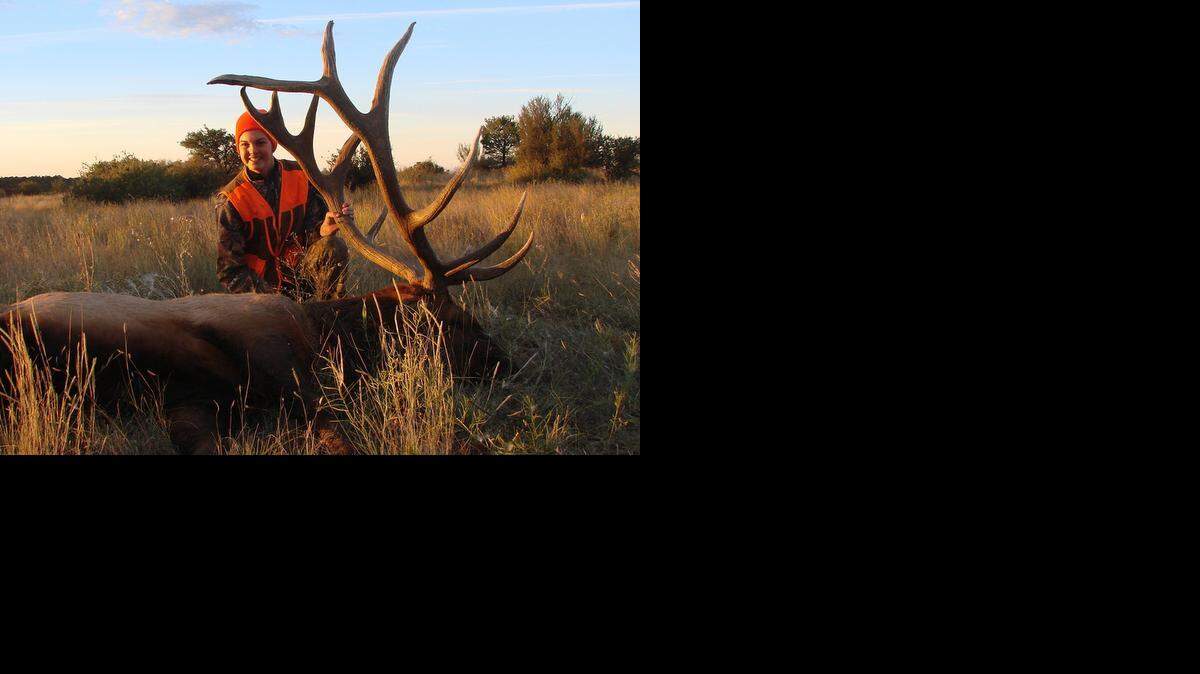
Semester break is still two months away, but Mikaela Raudsepp is counting the days until she leaves Wichita State for a trip home to Dundee, Ore.
“I’ve already told my mom when I get home for Christmas, I want to eat elk every day for at least the first week,” said Raudsepp, a freshman on the Shocker volleyball team. “Elk steaks are my favorite food, but I just love all things elk. They’re so, so, incredible.”
Part of her “all things elk” has been elk hunting, and shooting the kind of trophy bulls that grace magazine covers and most hunters only see in their dreams.
“My first bull scored 337, which is a really nice bull,” said Raudsepp. “But my second bull was 371. He was just so massive and heavy.”
A 300-inch bull is considered a trophy by most elk hunters. Both of Raudsepp’s bulls were shot during her high school years, during youth-only seasons in New Mexico.
The 6-foot-2 outside hitter seems more happy to talk about the elk she’s killed, rather than when she’s led the Shockers in volleyball kills at a match. She gets quiet, though, when asked where in New Mexico she shot her elk.
“Oh, that’s a family secret we don’t tell anybody,” Raudsepp said. She also said elk hunting was an important part of her life long before she made those trips to New Mexico.
A childhood passion for elk
Her father, Karl, has long been a serious elk hunter. Raudsepp remembers meeting him after he’d return from a week of elk hunting. She recalls being spellbound by the stories he told and the heft of elk antlers in her once-tiny hands.
“Oh, I always knew I was going to be an elk hunter,” she said. “There just wasn’t doubt about that.”
While she tagged along on a variety of outdoors trips with her father in Oregon, Raudsepp said she got her first big bite of elk hunting on her first hunt in New Mexico. The hunt worked out as she, her father, and the New Mexico game department hoped.
Hoping to increase success, and provide quality experiences, the New Mexico youth seasons are held at the peak of the elk rut, a crazy time when wild-eyed bulls can be running around looking, and calling, for cows. Most rut hunts for adults are during archery seasons. Youth season hunters who draw New Mexico tags are allowed to use high-powered rifles.
“I love to hear them bugle, it’s such a neat sound and it’s amazing when they’re so close you can feel the bugle,” Raudsepp said. “I was three yards from a (small) bull when it bugled, and it was facing me. It was incredible. I don’t think I’ve ever had such an adrenalin rush like when I’m elk hunting.”
Raudsepp said her favorite part of elk hunting is stalking a bull they’ve seen from the distance. Her first bull, the 337, came at the end of about eight or nine hours of stalking.
Tuesday afternoon, minutes after volleyball practice at Koch Arena, she went into detail talking of the final hour of that hunt, when she was scrunched into a creek bottom, fearing daylight would end before she got a shot. With every passing minute, she said, her determination to get the bull increased. When she got the chance, she made the most of it with the .30-06 she’s inherited from her father.
The year she shot the bigger of the two bulls, when she was 17, had a special challenge. Raudsepp had knee surgery about three weeks prior to the hunt. Before the operation, she told the surgeon she would be going on the elk hunt.
“Right after the surgery, he told me I could go if I got back to 65-percent flexibility,” Raudsepp remembers, “so I went home and really started flexing it and working it. It was hard but we got it there. I was not going to miss that hunt. That was not an option. I’d waited all year for that hunt.”
Raudsepp has been on hunts for mule deer and Coues whitetails with her dad, but didn’t fill either permit. On both, she probably could have shot smaller bucks, but didn’t. There was also another New Mexico elk hunt when she passed on a slam-dunk chance at a 360-class bull because one much larger was seen. She didn’t get within range of that larger bull, so she headed home empty-handed, but not disappointed.
“One of the things I love most about the hunts is that it’s when my dad and I really get a chance to connect,” she said. “It’s our best daddy-daughter time. I really like stalking the animals, and the excitement, but I also like the calmness of being out in nature and everything about it. It’s really special when I get to share that with my dad.”
As she recalled memories last week, Raudsepp said some of her most cherished moments came well after any elk were shot.
The year she got her largest bull, Raudsepp flew from Oregon and met her father in New Mexico. He’d just finished an archery elk hunt in Arizona, where he’d shot a tropy bull. They rode home together in his pick-up with over 500 pounds of meat and two impressive sets of antlers.
“I’ve never been so proud as I was on that trip home,” Raudsepp recalls. “We’d get out at a gas station and people would come over and look at the antlers and talk about them, then my dad would say, ‘The biggest ones are my daughter’s.’ That was such a fun trip home.”
Hunting with her dad is one of the things Raudsepp misses about being away from Oregon this fall. Even if it would be just tagging along on his hunts, she said she wishes she could be closer for all aspects of hunting. As well as the stalking and, eventual eating, she misses the work that goes into getting an elk out of the field. She was never shy about helping with that part.
“I actually think one of my highlights from the hunts is the field dressing,” said Raudsepp, who plans on going into surgery or physical therapy for a career. “I can’t pass up the chance to dissect anything. It’s all so interesting.”
Forever elk
She’s hoping to move back to Oregon someday, but with a full volleyball schedule, college classes and probably graduate or medical school in her future, Raudsepp knows it may be quite a few years before she gets to share the elk mountains with her father. Still, that’s one of the first things she hopes to do when her education process is done.
Every year for about the past 12, and also for every year in the future that she’s still in school, she’s been annually applying for preference points in Arizona. She figures she should have accumulated enough of the points, which push people to the top of the state’s draw list, to get a hunting permit in one of the world’s best trophy elk hunting units the year she is out of school.
She says more good elk hunts will follow that one, even after her father is no longer the most important man in her life.
“Dad and I joke that someday I may have to be teaching my husband about elk hunting,” she said with a wide smile. “But I will. Elk hunting is always going to be a big part of my life. Always.”
This story was originally published October 18, 2014 at 11:41 PM with the headline "Elk addiction."